
I’ve been meaning to write about the latest Elizabeth Strout novel, and since I was wrong about going camping this afternoon, I suddenly have time. I guess I should have asked someone if we were leaving the day we originally planned. That’s what you get for making assumptions. I make an a** out of me. And, sigh, we have to leave a day early because I have jury duty Monday, I’m a bit pouty. I really want to go camping. We haven’t been in so long.

However, I did read this book, so let’s talk about Tell Me Anything (2024). As soon as I realized there was a new book in this series (I’ve reviewed them all on this blog, so you can search for Strout and find them), I ordered it. I was very interested to find out what was going on with the characters in Crosby, Maine, since the pandemic, so I dove right in. I was happy to see that this installment concentrated on good old Lucy Barton and her friend Bob Burgess, as they cope with a local murder.

As with most of Strout’s books, the plot is secondary for me. I just enjoy how she tells stories. Her style is so spare, and her use of repetition and the narrator jumping in with bits of information, just enough information. And as always, you get insights into how people think, act, and work from points of view you’d never considered before. I just love the pithy parts.

I underlined and marked many passages that I can no longer see, but my favorite one was this part of a conversation about the meaning of one of the stories two characters shared with each other:
That was about the same thing that every story Lucy and I have shared is about. People suffer. They live, they have hope, they even have love, and they still suffer. Everyone does. Those who think they have not suffered are lying to themselves.” p. 315.

The people in the book are also fun for me. They are all so fully formed, with wonderful features and fatal flaws. They are real in the best way. I love how married couples are treated here. They have days where their spouses get on their nerves, then days where they don’t know what they’d do without them. And there are divorced people who don’t hate each other, but are glad to no longer be married. It’s refreshing to be able to feel empathetic with human beings who can be inconsistent, think judgmental things about others, but still be doing their best. I feel less alone.

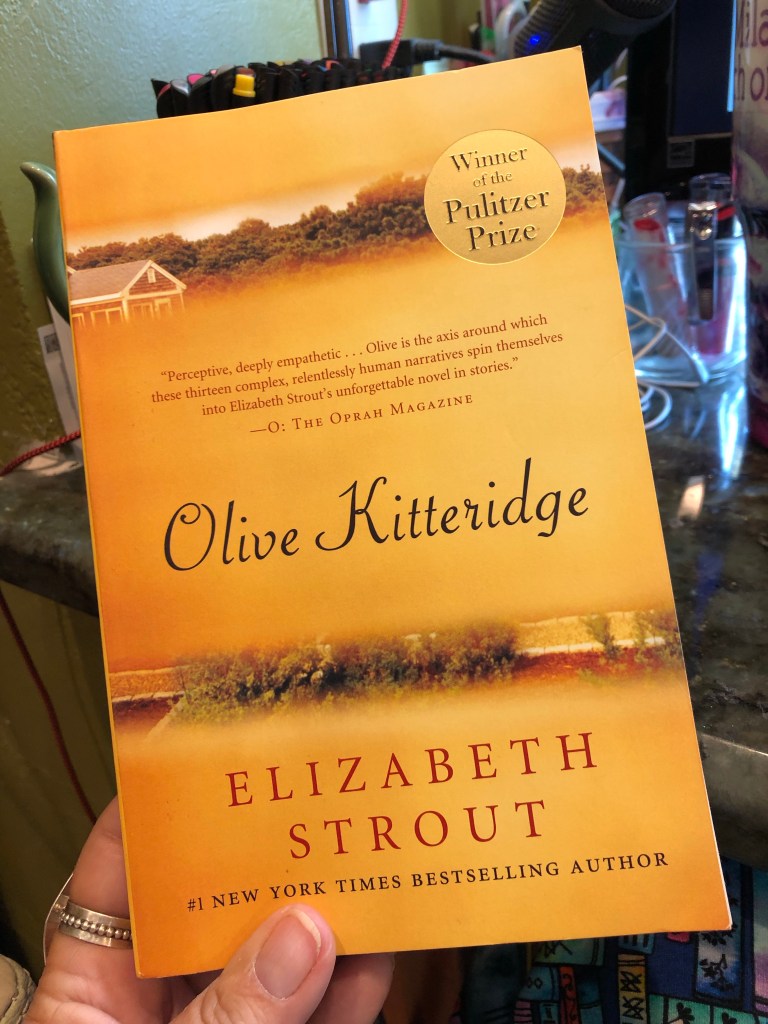
One more thing is that I was glad to see that Strout introduced a few new characters, since the “old” ones are mostly getting old. Olive Kitteridge is now 93! I can’t wait to see how she weaves them into the continuing saga as she follows them on through the scary 2020s.
 The Hermits' Rest