Losing Myself in Birds

What activities do you lose yourself in?

There are many activities I enjoy. Right now, though, birding is what I lose myself in. Time stands still and I let myself feel at peace when I’m watching their antics. They are so different and fascinating to me.

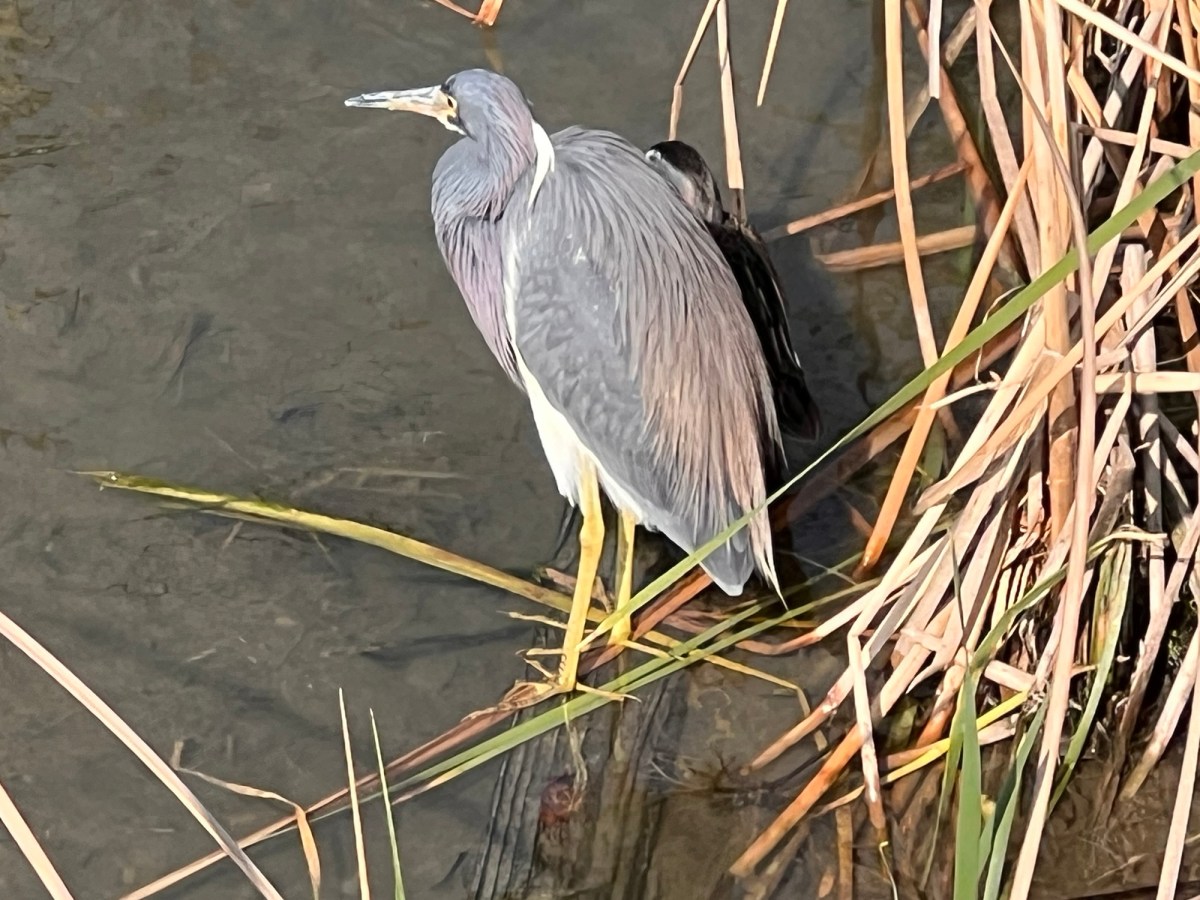
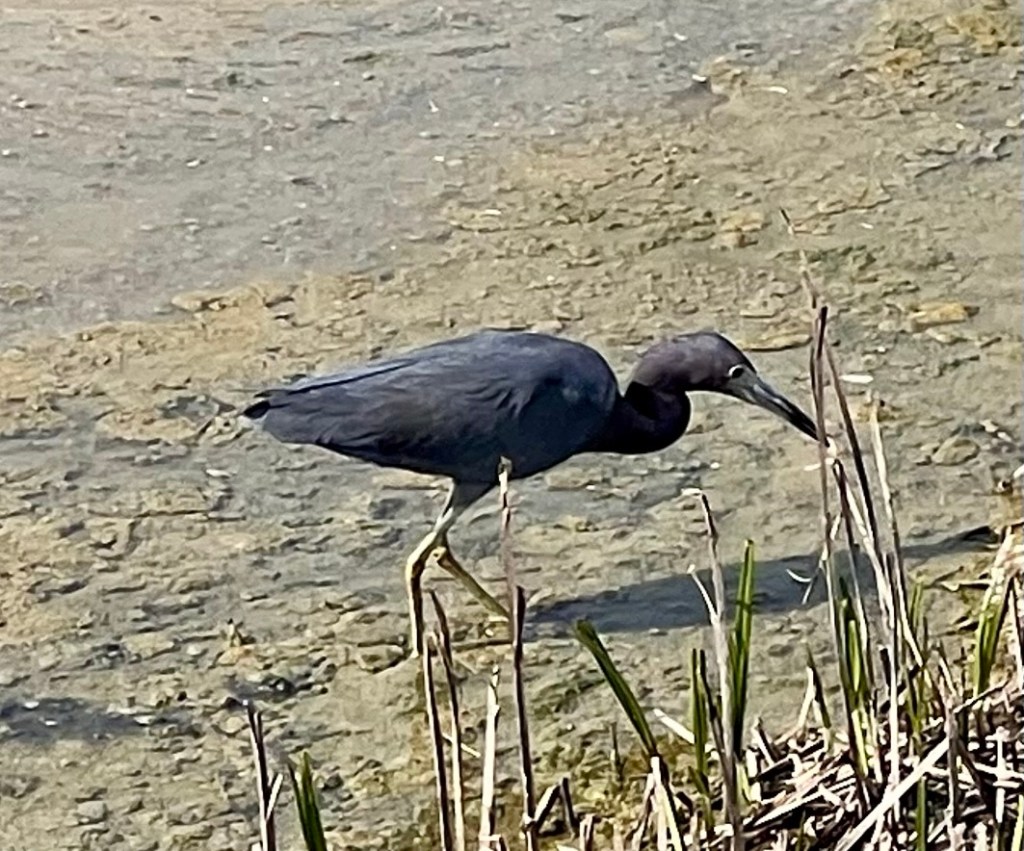
Preening Tri-colored Heron

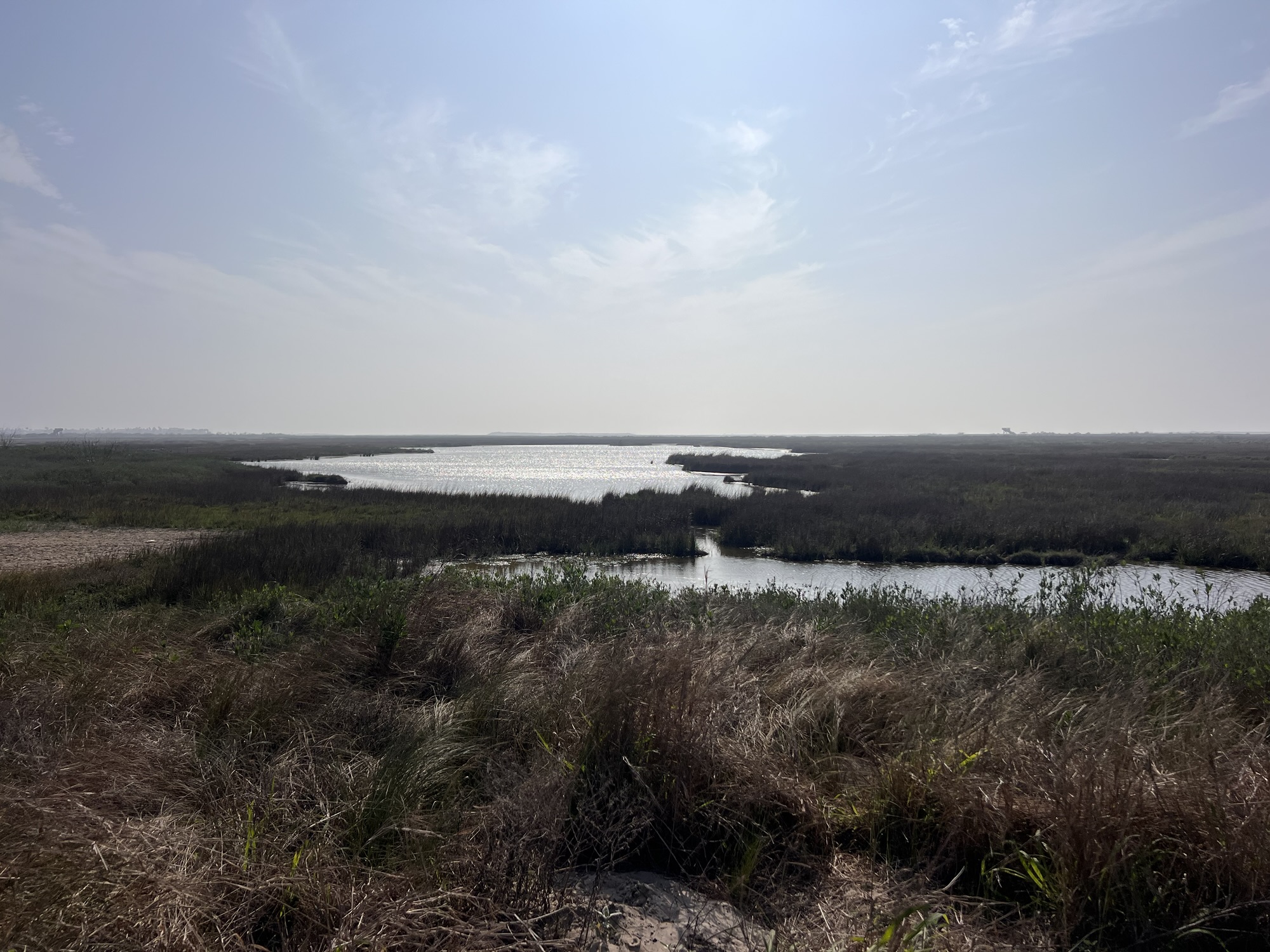
Today was all about birds, starting with a birding boat trip where I saw eight new birds for my life list. We went into the Aransas National Wildlife Refuge and were delighted by the variety of species good old Captain Tommy spotted (I spotted some, too).

Bunch of Neotropical cormorants.

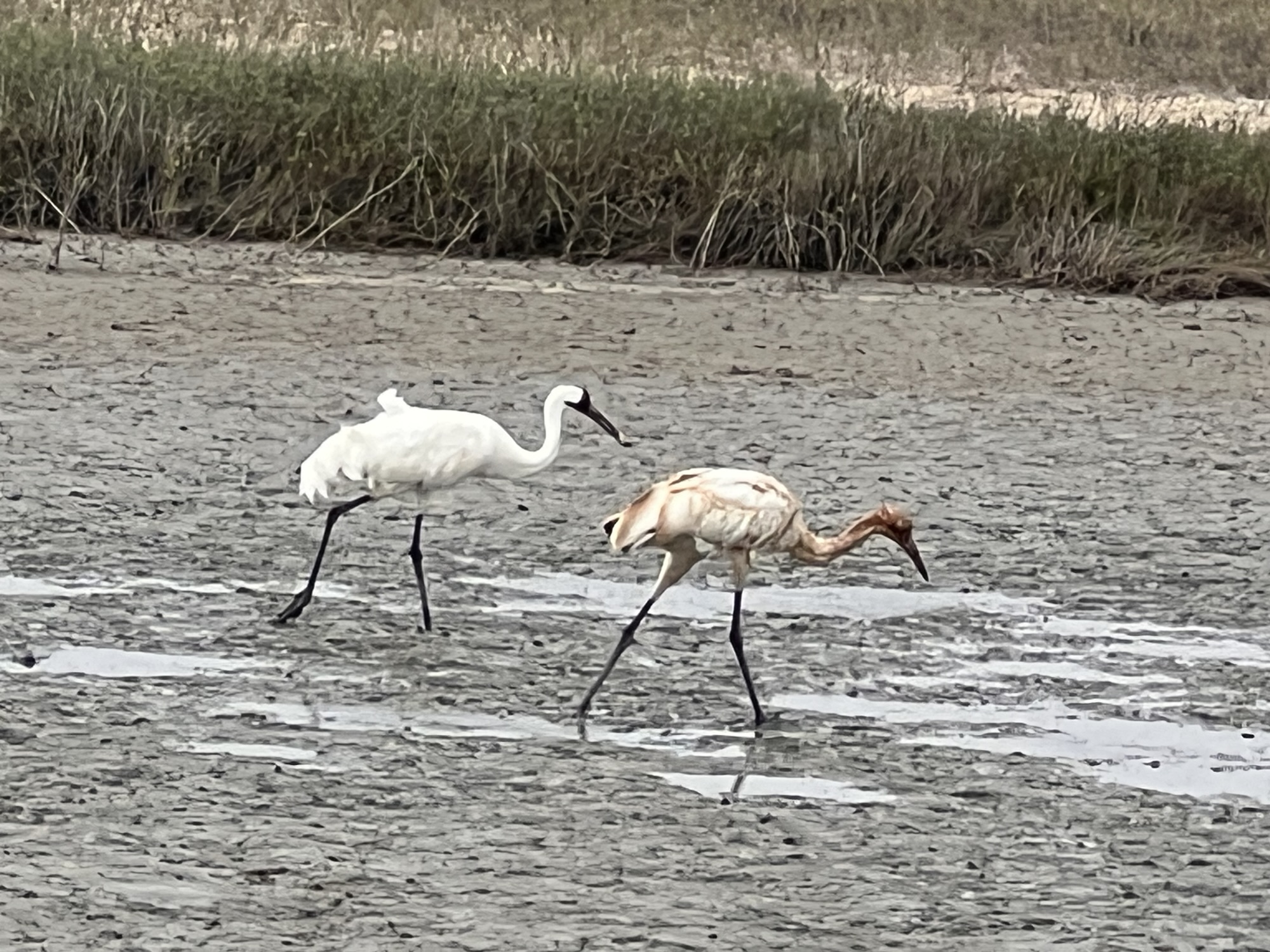
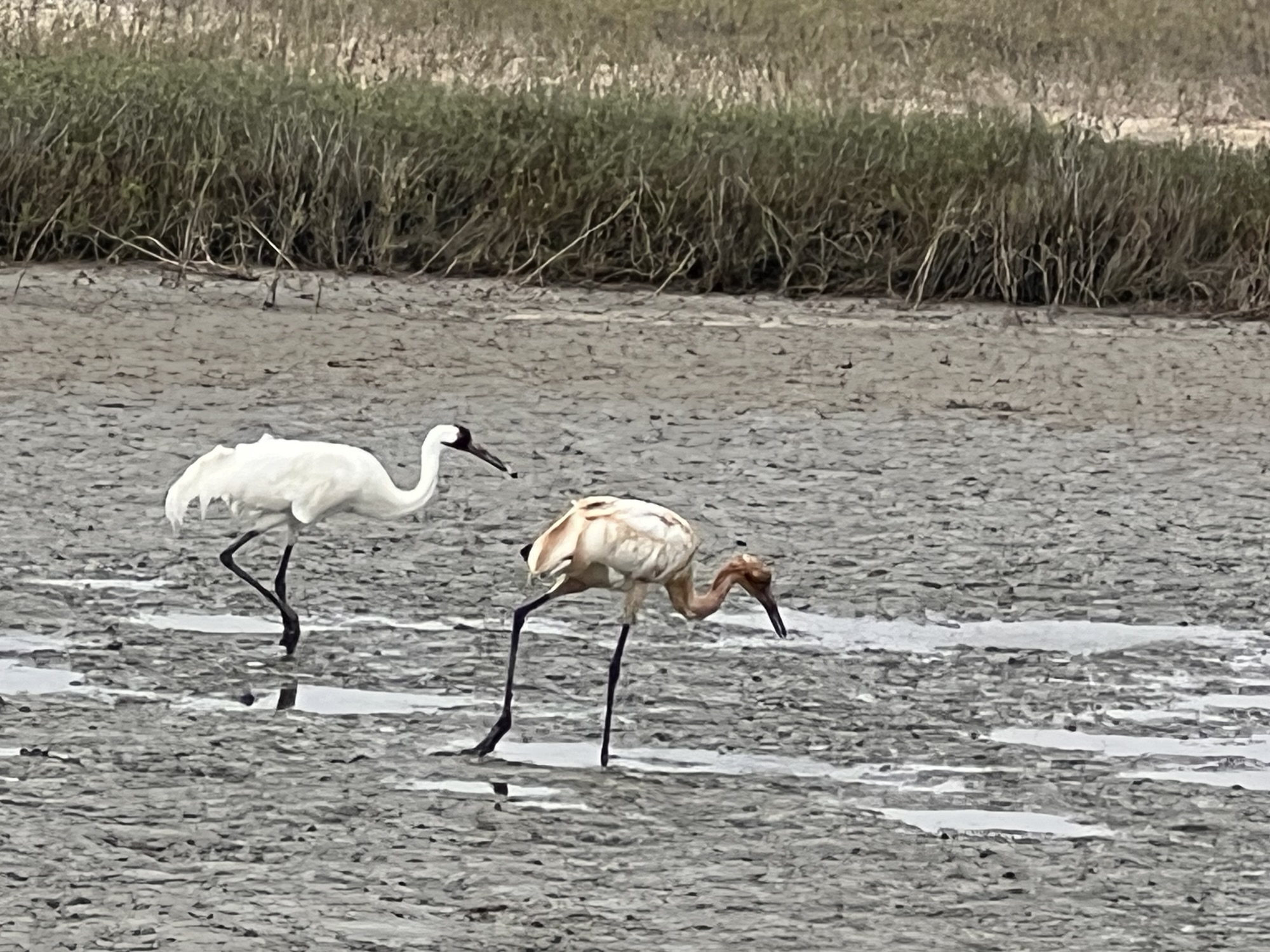
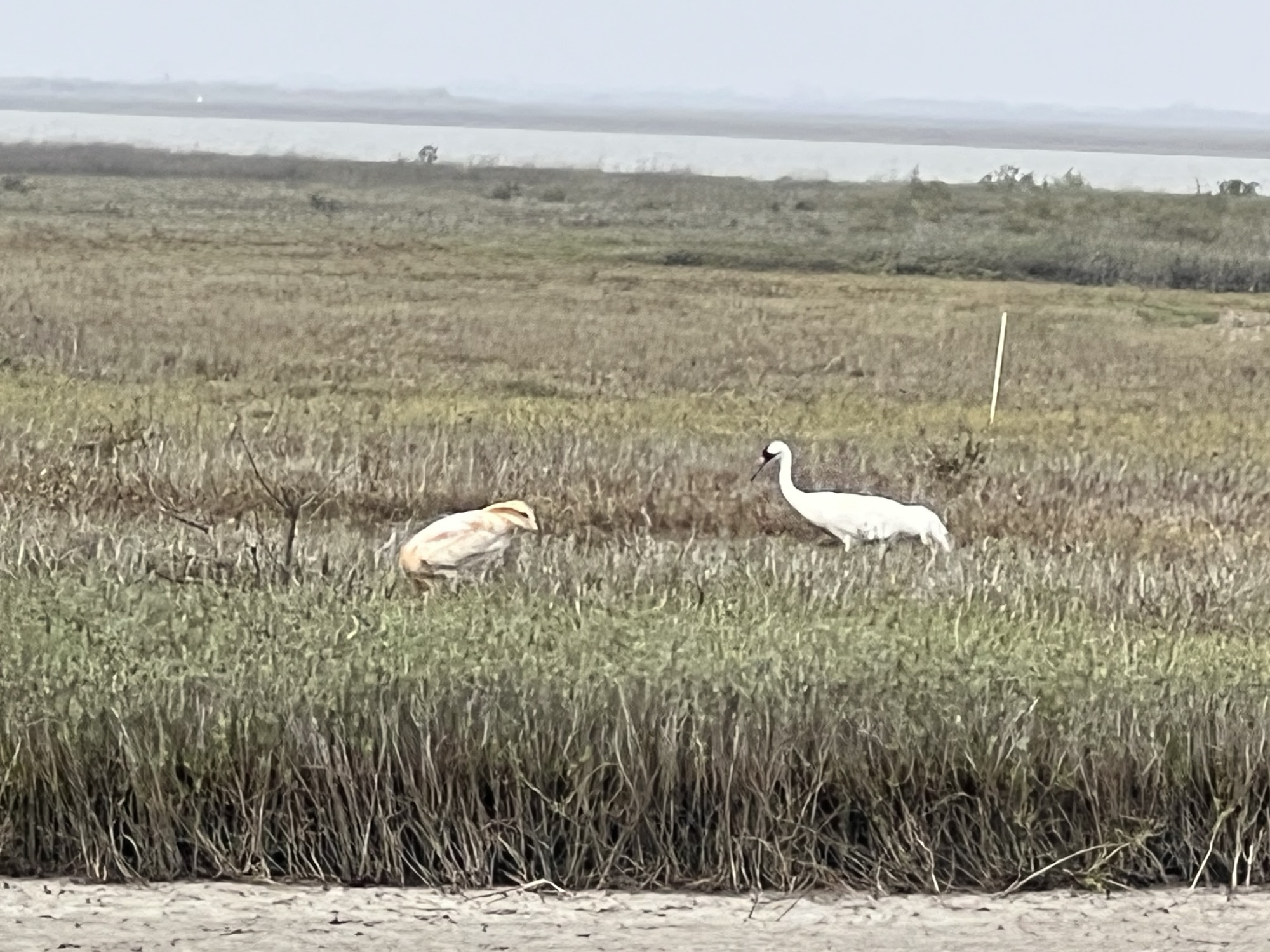
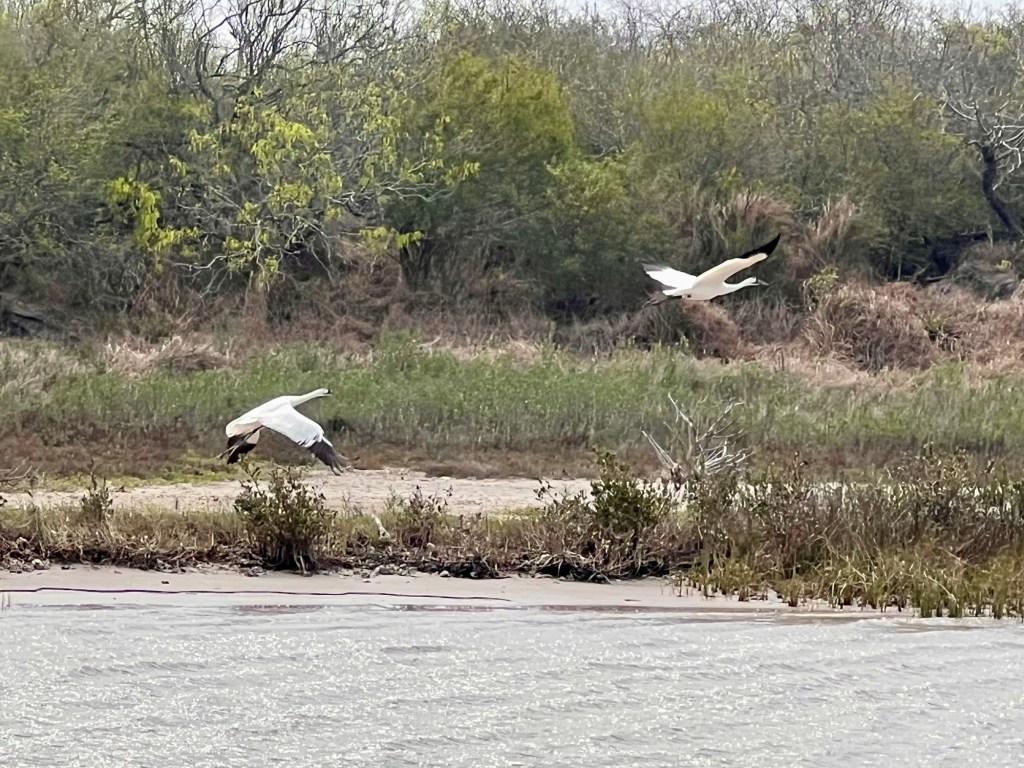
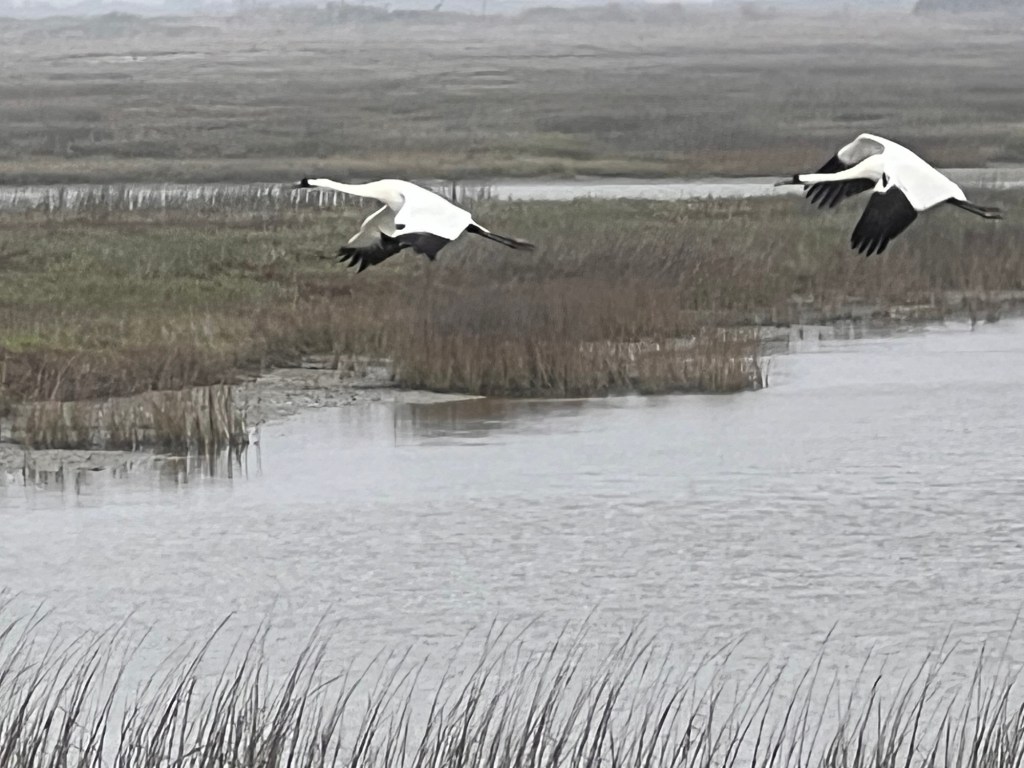
The highlight, of course, was spotting many Whooping Cranes enjoying their crab fests. We lucked out and got to observe parents and a hefty juvenile fairly close. The crabbing was excellent.

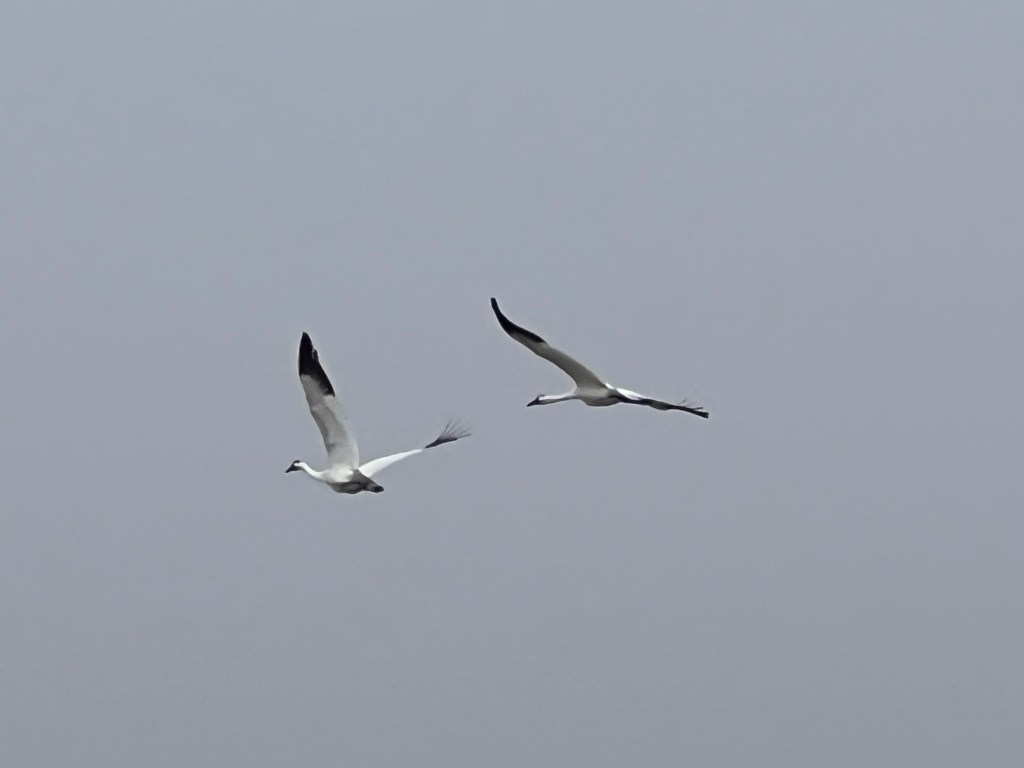
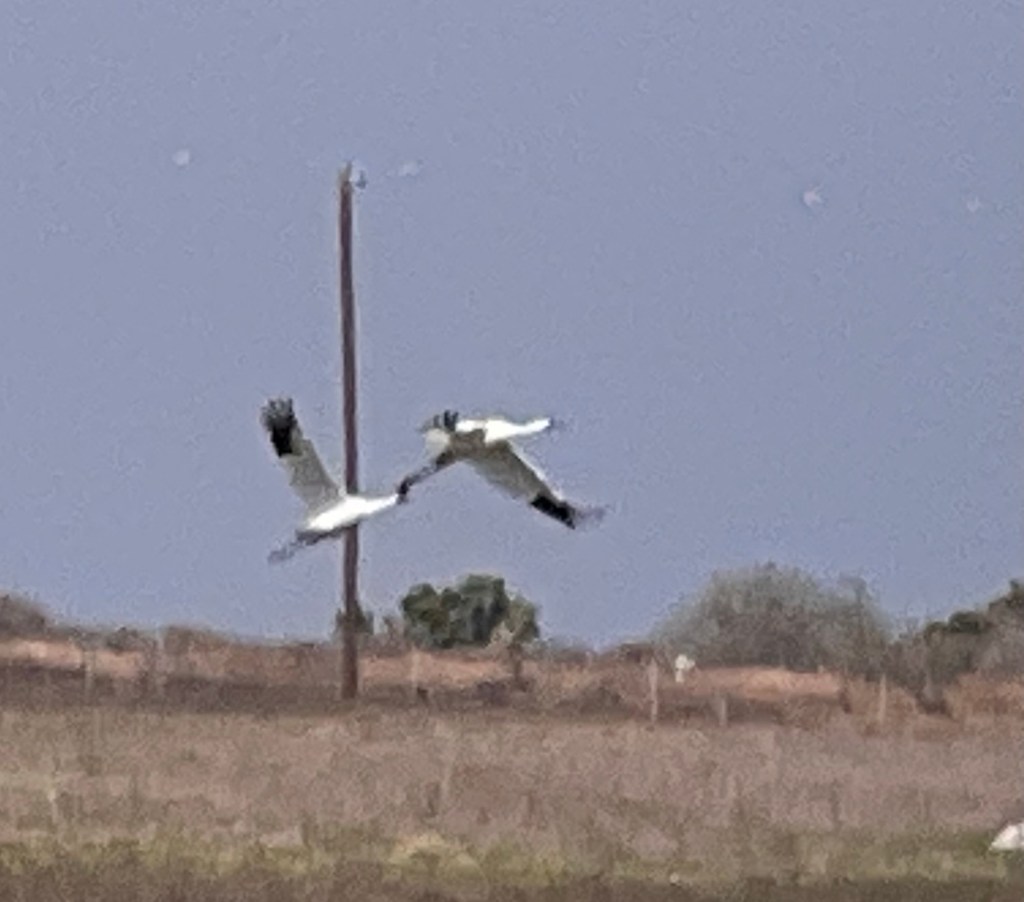
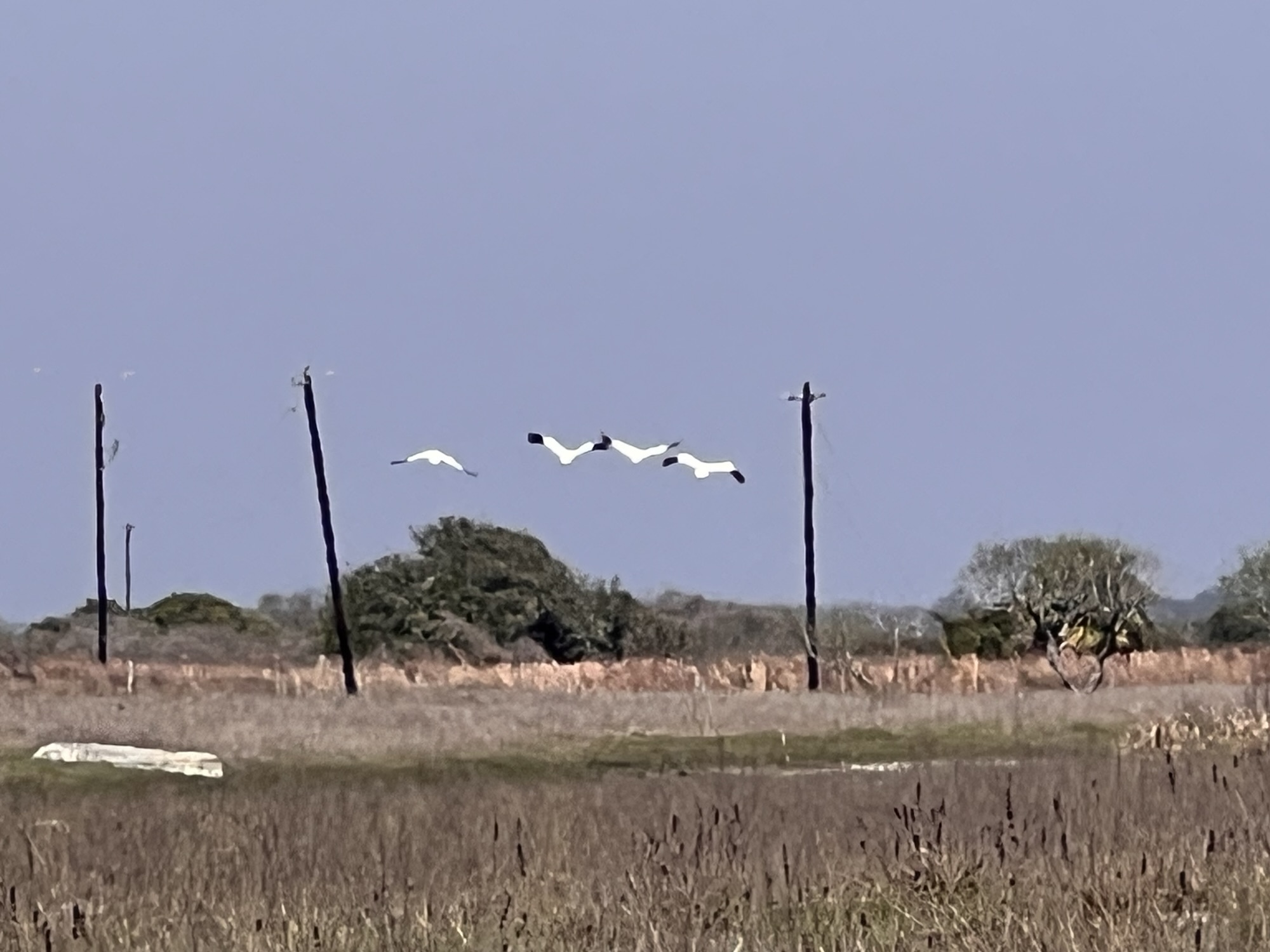
We saw a couple of pairs fly off, too. Those massive aviators are so graceful.

We also got to see Oystercatchers nesting, many different gulls, Roseate Spoonbills, cormorants (both kinds), White Ibis, and young Great Blue Herons. The adults are all nesting.

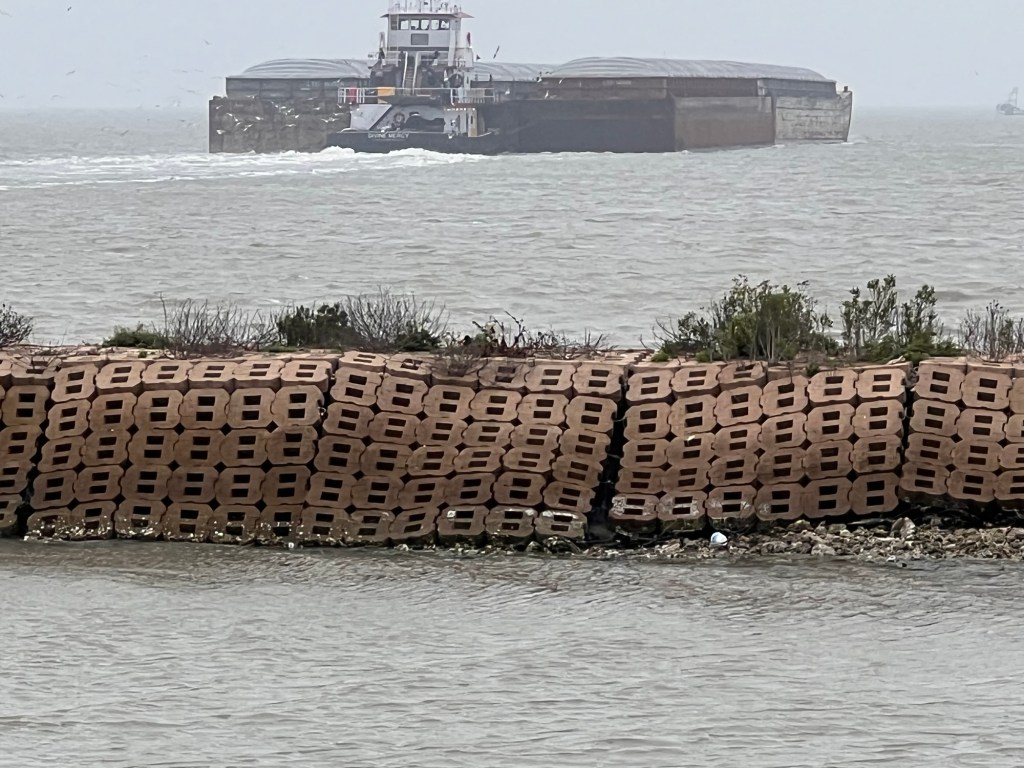
You can’t see it, but an Oystercatcher nest is in that brush. We also saw many huge barges.
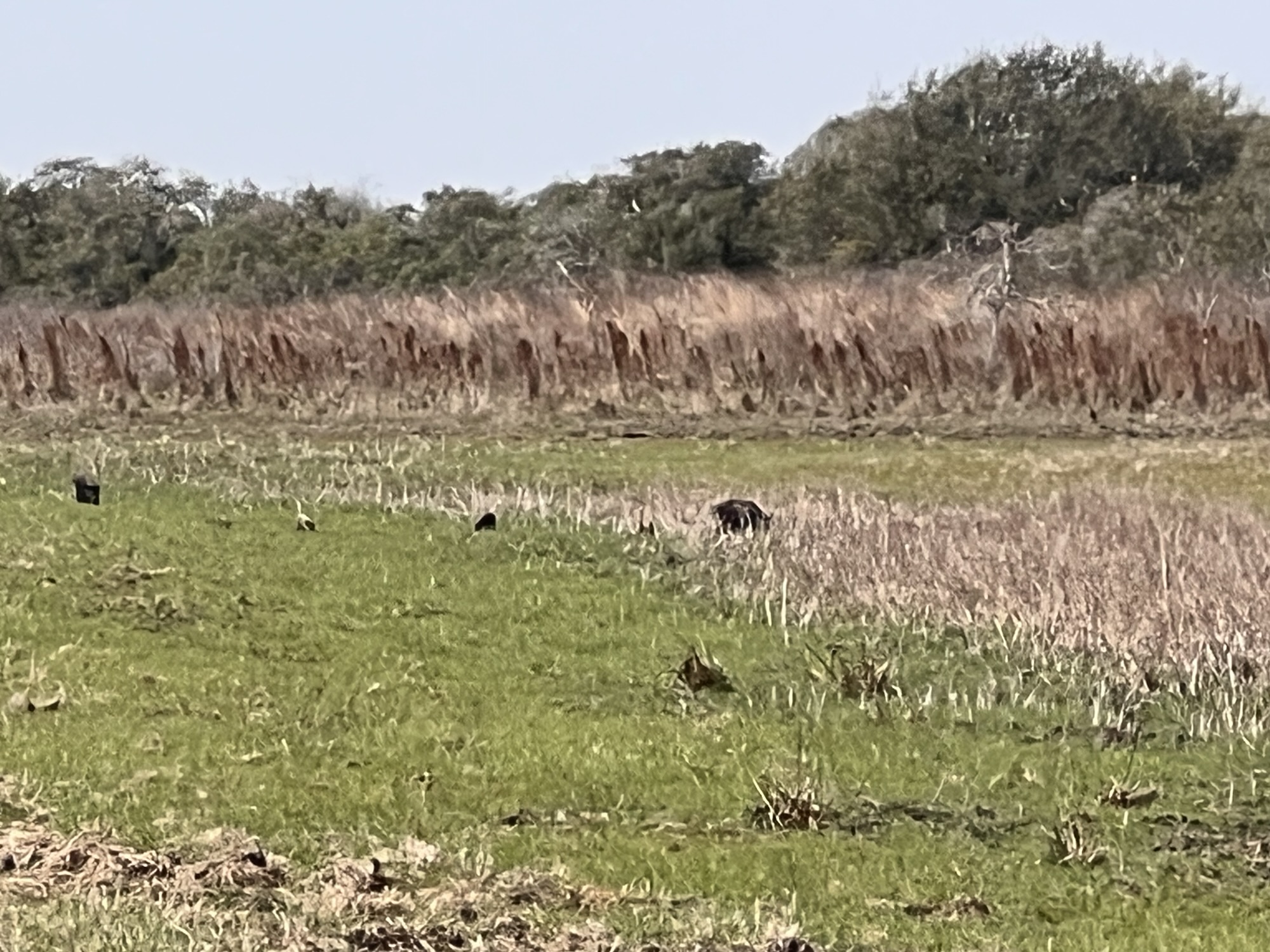
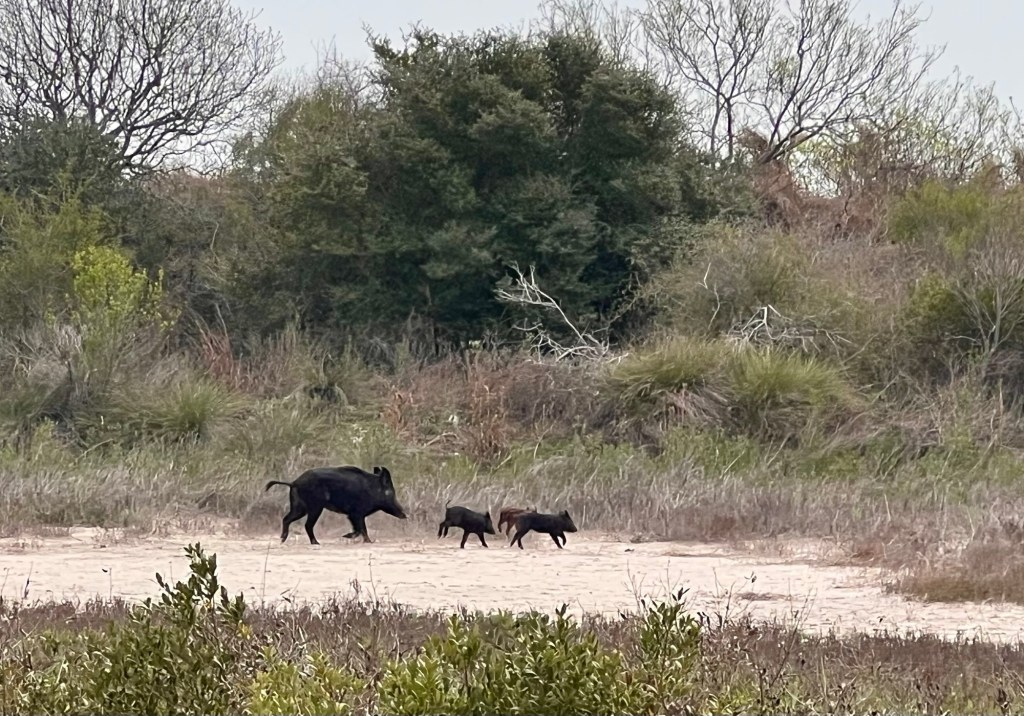
Wild hogs, too.

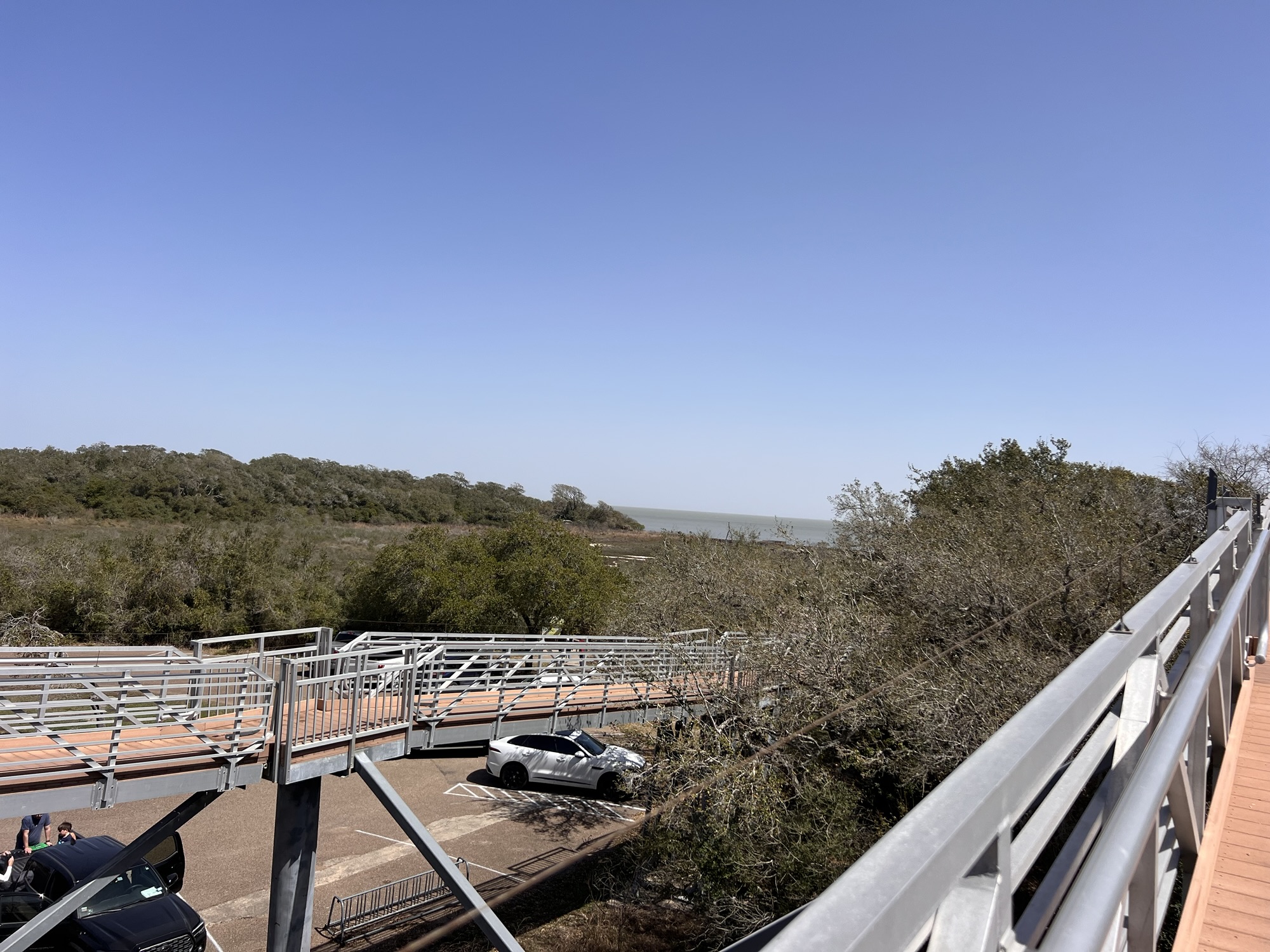
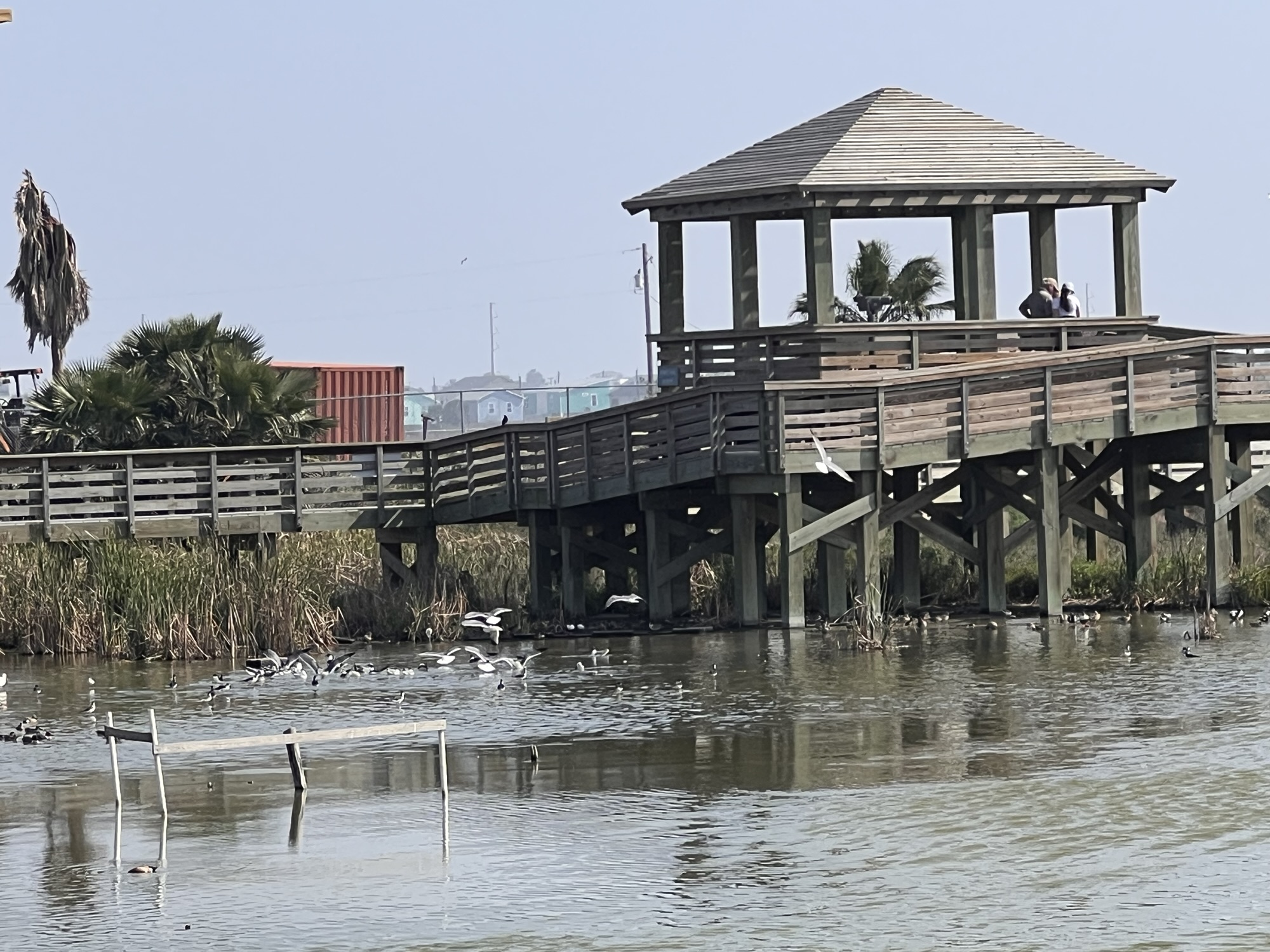
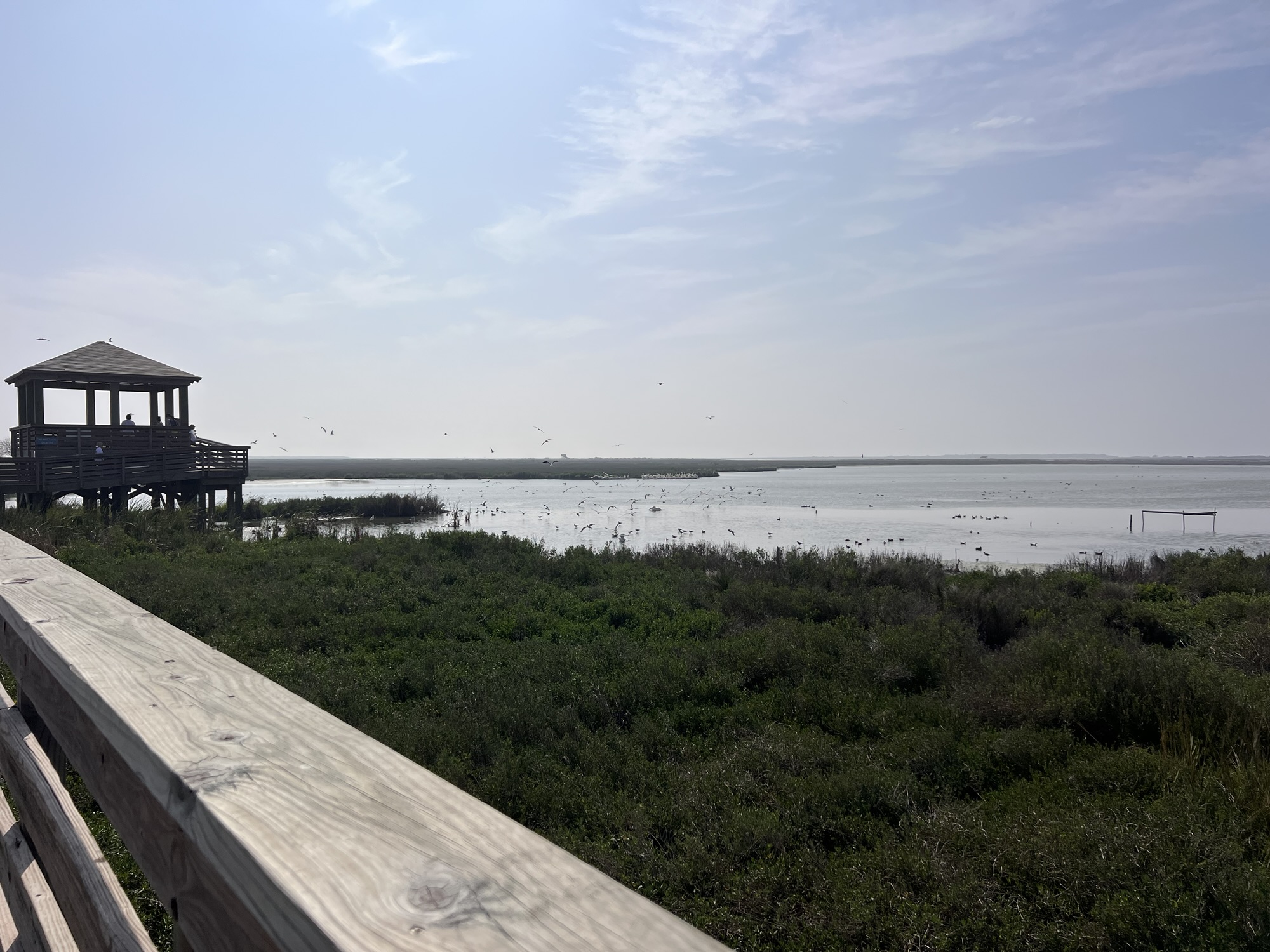
After the boat, we journeyed to Port Aransas, which was a longer ride than usual thanks to ferry delays (spring break). But the place we went was pretty darned impressive, even if it was right next to the sewer plant and garbage truck headquarters. It was the Leonabelle Turner Birding Center, with beautiful boardwalks overlooking hundreds of water birds.

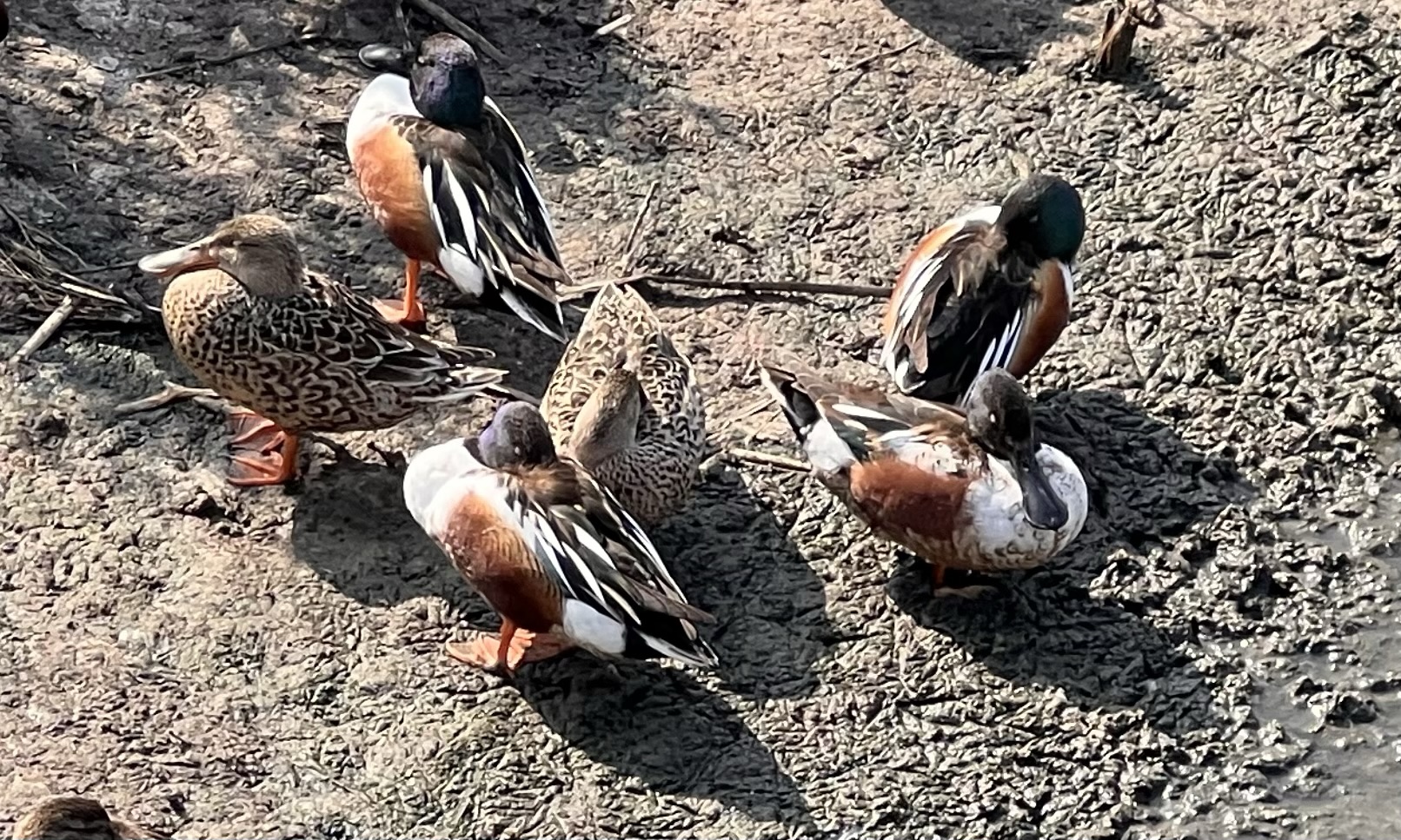
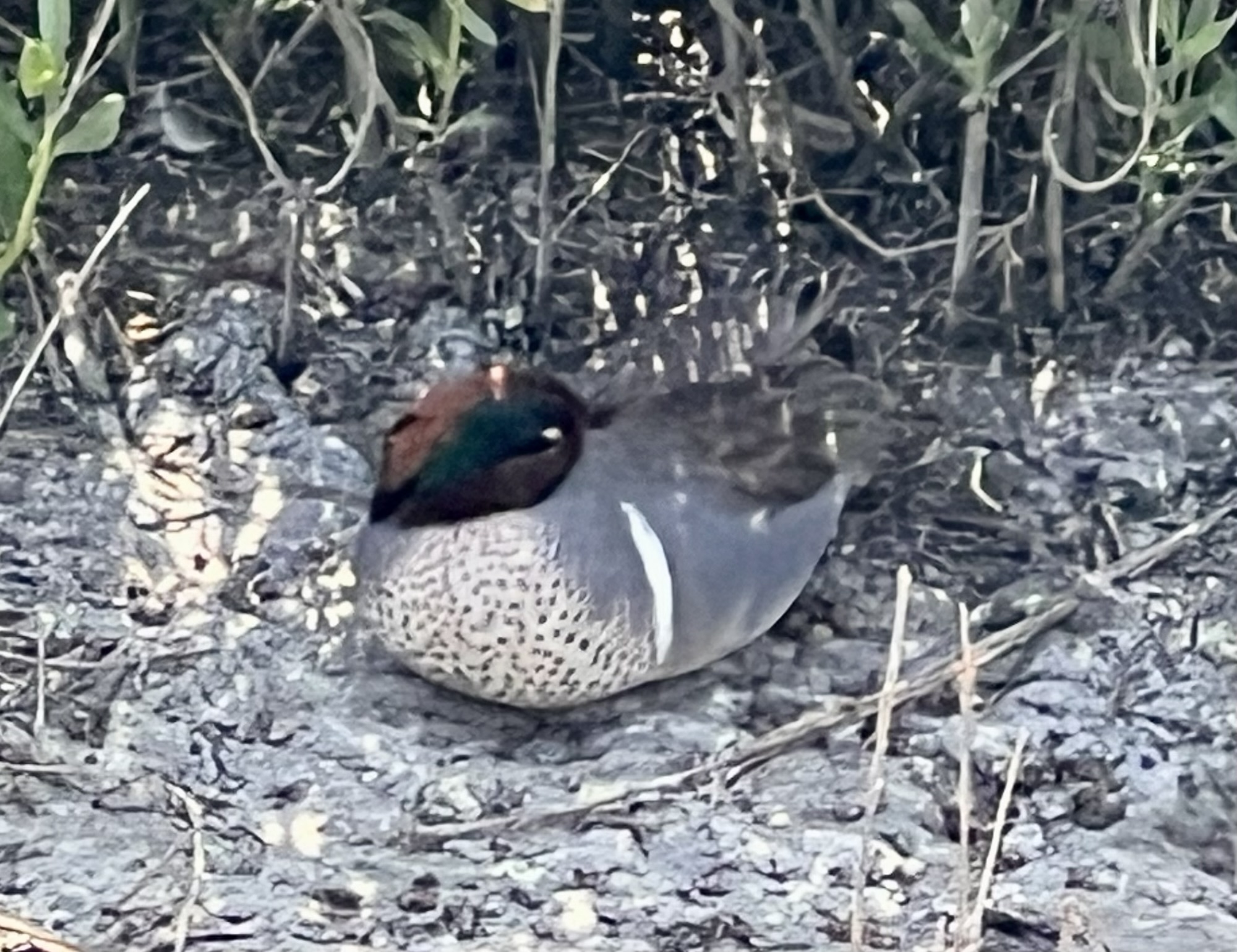
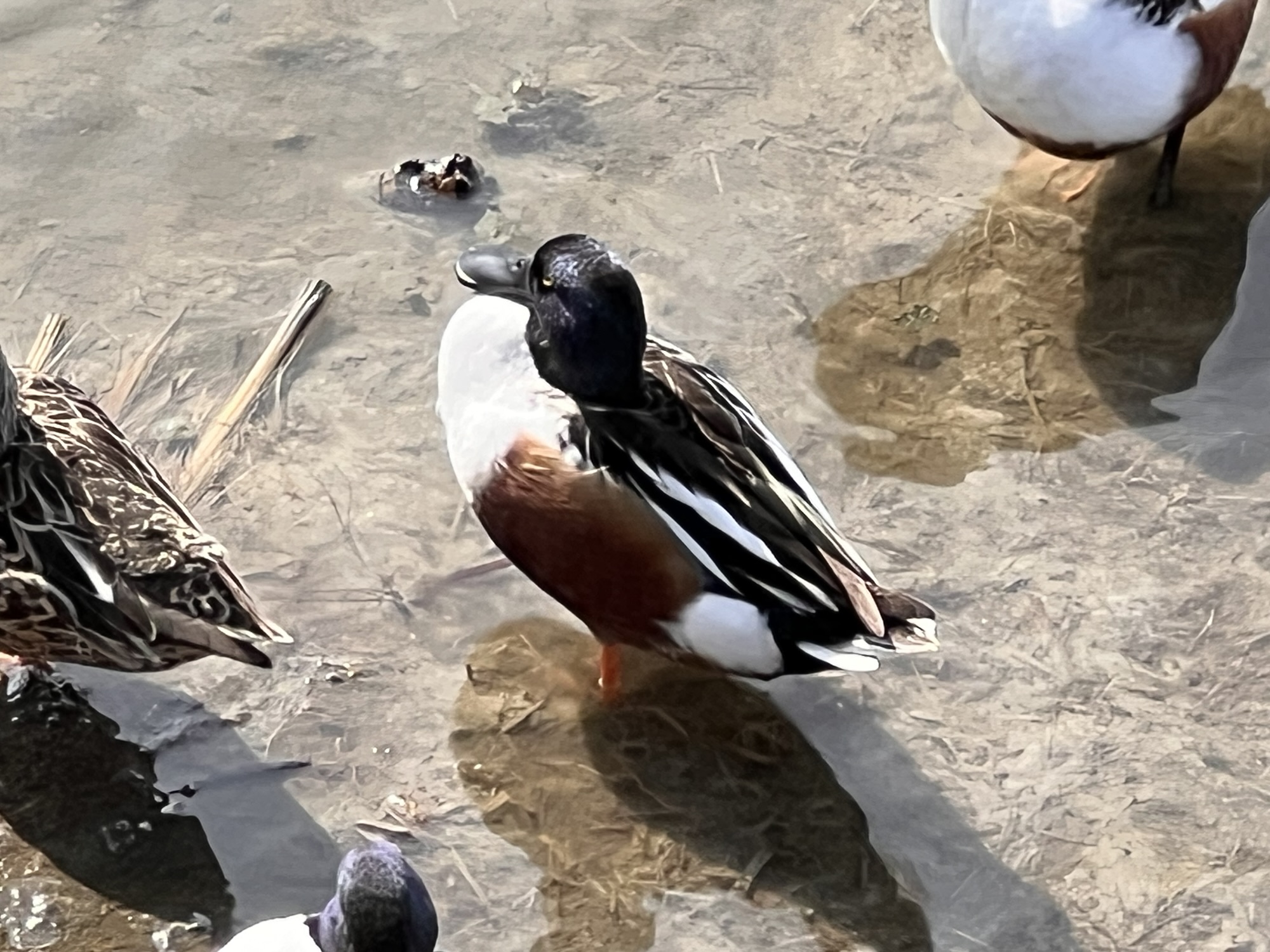
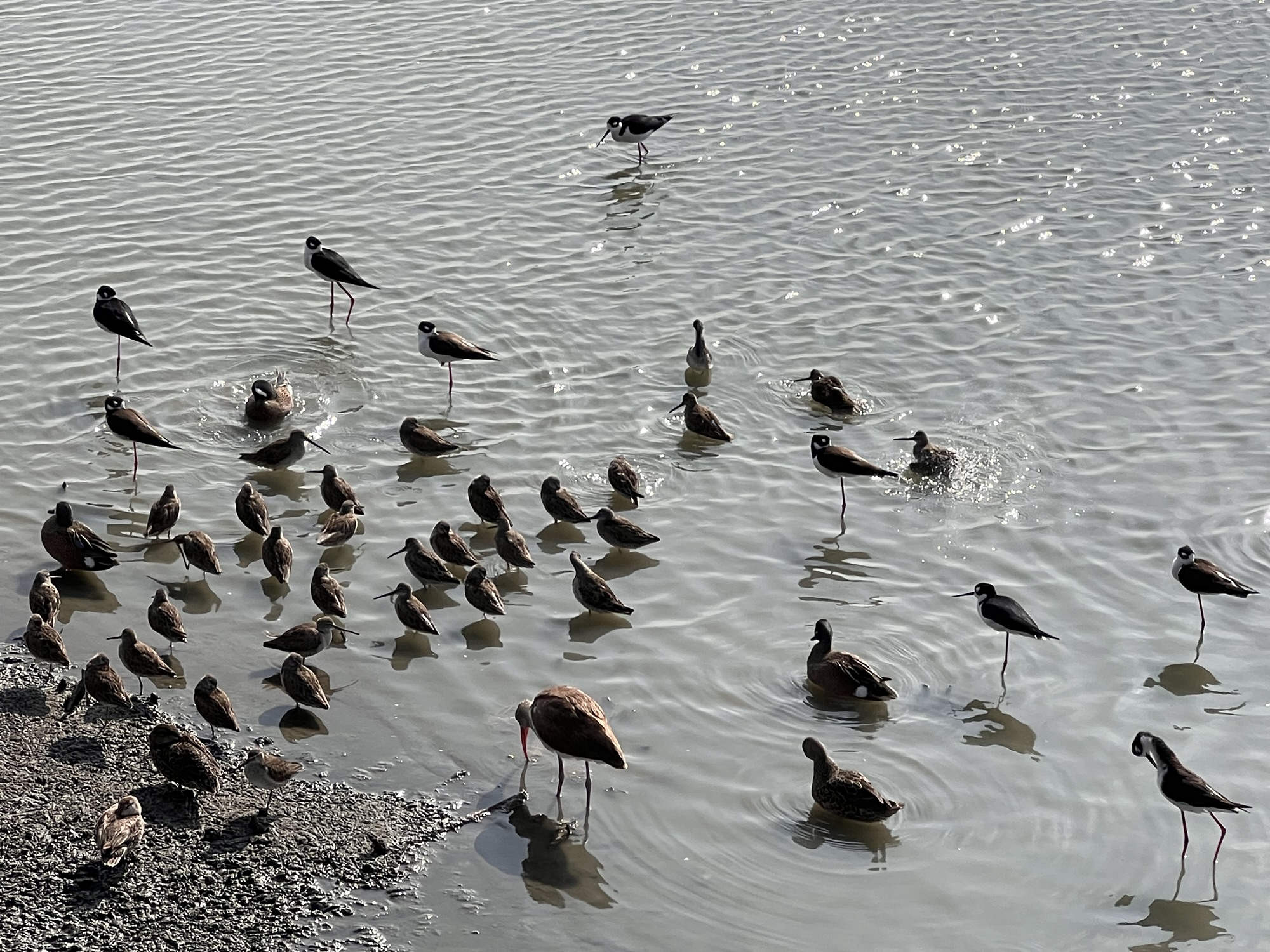
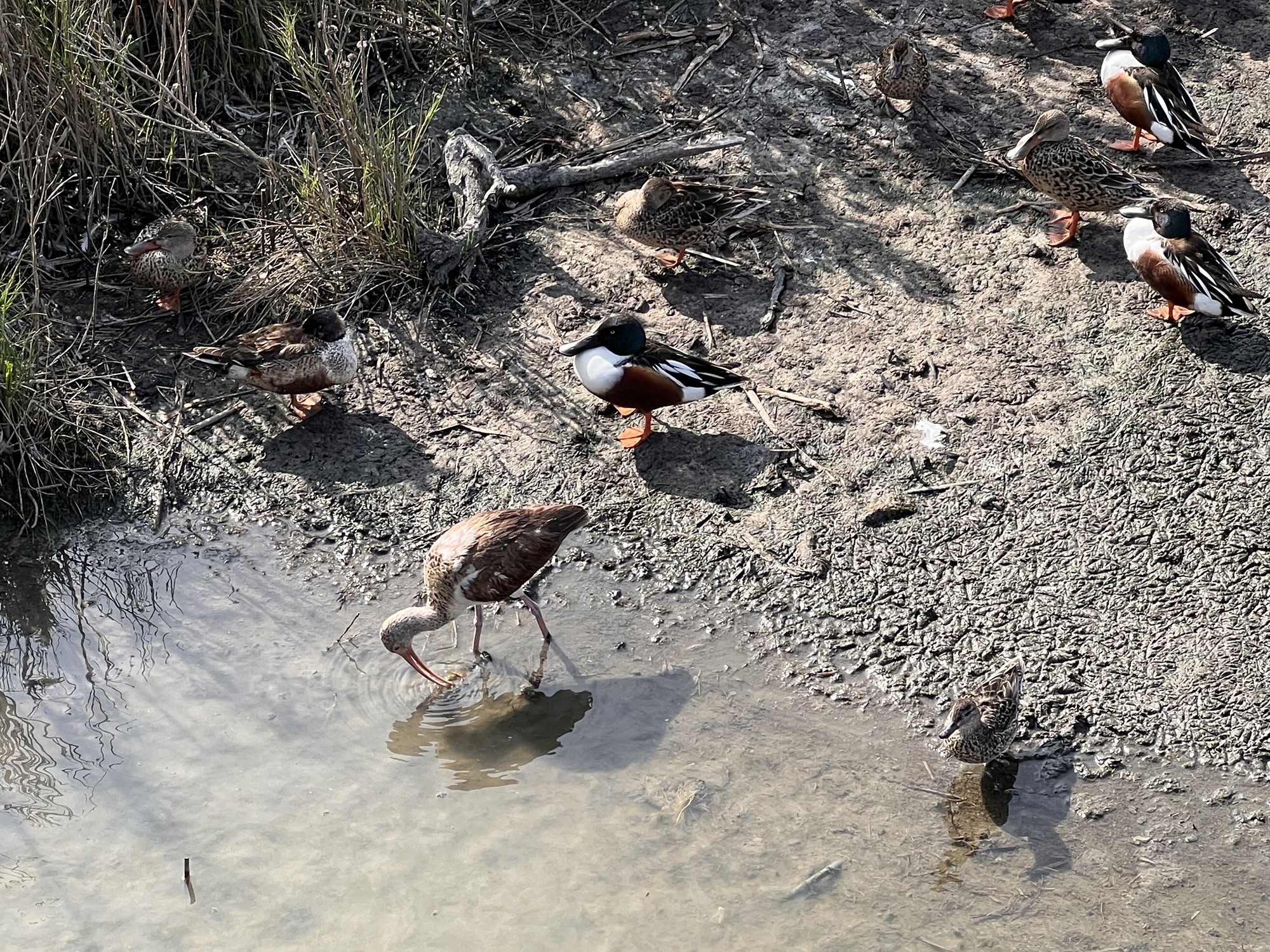
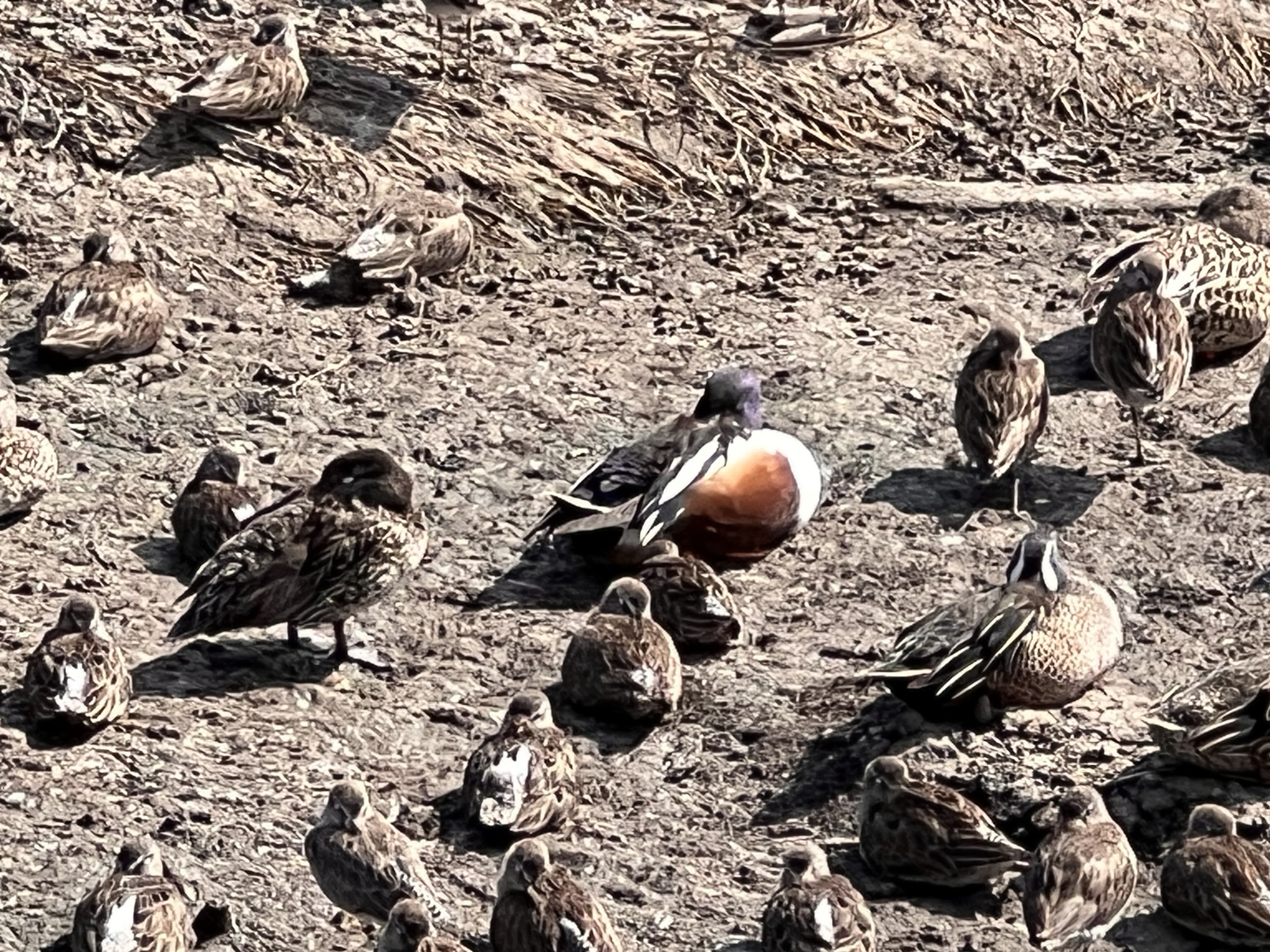
The water was so clear you could see what the teals and shovelers were shoveling. Oh there were so many ducks!

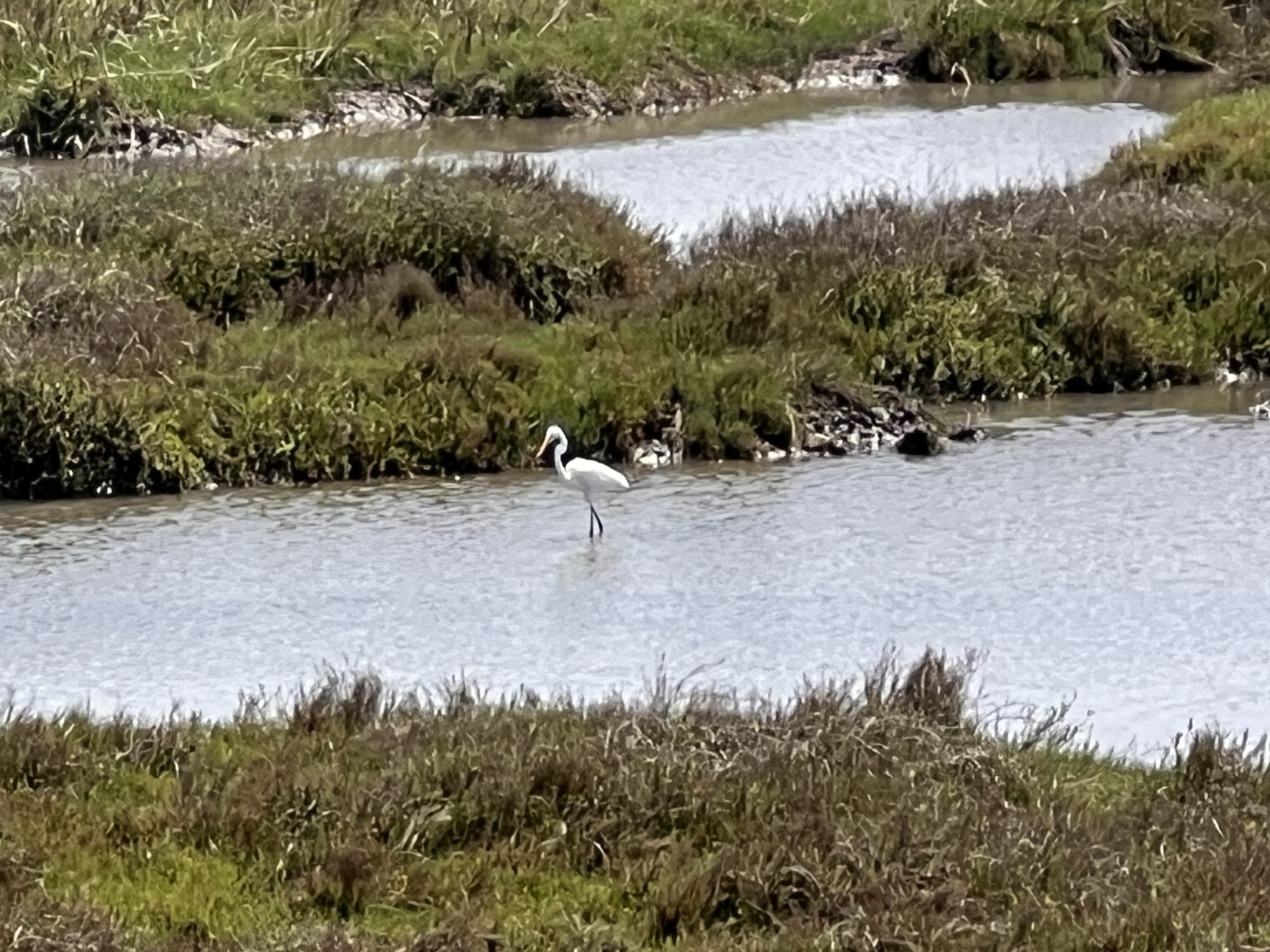
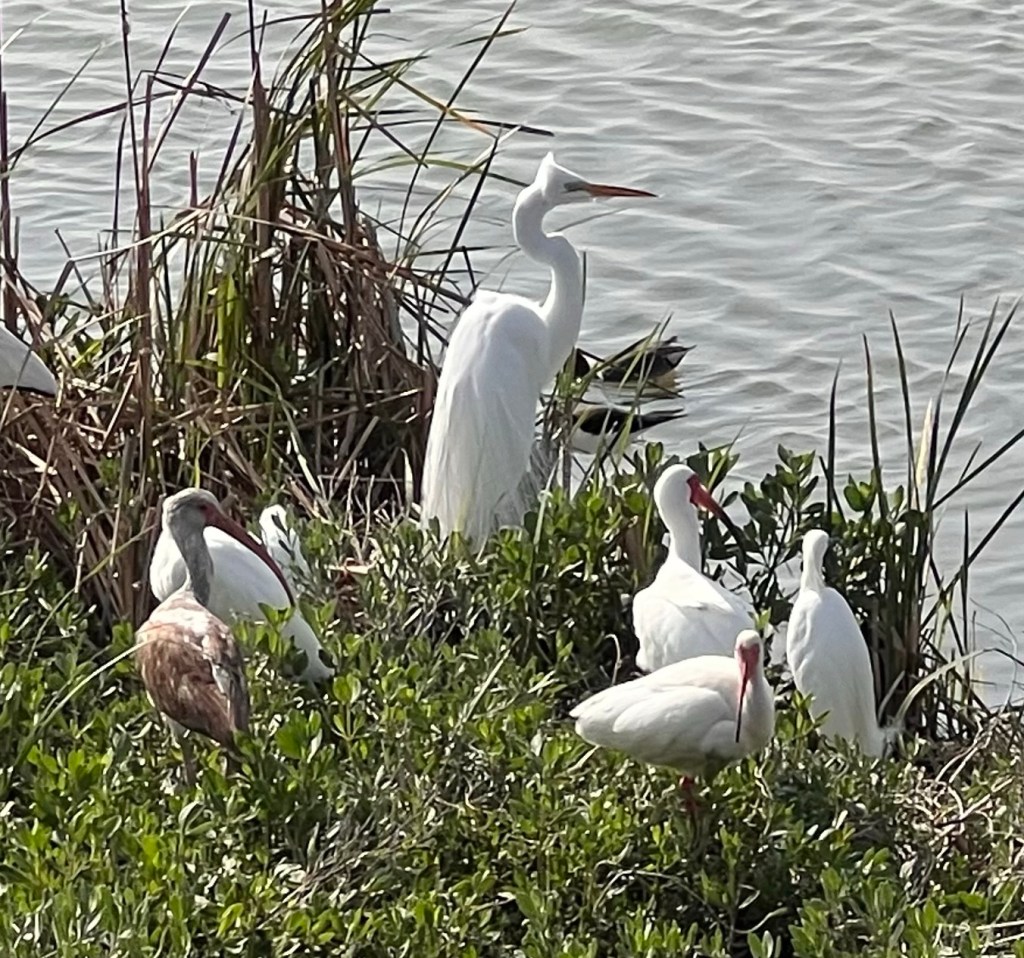
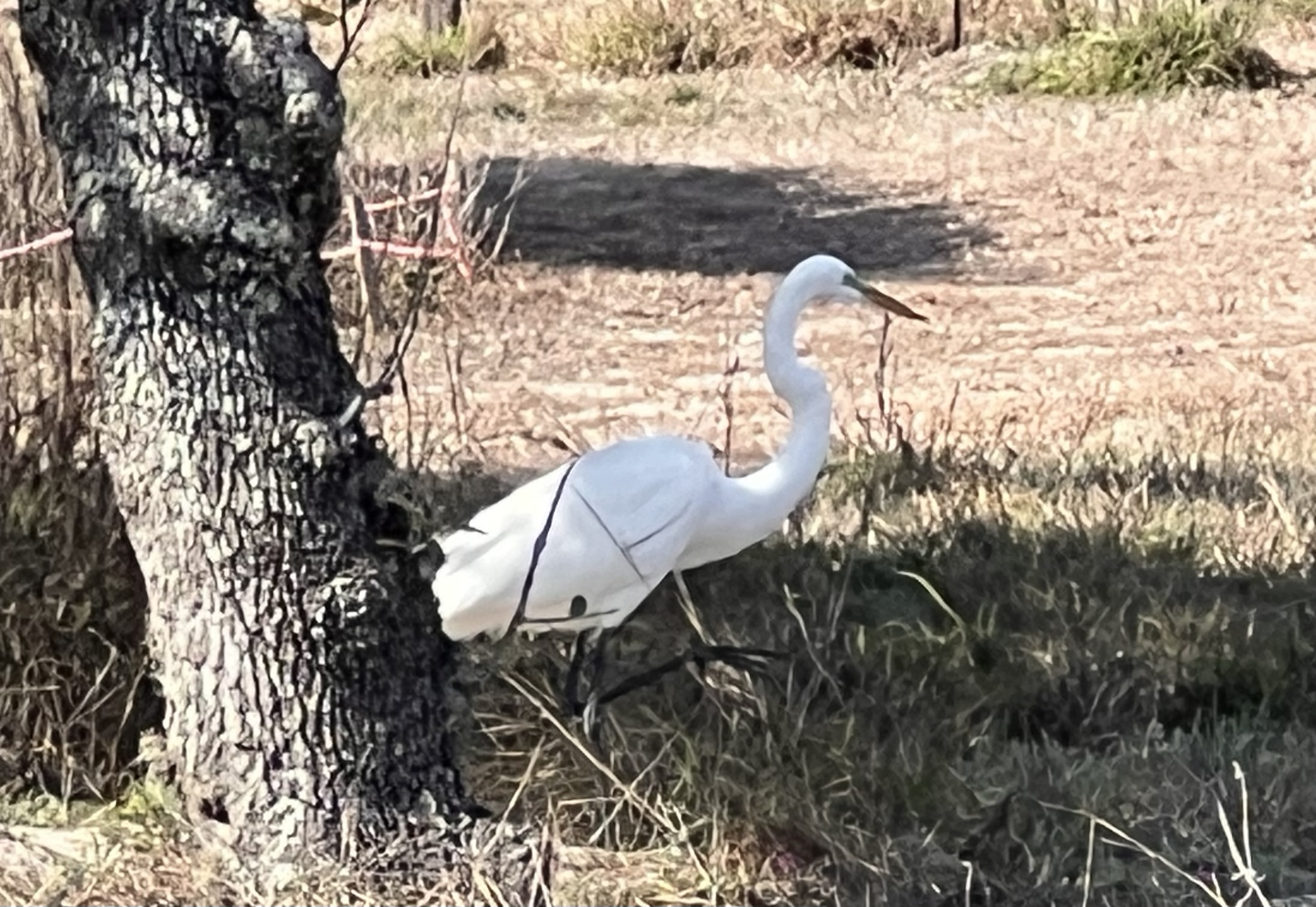
There were also herons and egrets galore, who hung out with Ibises.

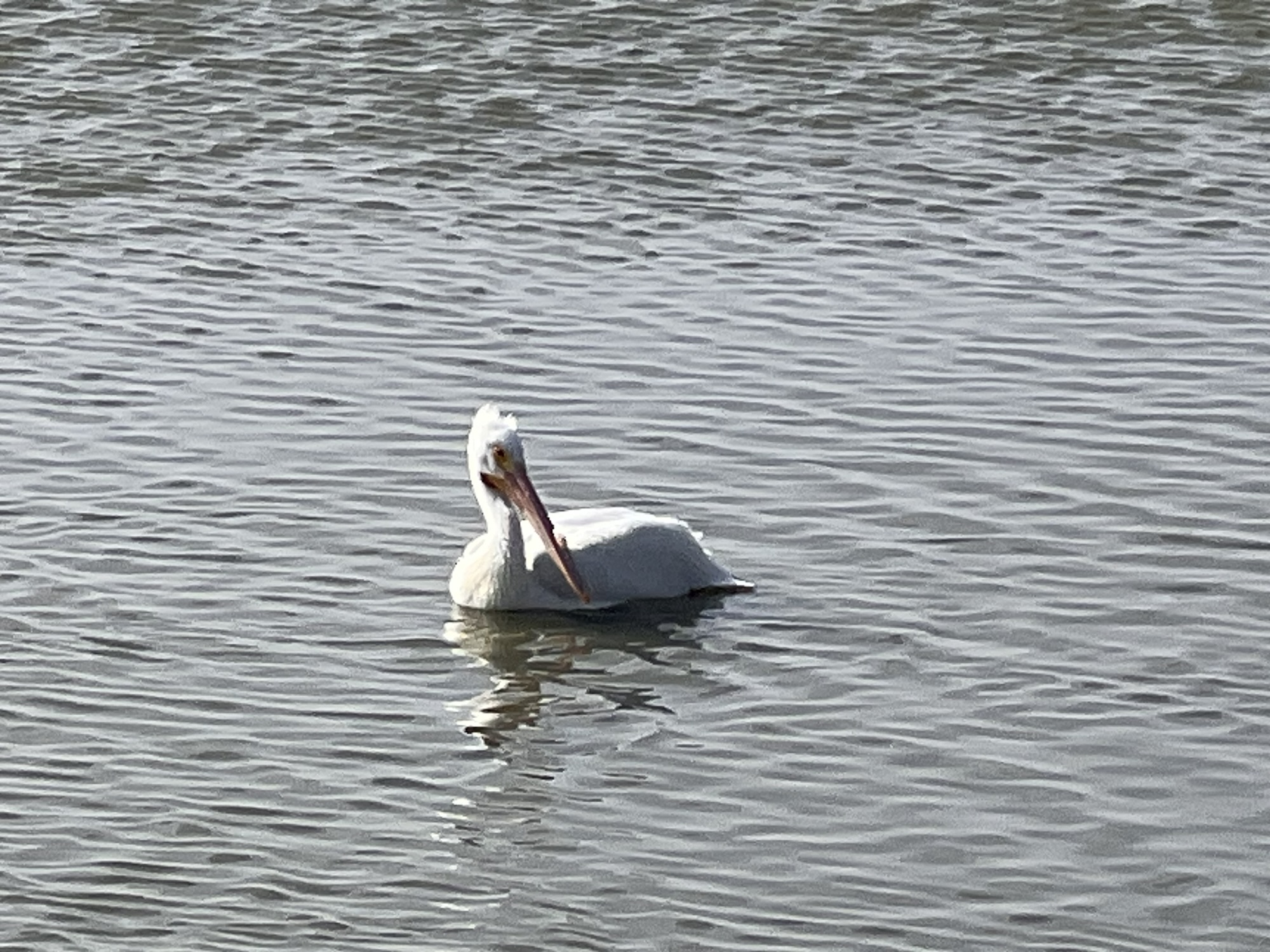
A flock of White Pelicans had camped out in the distance.

Pelicans

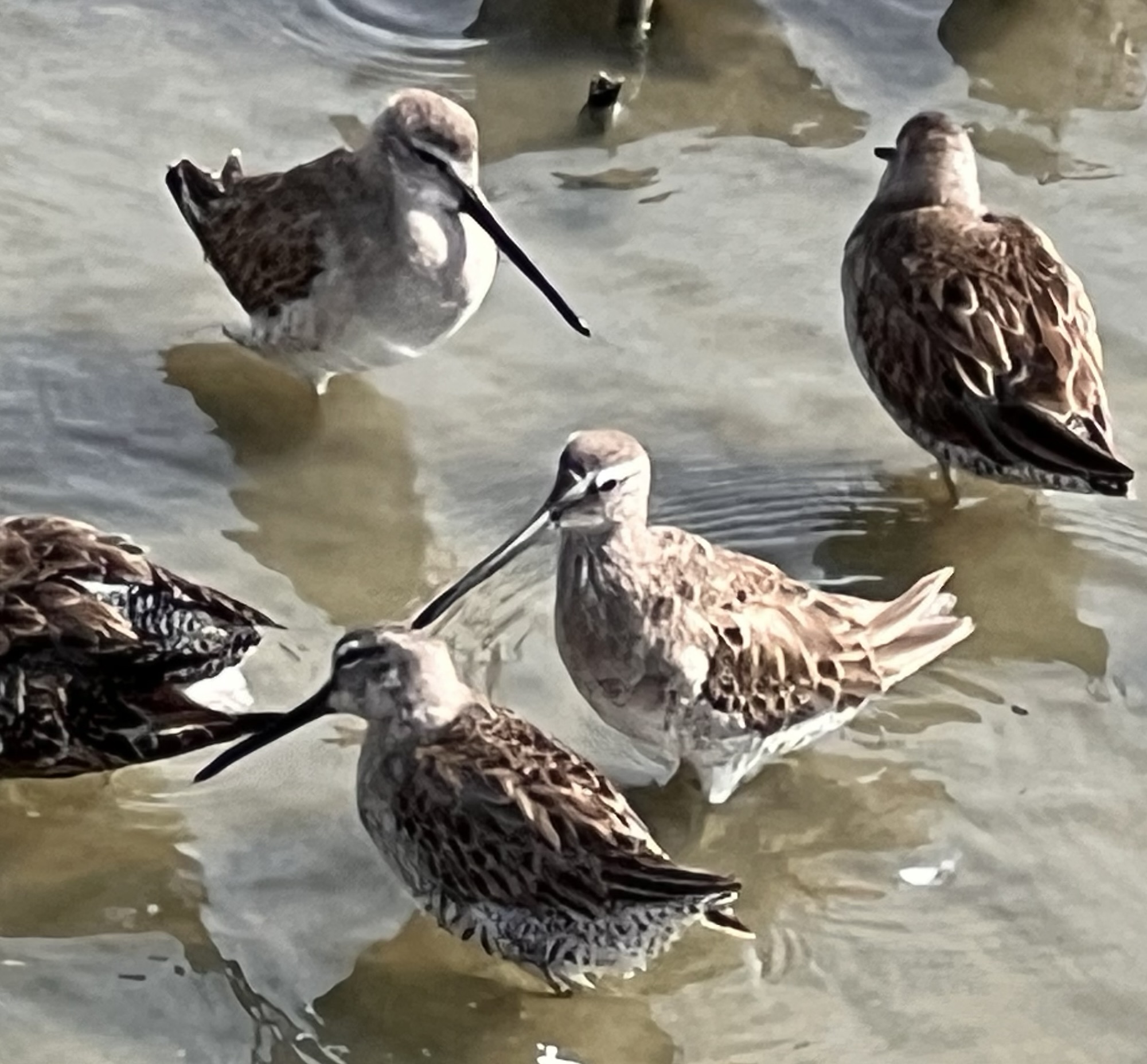
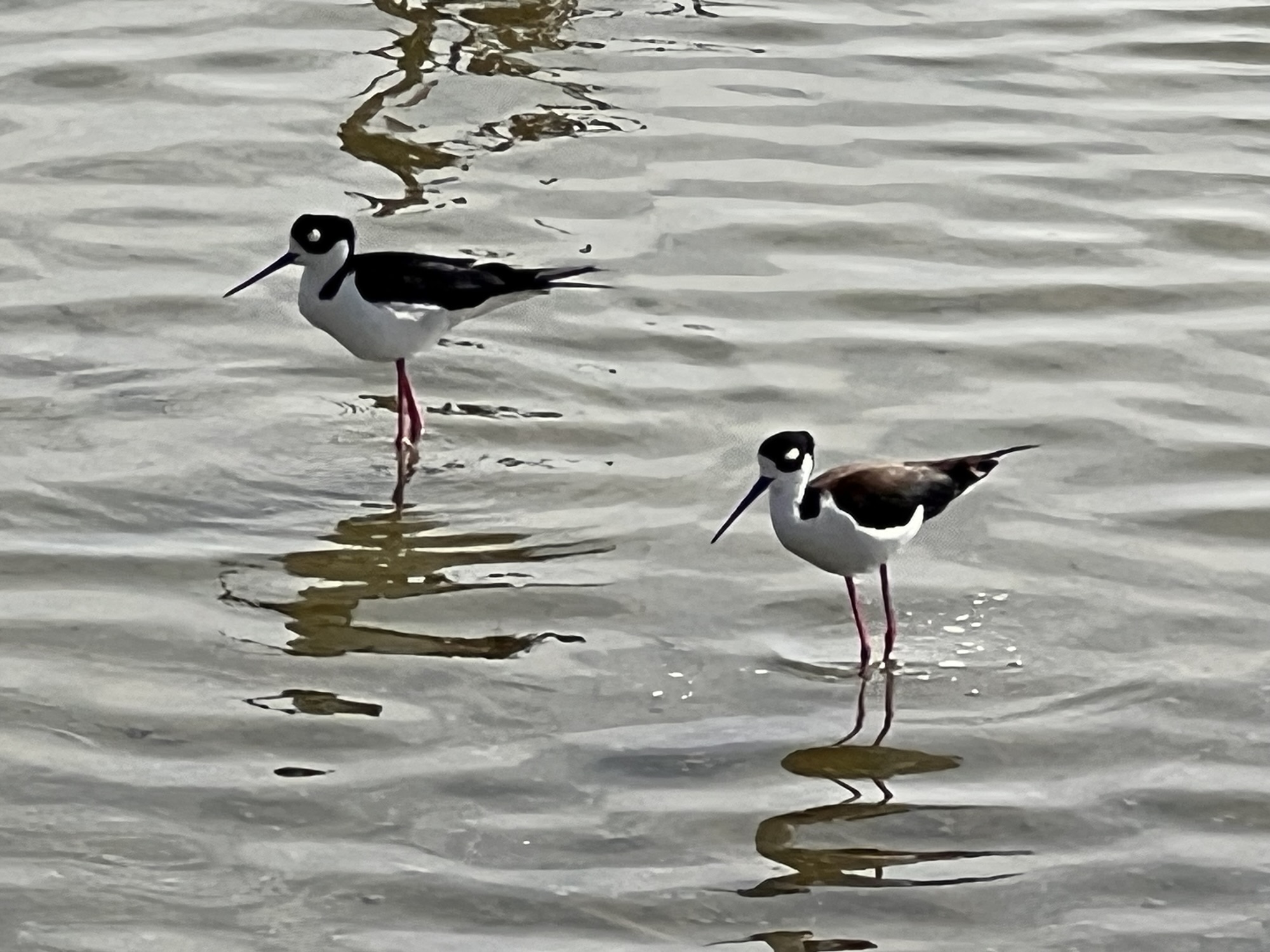
Also there were Long-billed Dowitchers, Black-necked Stilts, Coots, and Gallinules. So many birds. The stilts were hilarious and by far my favorite.

I’m too tired for more details, but we had a good day, especially when helping others or learning from more knowledgeable folks. We met many very cool people.

It was windy and I lost my hat.

Whooping Cranes Don’t Make You Cough

My silly dear friend Mike said they do. Maybe that’s why they want you to stay a respectful Dusty from them.

If you get too close they leave!

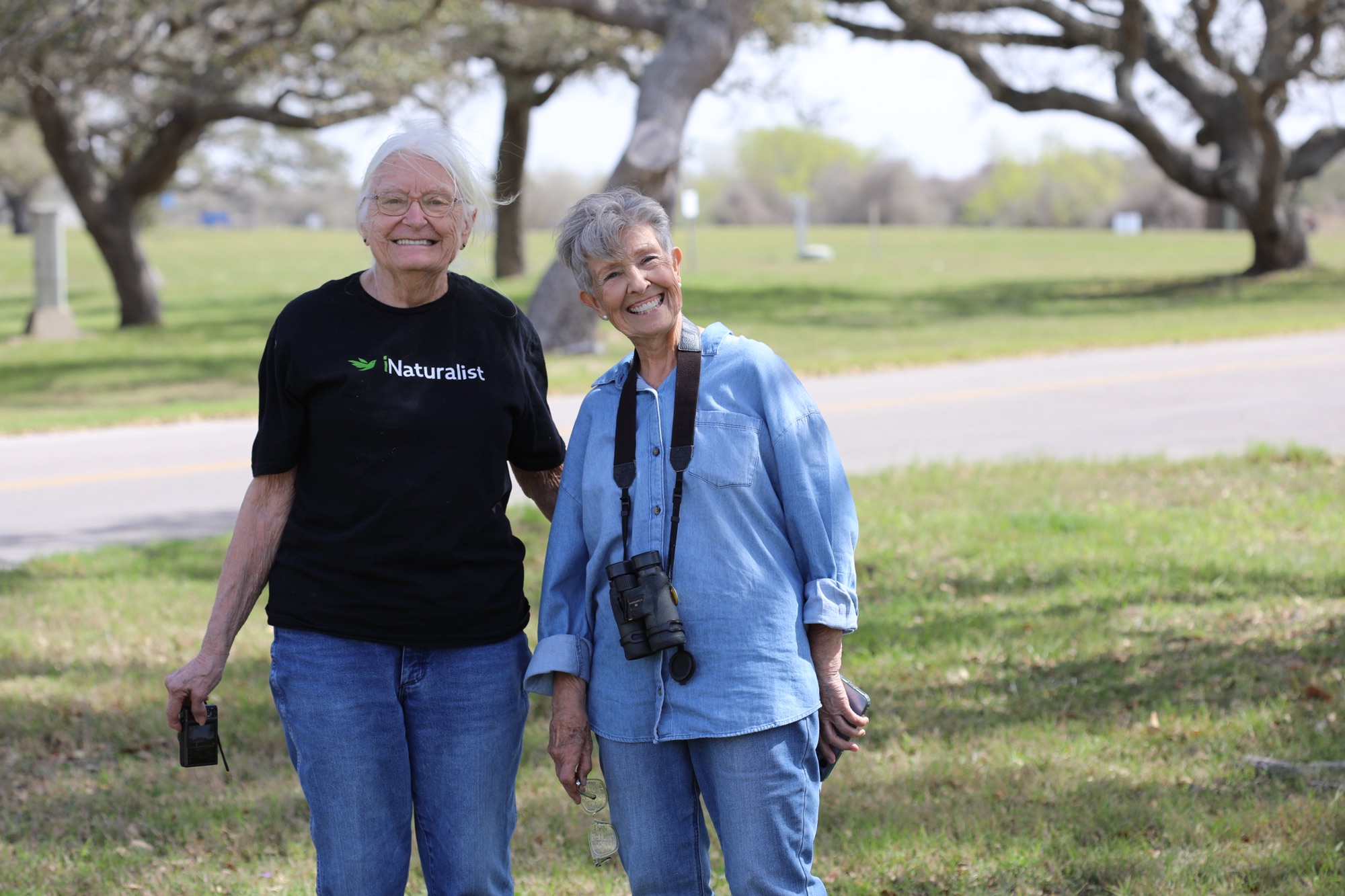
Yes, I saw my first Whooping Cranes today, as two Master Naturalist friends and I headed to Rockport to see them. On the way down we “only” stopped three times to look at plants for iNaturalist. That was easier because there were still few wildflowers.

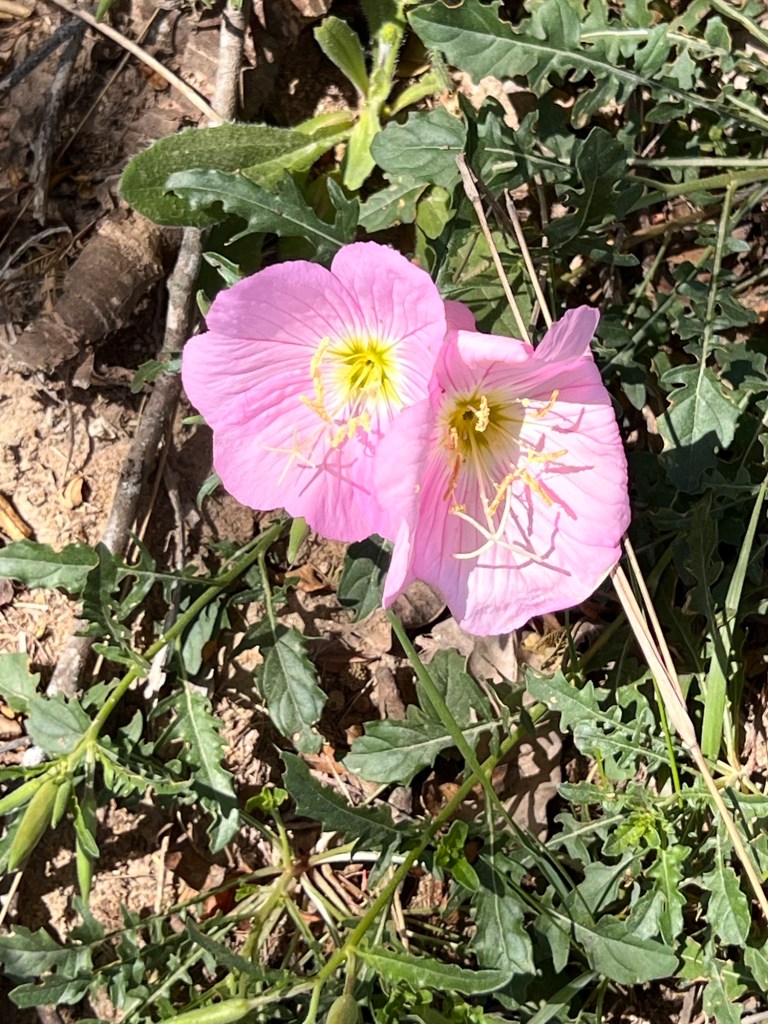
We did see a few pink evening primroses.

We only nearly lost our lives once when we were trying to turn left and a car didn’t notice I was stopped and signaling. I’m glad the other ladies couldn’t see in the rear-view mirror what I saw. But hey, flowers were seen.

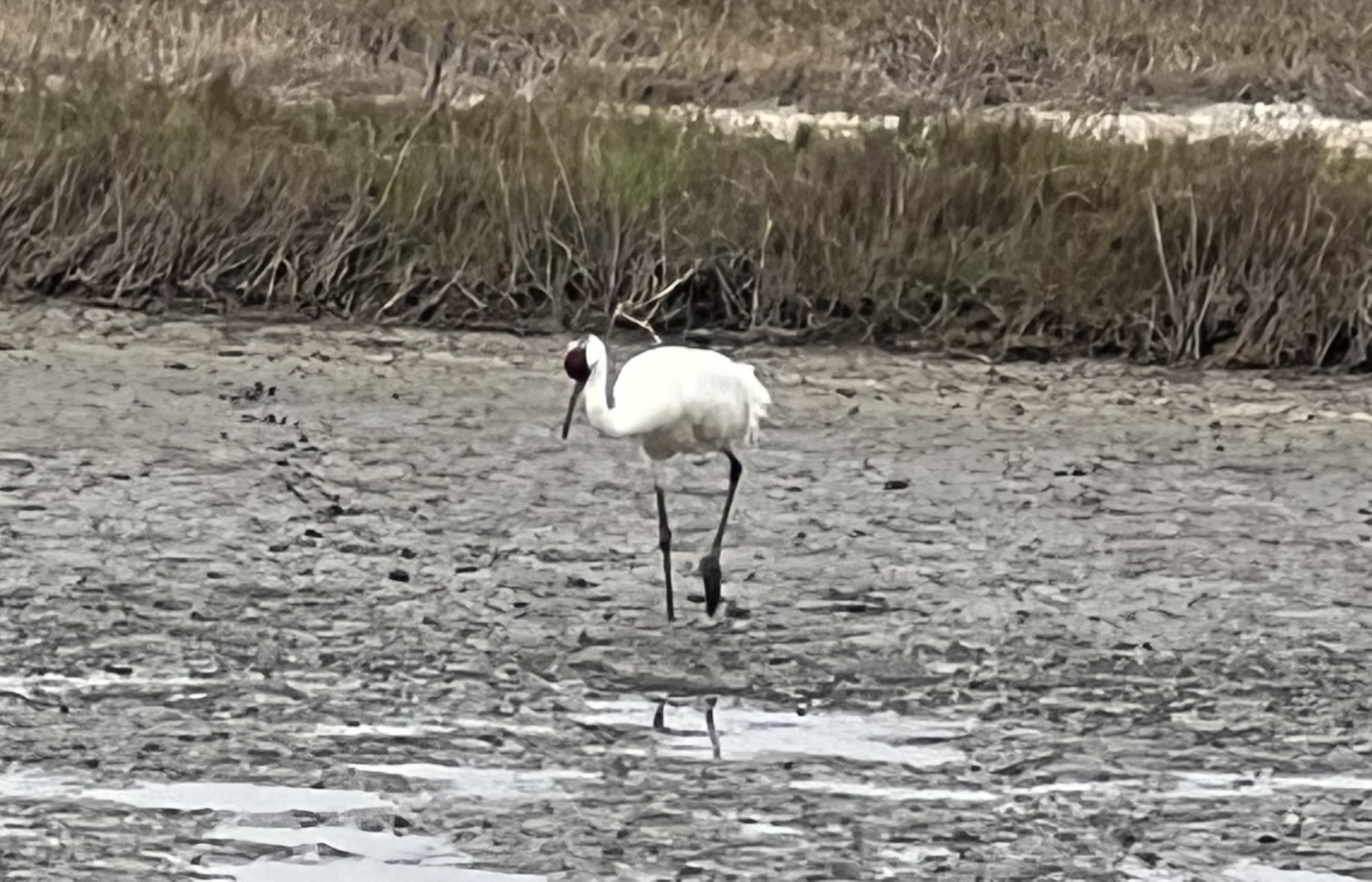
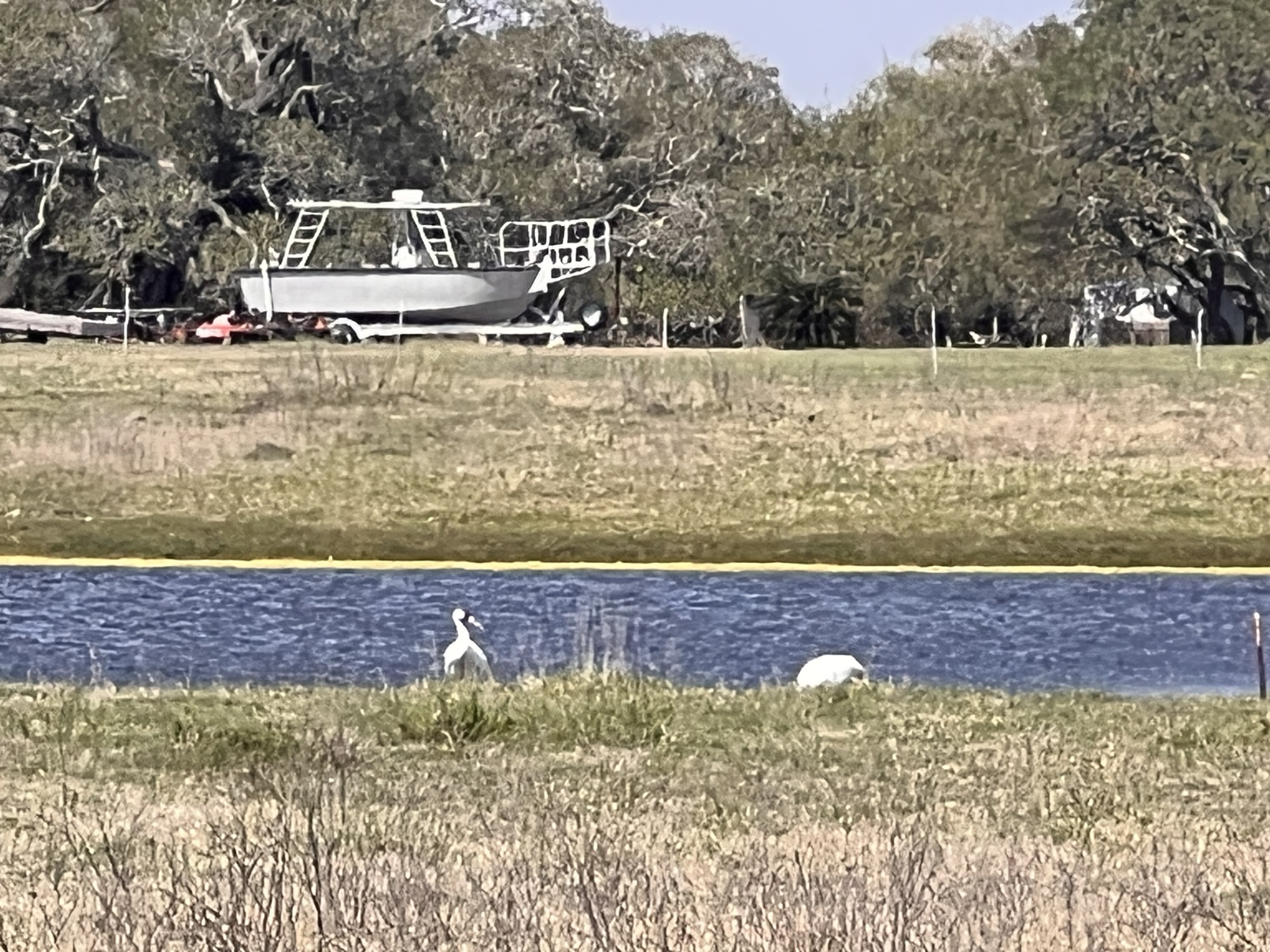
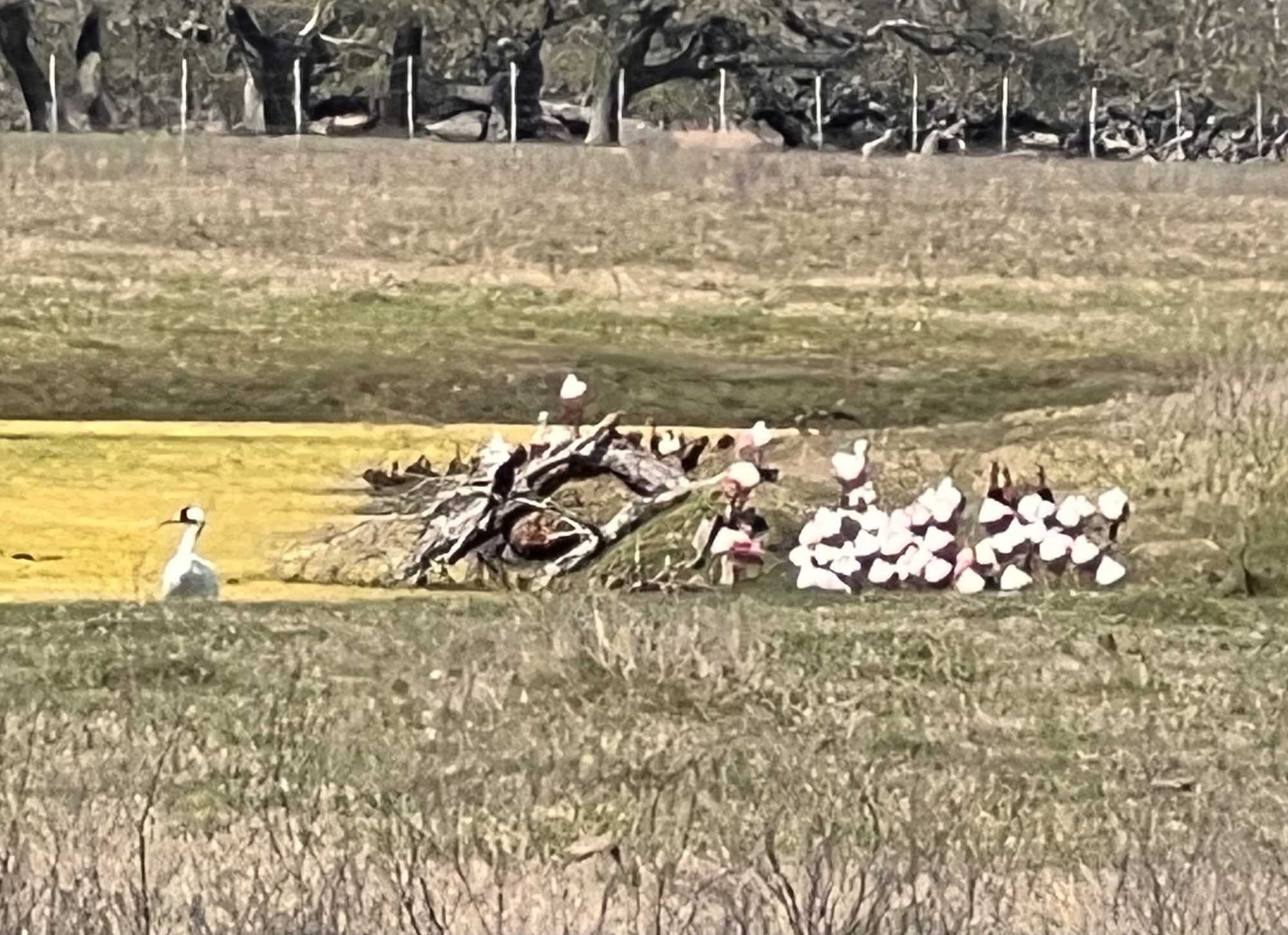
We visited Goose Island to find the Whooping Cranes, which were hanging out with Roseate Spoonbills and Black-bellied Whistling Ducks. There was even a juvenile. We hope to see more tomorrow, but this was cool.

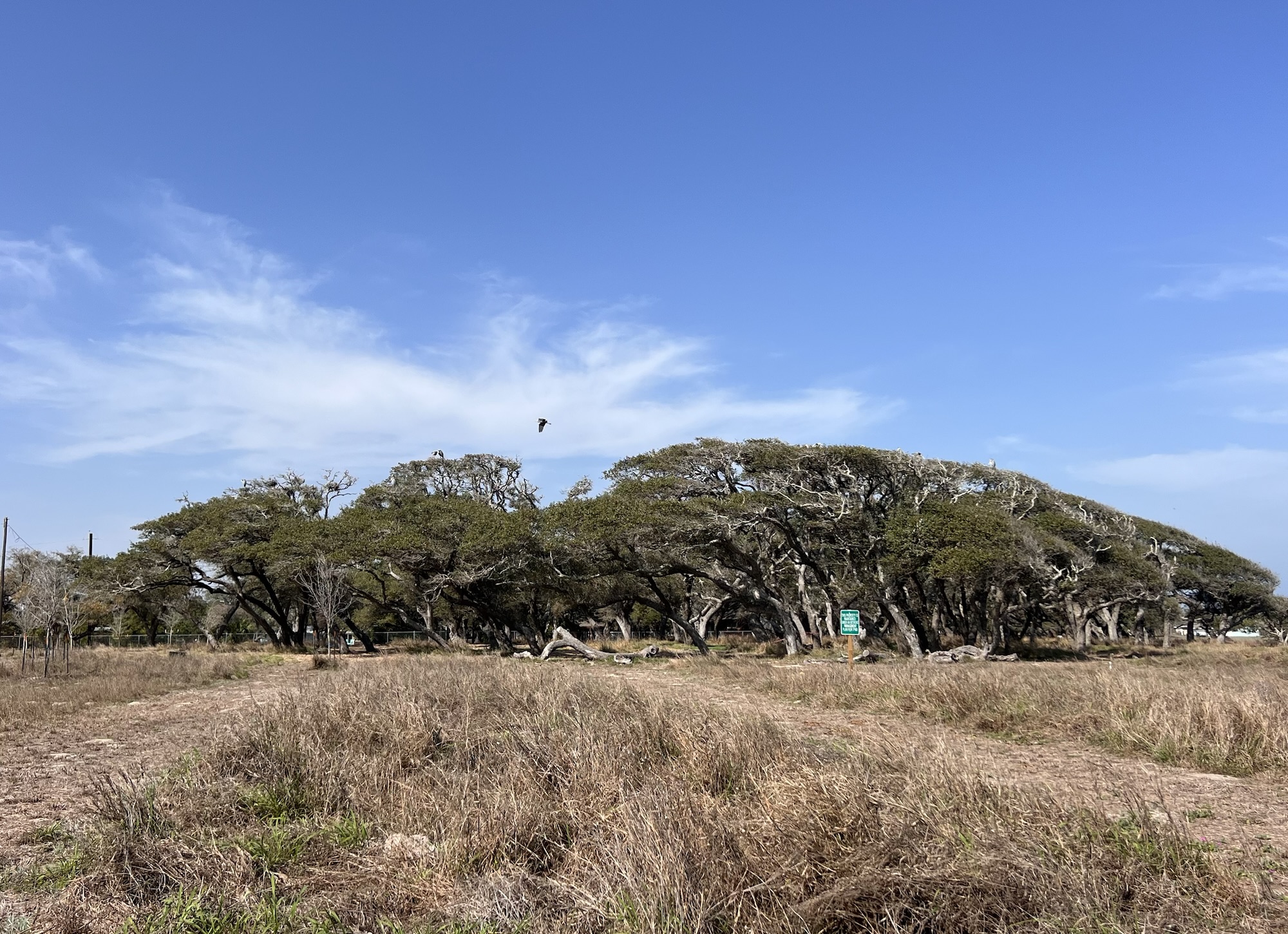
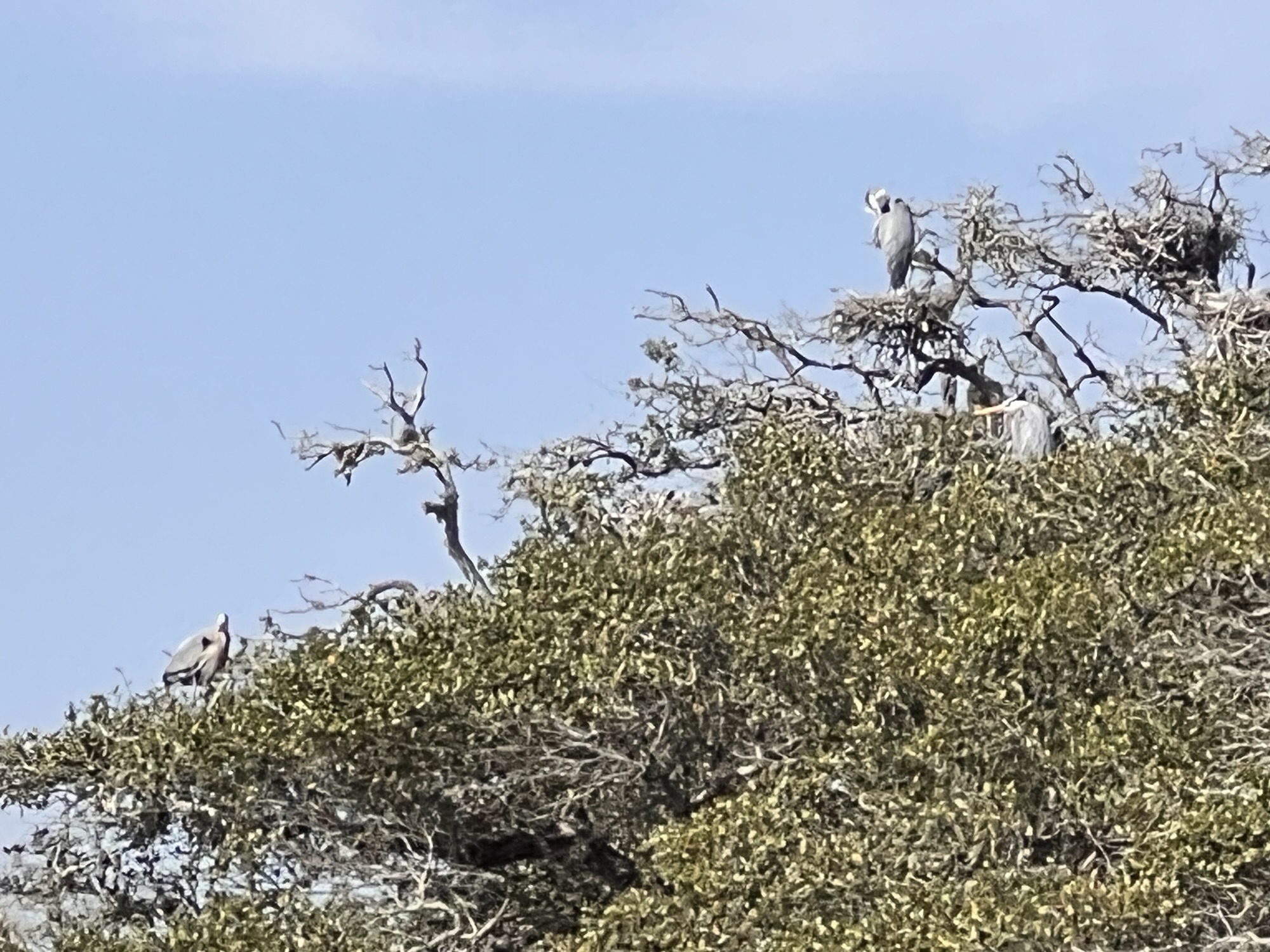
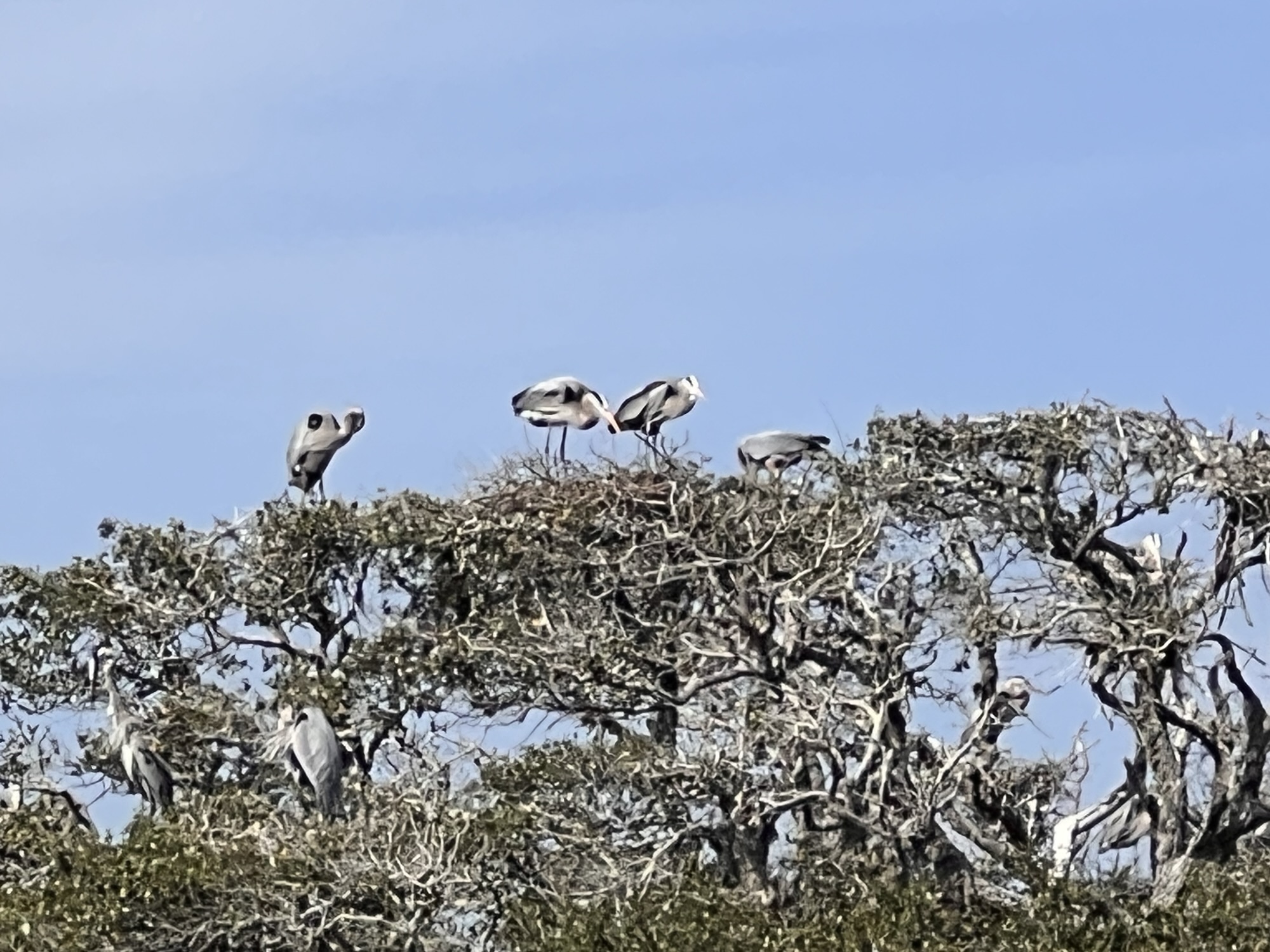
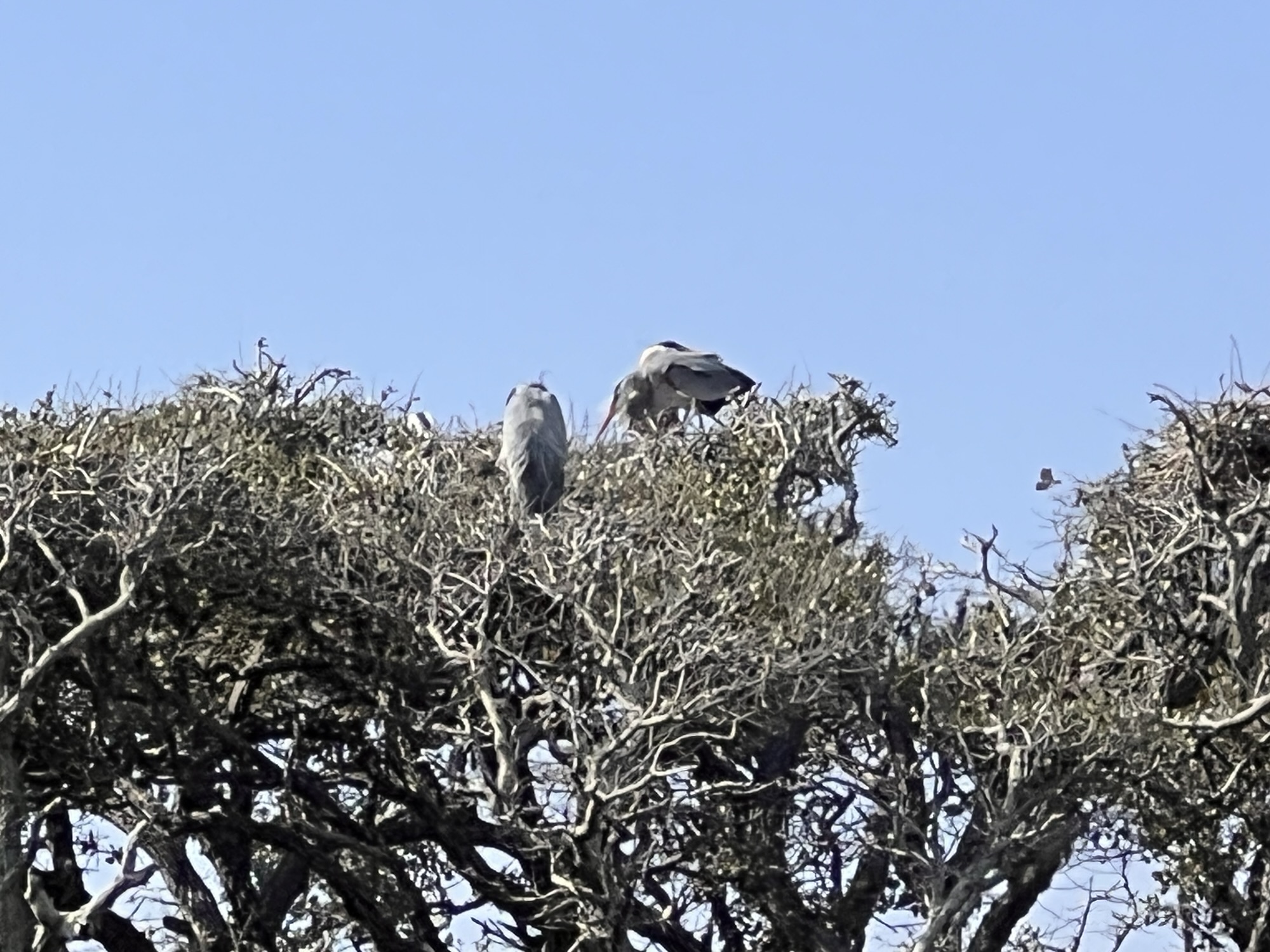
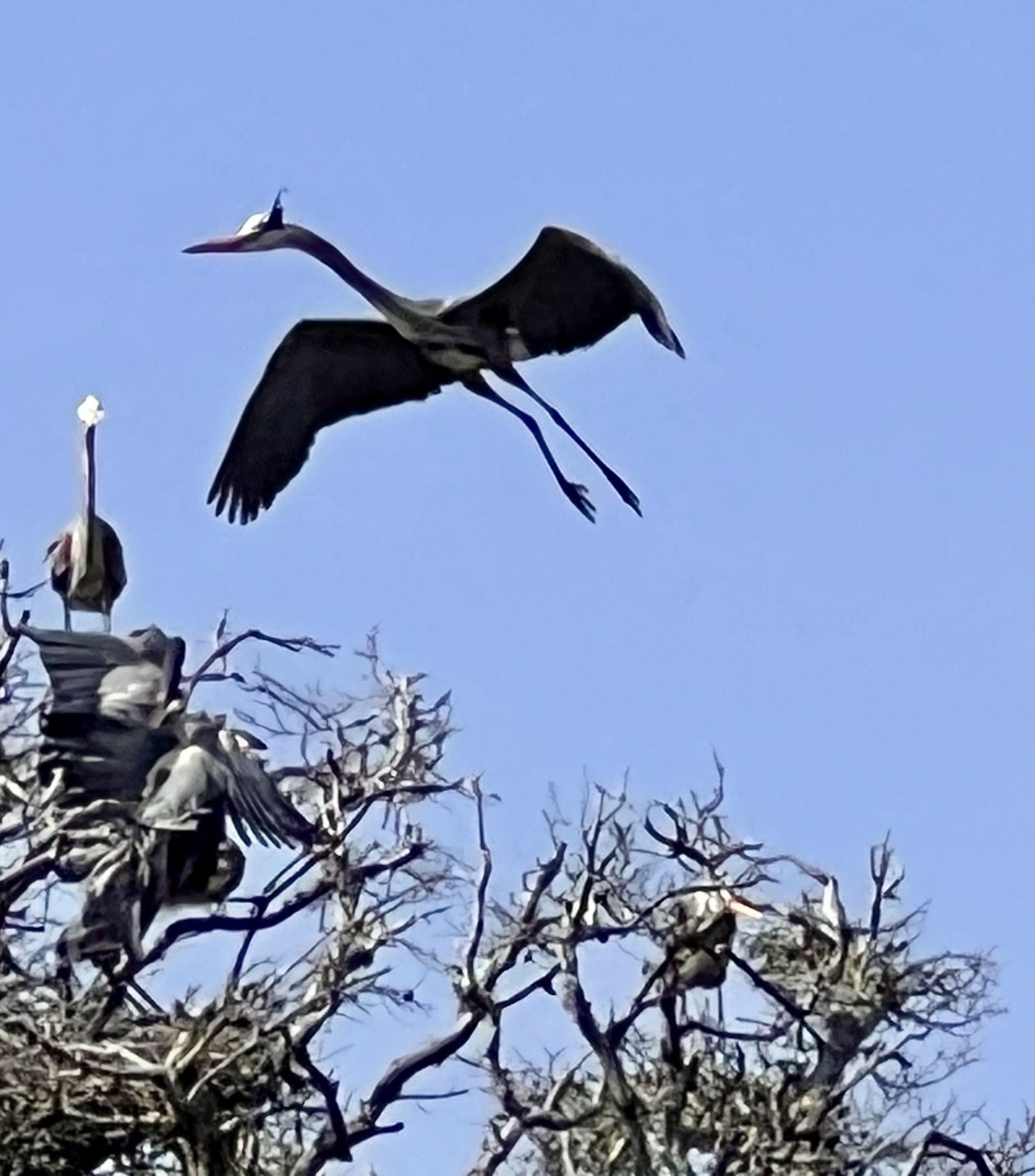
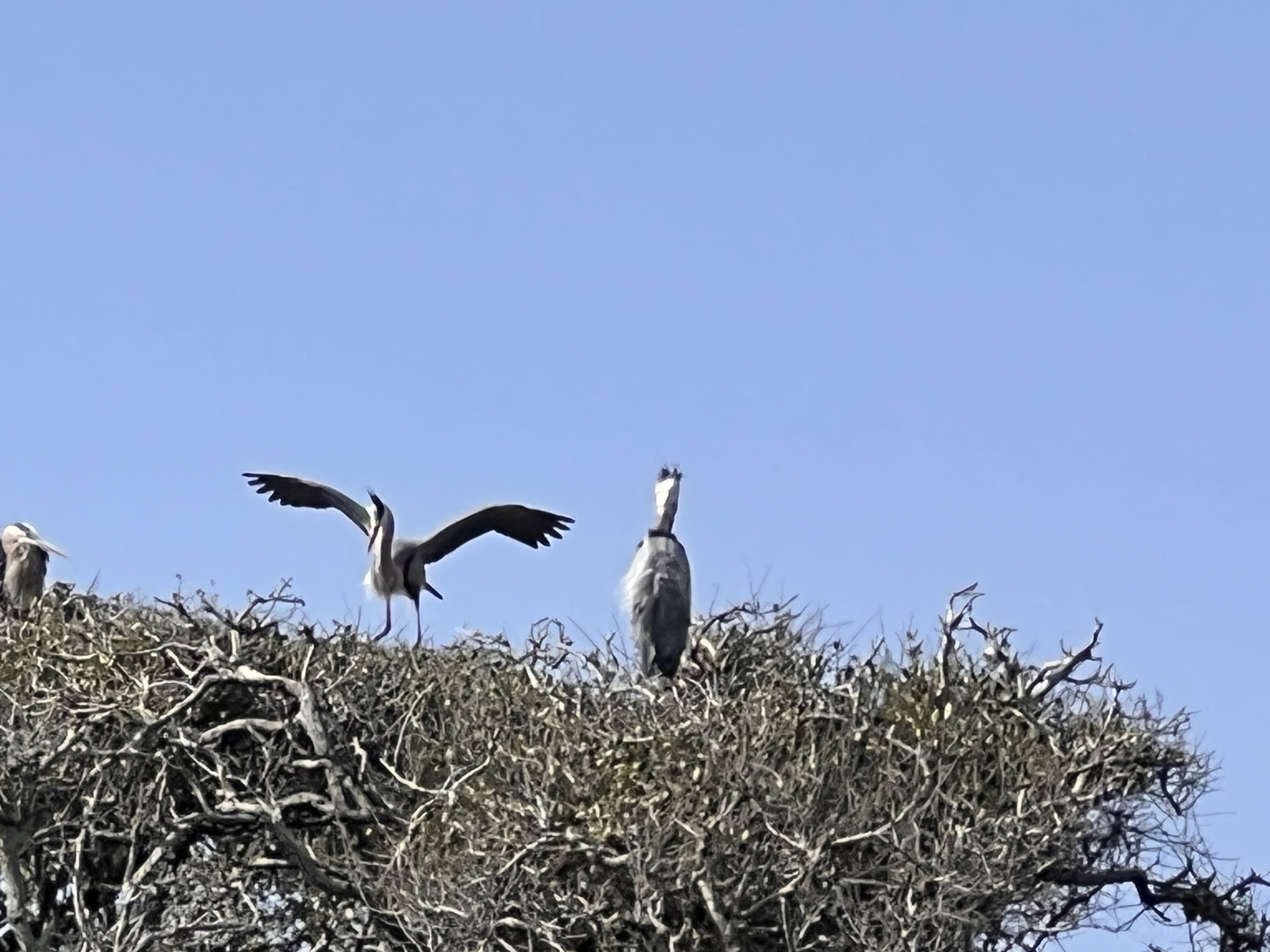
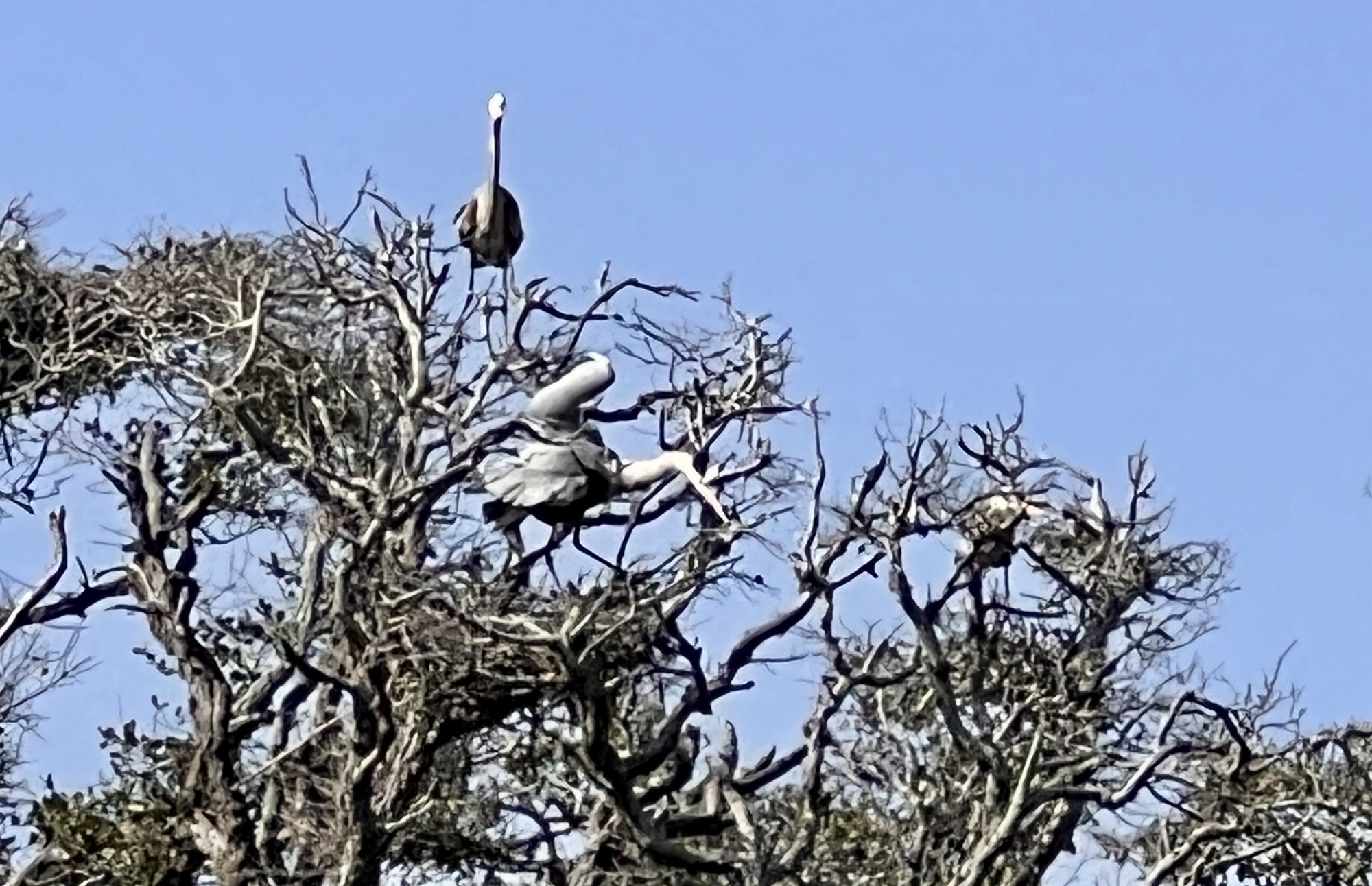
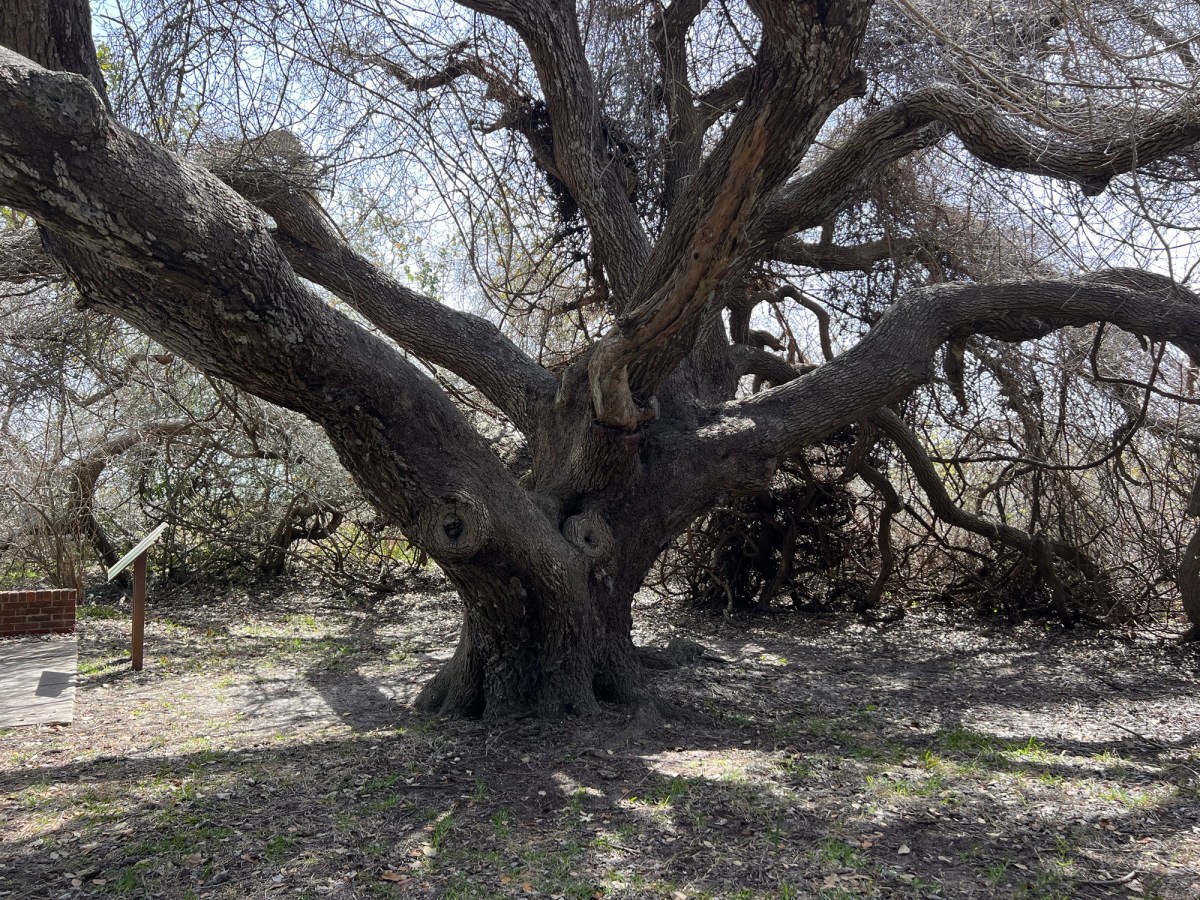
Even cooler to me was the incredible heron rookery we visited next. Oh my gosh, there were so many beautiful breeding Great Blue Herons! They were in beautiful windswept oaks.

A few herons

I saw males bringing sticks to females, who would add them to their nests. They were very affectionate, rubbing necks and clicking one bill over another. I got to see mating and squabbling, too. This was truly awe-inspiring for me.

Later we visited another couple of places looking for birds, but mostly saw scenery.

Everyone else was in bed before 9 pm. I’m still here. More fun tomorrow.

Enthusiastic about Enthusiasts

Who are your favorite people to be around?

Great question, prompt writers! I have a response.

Tonight I attended the Master Naturalist training class on birds for this year. I was supposed to have a horse lesson, but it was canceled due to the nasty cold and winds. Thus, I did my other option and I’m glad I did.

Suna learned how we birds breathe and what our “wishbones” do.

The speaker was brilliant, a gifted teacher and master birder. Those in our group who feel like we know birds were learning so many details we didn’t want it to stop! (Okay, probably my friend Ann knew most of the stuff.) I’m very glad to have spent four hours learning from him.

He mentioned that woodpeckers have fat around their brains to protect them from all that pecking action.

What struck me as relevant to today’s topic was that he talked about how great it is to love birds, because anyone you meet will have a bird story. Birds give strangers a common topic to start out on (or stay with). It rang so true for me as I think back on how many interesting people I’ve met while birding on camping trips. I guess my favorite people are those with a passion to share.

We learned shore birds aren’t usually territorial. They have plenty to eat.

But it’s not just birds. I find horses often lead to great conversations, and when you meet a fellow equestrian, you practically have to force yourselves to stop talking. I have to also love horse people. Heck. Enthusiasts of all kinds can be most enthusiastic!

I’m fascinating. Don’t you forget it.

Finding common ground may save us if we make the effort. We all have things in common if we take the time to look for them.

I bet you have a bird story or two you could share with me!

Carnivorous Plants Found

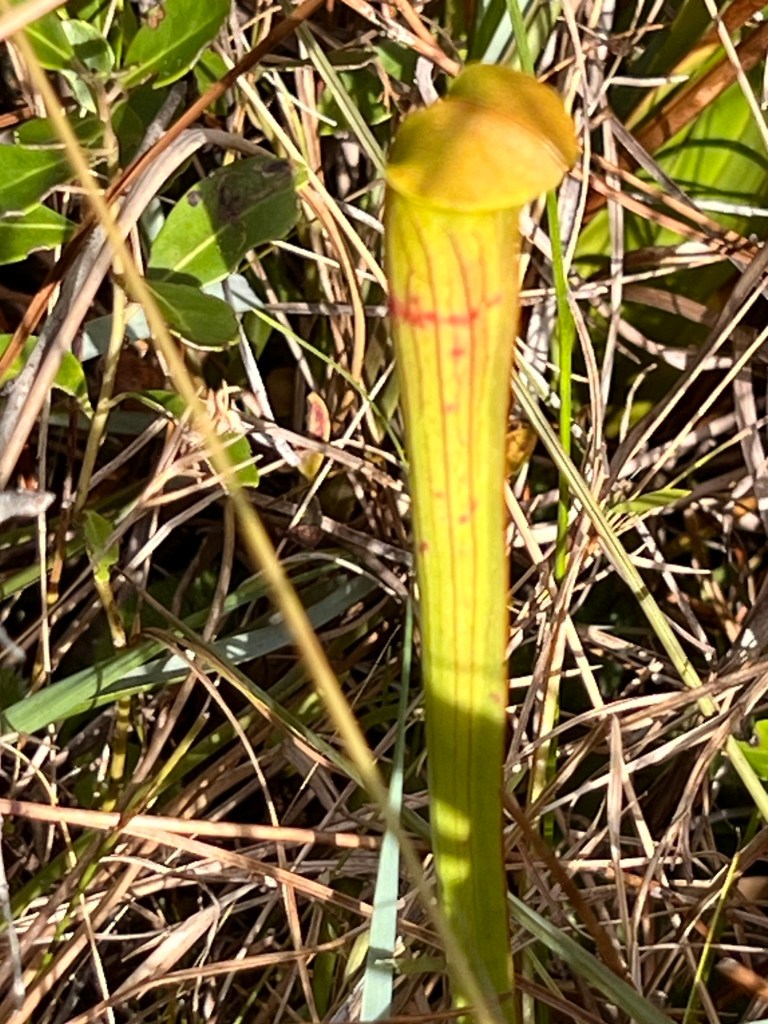
My whole life I have enjoyed those nature films where they show those fascinating plants that consume insects. In fact, I just read an article about them, I think in Texas Parks and Wildlife No, not there; it was a television show. I learned that they eat insects because the places where they grow, like boggy areas, are low in nitrogen or other nutrients. As much as I was interested in them, I’d never seen any in person before (haven’t traveled to the right Texas state park yet).

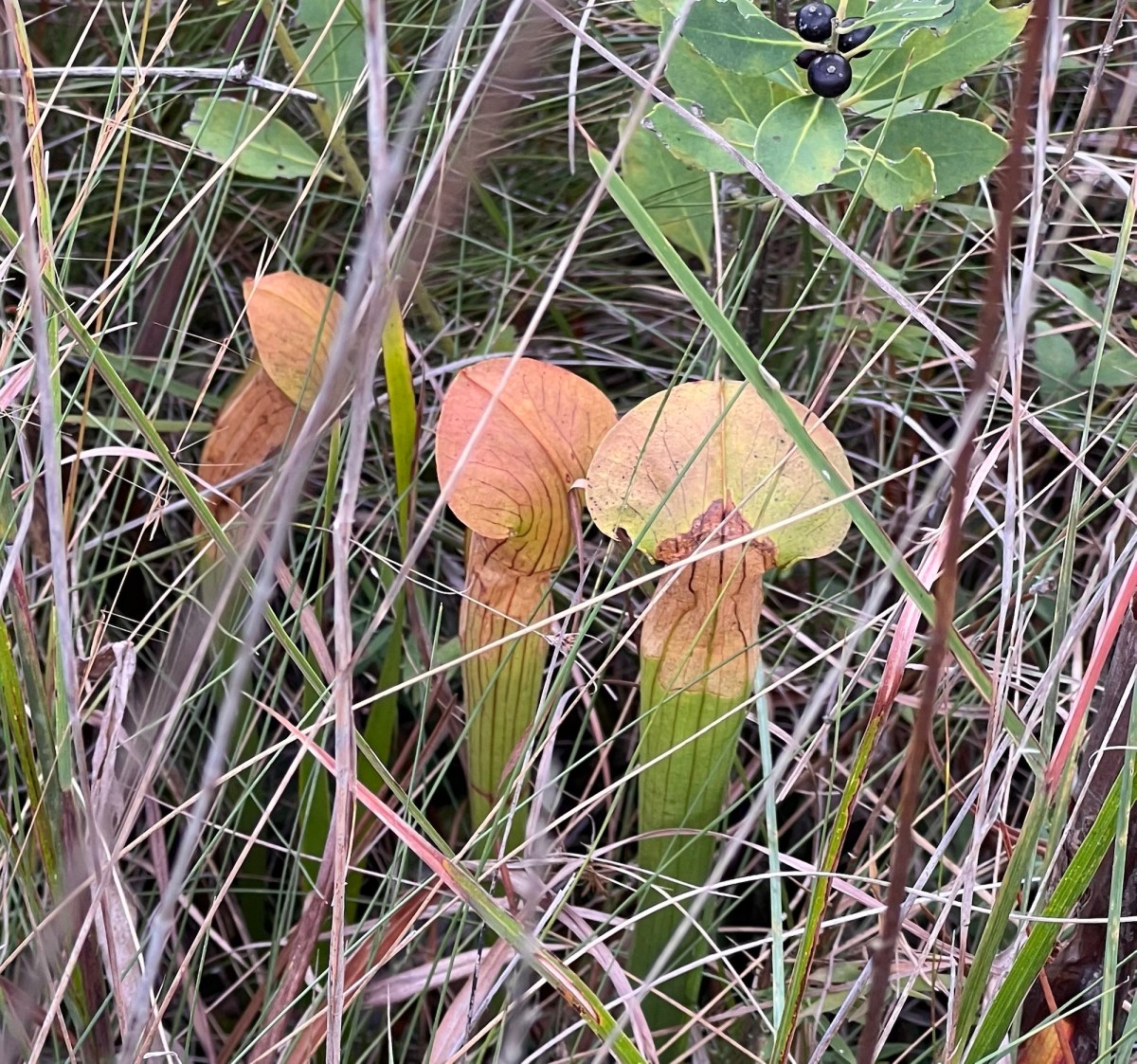
A pitcher plant

Sure enough, I found some, in a boggy area today, twice! It’s like we planned it.

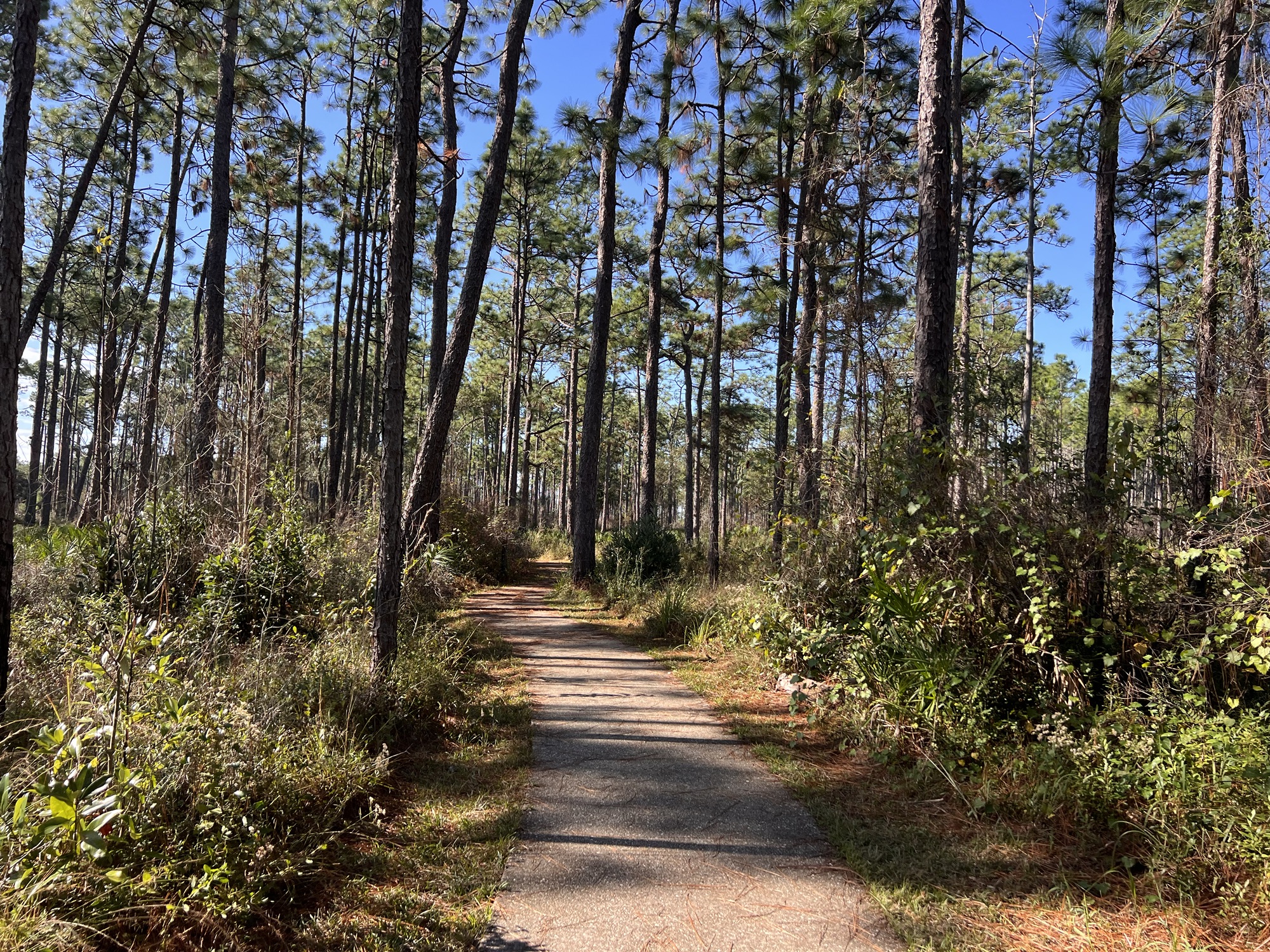
Pine bogs are beautiful.

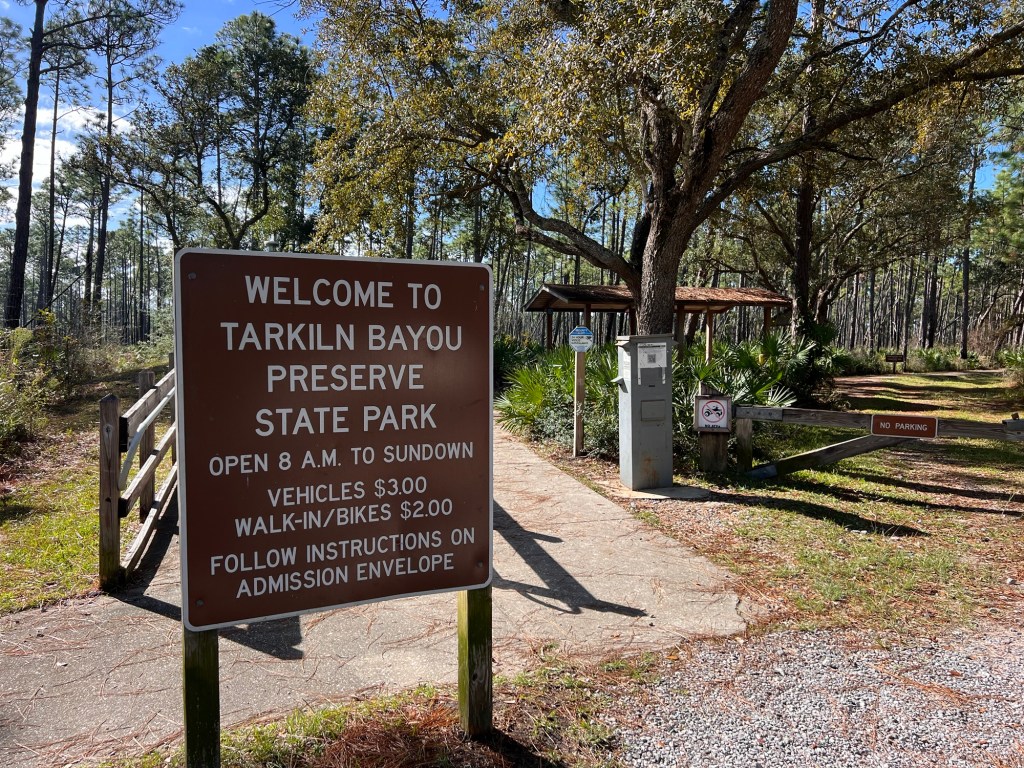
You see, today we had some extra time, because this is our short driving day. Lee suggested we find some places to look at nature. I found a state park in western Florida that said it had a boardwalk that had views of pitcher plants. They’re carnivorous! So we headed off through some beautiful coastal scenery to the well hidden Tarkiln Bayou Preserve State Park.

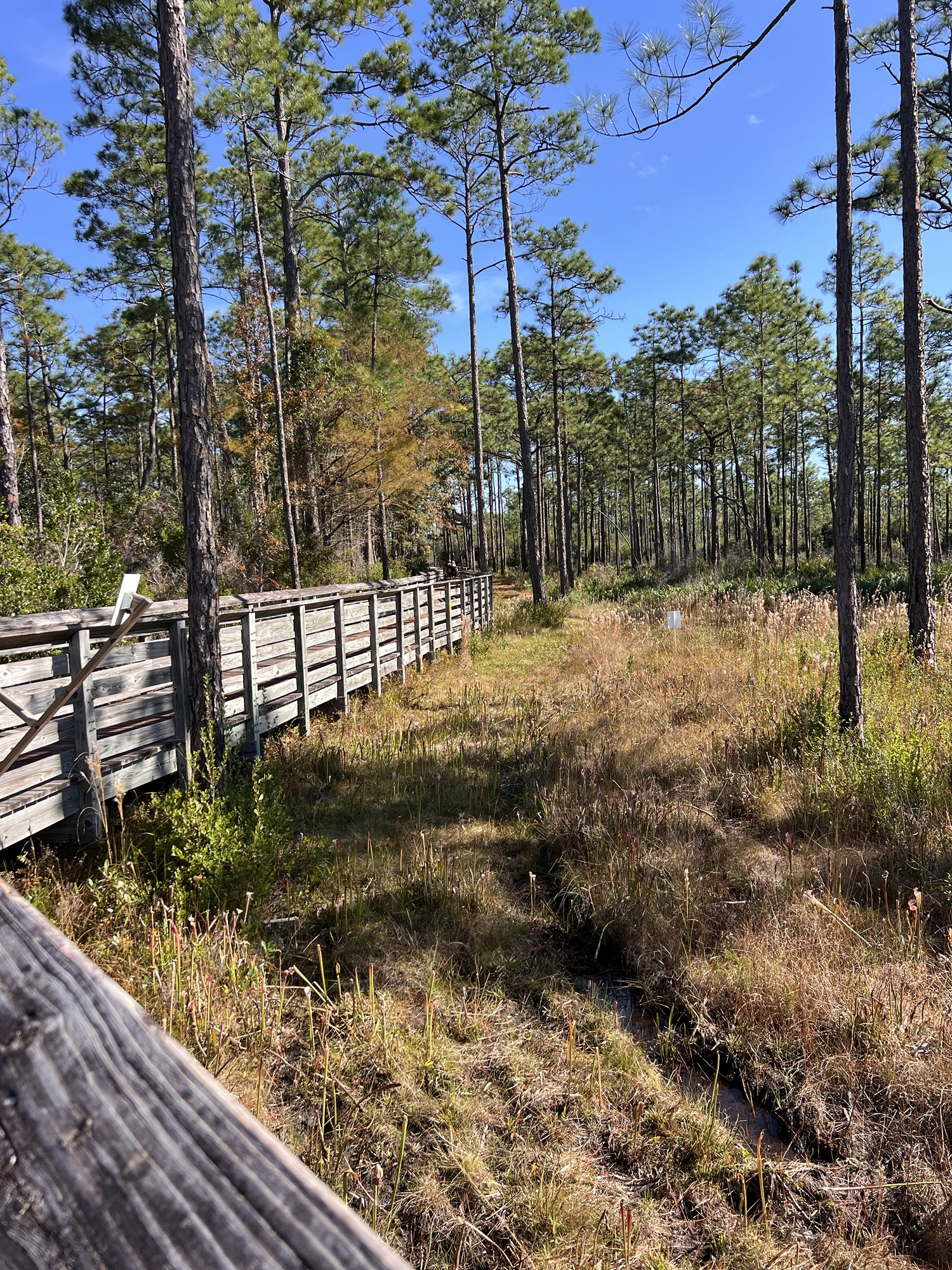
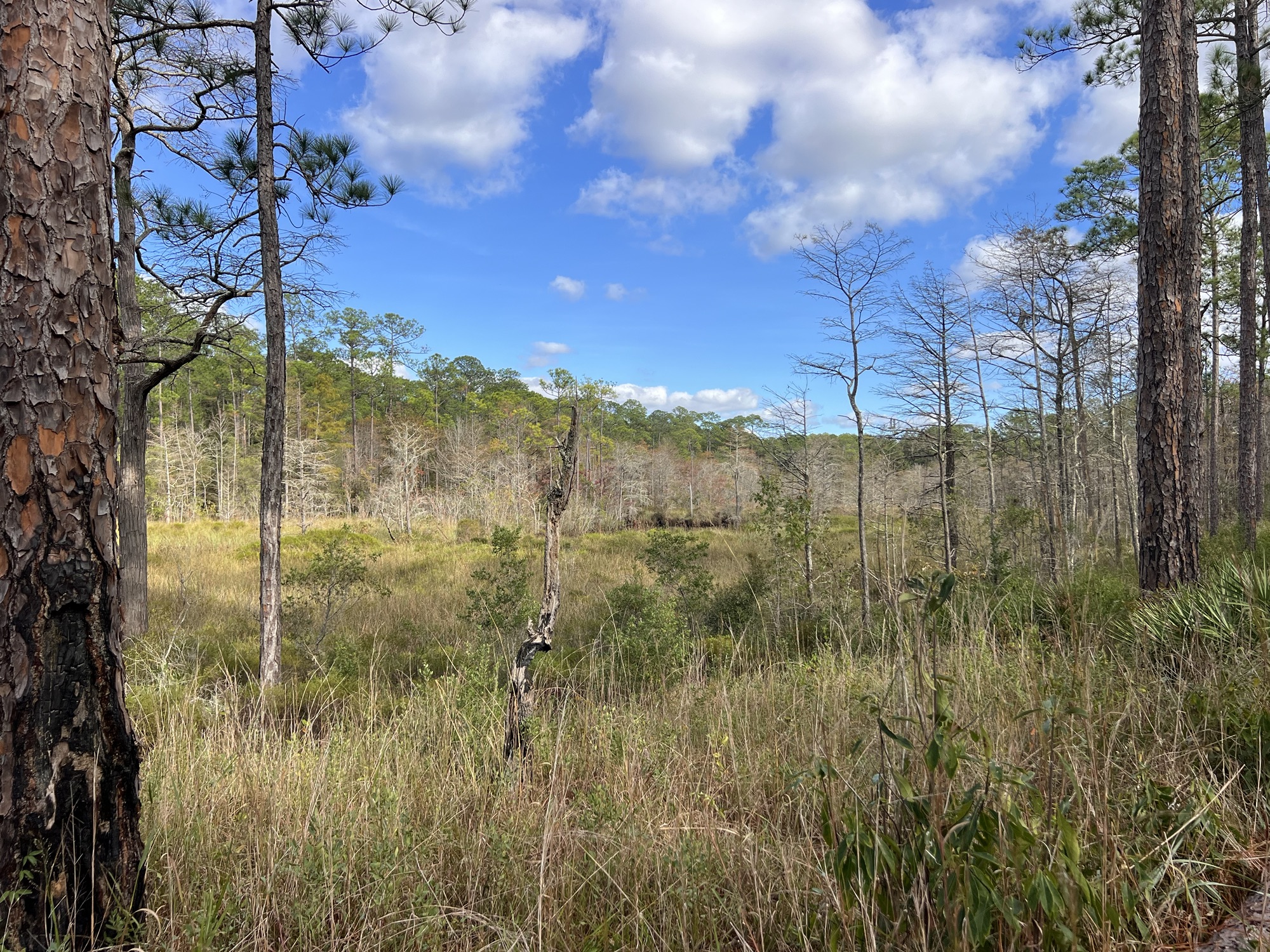
It’s in a beautiful wet pine forest with lots of wet areas leading to the serene and quiet bayou.

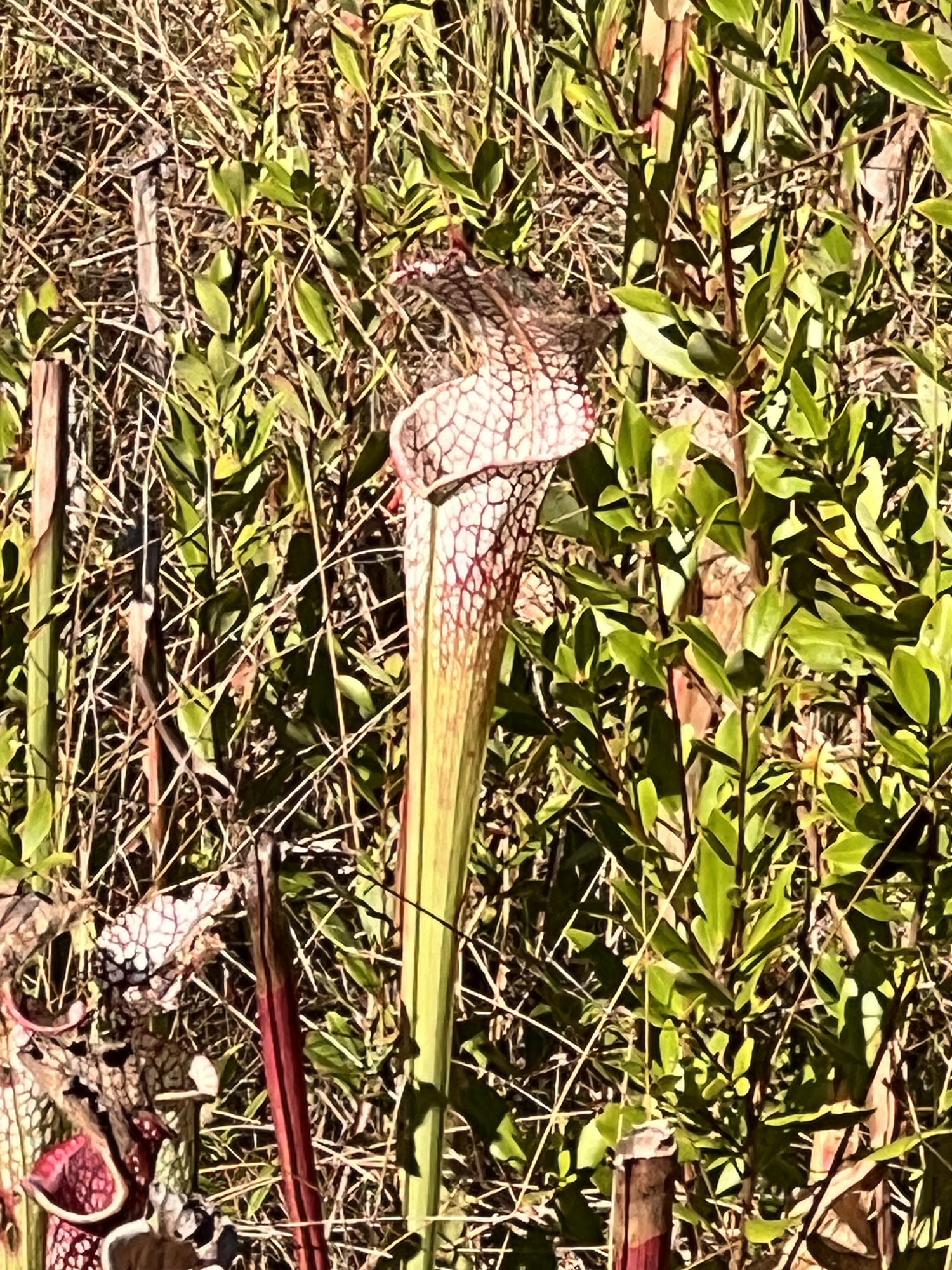
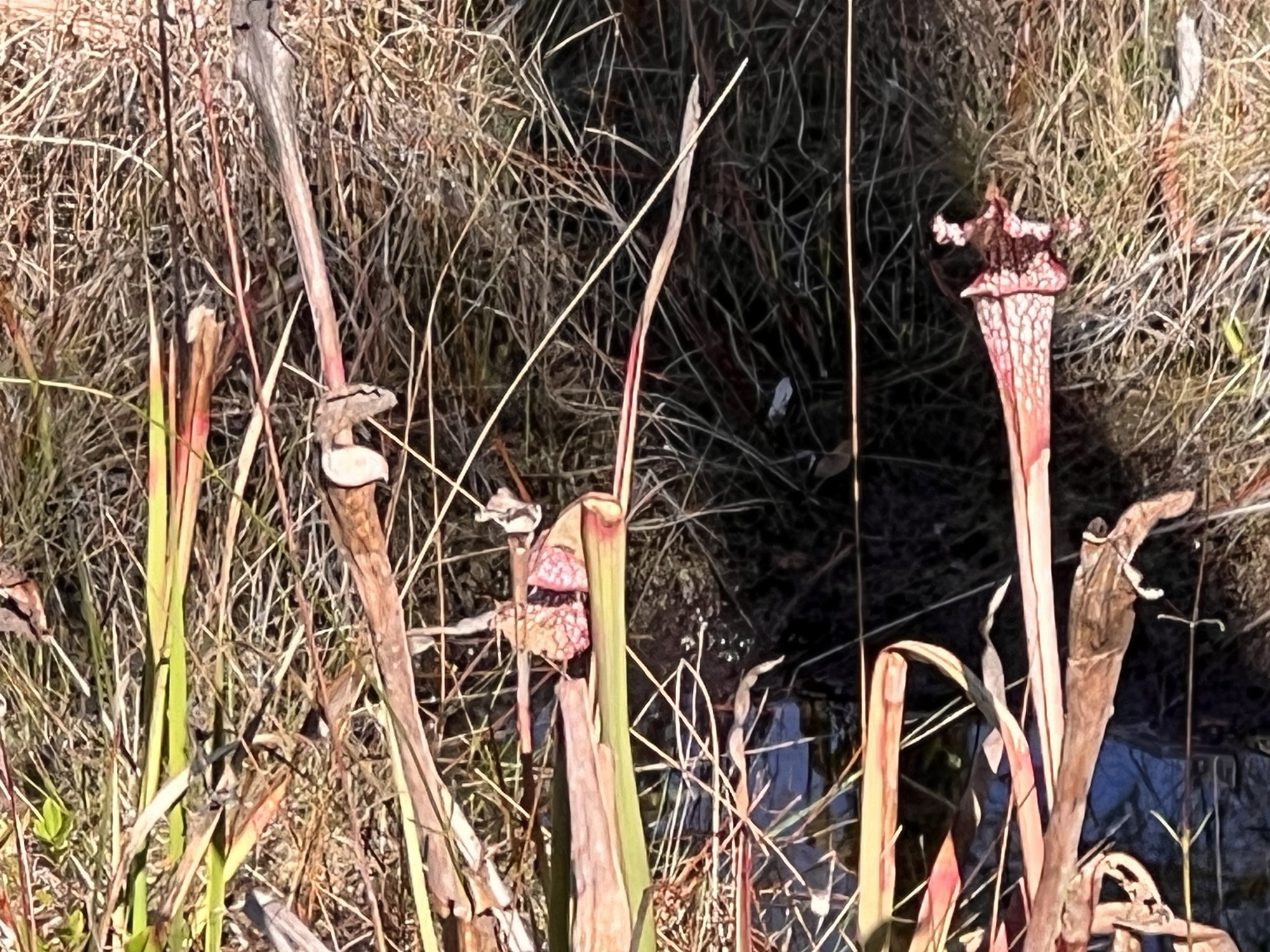
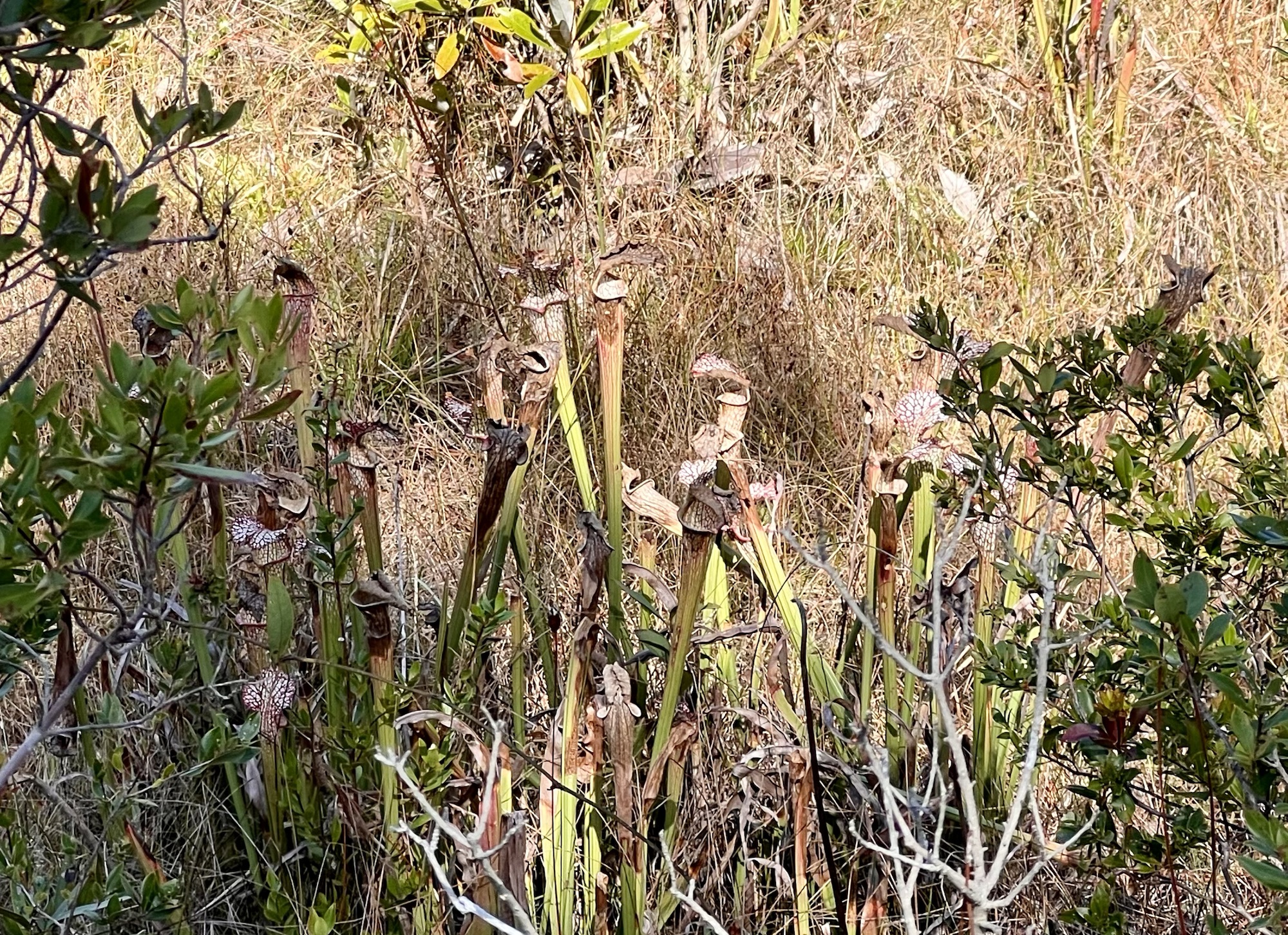
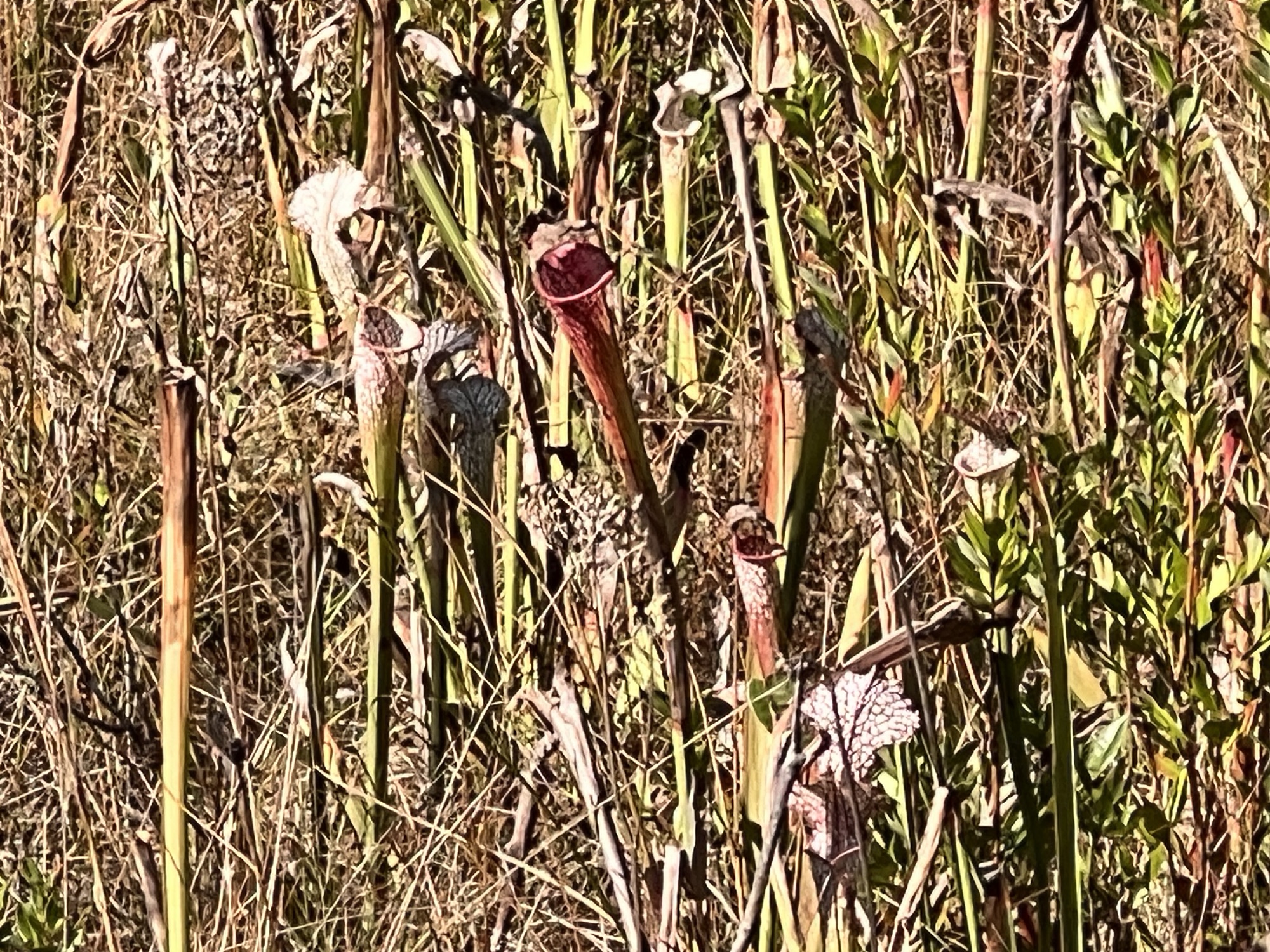
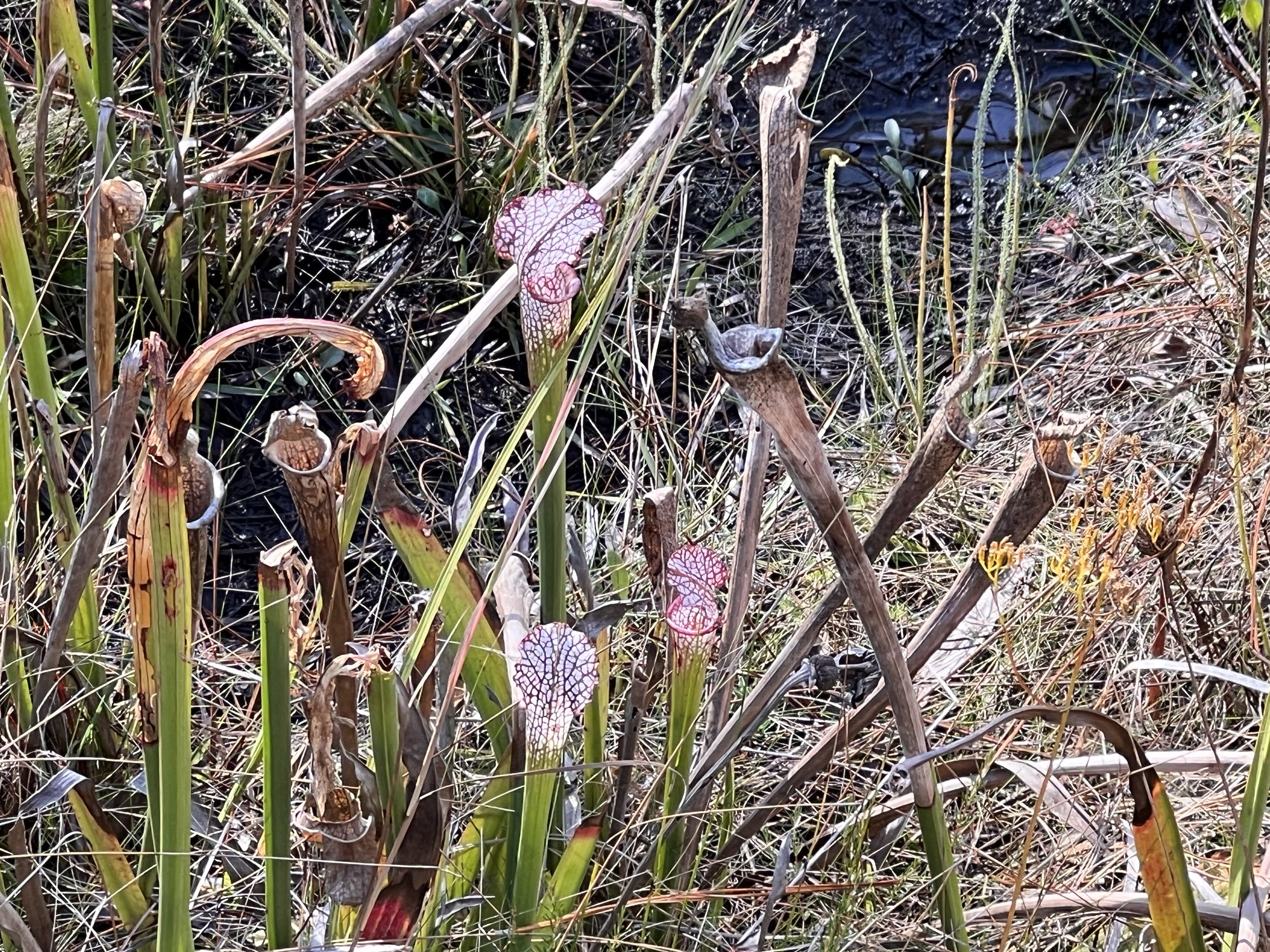
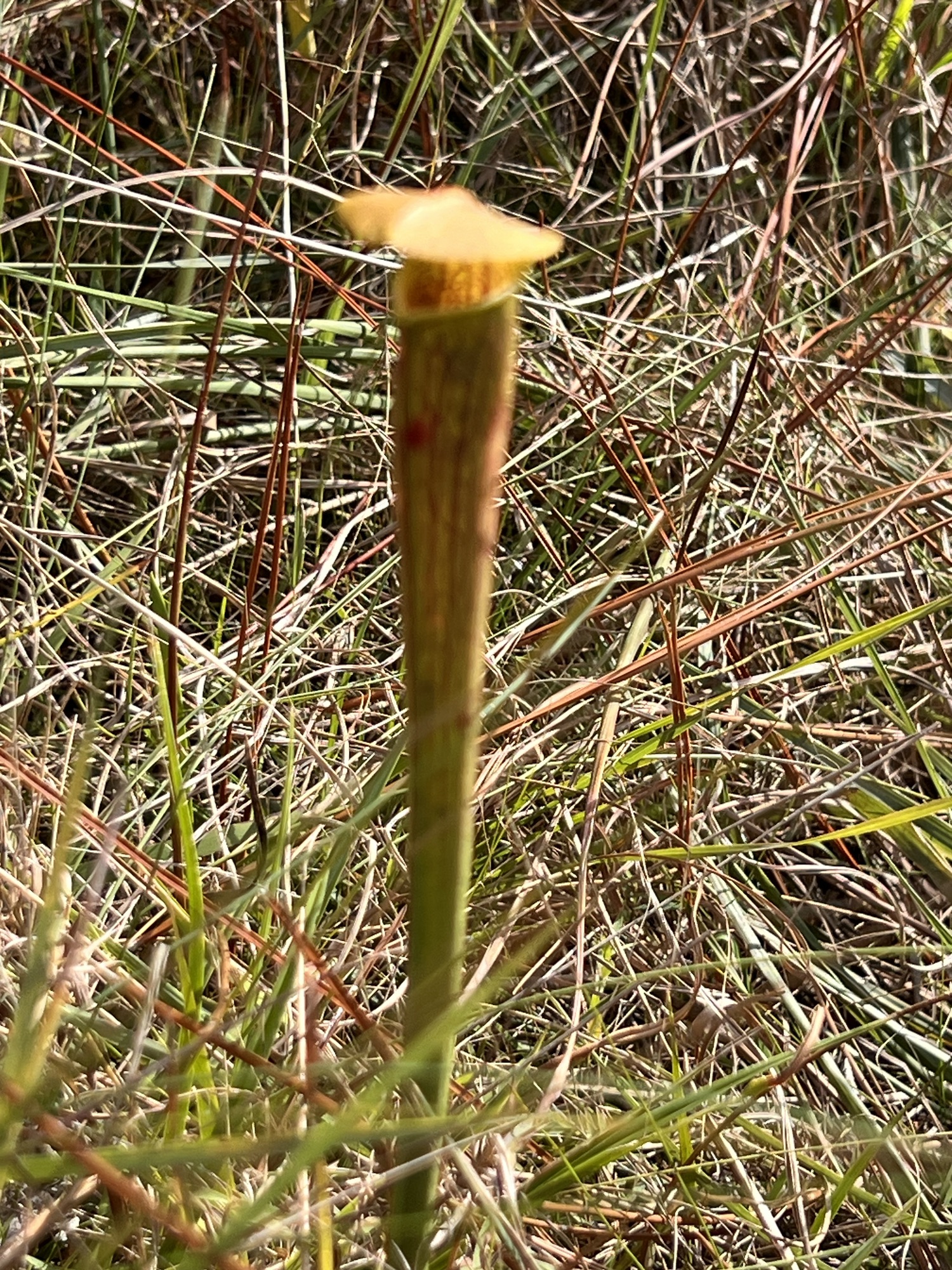
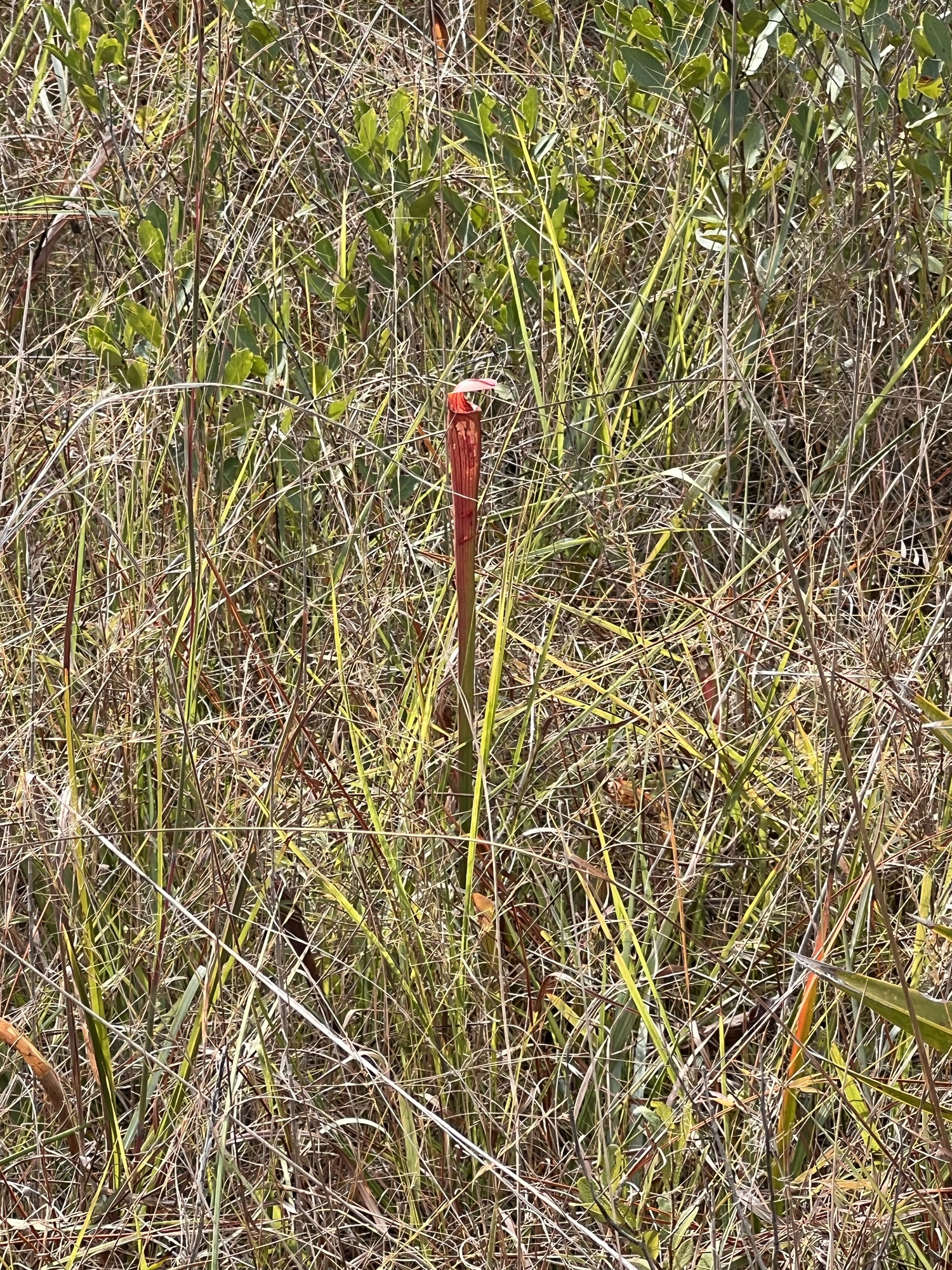
Sure enough, white-topped pitcher plants ( Sarracenia leucophylla) were growing in lovely swaths along the boardwalk. They shown in the sun and looked quite mysterious. I didn’t see any flowers; the “pitchers” are leaves.

While we were there, I looked for birds, but there weren’t many. We did meet Phil, a very interesting birder with some great equipment. He gave me lots of good information, so it was worth it. The only new bird I found today was a Scaly-breasted Munia (non-native) in the hotel parking lot.

All my bird pictures are backlit! Ugh.

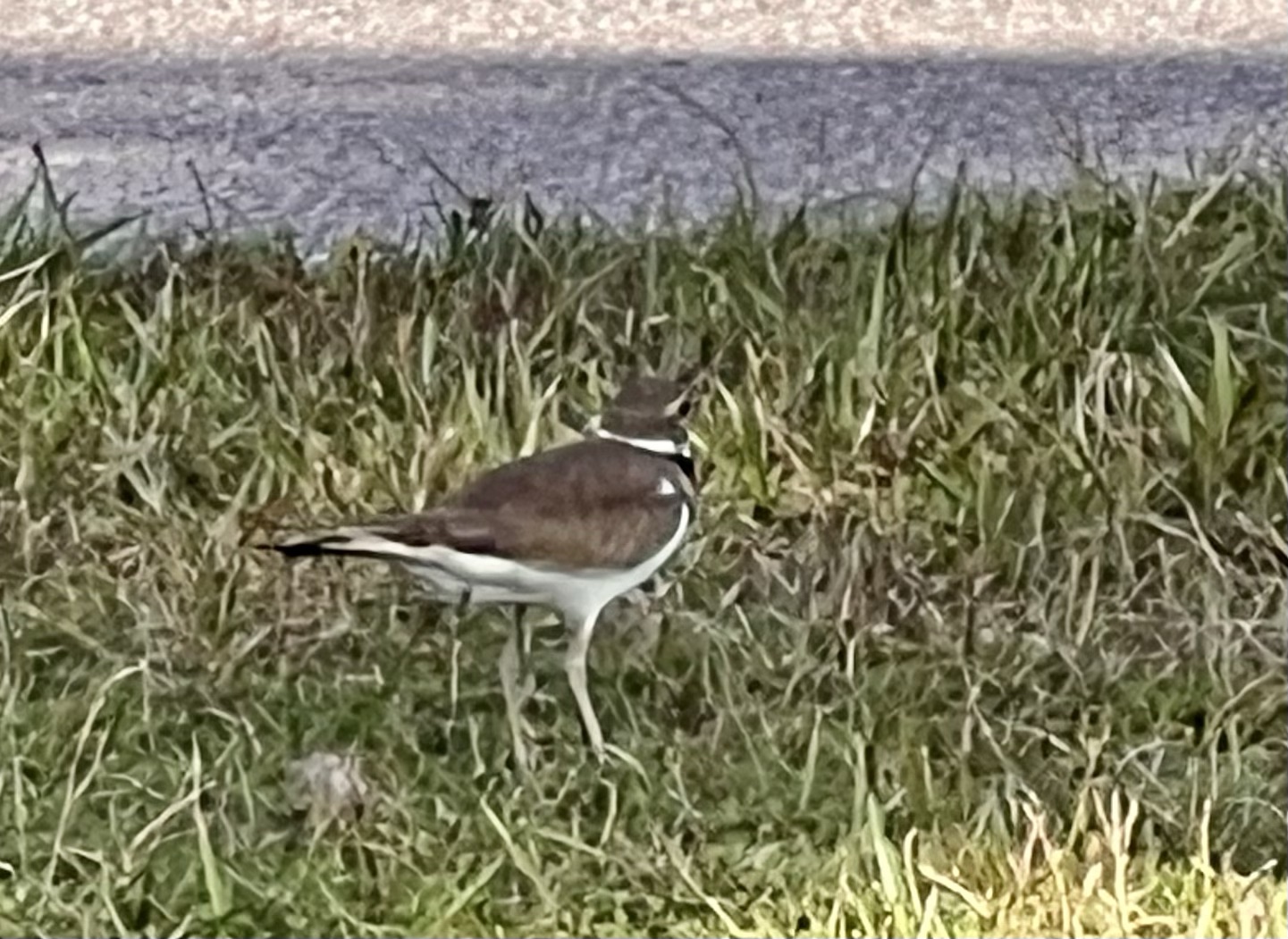
We headed out to Alabama (a half mile away) and got gas and snacks at Buc-Ees. Then Lee got the idea to stop at rest stops to find birds. The next stop, at the Mississippi line, was a great one, where I saw Killdeer, which surprised me.

While I was taking pictures, Lee went inside and asked if there was anything interesting bird-wise nearby. The lady told him there was a Sandhill Crane sanctuary nearby. Off we went to the Mississippi Sandhill Crane National Wildlife Refuge.

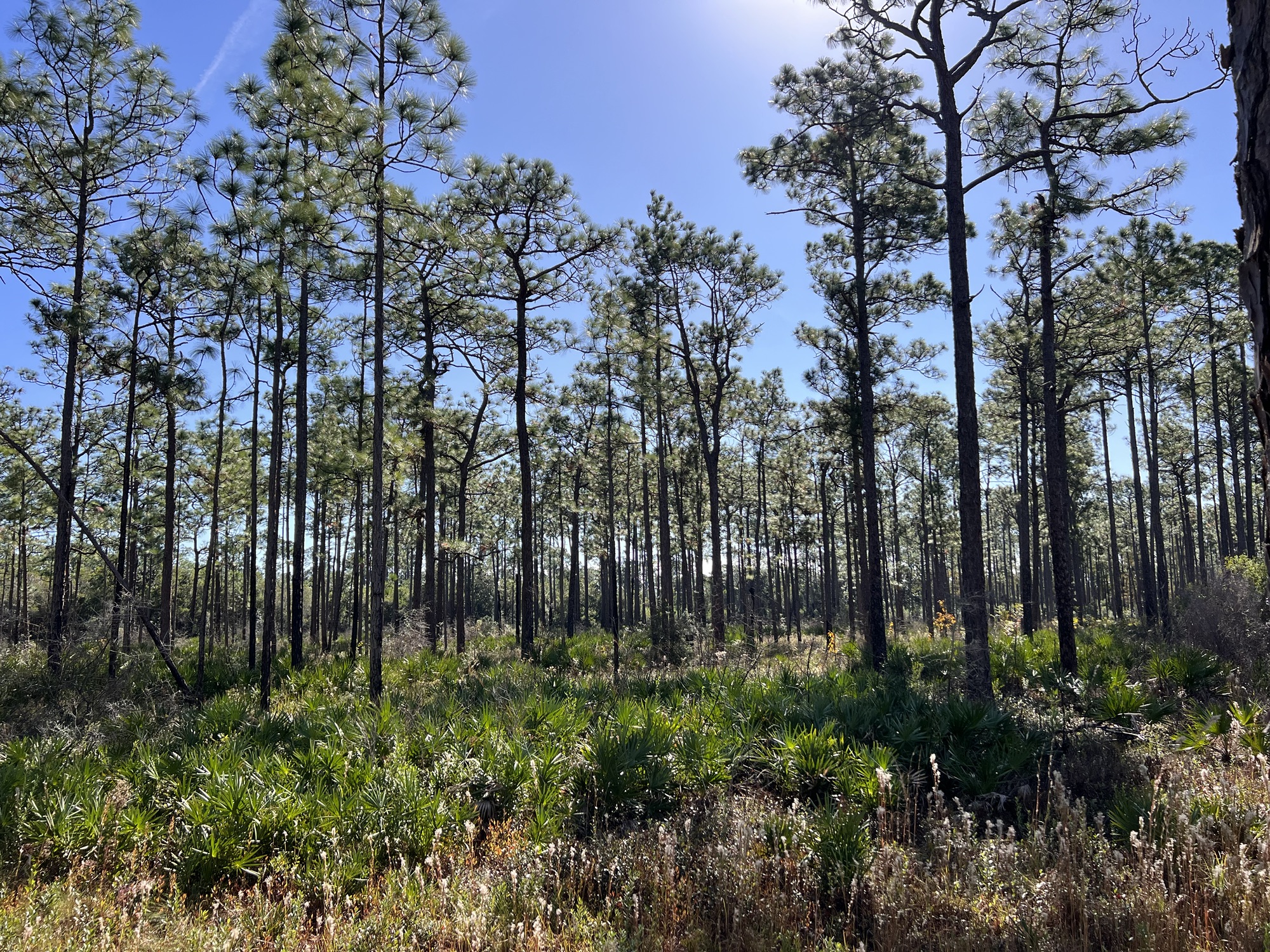
Wet Pine savanna

We did not see one crane, only Chipping Sparrows and Brown-headed Nuthatches. But who cares, because this place, a wet pine savanna, is a treasure trove of rare plants, including three kinds of carnivorous plants! Whee!

Also, many fun trees.

The pale pitcher plants (Sarracenia alata) were most numerous, and amused me, because they looked like little mouths.

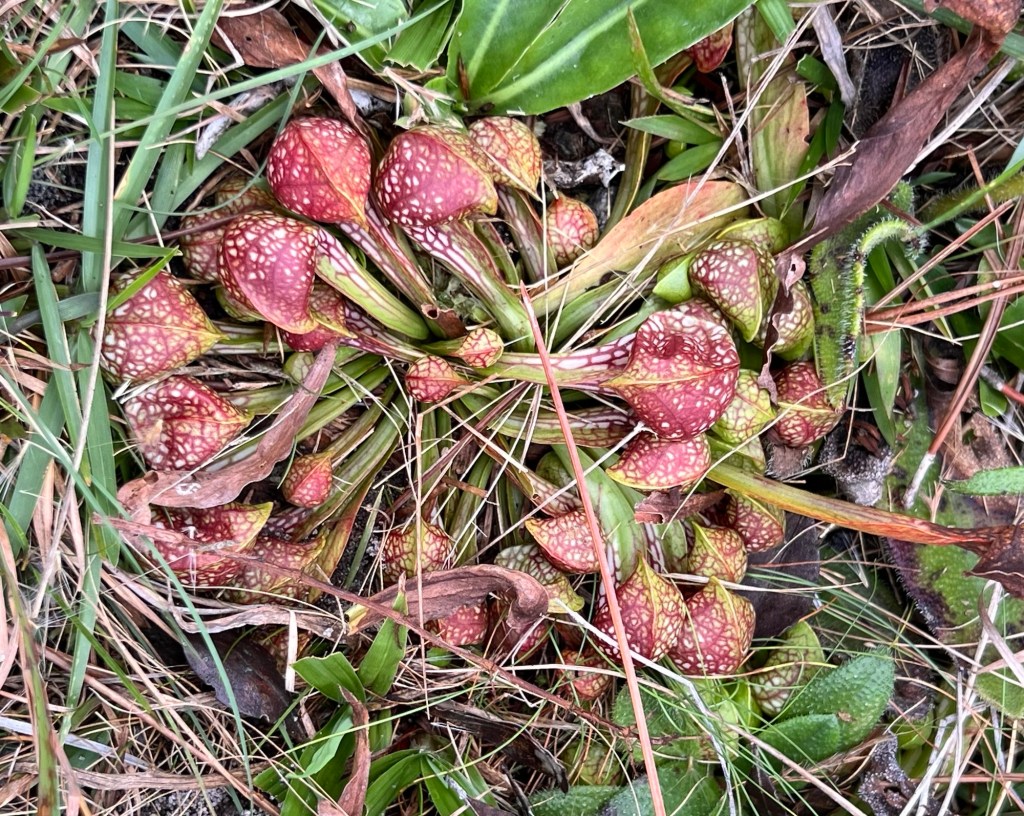
There was also a parrot pitcher plant (Sarracenia psittacina), whose hoods look like parrot beaks.

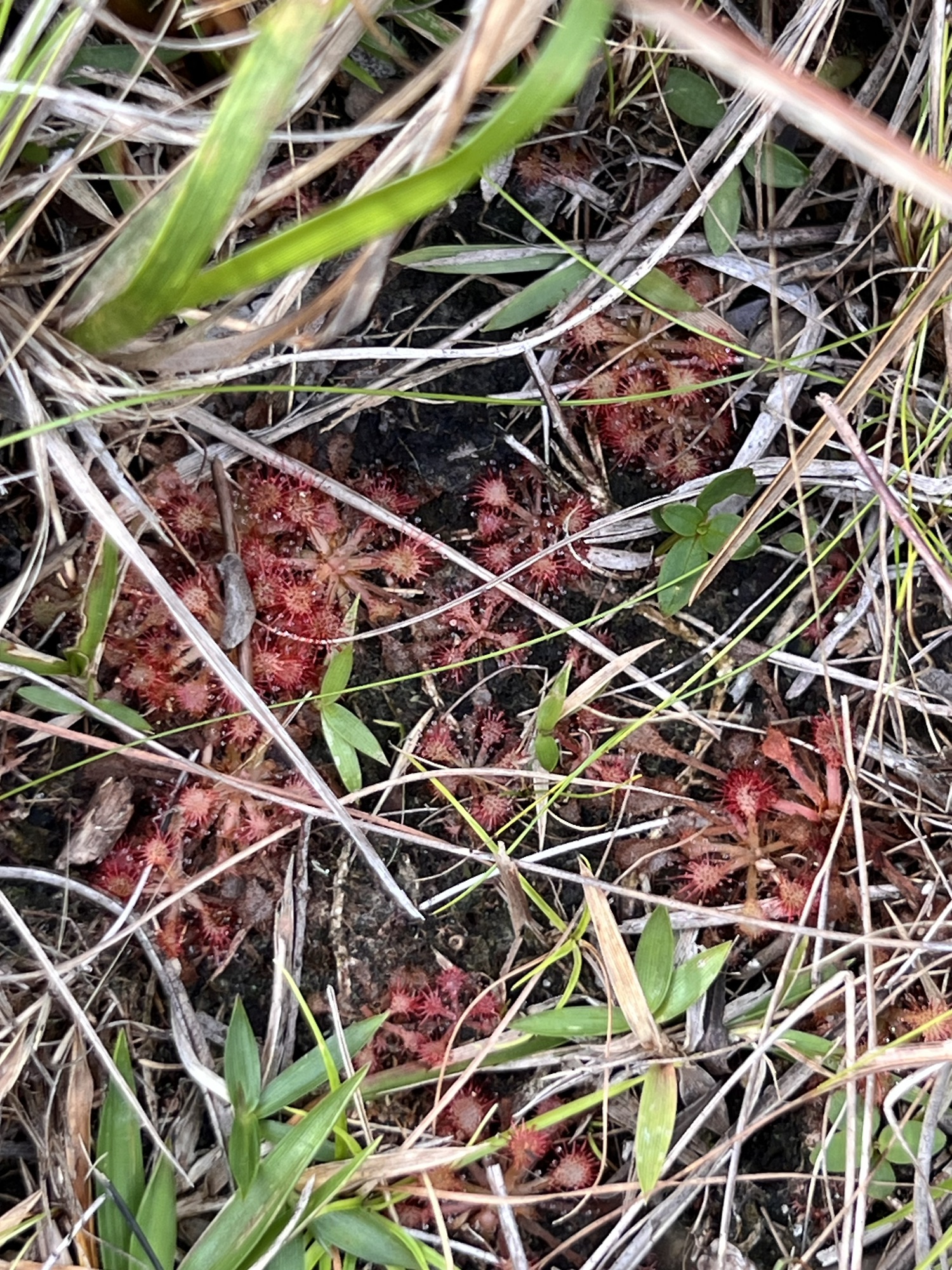
But the best to me were the pink sundews (Drosera capillaris). They are so tiny! Their little jewel-like sticky traps were mesmerizing to me.

That’s not all, though, the trails took us through many areas with plants that were new to me.

Tantalizing and nearby was Bayou Castelle, which was off limits, because it is pristine and hosts many rare plants and other life. I heard there are orchids!

What a wondrous place to see. I’m grateful to Lee for making the effort to find out about it.

Shining!

The rest of our ride was through sparsely populated parts of Mississippi and Louisiana. There were many very pretty towns, farms, forests, and sights. We are now in Covington, Louisiana in a very tired Hampton Inn. But it’s clean.

Sunset behind the hotel

A fine day. Home tomorrow.

The Thrill of Discovery

I think the reason I like to travel around and look for birds is that I get such a great feeling when I find a new one or a beautiful collection. I feel a refreshing rush of adrenaline and a glimmer of joy every time. You don’t get that many chances for those feelings!

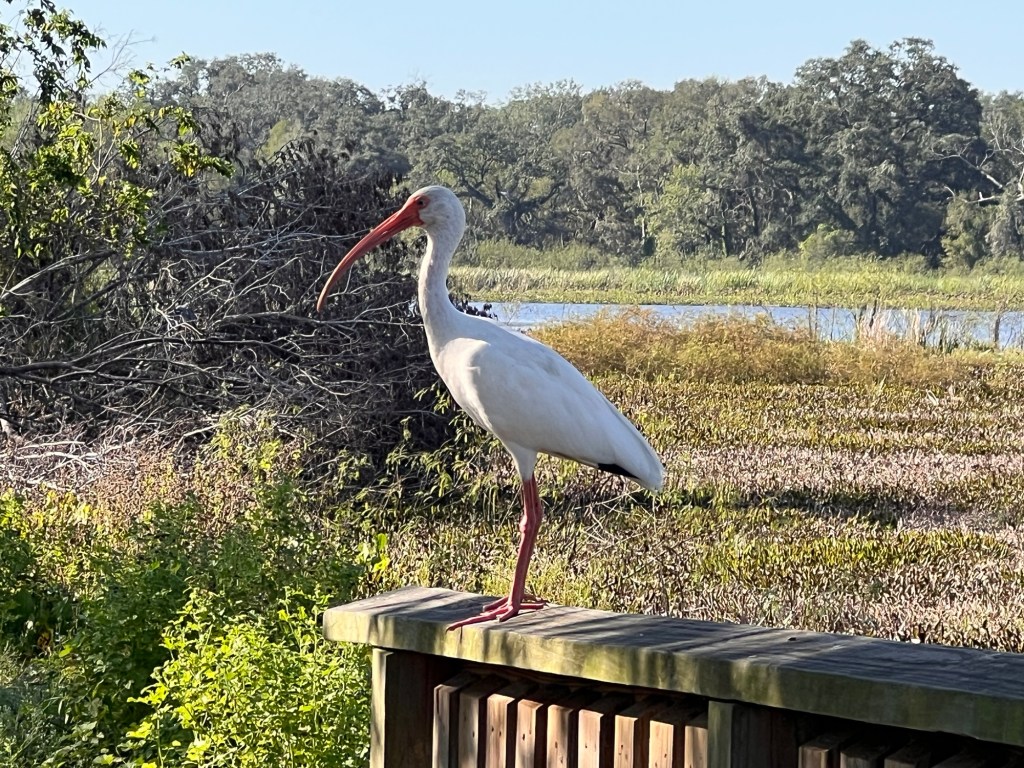
You’re welcome for that feeling, Suna, says the White Ibis.

Today’s walk around 40 Acre Lake gave me plenty of reasons to glow and grin. I’d never seen a White Ibis outside of a zoo before, so the ones I got up close to and saw flying today were quite special.

Another sighting that took my breath away was an American Bittern. I think I saw one in South Carolina a few years ago, but this one was close. They are so stripey!

I was more exciting in the binoculars.

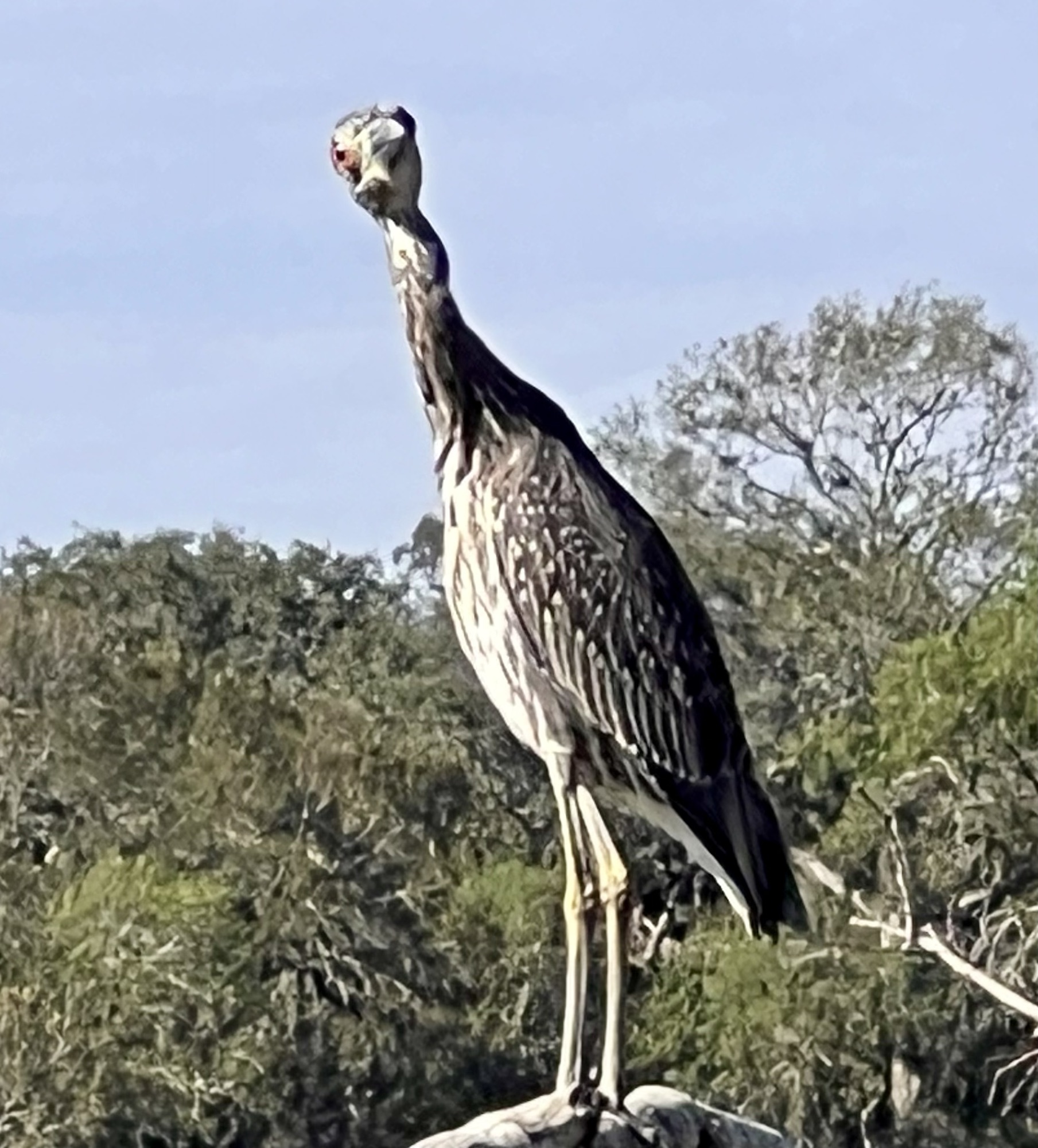
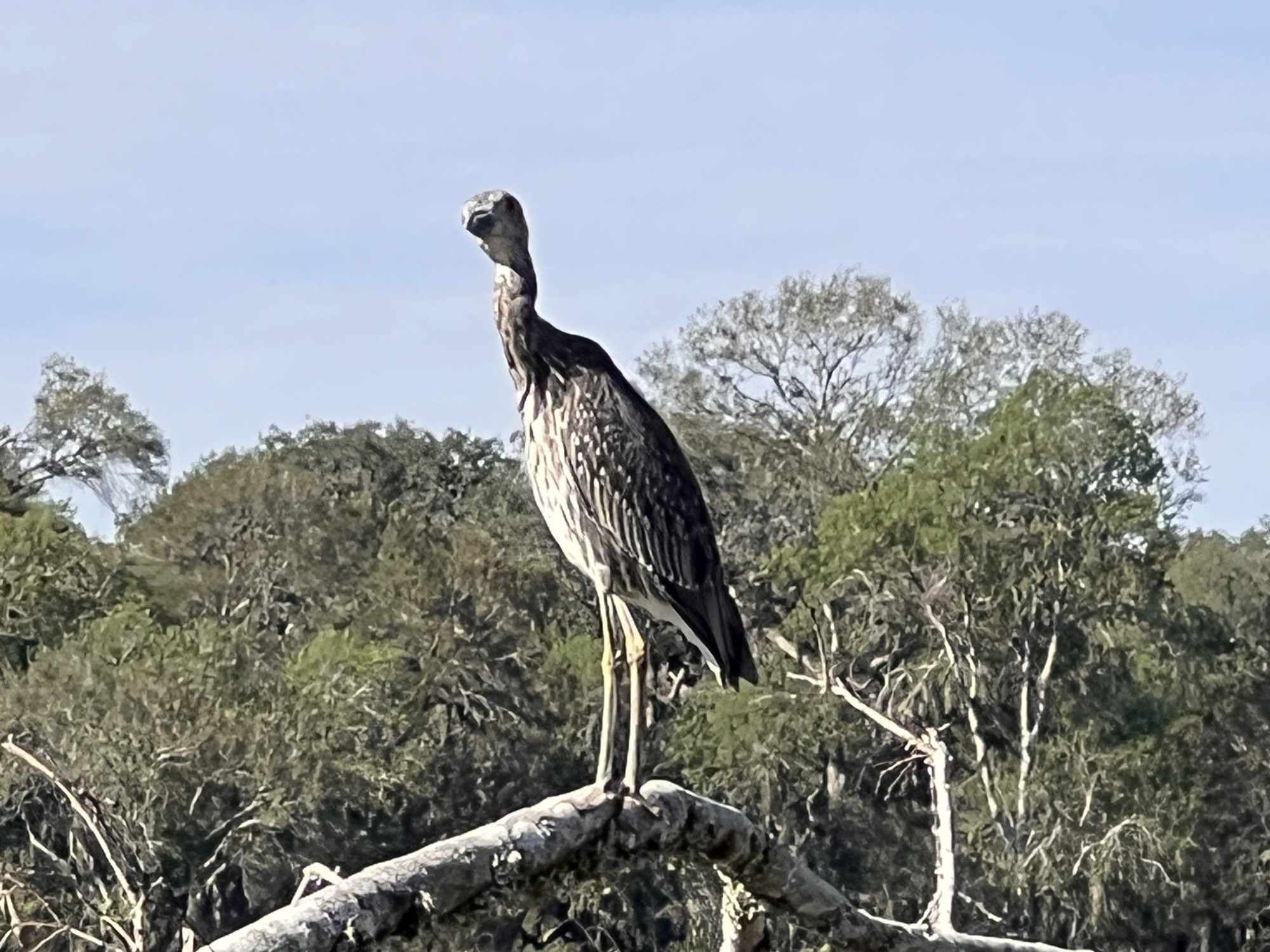
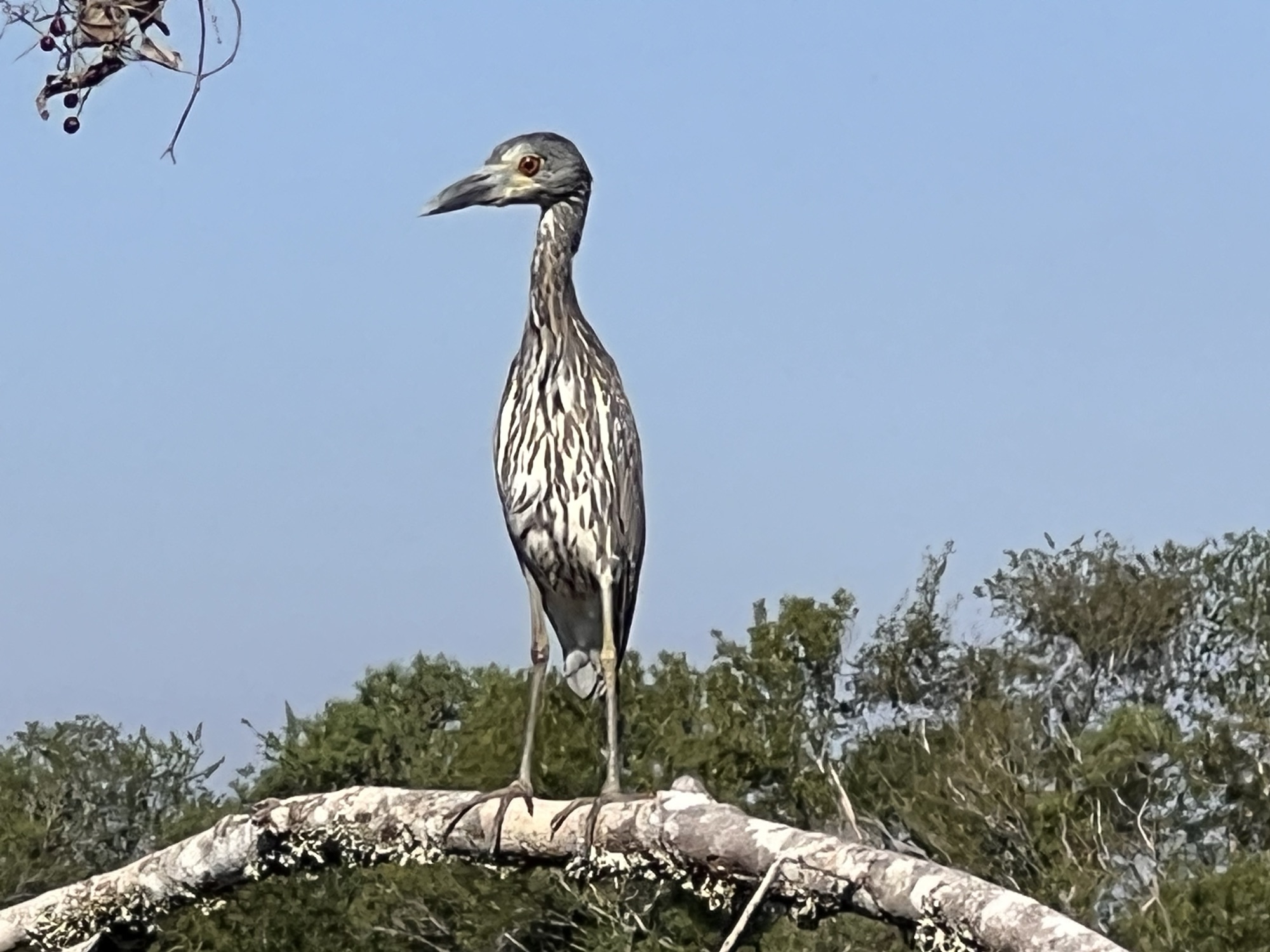
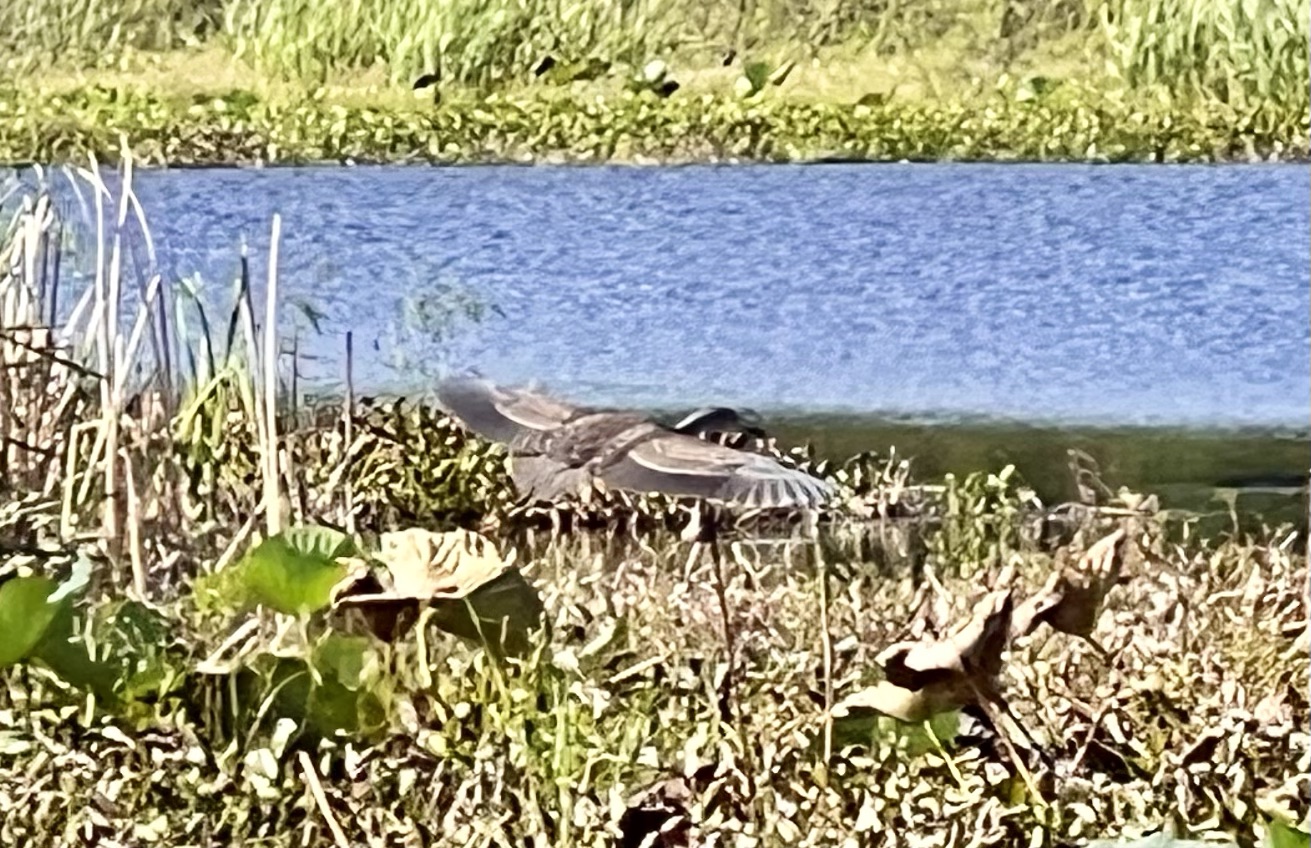
The lake had more of the Yellow-crowned Night Herons that Brazos Bend State Park is known for. One juvenile made fun faces at me.

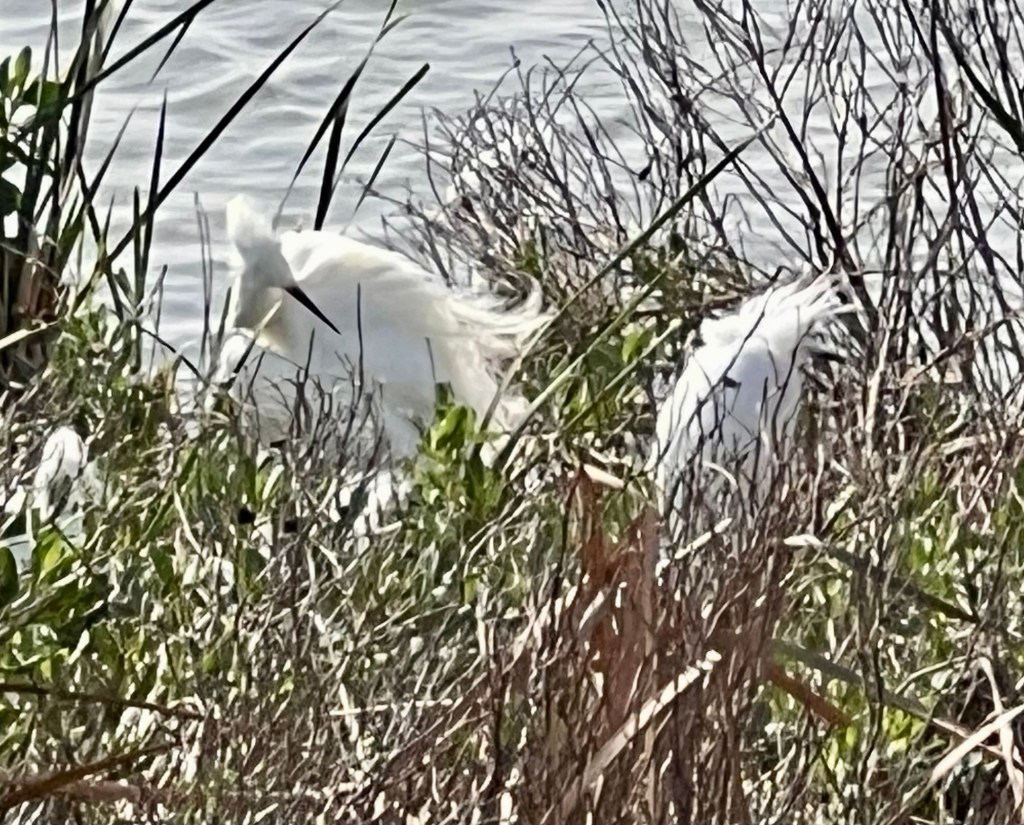
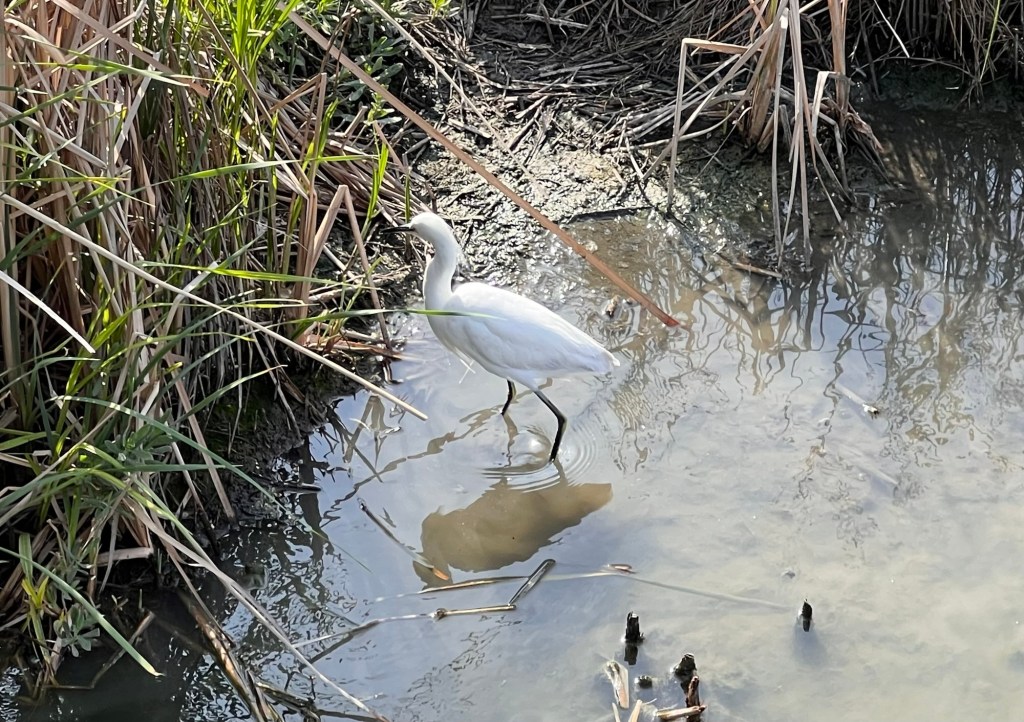
Another bird I enjoyed were the Snowy Egrets. They are so dainty and busy. I saw many of them catching food, flying around, and squabbling.

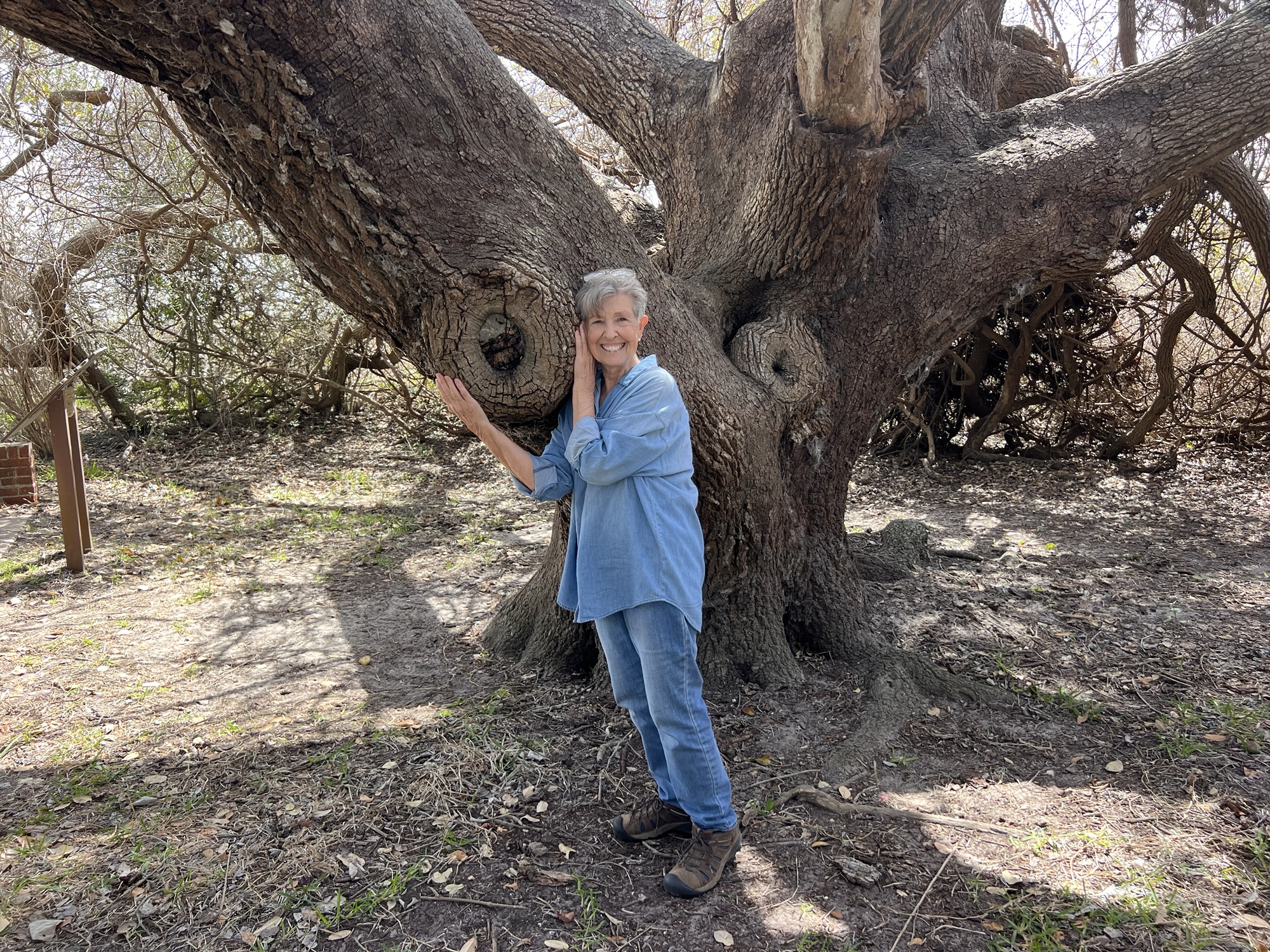
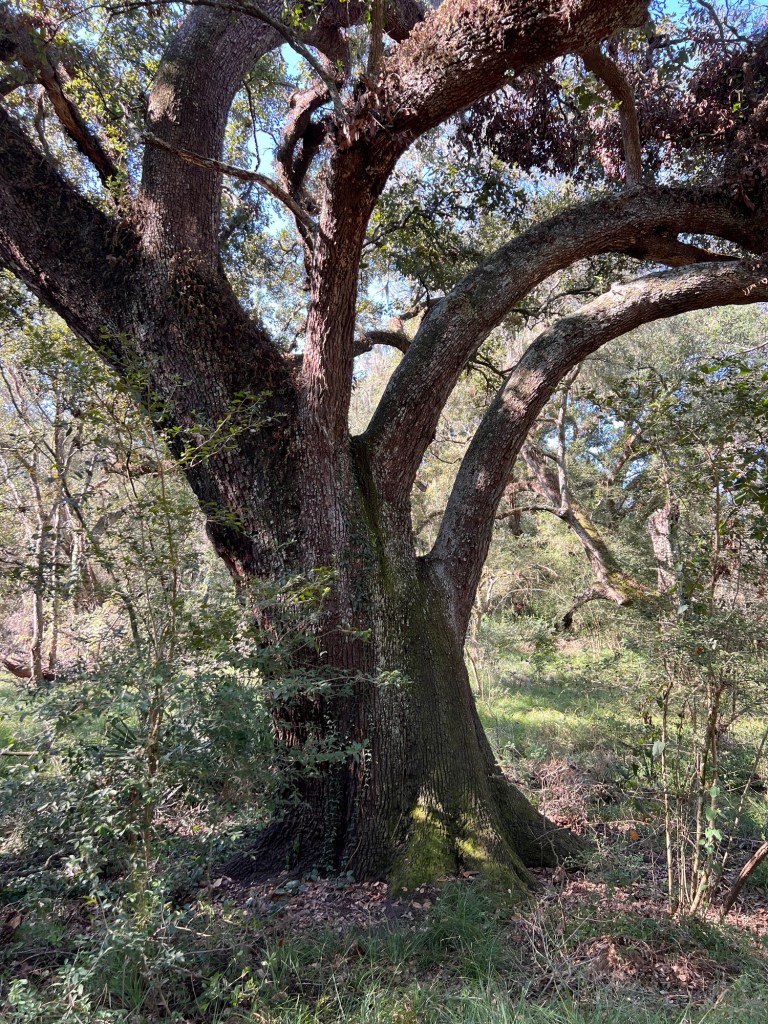
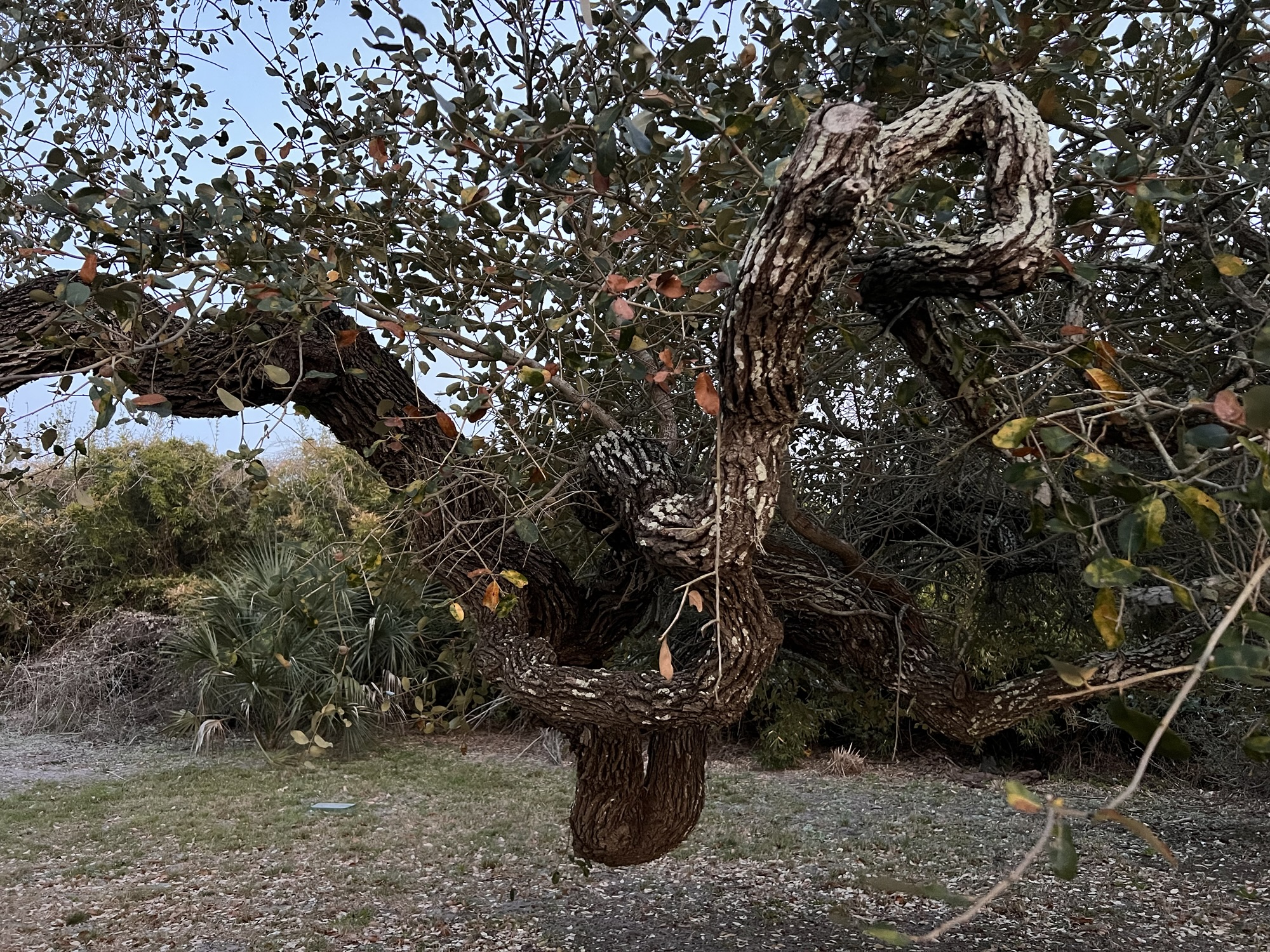
After the lake I checked out some huge live oaks. They bring me a different feeling. I feel at peace around them. I guess it comes from hugging so many as a child.

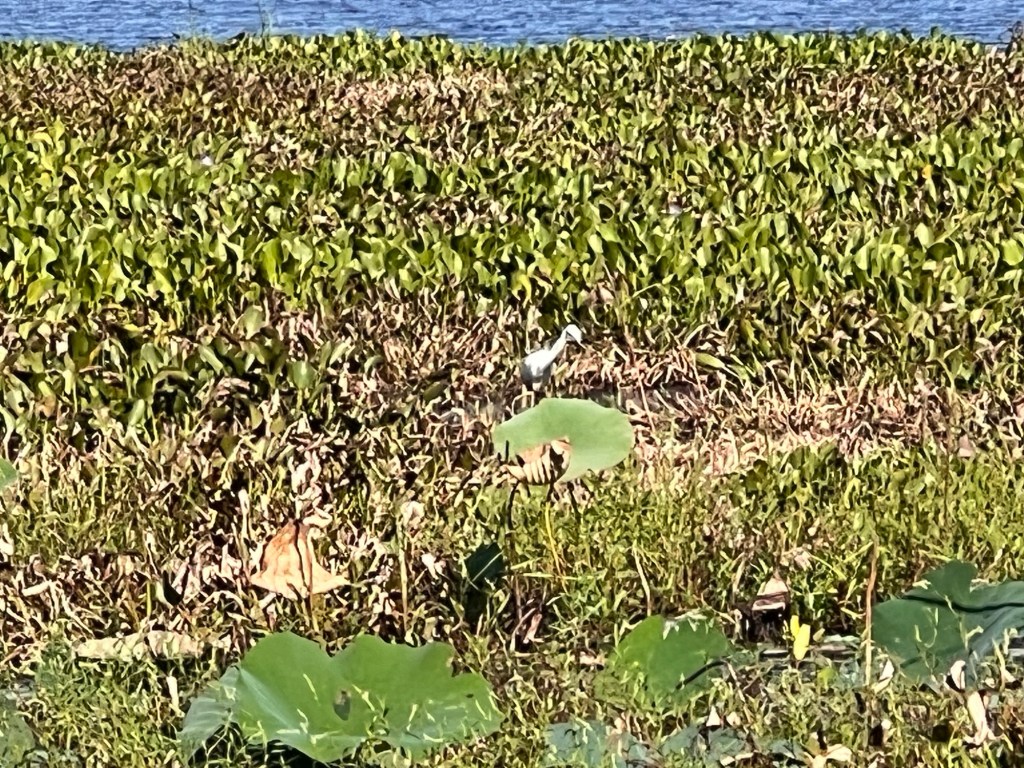
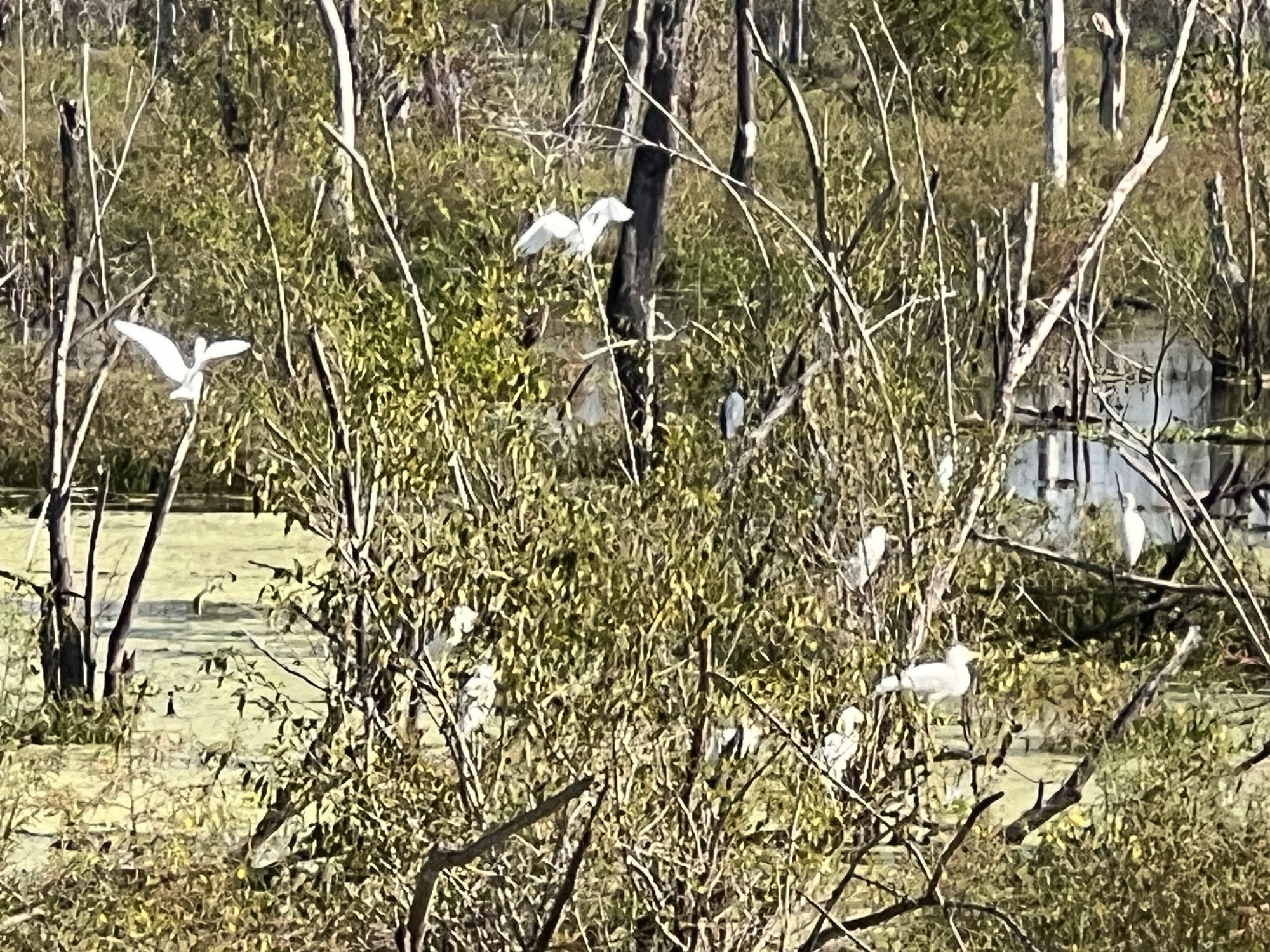
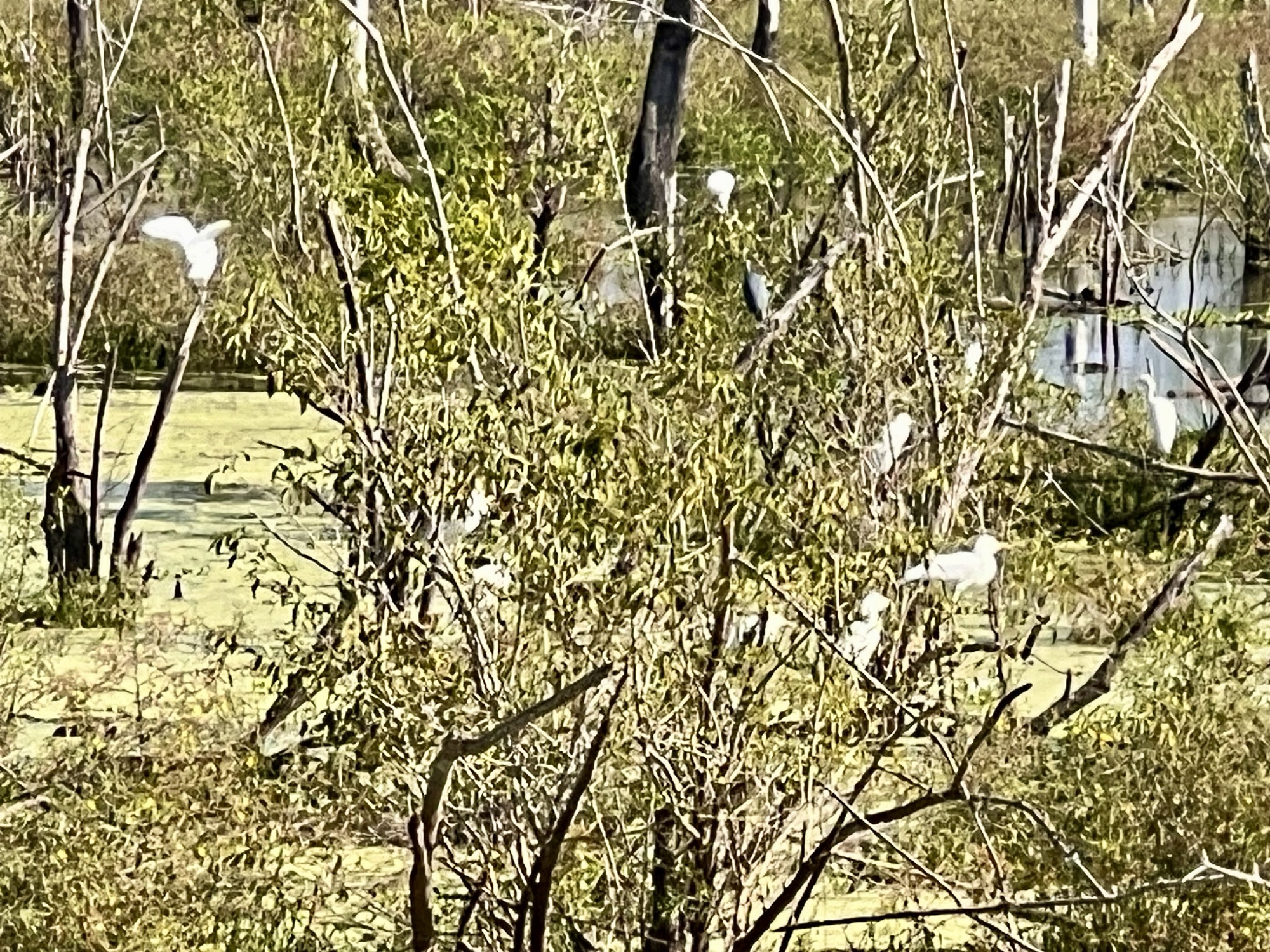
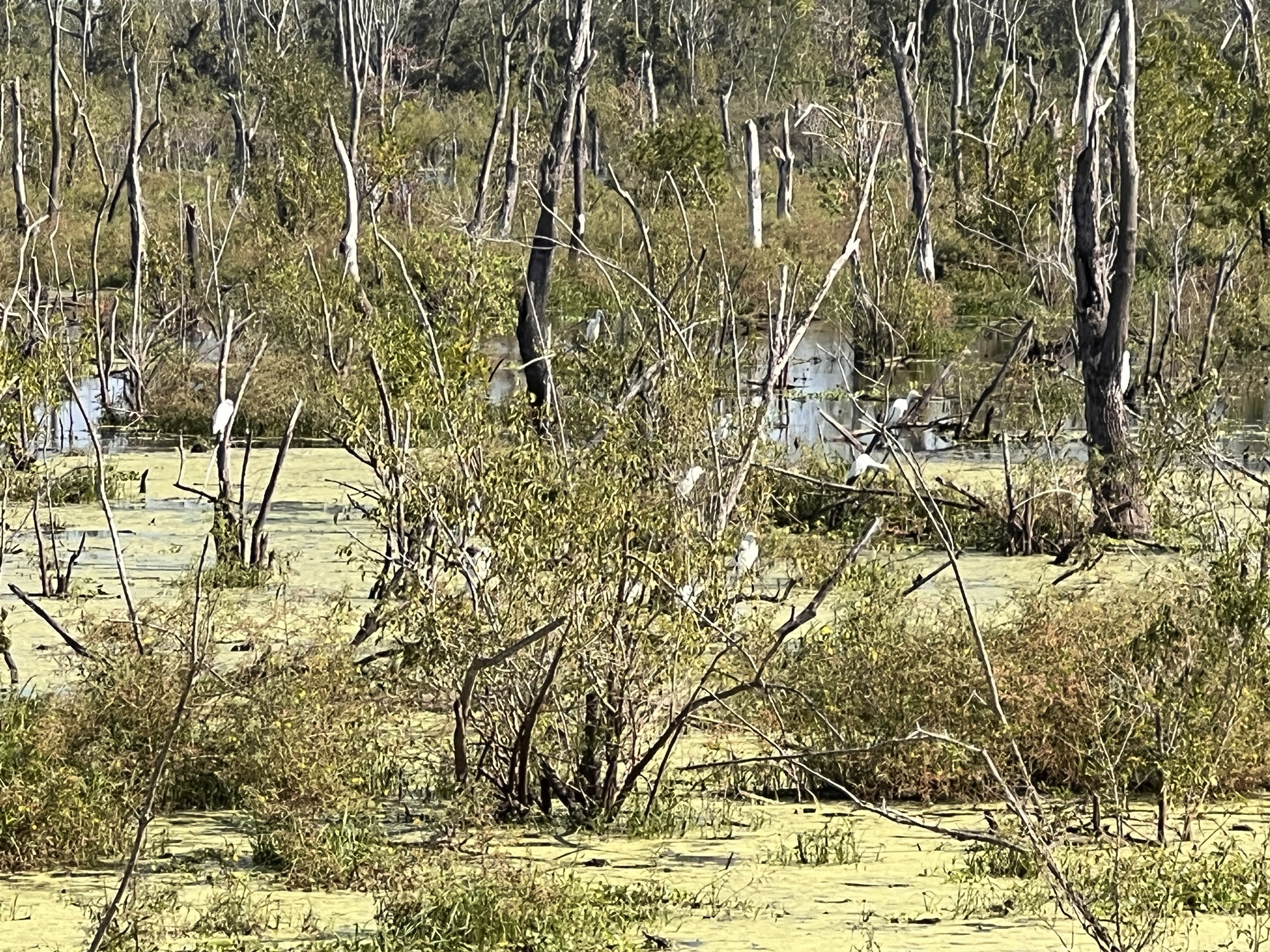
I left the trails and headed back, but just had to stop on the roadside by the swamp snag area where all the birds hang out. There were dozens of Great Egrets, Snowy Egrets, Ibis, Little Blue Herons, and Gallinules. They’re lurking in these photos.

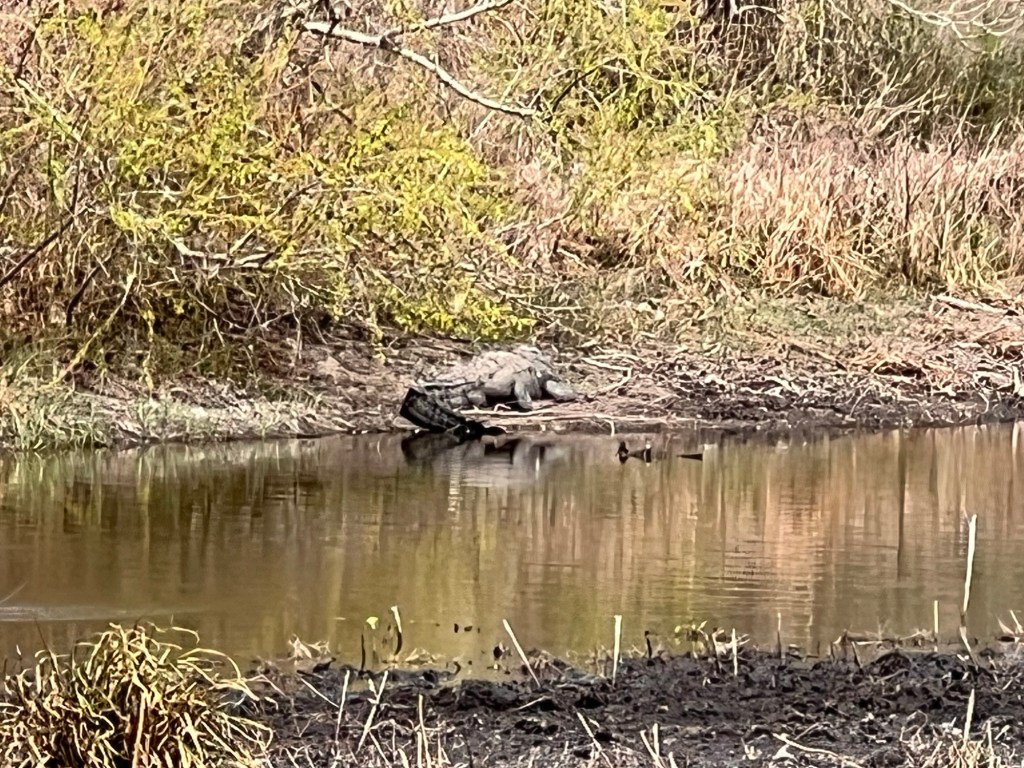
What you don’t see is the small flock of Roseate Spoonbills I saw flying. I got to see them with the binoculars, too. The only other times I’ve seen them was flying over the Interstate in Mississippi and the one that visited our pond with some storks on the most exciting ranch birding day ever. No photos, so here’s the only alligator I saw on this visit.

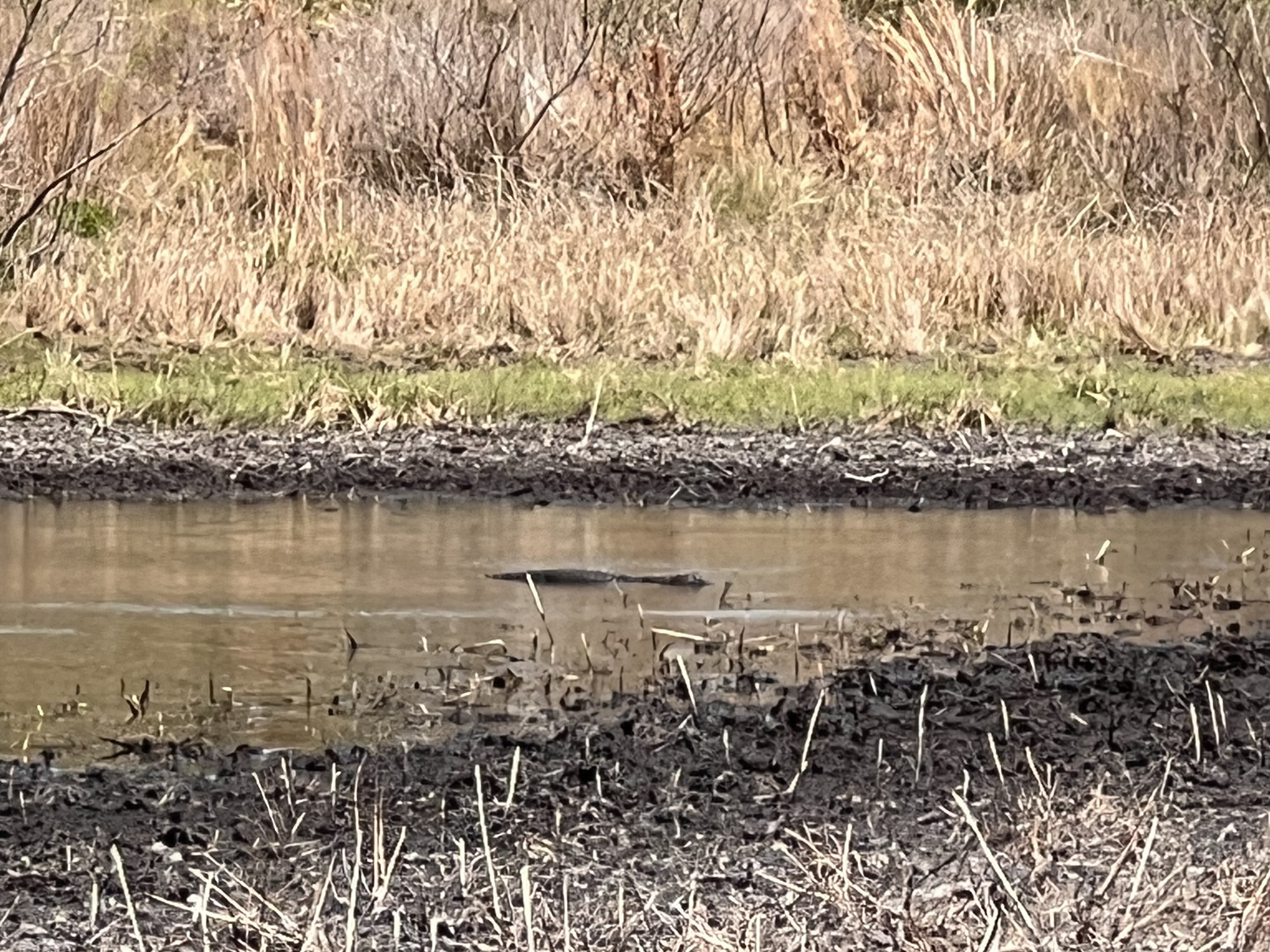
It’s a little one.

And now I’m back home, though I discovered jury duty was canceled. Back to work. But let me leave you with some pretty sights. I need them, so maybe you do, too. I’m tired of being bombarded with negativity in media, so let me provide you with an alternative.

Taking Comfort, Making Plans

What’s your go-to comfort food?

Hmm. Lately no food comforts me much. But I’d say I usually reach for something cheesy. These days it’s either those little red laughing cow rounds or cottage cheese (preferably full fat, large curd). Full fat yogurt with good fruit, like Noosa, also works. Creaminess seems to be a key. Naturally, creamy ole ice cream also does the trick. I guess I help finance the dairy industry.

Cheese. I like it (also bread—I can eat wheat and dairy just fine, being all European.

My anxiety has ticked down a notch, which I can tell because I’ve allowed myself to plan for the future (other than camping and condos; I do plan that). But today I figured out what I’d like to do with my volunteer time. Well, in addition to endless flower and insect photos.

I visited the new bird observation way station thing that’s been started by our Master Naturalist group today. I’m very impressed by how hard Gene at the Bird and Bee Farm has been working on it. He’s even obtained outside funding that is helping with fencing and future mulching.

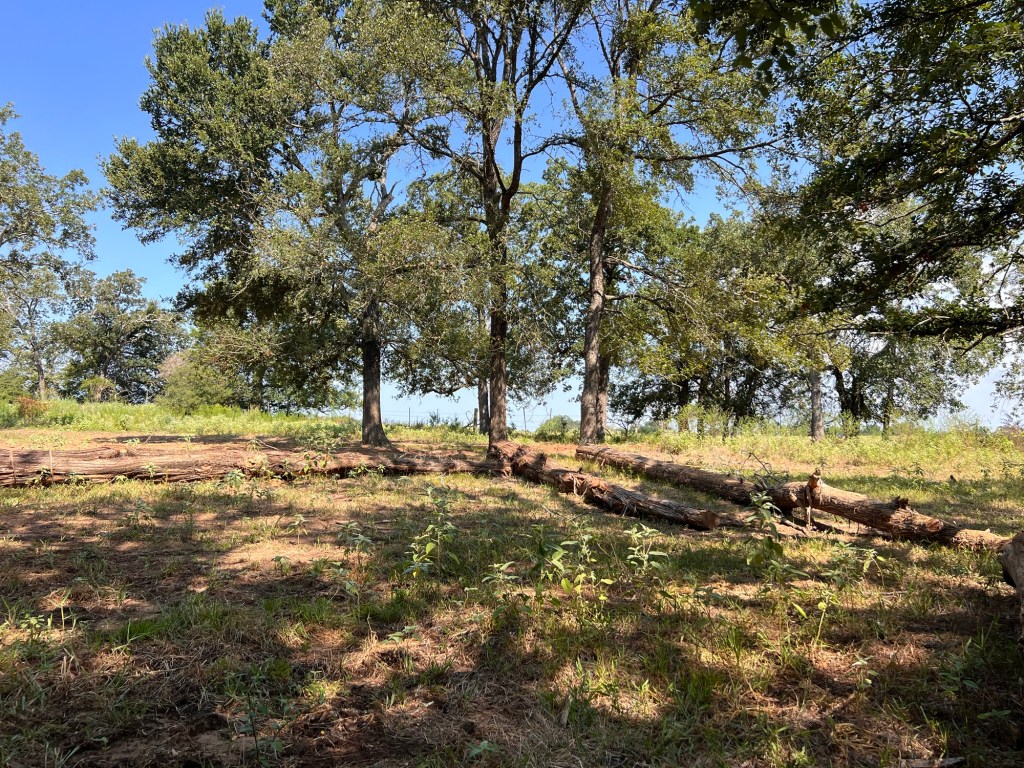
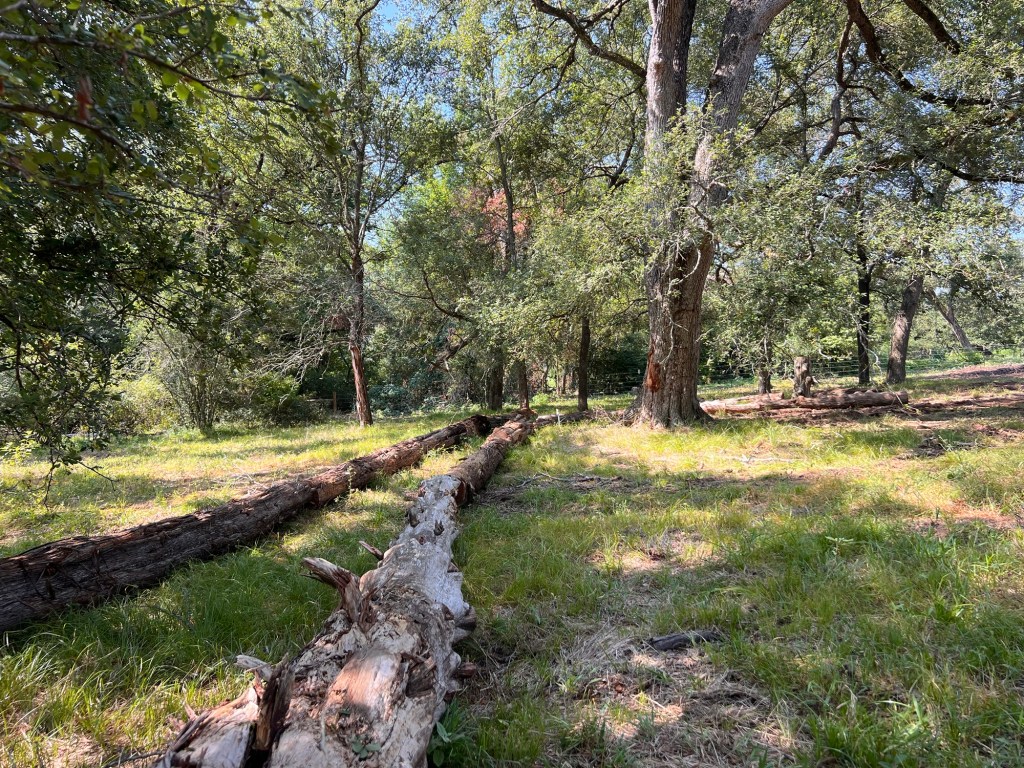
New fencing, gate, and cleared trees

My friend Ann is the mastermind behind the project, but she can’t do most of the heavy work. She is the expert on birds, though.

The broken arm doesn’t help, either

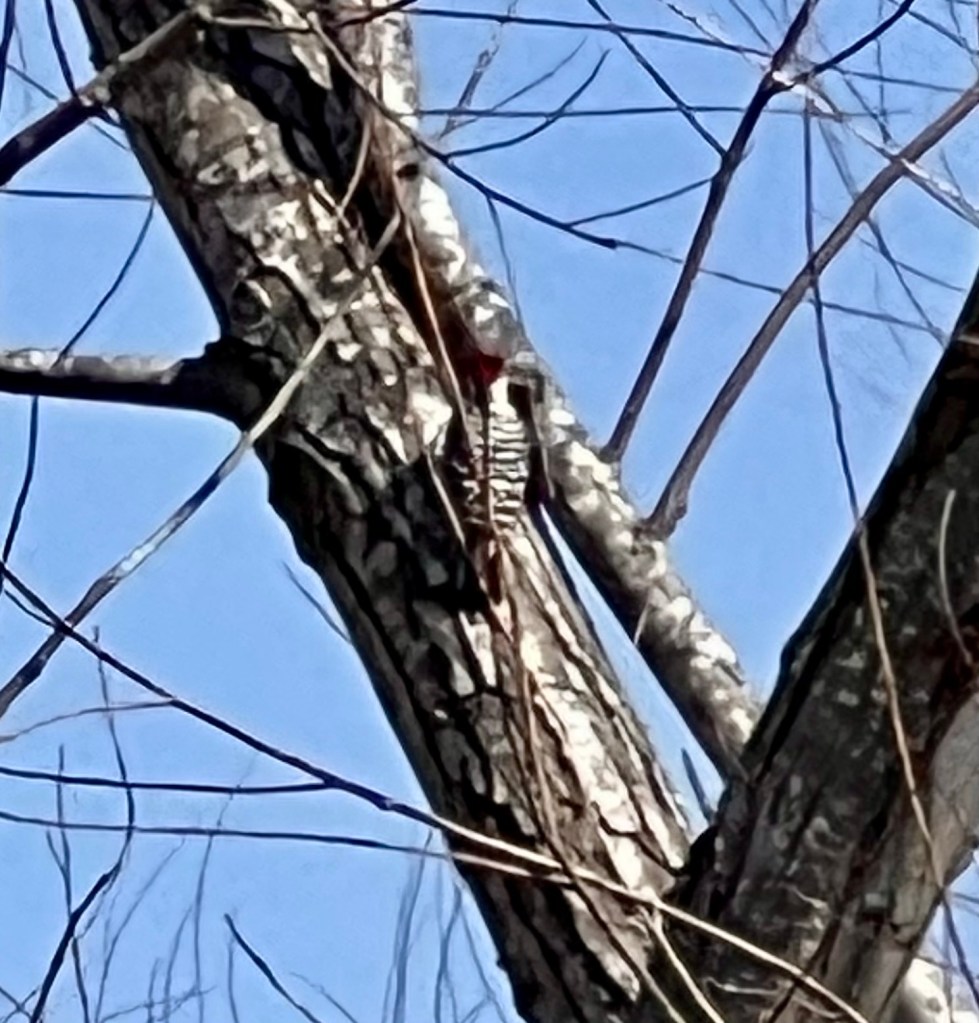
I sat on a log out there for a long time and watched a little Downy Woodpecker digging a hole, maybe for a nest. Then I watched dung beetles rolling some poop quite industriously. I realized that this was A Good Place and that I’d like to help.

So, I told Ann I’d be the chronicler of the project. I’ll take pictures and record the bird species seen and heard there. I can blog about it on the Master Naturalist blog, too. I’m feeling brave for making a plan.

It will be a great reason to be outdoors in peace and quiet while contributing to something positive. And maybe I can take some cheese out there and have a comforting picnic.

Bonus piece of oddness. There’s a crawfish in our pool. It’s just going around eating stuff.

Book Report: The Birds Audubon Missed

To say I enjoyed The Birds Audubon Missed, by Kenn Kaufman (2024) would be an extreme understatement. I had a great time reading it and must admit I put off important things like Master Naturalist meeting minutes and knitting to keep reading.
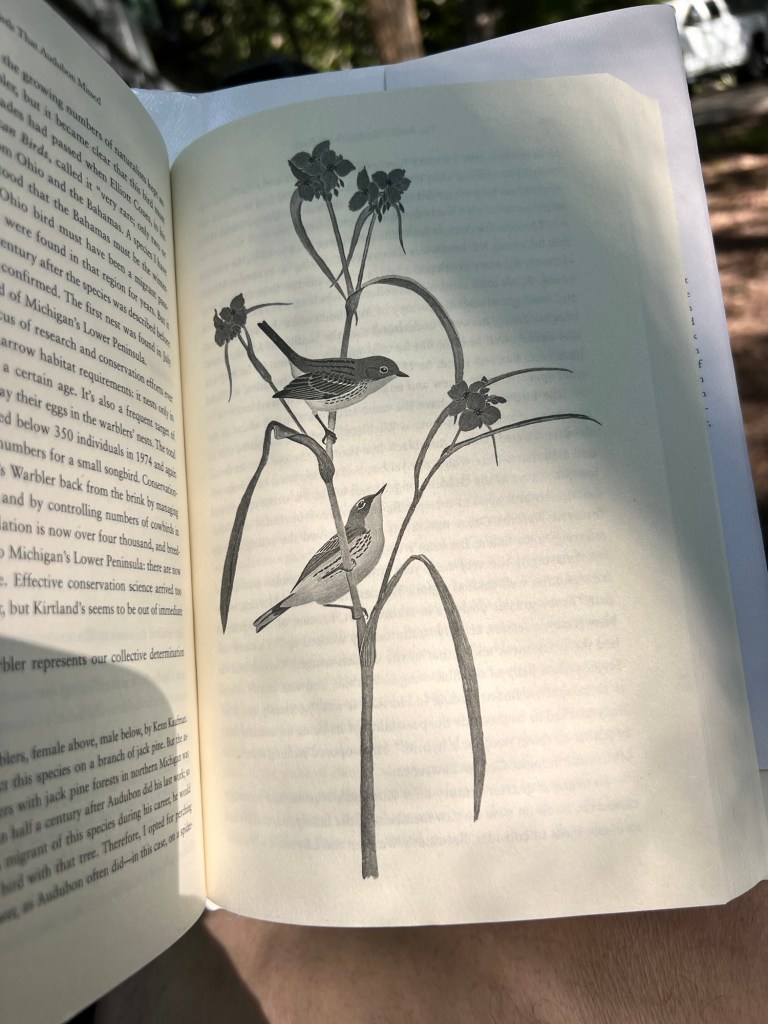
Bonus: the book is beautiful. The paper it’s printed on feels wonderful and the illustrations are crisp and look true to the original art.

I guess I’ve become one of his (no doubt) many fans as I read along, because I admired his pluck in just taking off and hitchhiking across the US in search of birds during his teens and twenties while I was looking at birds only on rare escapes from university classrooms. He got the education I wanted, deep in my little naturalist soul.

The other thing I most admire about Kaufman is his embrace of non-polarized thinking. In the book, he lays out many criticisms of John James Audubon’s dishonesty, appropriation of others’ work, errors of judgment, exaggeration, and ethics. At the same time he reminds the reader that nonetheless, Audubon was an extraordinary artist who contributed much to the increase of scientific knowledge about birds of North America in Europe and among people of European descent. Yeah, Kaufman often points out that there was vast bird knowledge on the part of millions of people who already lived there. What a good guy.

The book taught me so much about history from an avian point of view, so now I know who all those people are who’ve historically appeared in bird names (those won’t be around much longer, however). I also learned a great deal about how bird classification has been refined in the past few centuries and continues to be worked on.

Example illustration

Just last night I read a long section on tyrant flycatchers and how they’ve come to be differentiated mostly by their calls. Then this morning I went out and heard many of the birds discussed, thanks to Merlin’s skillful algorithms. As a bonus I learned how the Northern Parula got such an odd (to me) name for a warbler. It is in the order Parulidae. Parrula means bird in Katin. Its Latin name is Setophaga americana, which comes out to American moth-eater.

As you have probably inferred by now, I got a lot of nuggets out of this fascinating resource. Also enjoyable were Kaufman’s asides on how he tried to learn to paint in the style of Audubon for the book’s illustrations. It wasn’t much fun. Nor was it really necessary, since Kaufman is a renowned painter of birds, in addition to writing many bird guides.

Painting in Kaufman’s style and his attempted Audubon style.

I’d recommend that anyone with an interest in birds, history of science, or art history would enjoy The Birds Audubon Missed. But it’s written so well that anyone who enjoys learning would come to treasure it as much as I have!

What a great book to finish after a weekend on birding!

Insights about Merlin Bird ID

Blog readers will know that I’ve been using Merlin Bird ID since last summer to identify birds I hear. I’d used it before to identify birds I saw, but once I started the listening exercise, I was hooked. It’s such fun knowing what I hear around me, and it’s great training for birding without the app. My ability to identify birds by song is hugely improved. Plus, knowing what’s out there helps you know what to look for if you want to see birds.

Merlin interface.

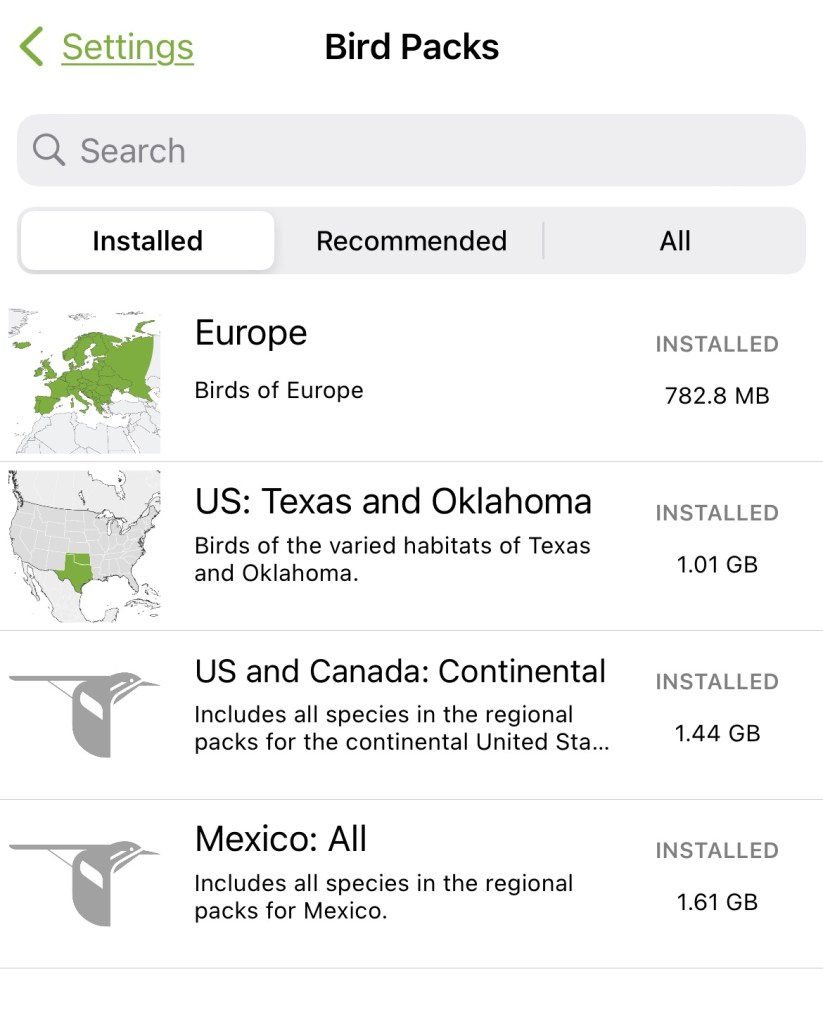
Cornell Labs has done an amazing job developing this app, which you can download from the App Store in whatever kind of phone you have. I can’t imagine how much work it has taken to train the listening app on the sounds of all the birds around the world (you can get Bird Packs for wherever you happen to be).

I got Europe because I keep getting those weird IDs and wanted to read about those birds. Mexico is because I go to South Texas sometimes.

I’ve learned a few interesting things about Merlin that those of you who use it or are interested in giving it a try may benefit from.

One of the most common birds I hear.

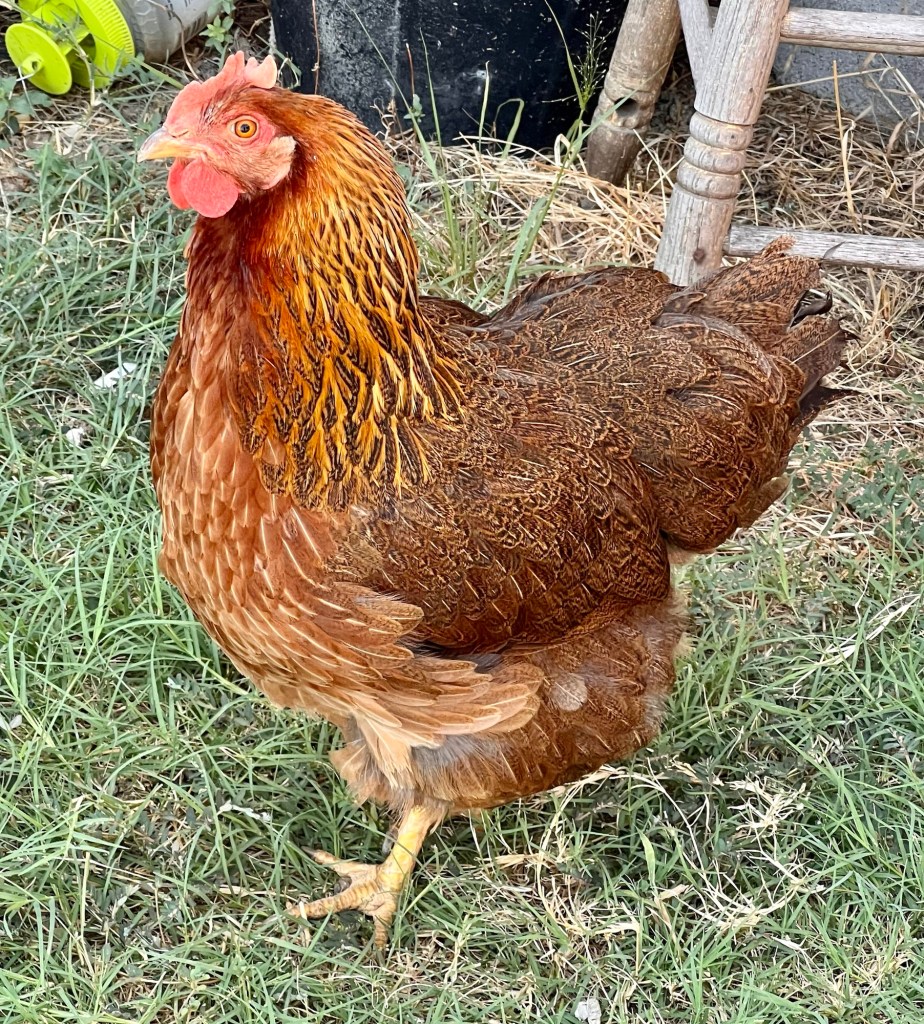
1. Merlin will not identify domestic birds. My chickens can walk right in front of the phone and nothing registers. It also completely ignores Tarrin’s guinea fowl, and didn’t pick up the turkeys at Bird and Bee Farm. However, it has identified wild turkeys, so I think the turkey thing was a fluke.

I’m a bird!

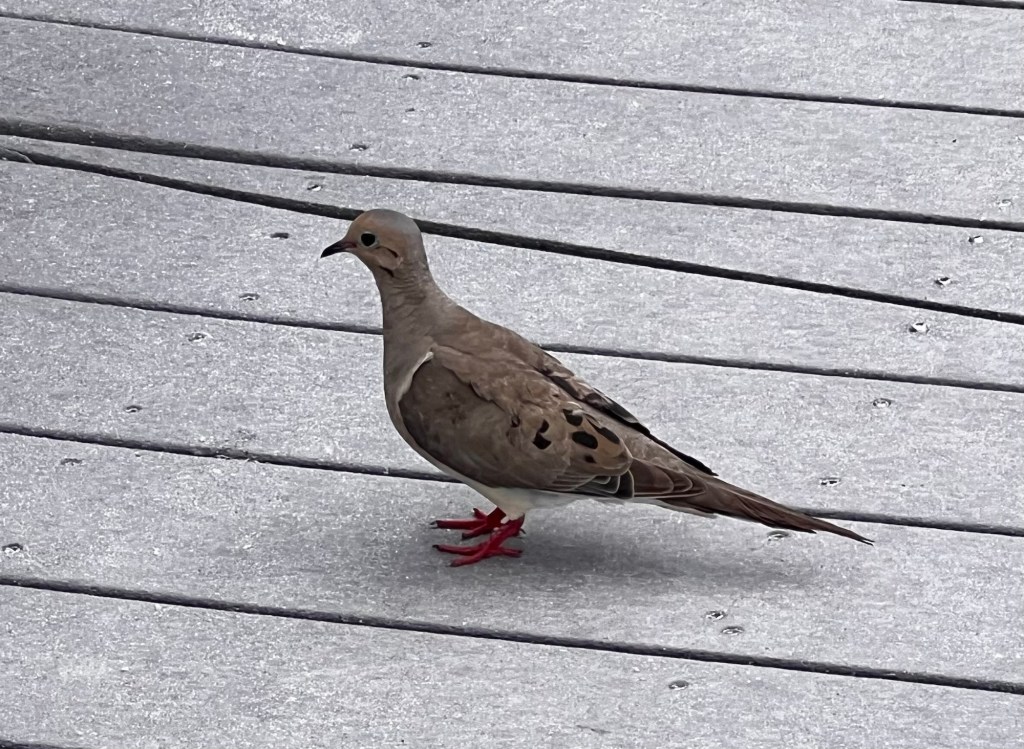
2. The app has trouble with birds who make sounds that are low in pitch. For example, it needs most doves to be really close in order for it to register them. Collared doves make a higher sound that it identifies more easily. And you have to be on top of an owl for it to be picked up. In the past week, I’ve heard entire owl conversations that didn’t get “heard,” both of barred owls and great horned owls. That’s why it pays to also be able to identify birds with your own ears!

I’m so subtle.

3. Crazy things can happen after a recording is interrupted. Two things that happen to me often will interrupt a recording: the phone ringing or me accidentally starting a video rather than taking a photo while the app is running. You can usually save the recordings, though I have lost a couple.

However, I’ve found that if I start the listening function again after an interruption occurs, Merlin’s decides I am not only in North America, but I’m also in Eurasia. I will be informed that I hear a great tit or a European robin, which is highly unlikely!

So, if you suddenly get an identification of a bird you’ve never heard of, be sure to click on the map for that bird, to be sure it has actually been seen in your area. Sure, occasionally birds are blown off course when migrating or after a storm, but most European birds stay in Europe (other than our biddies the house sparrows and starlings, of course!).

Lee’s haiku: Porch sparrow drama –
fussing, fighting – very loud
What are they saying?

4. Moving around is hard on Merlin. The app works best if you are standing still (or the phone is sitting on something) and the environment is not noisy. It’s amazing how loud you are walking on a trail or around your property. I live in the country, yet I realize now that it’s loud here. Loud farm vehicles and trucks, single-engine planes practicing their takeoffs and landings at the nearby tiny airport, our six dogs, the pool pump and waterfall, and air conditioning units all contribute. When camping, screeching children on trails and boats are hazards. So are waves, believe it or not. But if you stay still, Merlin’s does a pretty good on anyway.

Savannah sparrows looking for bugs

When I’m out walking, I usually pause if I hear an interesting bird, so the app can pinpoint what it is. My exercise app on my watch hates that.

Merlin Hints

  • Save fairly often. I try to go no more than 20 minutes or so before saving a recording unless there’s some great bird action going on. That minimizes your losses if the app crashes, which does happen occasionally.
  • Remember to report interesting birds you hear or see to Cornell Labs. It goes to e-Bird and provides useful research data. I don’t report every sighting. I doubt they are interested in the fact that I see vultures and house sparrows every single day. You can also upload photos. Occasionally I get one good enough to share.
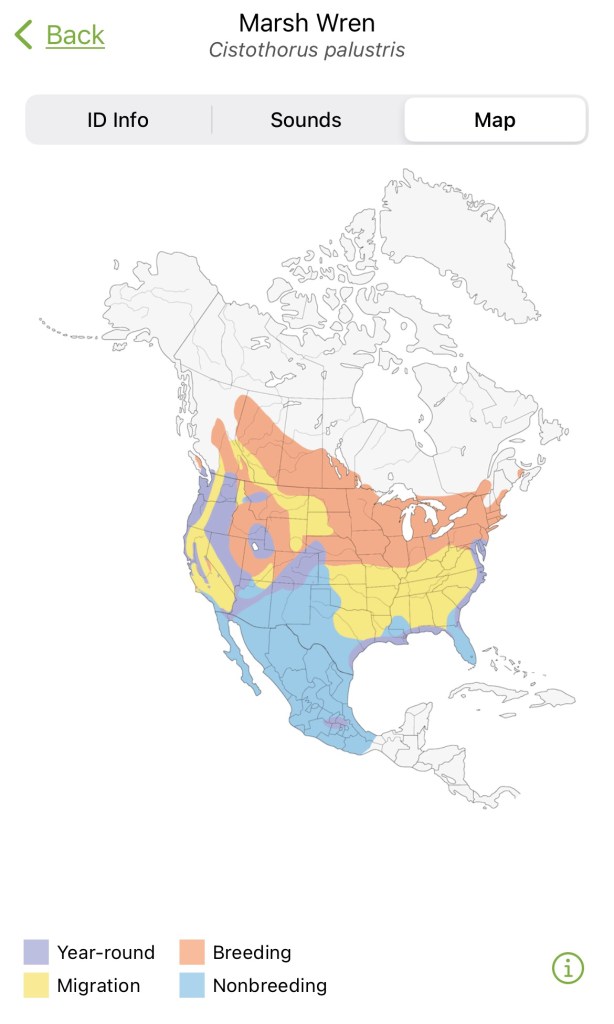
  • Have some fun with the app and do your own research. I’m tracking what birds I hear at my house each month. It’s letting me know which birds are winter birds, which migrate, which show up in summer, and of course, what’s here all the time (vultures, house sparrows, cardinals, chickadees). Be sure to report each new bird you hear, so your life list on Merlin can grow. I have 192 birds since last September. Majestic that 193. A marsh wren showed up today. That includes birds I’ve seen while traveling, too.
Yep, we are in their range.
  • Conserve your phone battery. To make my battery last longer when on long hikes, I don’t keep my camera open at the tame time Merlin is running unless I’m actively taking pictures (remember, I also obsessively record plants and other life for iNaturalist). If I were planning to go out for a long time, I’d take a spare battery. I tend to run out of juice after around three hours.
  • Don’t become annoying. I have developed the habit of shushing people who talk when I’m “listening” through Merlin. I’m sure it irritates my spouse. People are important! I also don’t even TRY to use the app when on a group hike unless I hear something really cool and go hide to try to capture it. I was hilarious at the National Butterfly Center last October, as I lagged behind the Master Naturalists trying to hear exotic Mexican birds. I also find myself trying to be extra quiet any time I’m outdoors,because it’s become a habit. I whisper answers to questions and such. I am working on fixing that before my family stope talking to me.

I hope you get something helpful out of these hints. If I’m wrong about anything, let me know. Also, if you have additional insights or hints, tell me and I can add them to this blog post. I’m still learning!

Flowers attract insects that attract birds.

By the way, I’m not claiming Master Naturalist VT hours for any of this, since it’s on my own property most of the time, and that doesn’t count. I did count my time during the Great Backyard Bird Count, since that’s approved. I don’t claim hours when I’m camping or traveling, since I’m also usually making iNaturalist observations at the same time and don’t want to “double dip.”

Bird Report: Cliff and Cuckoo Edition

It’s been an interesting couple of days, bird-wise. We don’t tend to get many new or unusual birds this time of year, since no one’s migrating and we just have our summer residents. But yesterday, I realized we had new guests.

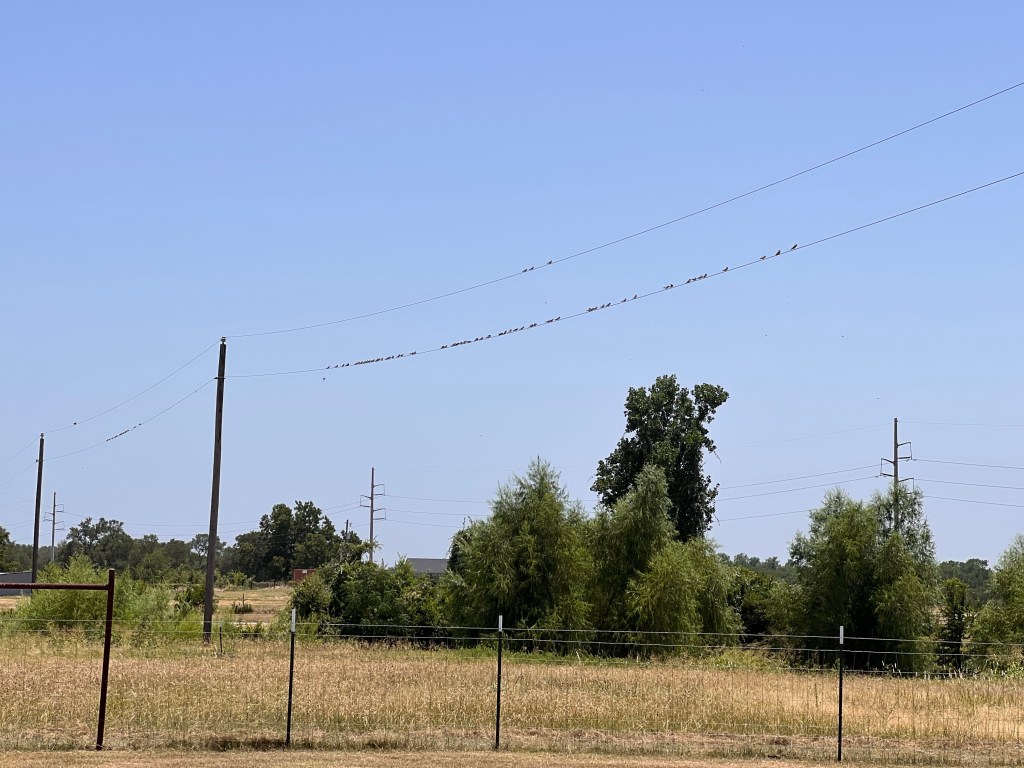
It’s these guys

I thought the birds on our electric wire were the grackles who’ve been hanging out here the past few weeks. Earlier, they definitely were grackles. But these birds were shaped more like the barn swallows who nest at the house.

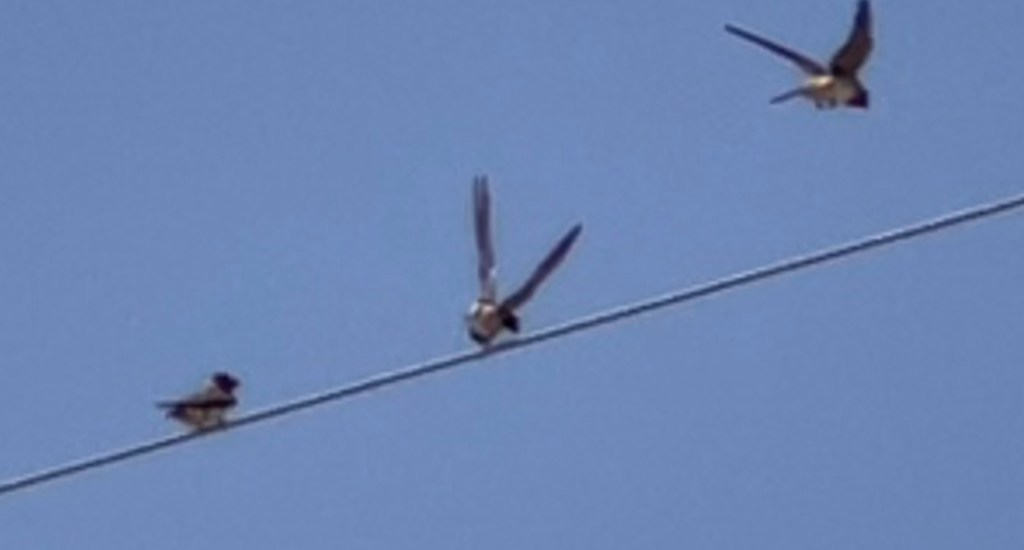
Yep, those are swallow-shaped.

I thought maybe since the babies hatched, the swallows were gathering in new places. I do still see them, just not as many. However, the Merlin Bird ID app I’m so fond of these days clued me in yesterday morning. It heard cliff swallows. Huh!

How do you know which is a which?

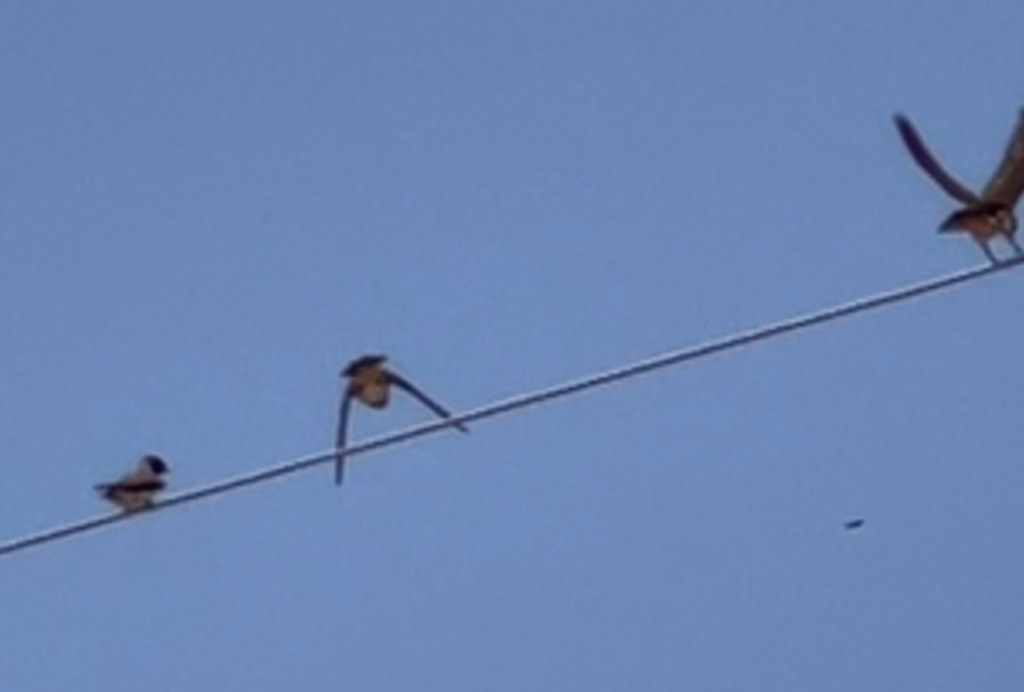
I went in and got my binoculars, and once I got a closer look, I could confirm that we now have two different swallows flying around. Cliff swallows (Petrochelidon pyrrhonota) are more brown than barn swallows, have a distinct rust-colored patch on their rumps, and their tails are more squared off. They have whiter breast feathers, too. Otherwise, they are similar to barn swallows. They’re found all over the US and nest on cliffs (duh) and under bridges.

You can see a tail here.

Unlike barn swallows, who build separate mud nests for each family, cliff swallows have huge communal nests, also made of mud. They are more social than barn swallows, so if you see large groups flying or hanging out on wires, these are probably what you’re seeing. I noticed a cool thing—the birds always face away from the sun. In the mornings I always see them facing west, and in the evenings, it’s east, at least on our north-south wire.

I’ve been enjoying watching them feed over our front pond. The barn swallows seem to have claimed the back pond for their territory.

The back pond is also the favorite hangout of our yellow-billed cuckoos. I’ve mentioned before that I only realized we had them when Merlin Bird ID heard their sounds. You may have heard them, too. Go to this page and click the “listen” button. Sounds like the jungle!

Photo by Carolyn Henderson

Lately, many of my Master Naturalist friends are seeing them for the first time. I was getting jealous, since I’d only seen them way in the distance. My friend Donna even wrote a blog mentioning it.
Yesterday, I was reading something from my friend Carolyn Henderson about how she had just seen one, and feeling a jealous twinge, when right above my head was the unmistakable cacophony of a cuckoo, and sure enough, one was right above me, flying low. I guess it was saying, “Fine, here I am already!”

I guess this is the year of the cuckoo and painted bunting, thanks to the sound ID app. Even Lee knows when he hears them now.

Birding Experts on Birding

Last night I went to the El Camino Real Master Naturalist meeting, as I do most every month. I wrote up a post for their blog with lots of details about what I learned, so here I want to share my deep enjoyment from listening to women who are passionate about birds and birding as they share their passions with others.

Three women from our group spoke about how they engage in bird watching, each with a different perspective and knowledge base. I sat there like a little kid, all enthralled at the details they shared. It was thought-provoking to look at how each of them engaged in their hobby. Here’s what I saw (just using first names here).

Ann tells us you really, really need a good bird book.

Ann has been birding for many years, and she does it for the same reasons I do: basically, she likes birds a lot. Her passion and enthusiasm for identifying new and unusual birds was very obvious, but she reminded me of my methods for birding. She said if she didn’t know what a bird was from quickly observing it, she’d often just move onto the next, in contrast to her birding friend who just HAD to identify every single bird she saw, in a scientific way. Of course, Ann knows pretty much all the birds you can see around here; she just doesn’t stress over what she doesn’t know.
Joyce shares the various ways we can upload our observations to help researchers.

Joyce also loves birds, and watches them in a very accurate and detailed way. She keeps good records of her feeder, counting them carefully, and only identifying the ones that come into her feeder watch zone. There is a great deal of discipline to her approach to observing birds, which goes along with her amazing attention to detail in other parts of her life. We need birders like Joyce, too, to provide accurate data for researchers. (Of course, she’s also having fun.)


Here, Ann is listening to Cindy tell us her suet recipe. Some samples are on the table.

Then, there’s Cindy, whose approach to birding is to figure out how she can practically help the most birds. She shared with us her recipe for making lots and lots of suet for little money, so that the woodpeckers and other birds that like to feed on trees and eat more than just seed can be satisfied. She’s not there just to watch or count or record she’s there to help the birds thrive.

(All the women also carefully feed and water their birds; I was just contrasting their main styles.)

Another birder style was described by Ann, who talked about a very intense young man who asked to come to her house, because he was on a mission to get three more birds on his Milam County list of 100, and she had some of them in her yard. As soon as he saw one, he went on to look for the next. No lollygagging, watching behavior, or anything. And he didn’t stick around to chat; nope, he had to go to Bell County to work on his count there. These are the kind of birders people often gently poke fun at, but hey, they aren’t hurting anyone, are they?

Bonus sinset from the meeting yesterday.

Like any other hobby, there are many ways to enjoy birding (don’t get me started on process versus product knitters). Do you like to watch birds? Do you feel like you need to know what they are? Do you just enjoy their antics? Do you use them to tell what season it is? Share!

Now, that is a yellow flower!

By the way, I was almost late to the meeting, because I had to take this photo of beautiful evening primroses along County Road 140 across from the cemetery.