In many parts of the US, Easter-time is when spring is celebrated. Here in Texas, the spring new growth starts around the beginning of February, at a time traditionally called Imbolc or Candlemas (or in US folk culture, Groundhog Day).
This is one of my favorite images of Brighid. It’s on sale right now, too. I had to borrow this photo, since I’m not at home to take my own picture.
It’s also the day sacred to St. Bridget or the goddess Brighid, depending on your tradition. She’s always been my favorite, since not only is she the Mother Goddess of Ireland, but she protects the hearth, the home, spinning and weaving, and fire! That’s why there is an “eternal flame” in Kildare, Ireland in her honor.
I was pretty thrilled to find a goddess who cares for all the things I care so deeply about, so I’ve always loved her. Back when I got to go to Ireland often, I visited her sacred well and cathedral many times. If you’re ever in Kildare town, check it out.
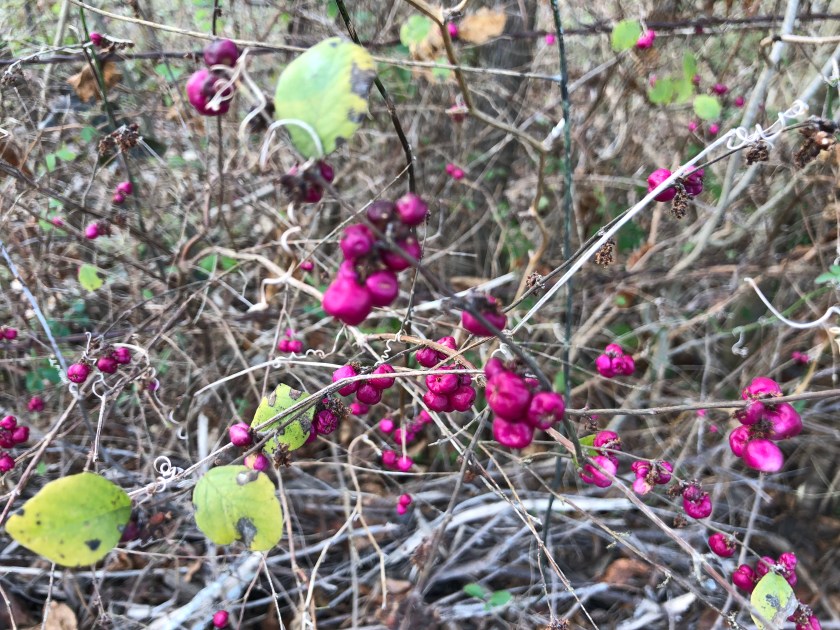
Here, though, I celebrate Imbolc by giving thanks to all the little plants and flowers that have kept me going through the winter (the very damp winter this year!). The little bluets are a real favorite, as is the chickweed I shared earlier in the week.
I’m glad I met Monique Reed, my botanist friend, because when she came to inventory plants on the ranch last year, she showed me how many wonderful tiny plants there are here at the Hermits’ Rest; you just have to look for them.
Looking at the tiny blossoms, the tiny berries, and all the plants that keep on going through the winter reminds me that we, too, have to keep on going through the dark periods, and just keep looking toward the light. That’s what the Imbolc season tells us, too. Spring is coming. Keep looking at the light and stay warm (yes, even those of you in the Polar Vortex right now!).
Hey!
If you want your own statue of Brigit or Brigid or however you want to spel it, I recommend you visit my friend Liana’s business, Sacred Source, and see some great options/
A number of years ago, I quit writing in my blogs (I had one on knitting and one on traveling in our RV). I basically quit reading them, too. I found, at the time, that all my blogging friends had moved to Facebook and were posting updates there, or in Instagram.
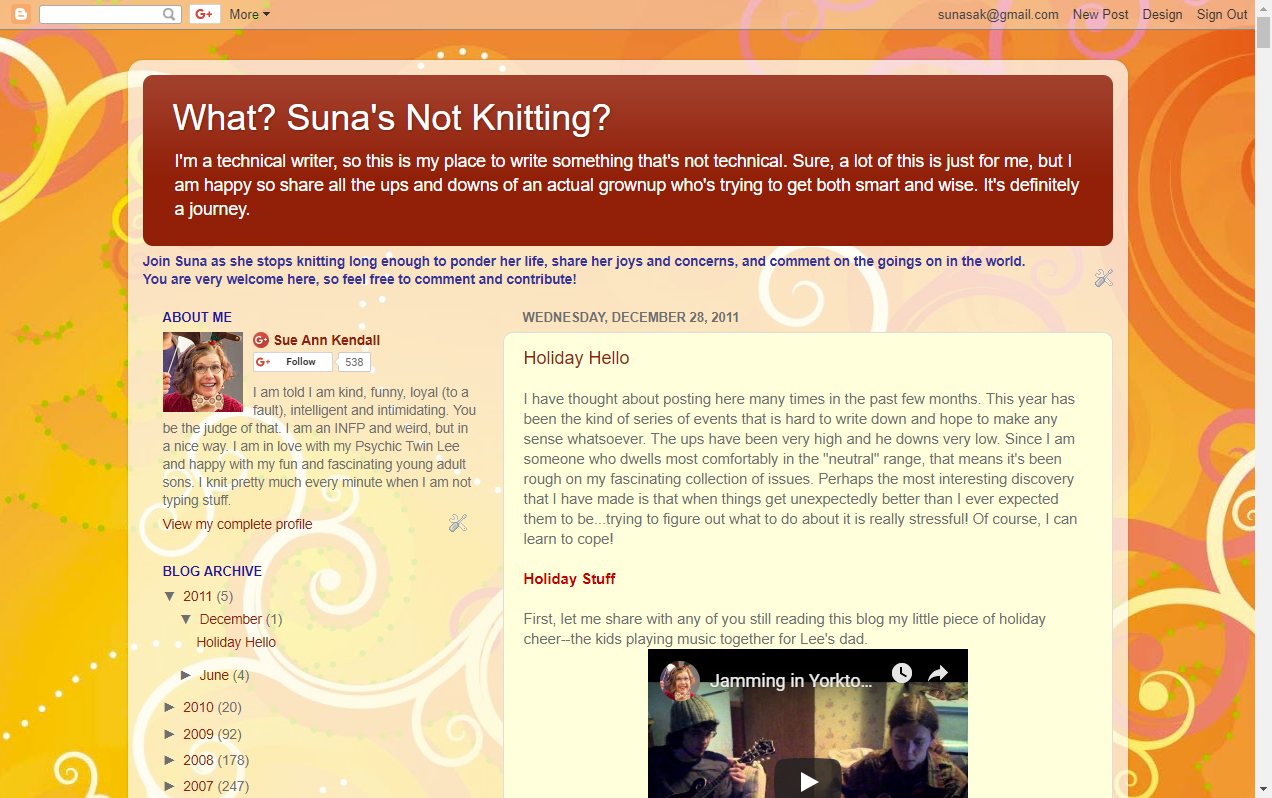
I used Blogger for my first blog. It is apparently still there, with a happy message from 2011 and some depressing things about my dad dying.
Why did I blog before?
Throughout my life I’ve enjoyed keeping journals. Writing my thoughts down helps me process. When I found blogs in 2005, I was thrilled to be able to journal without writing by hand, and at first kept a private blog (which I think my spouse still does, but who knows; it’s private!).
Then, I discovered many cool people on email lists (another love of my past) blogging about knitting, sharing their work, sharing their patterns, and interacting with each other. It was so great to share photos and instructions, as well as what was going on in our lives.
We readily admit that one thing we love about the Hermits’ Rest ranch is there is no Home Owner Association or HOA to deal with (just me, Lee, Sara, and Ralph having a meal and discussing stuff).
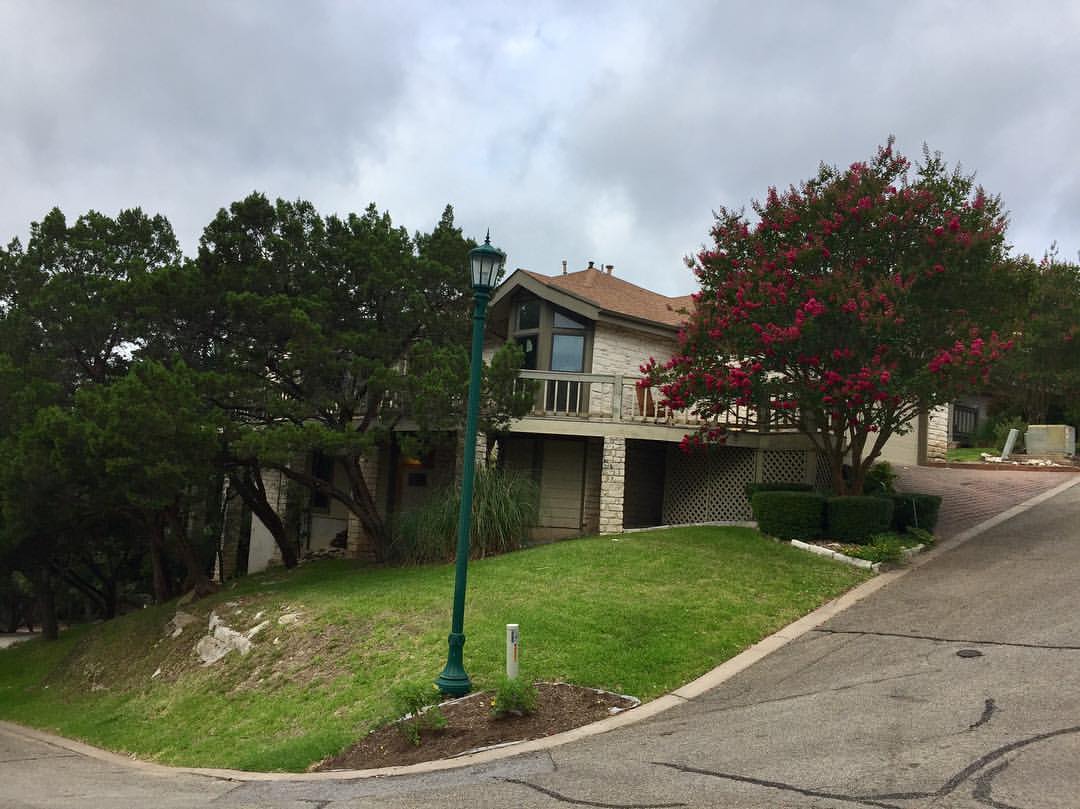
Our little villa. Note narrow hilly street.
In my previous Austin house, I was in the Meadows of Brushy Creek HOA, which was a big one with lots of people. I admit that in 20 years, I never attended a meeting, though I did give my proxy a couple of times. I thought of them as those busybodies who told me to weed my plants right after my husband left me, along with a broken lawnmower.
On the other hand, I was glad they were there to keep the place looking presentable, get public things repaired, and all that. I guess I didn’t love them or hate them; I just chafed a bit because I’m not much of a rule follower unless I think there’s good reason.
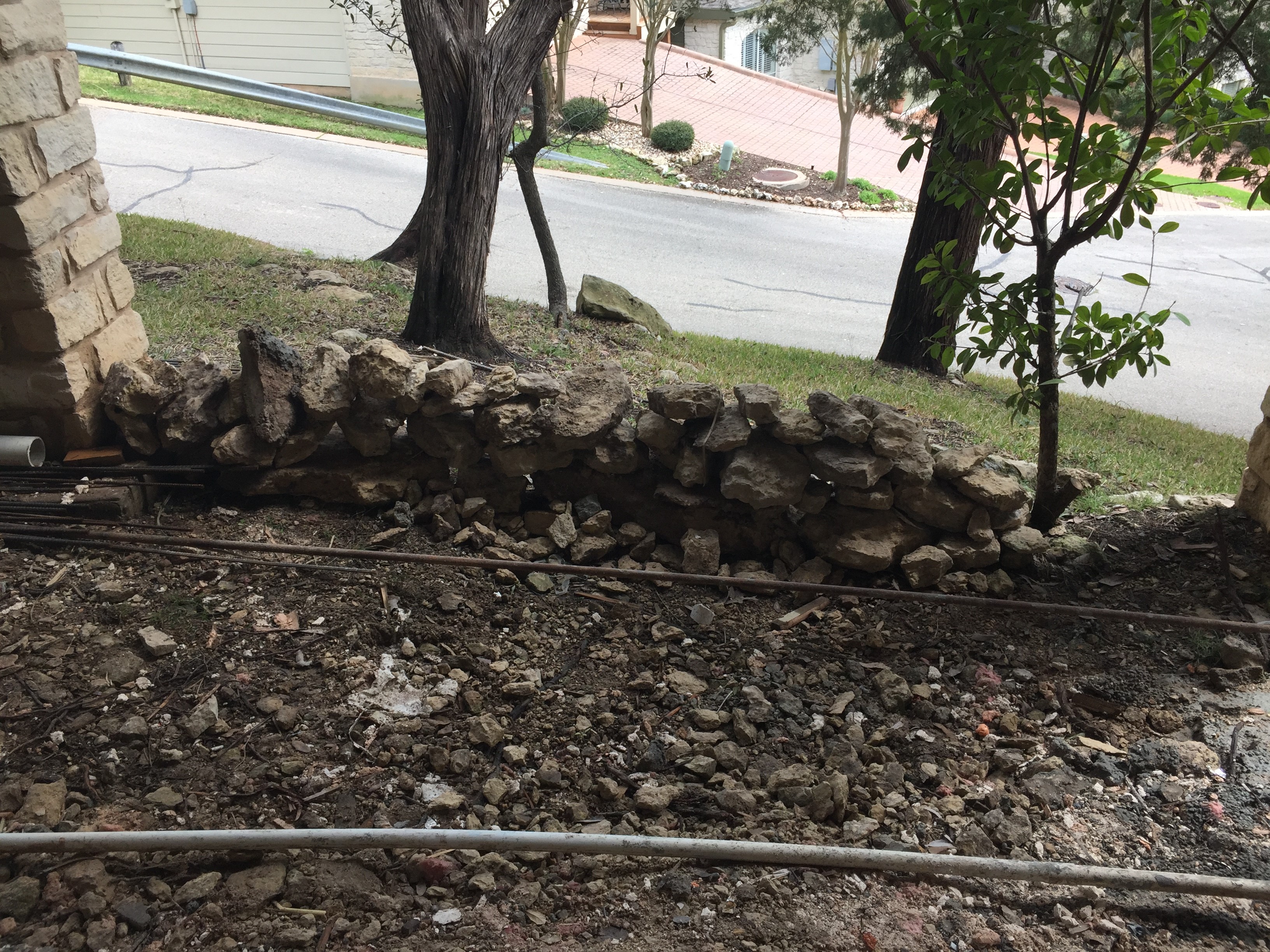
Example of why the landscape needs work. These are the irrigation lines. They are no longer UNDER the dirt or rocks.
My friend, Mike, has been president of his HOA in southeast Austin more than once. I enjoyed his tales of complaining neighbors, argumentative meetings, and having to make hard decisions. It did not sound like my cup of tea.
Here we are at the Northcat Villas
As soon as we bought the Bobcat Lair and ran into all the problems with the City of Austin and permits (see our Bobcat Lair page on our business blog), we figured we’d better attend neighborhood meetings, so either Lee and I, or Anita and I have been going ever since.
Yesterday was a beautiful day, and whenever that happens, I’m sure to take a walk or two during the workday. I use that time to make plans for meetings and figure out problems, like I said in my previous walking post. It helps me think.
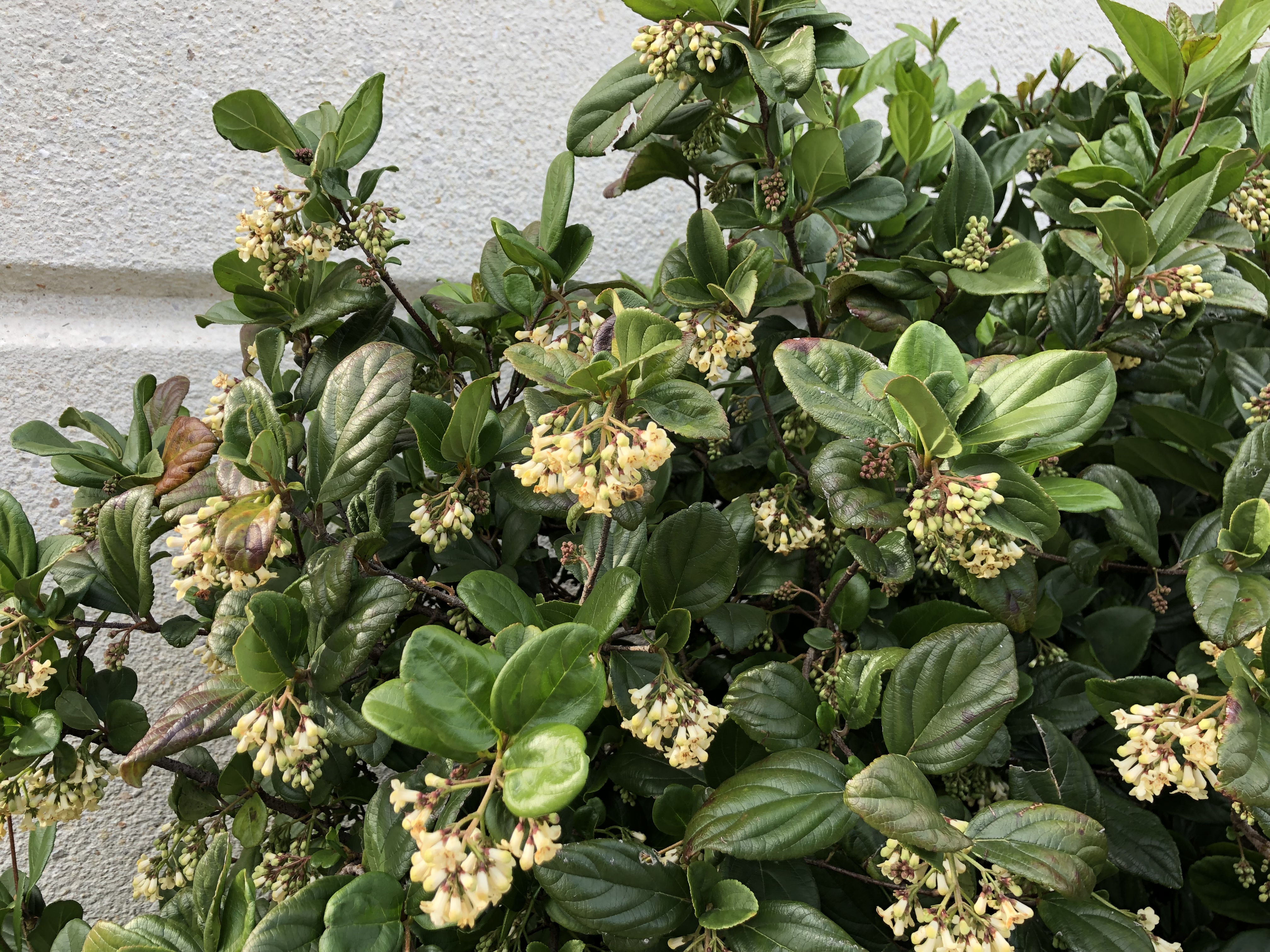
Can you spot the bees in the sweet olive bush?
Moments after I stepped out of the building, my spirits lifted, and I happily thought to myself, “Sweet Olives!” Once again I gave thanks that my sense of smell is very good and that some smart landscape designer put sweet olive hedges all around the building where I work.
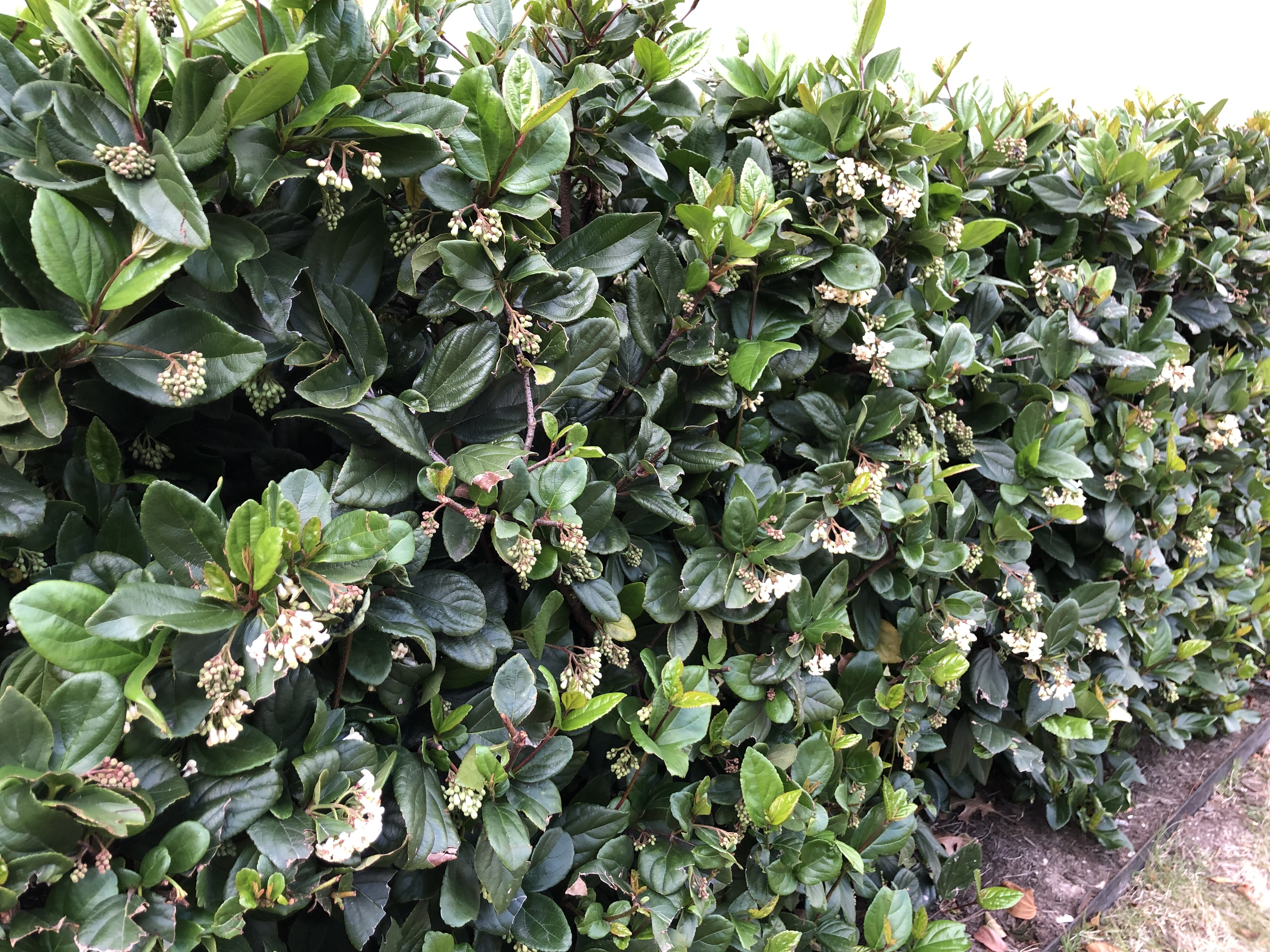
They trim up nciely to make a hedge.
These plants (Osmanthus fragrans) are among the earliest to bloom, and make January and February very pleasant throughout the southern USA. The sweet olive has beautiful green leaves, making it a nice hedge plant or small tree, depending on how you prune it.
Just one tiny flower can be enjoyed for hours.
But the best thing about the plant is its flowers. They are tiny and white, and grow in not-very-showy clusters. But who cares what they look like! They smell fantastic. They are sweet, but not overly so, like many white flowers. I took one tiny blossom back to my desk and enjoyed it all afternoon.
People aren’t the only ones to enjoy the sweet olives, too. I saw many honeybees pollinating away, and even some houseflies enjoying the nectar.
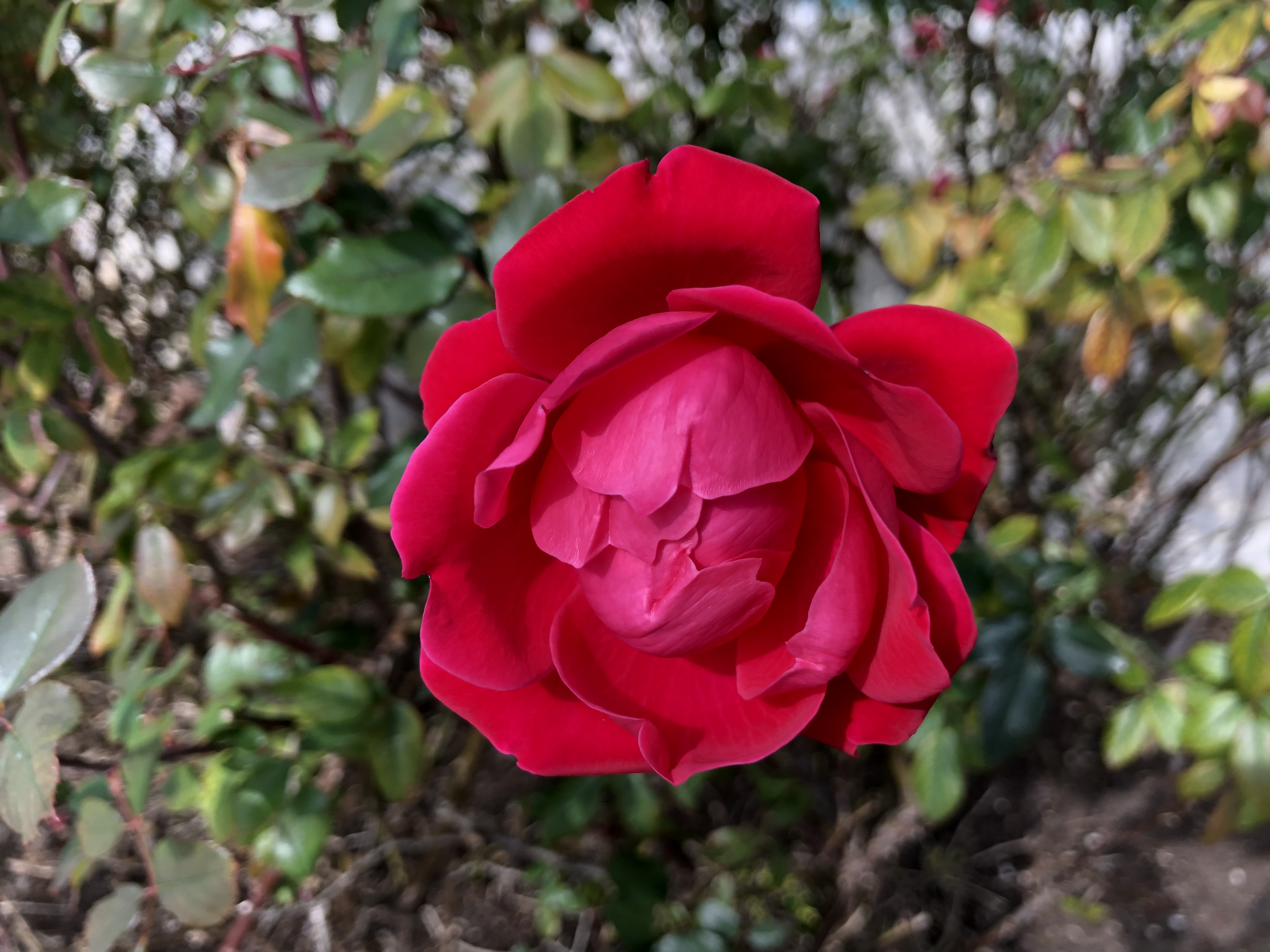
I smelled this one. It smelled great. I like those landscape roses, even if they are getting a bit ubiquitous.
My nose continued to be happy as I walked around the building, because the roses are continuing to bloom, as they have all winter (they are that nonstop kind). The good news is that they do have a nice scent, though not as strong as a damask rose.
They call it sweet alyssum because it smells very sweet. And is a great edging annual.
Then, as I continued my walk, I smelled something very, very sweet. I looked down, and there, smiling at me, were some beautiful sweet alyssum. They were planted with dianthus, so, if you lean over before walking in the neighborhing buildings, you get a sweet, spicy mix. (Aside: I always find the purple ones more strongly scented, which is also true of solid purple pansies and the purple variety of lantana, which smell fantastic if you get close to them.)
The different textures in these bushes helped me forget about the cigarette I had been smelling.
Luckily, most of my other senses also got to enjoy themselves, since all kinds of plants are budding out, and there are always songbirds trying to drown out the traffic noise from US 183. The last part of my walk was bad for the nose, though, since a guy got ahead of me and lit a cigarette. That gives me the wrong kind of sensual overeload. I always wonder if smokers realize how many other people their habit can affect? (I know some do!)
Bird News
Speaking of birds, I have good news. The Swainson’s hawk pair that nested at the office appear to be back. And I was very surprised to see a caracara (Mexican Eagle) fly over outside my work window this morning. You don’t often see them in such an urban setting.
Today’s bonus post is about how recycling and properly disposing of waste really, really matters. This is not more of my New Age jargon. It’s real, man.
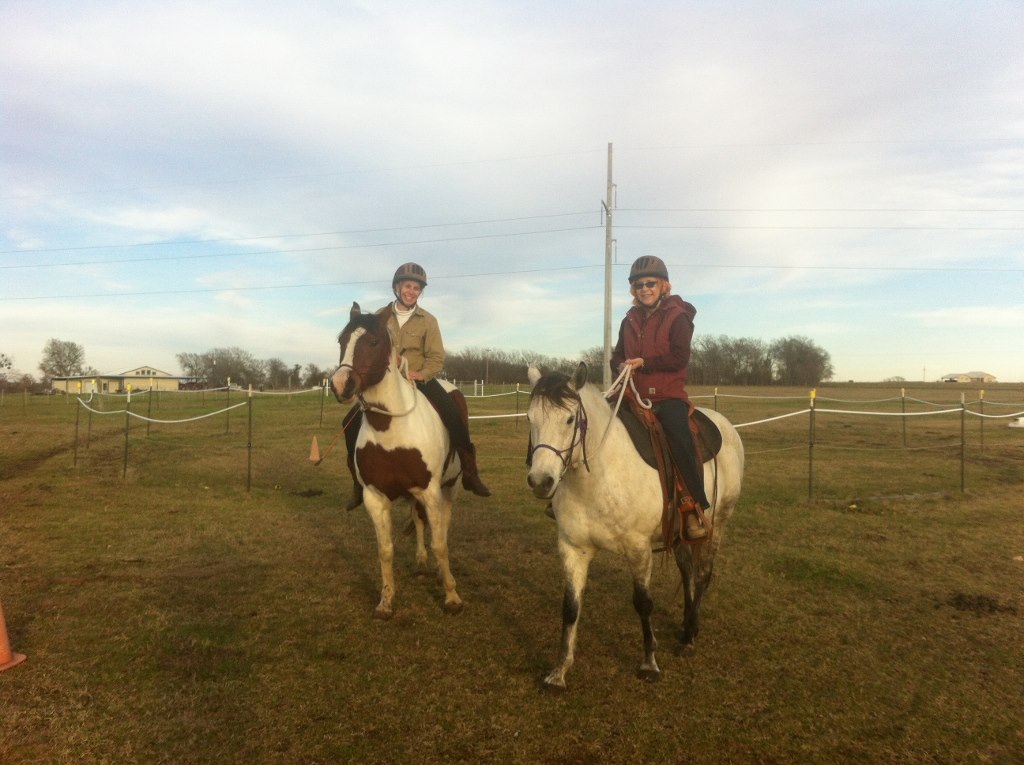
Here’s a picture from this date in 2015 of Sara and me out riding. She is on Apache, who is now my horse, and I am on her previous horse, Aladdin. This was the first time I rode a horse other than the ancient plodding sweetheart, Pardner.
Yesterday, as often happens on weekends, Sara and I were out riding our horses. It was a really beautiful day, and the horses (Spice and Apache) were informing us that they’d rather do things other than what we were asking, so we needed to keep them out there to remind them we are the leaders and they are the followers.
So we wandered all over the property where it wasn’t too wet to wander. There were still a lot of good-sized puddles that are turning into small ponds, so I practiced convincing Apache it would be fun to walk through them, while Sara convinced Spice she really DID want to trot in giant circles.
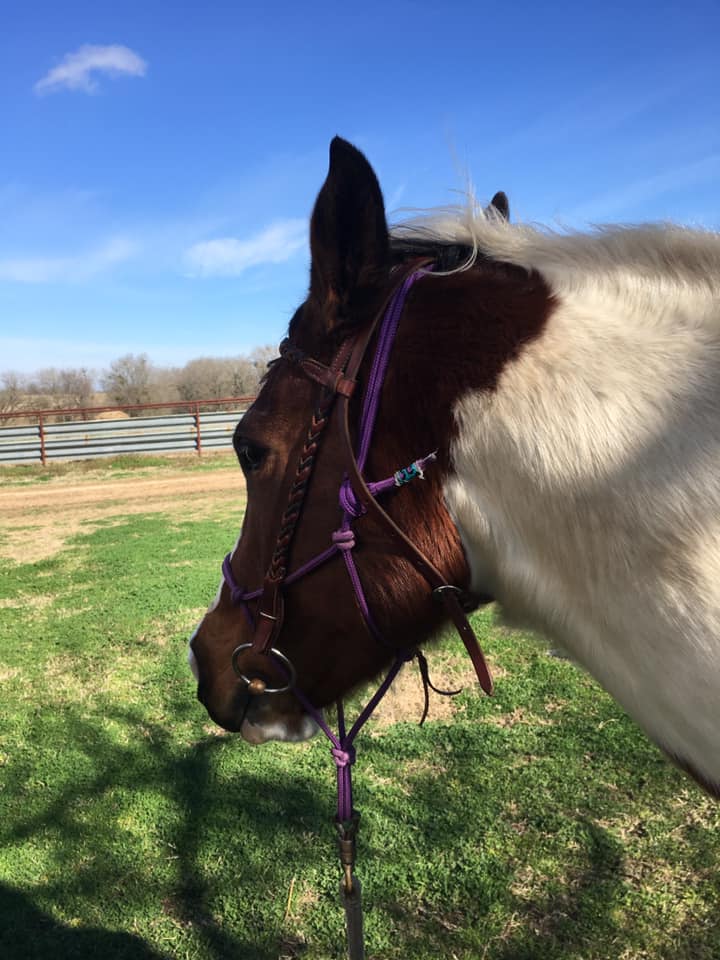
Speaking of not being bored, Apache is learning the new skill of riding with a bit and bridle! We usually just use his halter and reins. Next, I have to learn to use the new tools.
That got boring, so we went into a pasture we’d not ridden in much before, over where our precious cattle are. There are some cool low spots I want to investigate on foot over there.
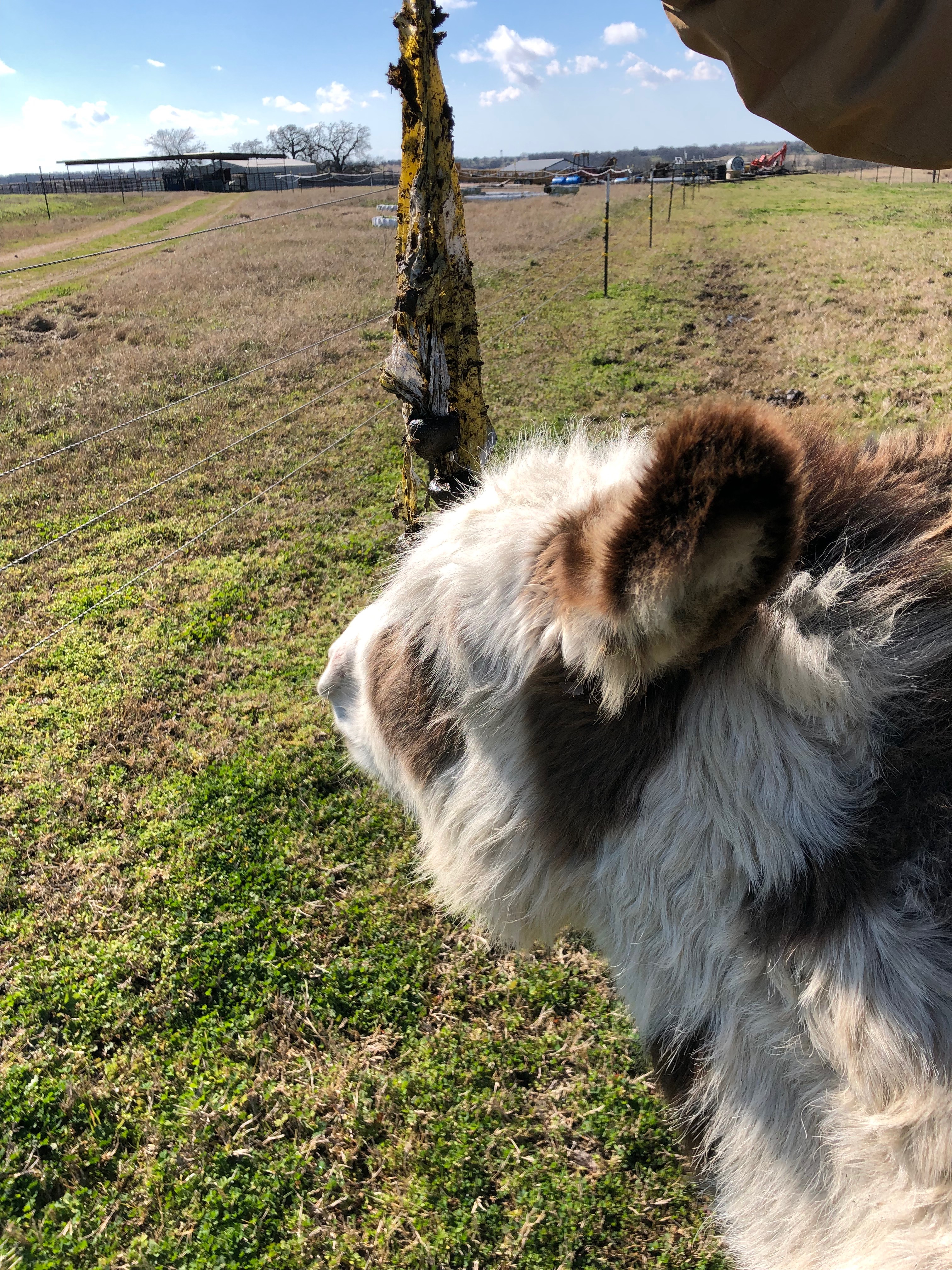
What was cute, though, was “checking on” the cattle. Basically that meant we walked up to each of them and calmly said “hey, cow/calf.” The littlest calf, who’s chocolate brown and very dainty (her mom was the youngest mother of the group) hid behind the larger bull calf at first, but then she peeked out and came right up to us.
All the mother cows have known these horses for years, so they were fine.
And what about plastic?
I’m getting there. We took two different routes to return the horses to their pasture, do to gate rearrangement needs (a common ranch thing, moving gates around). I was walking toward Sara as she was bringing Spice to where I was, and I noticed she was carrying something funny looking.
What in the world is she carrying?
I asked her if she’d found a plastic bag on the ground (we have recently found mylar balloons, which I think I’ve mentioned).
She said yes, but look at the decorations. Oh, ick, the bag was covered in nuggets of horse poop. One of our equine friends had eaten it and excreted it (and we all looked at Apache).
This image, seared into your brain, should convince you to not randomly throw away plastic bags.
Friends, that could have messed up his innards big time. Obstructions kill horses. They aren’t great for cattle either.
Fiona says she’s grossed out, too.
So please, please don’t let loose of mylar balloons and don’t let your plastic grocery bags fly off. Not only do most of them end up way up in trees, which looks awful, but if they end up on the ground, very valuable livestock could ingest them. That would be sad.
PS: Sara reminded me that they lost a calf (valued at thousands of dollars) once because it ate a mylar balloon. Expensive balloons!
[By the way, if your personal tradition doesn’t like the word “meditation,” you can substitute “prayer” or something else that works.]
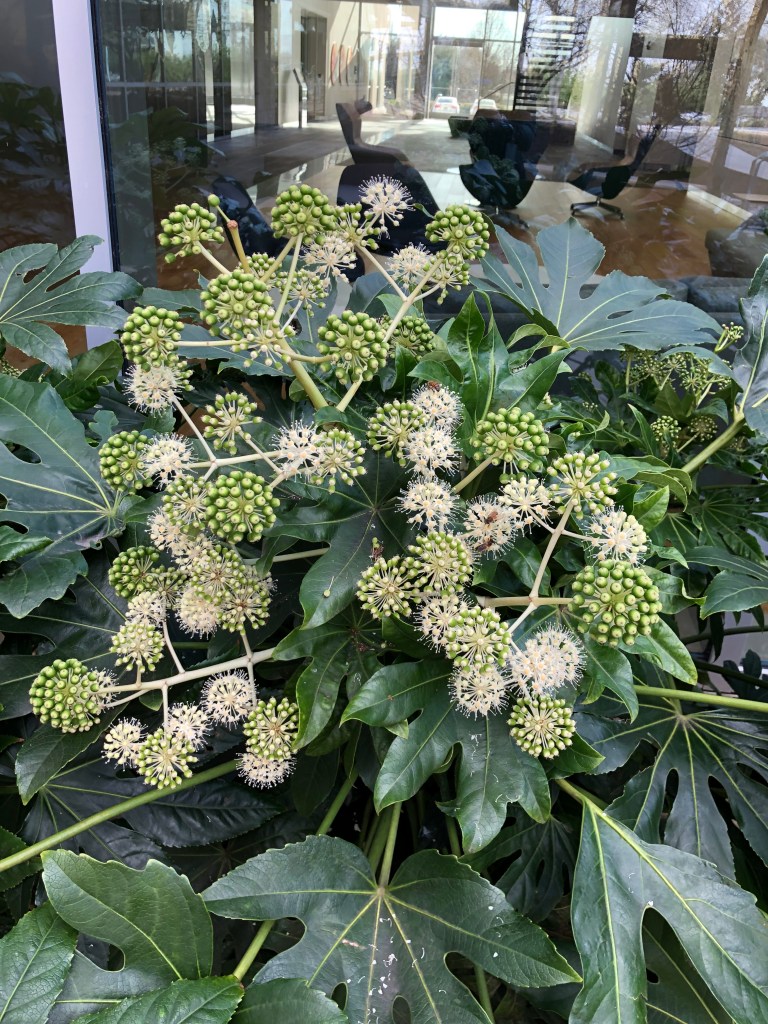
Some folks like to look at something when they meditate, like a flame or a flower. I like things with regular patterns in them, if I’m going to look at something.
Believe it or not, the habit I have cultivated for the longest time is meditation. I probably came to it for self defense; I had a very, very busy brain as a young person. I worried a lot; I daydreamed a lot; I replayed scenarios in my mind; I engaged in endless analysis of my perceived flaws and the perceived flaws of others. I needed a break.
Lucky for me, I liked to go to the library as a little kid, and my mother did not care what I brought home, because when I was reading I was quiet. Sometime around 1970, when I was a preteen, I saw a scary looking book called Transcendental Meditation, by the equally scary looking Maharishi Mahesh Yogi. I thought to myself, “Hey, that’s what all the hippies are talking about” (the “hippies” were actually grad students who rented a house down the street from us).
I must say that back when I was a teen, I did a lot of sitting outside hiding in mossy areas to meditate.
So, I was just a kid, 11 or 12, so I probably didn’t get all the nuances of the technique right, and I never did take an official class in it, but I started meditating almost every day. I got to be pretty good at getting all blank, and I sure felt calmer when I consistently did it.
As time went on, I studied other forms of meditation, finding myself drawn toward something like Zen Buddhist meditation for a long time, learning about entering trance from my pagan friends (who always said I was SO good at that, since they didn’t realize my self-taught practice was pretty much what they were teaching), and of course, taking childbirth classes and practicing all that breathing (hee hee hee, etc.). And as you know, I do yoga as one of my main forms of mind-body exercise.
What did all that get me?
I’m pretty sure that all my meditation allowed me to go many years without any medications for my anxiety issue. It has also provided me with the best tool I have for dealing with physically stressful times, too. That childbirth breathing also works very well at the dentist, when stuck in crowds, or when I’m about to give a speech. A bit of breathing helps a LOT.
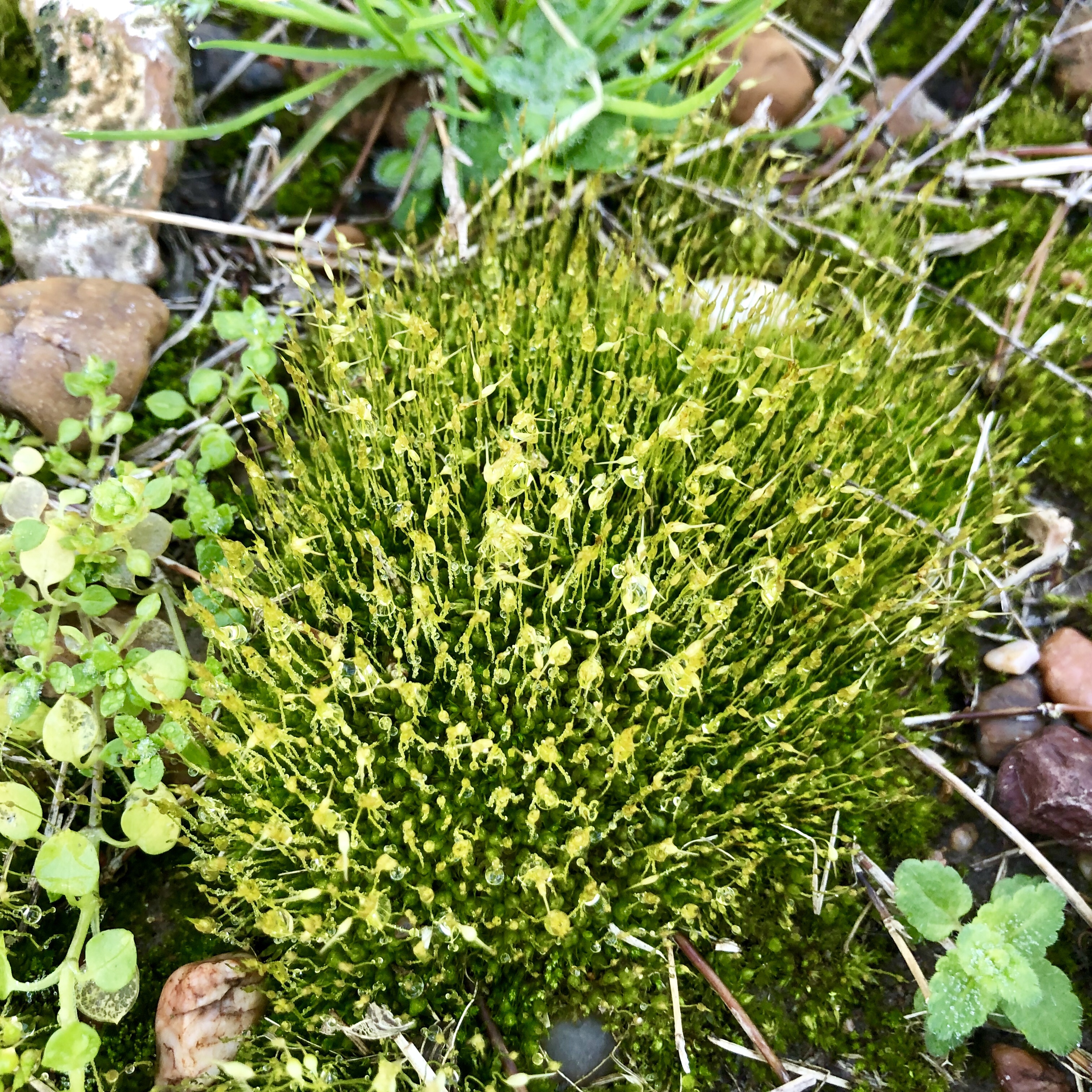
All the little leaves are my quiet mind, and the little flowers are those intruding thoughts popping up.
I’ve also found that answers to questions that have been on my mind have popped up while I’m doing my best to think about nothing. Usually one just gently shooes away random thoughts, but when an answer shows up, I see where it goes.
Honestly, meditation was my first step toward fearlessness. Having this wonderful tool in my repertoire to help me through difficult times has been a real blessing. I fear physical pain so much less, and I know that in mentally stressful times, I have a tool to help me recover. Such a simple thing as sitting for a while in silence every day has morphed into a powerful and freeing part of my life.
Does this aply to you?
Do you meditate? Do you prefer to pray and include words directed toward a helpful intermediary? Do you concentrate on a mantra or other phrase? Do you read from a book of meditations of some sort, then think about that? There are many different ways to center yourself and many different things people call “meditation,” but I think everyone needs a way to find their center quickly. Think about what you do. Do you want to learn something new?
Here is a free sample object with a regular pattern to focus on as you quiet your mind. I kid. I don’t have any meditation illustrations, as you can probably tell.
If so, well, there are lots of resources beyond Transcendental Meditation these days, and there may be one that is just right for increasing your own fearlessness and coping with what life brings you
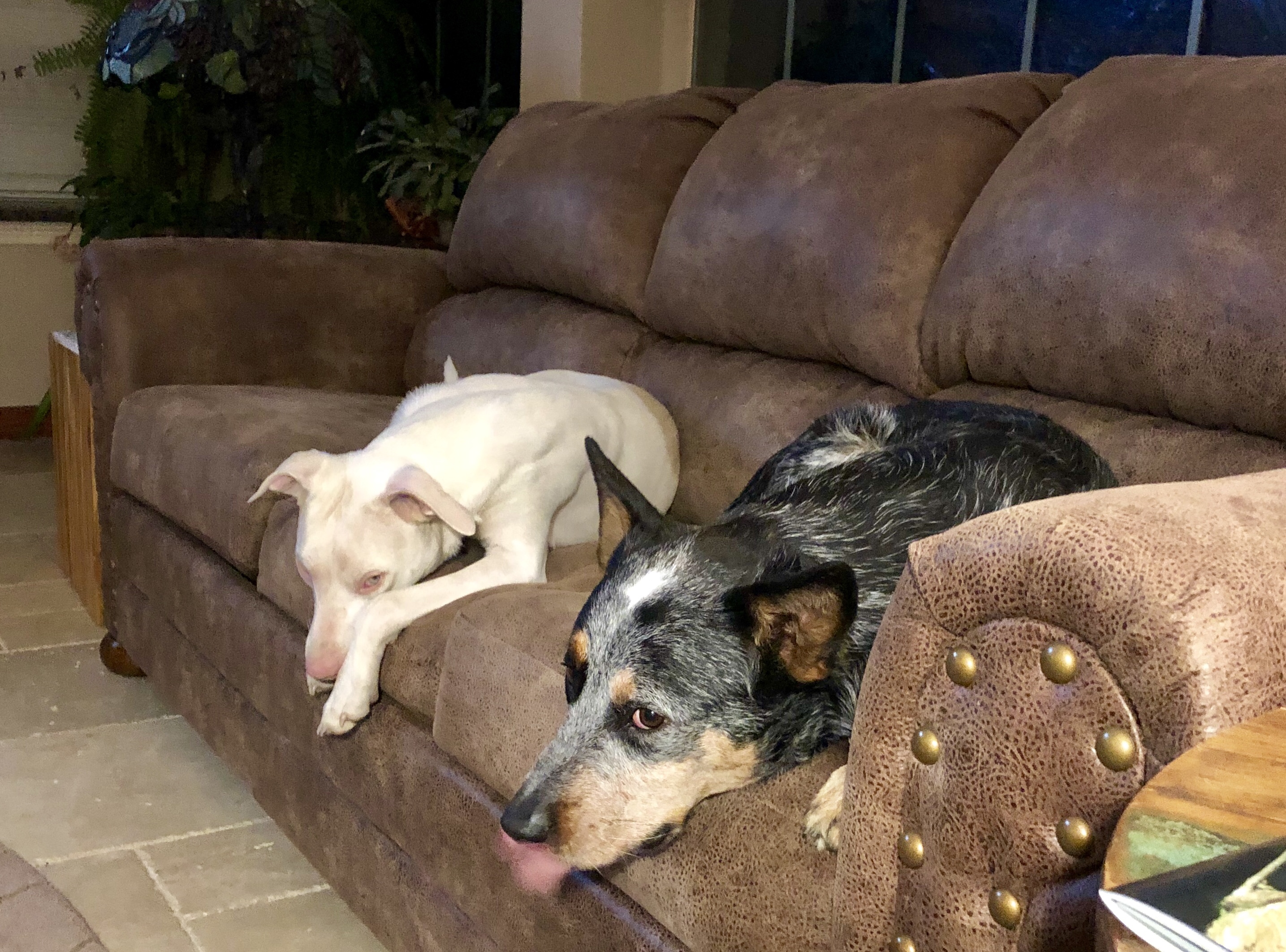
I was a bad dog. Now my foot hurts. Pays me back for hurting Brody last week.
On a rainy day in which I suffered from dizziness and headaches and general ickiness, I was glad to have my canine buddies to warm and cheer me.
We’re totally innocent of course. But Brody has his thupper out to thup unsuspecting passers by.
(Although Harvey tried to eat Big Alfred’s breakfast and now has an owie.)
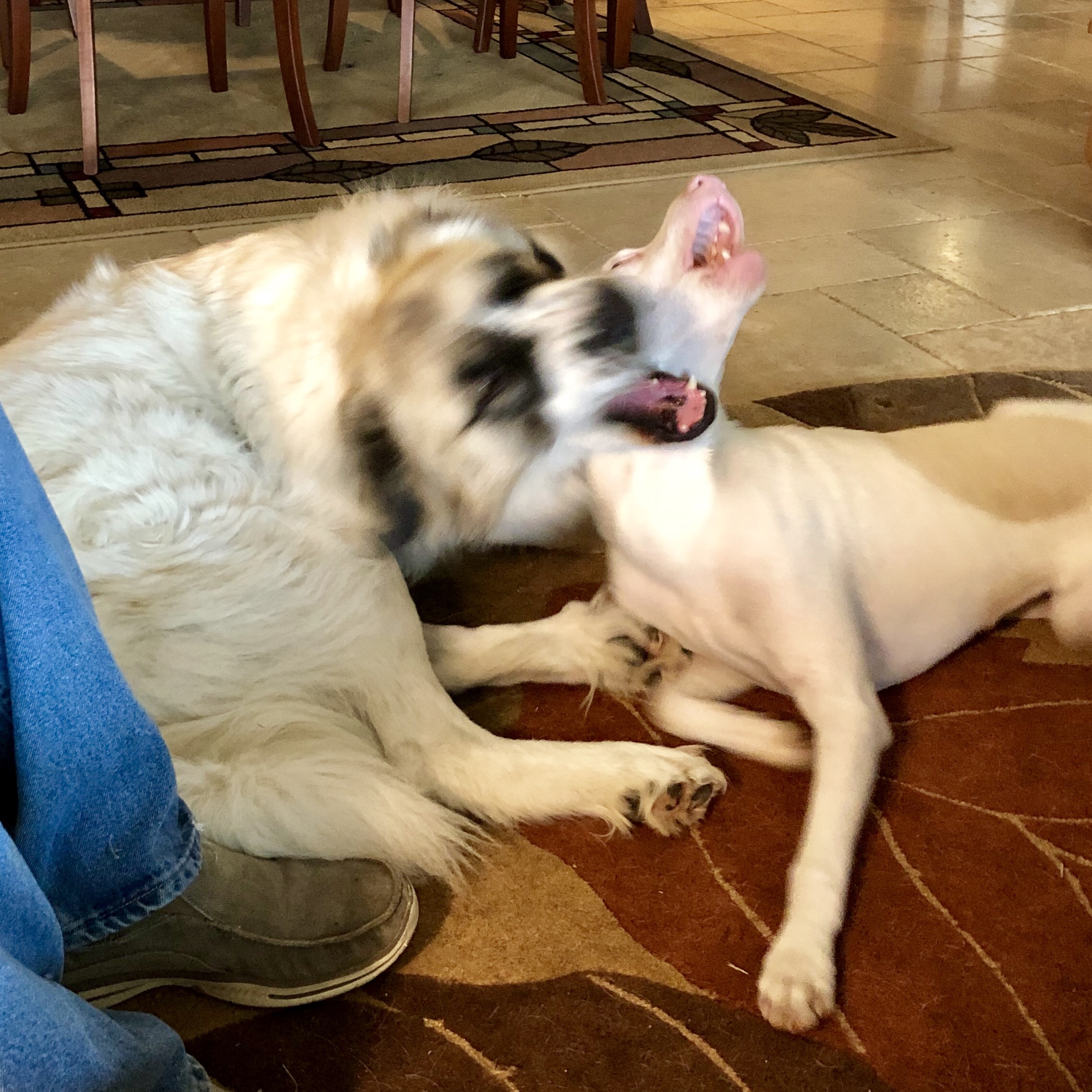
Action shot.
To occupy themselves during the rain, Alfred and Carlton played at least a half hour. It looks fierce but was actually very gentle. They kept sticking their heads in each other’s mouths and gnawing at legs.
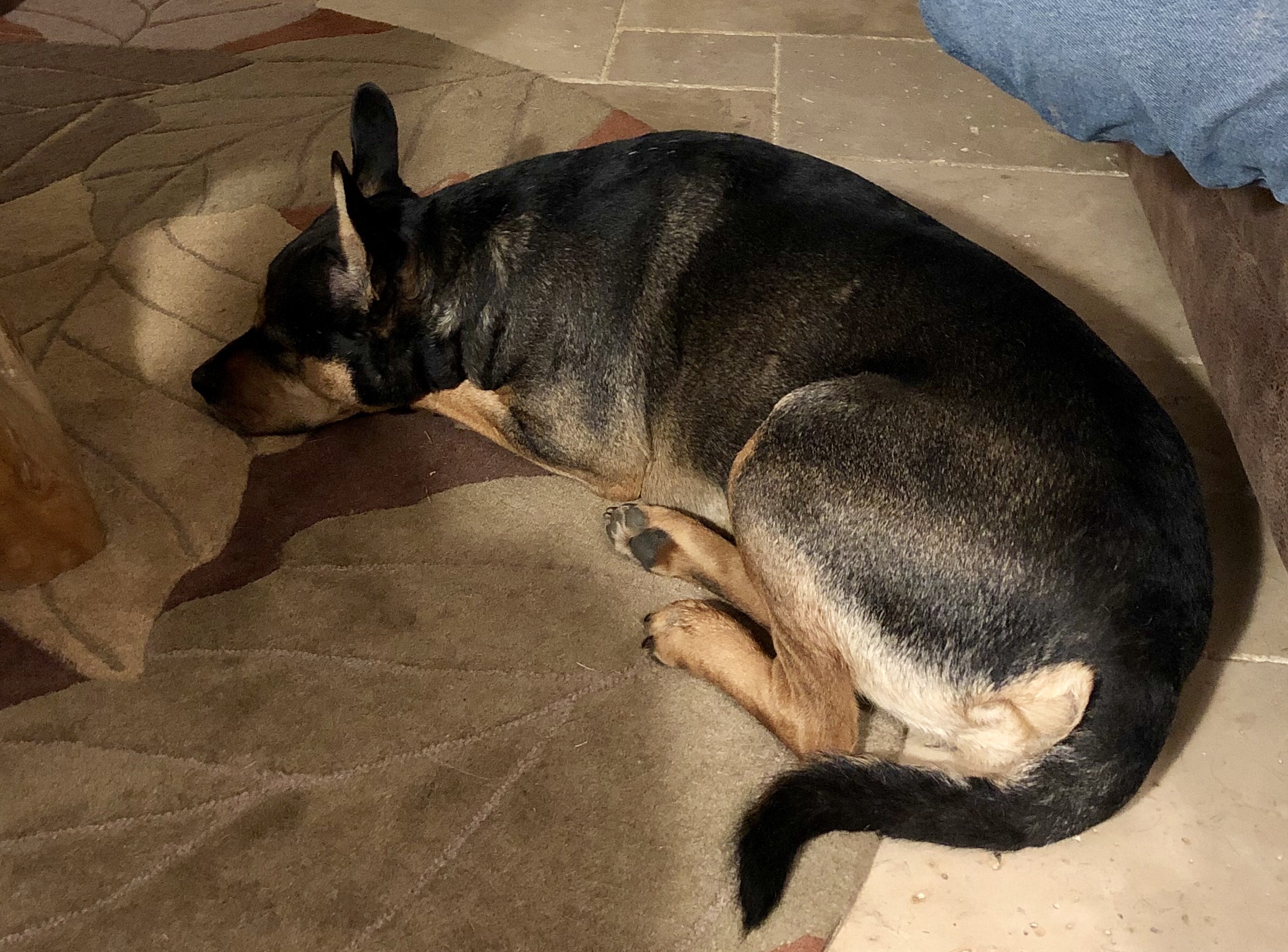
We short-haired dogs have to keep each other warm.
Much of the day both Carlton and Vlassic sat in my lap. Carlton is incredibly gentle when he jumps up. I often don’t even notice. The other dogs are like flying mallets.
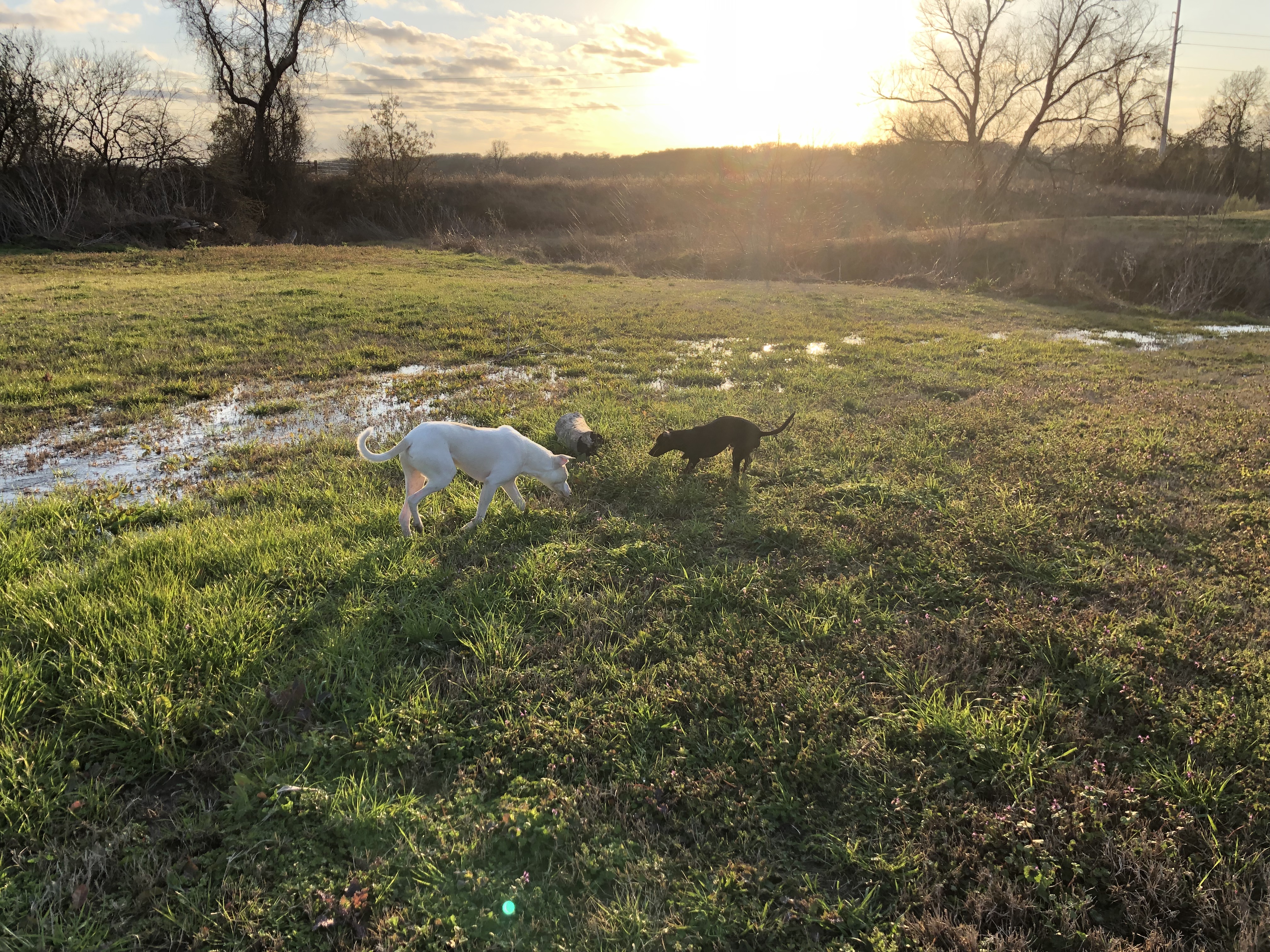
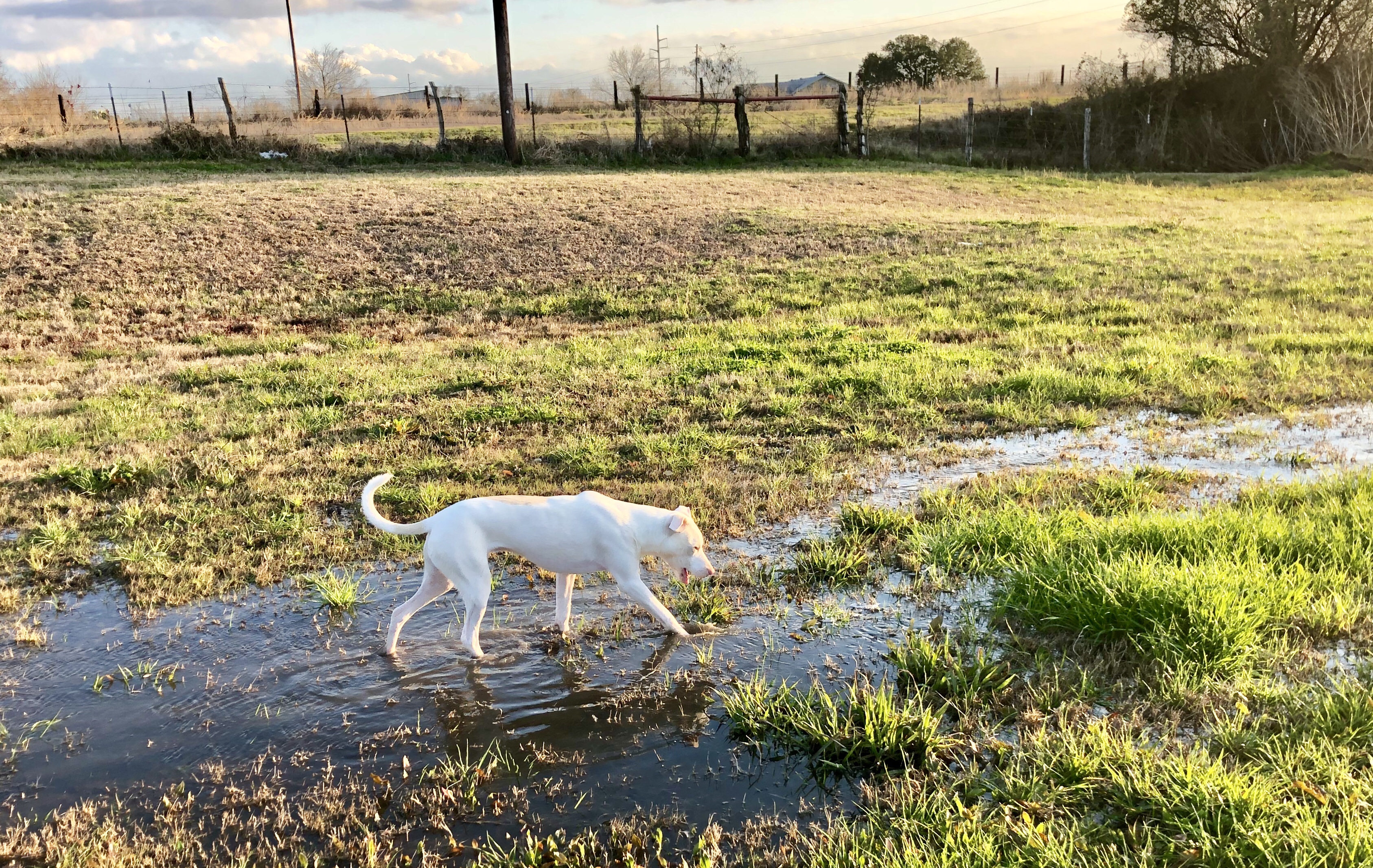
Sun, water, and stuff to sniff! Heaven.
I did go outside to take some plant photos, accompanied by the guys. Then sun had broken through the clouds and everything was clean and shiny. The arroyo was flowing, which makes for happy dogs and even made me feel a bit better.
I’ve been musing about how I feel fearless lately and thinking about the things that helped me get that way. Most of them are just normal things, but done intentionally (like walking). Another thing that’s made a huge difference for me is doing yoga regularly.
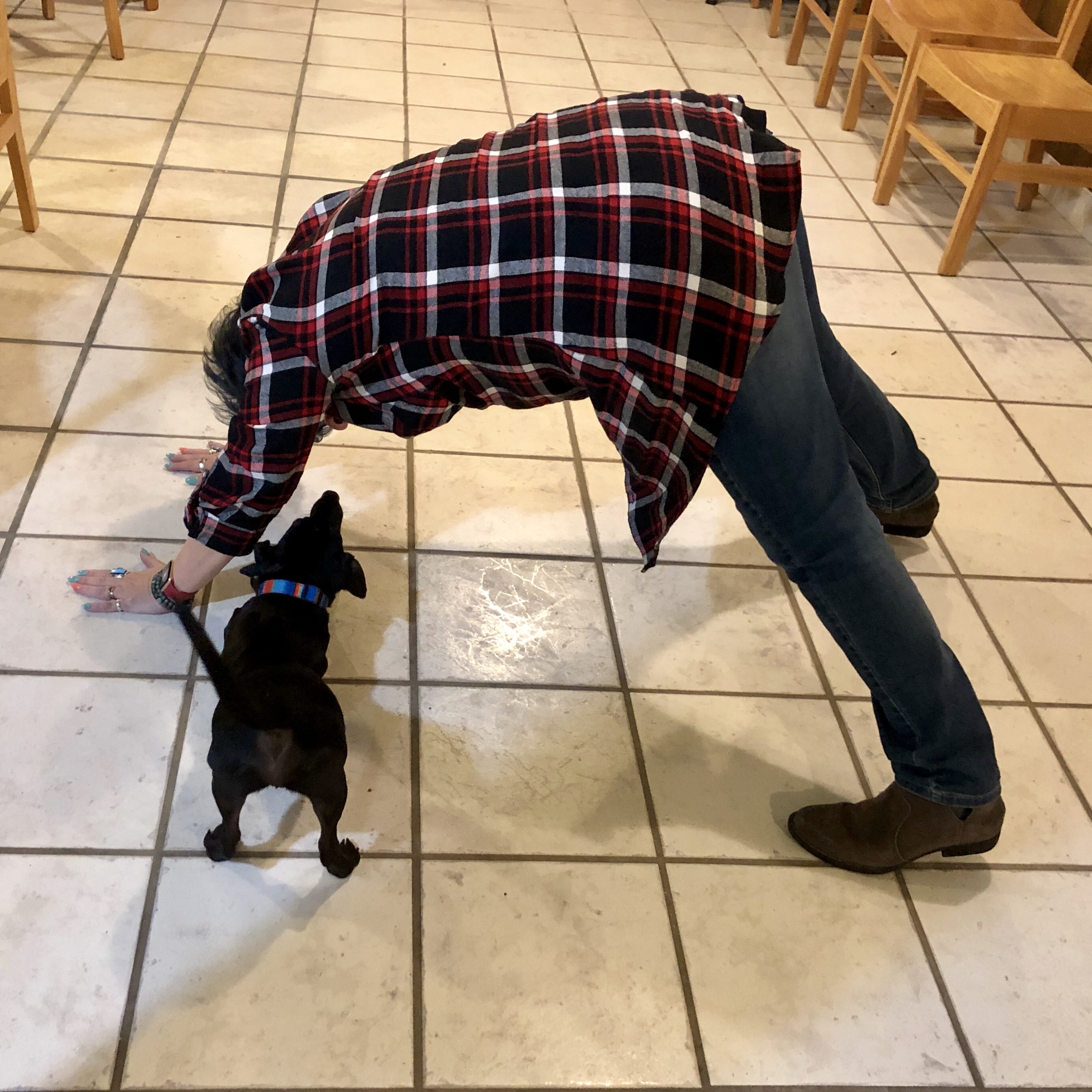
As I was trying to do downward dog in my boots on the dirty floor, Vlassic came over to demonstrate puppy pose.
Now, I’m not one of those super-flexible yoginis that they show in ads. In fact, when I was taking my one ill-fated year of ballet lessons, I overheard the woman tell my mother that I was the least limber child she’d ever seen. That did not inspire me to dance greatness. Plus, when I tried gymnastics, I never could complete a backward roll. Still haven’t, for that matter.
BUT, there are two things about yoga that have built my confidence in my body and buoyed my soul.
It’s not a competition
When you do yoga with real people with their varied abilities and issues, it quickly becomes apparent that comparing yourself with others in your class or the teacher is a waste of time. The mental part is as important as the physical part, and by gosh everyone can practice making their mind still and concentrating on their breath. Who cares if their hands don’t touch the floor when they bend over?
Many years ago, my friend Sensei Larry took a look at how many committees at the church we were members of, and he said, “Wow, you’re really a joiner, aren’t you?” I was quite indignant. I am NOT a joiner. I’m a hermit, dang it! I hate joining things. Ugh! Groups! People! Conflict!
I am NOT a joiner! GRRRR.
I started laughing to myself today when out of the blue, I volunteered to run for the Board of the homeowner association where we live in Austin. The Board pretty much tells the 30+ homes in our little development what they can and cannot do. They meet monthly. They have committees. They are mostly “good old boys” (not exclusively). Why on earth…
…I’ll tell you why. I care. Wow, make me stop caring.
But wait, there’s more
As I type this, I’m in a Board meeting of another organization. Why? Because I care about my connections and friends. And they asked. So, other people: don’t ask me to join anything!
We changed the name of the LLL Alumnae Association to make it more clear that ALL are welcome. That means everyone who cares about our connections.
I’m happy to say I’m the new editor of Continuum, the publication for Friends of La Leche League, a group of people who have been or are currently members or associates of local La Leche League breastfeeding support groups. It’s going online and they asked. And wow, I love working with smart and interesting women.
Help me!
So, yeah, I’m a joiner. But I’m also an organizer and a person who loves collaborative work. So hey, former LLL friends of mine! Consider helping out with this project! Nothing would be a lot of work! We could get the old gang together and create a useful and entertaining online publication relevant to all of us, whatever parenting stage we’re at. Contact me on the Facebook, please.
Now I think I’m full. No more joining for a while, which I’m sure will make good ole Sensei Larry happy. Remember: I’m FULL. No more volunteering.
I’m still pondering how I got to be so fearless all of a sudden. Did I suddenly become a wise crone when I turned 60? I doubt it. A lot of things I do contributed to it. Now, I know everyone attains their wisdom and maturity differently, but I also know that I learn a lot when I read about other people’s journeys (probably why I like blogs so much, now that Facebook no longer has as many interesting personal updates). Memes schmemes.
So, I’ll be sharing what’s worked for me over the next few days or weeks, and you are welcome to take what works for you and leave the rest, as we used to tell mothers at La Leche League meetings.
Let’s take a walk
I can remember thinking I was a slothlike slug, because I never was very good at vigorous exercise. I sure was over-generalizing! Looking back, I see that I was, and still am, a big walker. I walked miles and miles while I was getting my university degrees. I have strong memories of exactly how far it was from the Foreign Language Building to the Engineering building on the University of Illinois campus, especially when it was below zero outside.
Then I had kids. Walk walk walk (also a lot of bike rides). Walking on trails. Walking at football stadiums. Walking.
I can see this path from my window at work. I usually walk around the whole complex, which takes a half hour, or walk this over and over (many lovely birds here). When it is raining, I can always walk all the way up the parking garage and back!
Then I started working in office buildings. The only way I can survive is to take a walk most days. That’s where I do my best thinking and pound away my concerns.













 The Hermits' Rest