Sometimes You HAVE to Be Goofy

No doubt I was a lot goofier in my youth. I recall that I was laughing or crying pretty much through my whole teen and college years. I’ve moderated since then, probably thanks to the Prozac. Or maybe I’ve matured.

Hi, I’m one fun sloth.

Still, when big chunks of your life basically suck in a lot of ways, a bit of goofiness can really help. Yesterday was a day of painfully difficult work conversations followed immediately by leading the latest Master Naturalist meeting (I love the meetings, but trying to host them, be the secretary, somehow get the member who can’t do Zoom able to listen on the phone, answer people’s emails who lost their credentials, and ensure that everyone gets in is not easy). I was out of spoons, as they say.

When I was finally free, I went straight up to my bedroom and plopped down. I couldn’t even focus my eyes. I was reeling trying to figure out what my options are in so many areas…where to live, when to make changes, how to support my work team, how to support my family, and whatever. I KNEW I needed to breathe and let it go, which is exactly what I did.
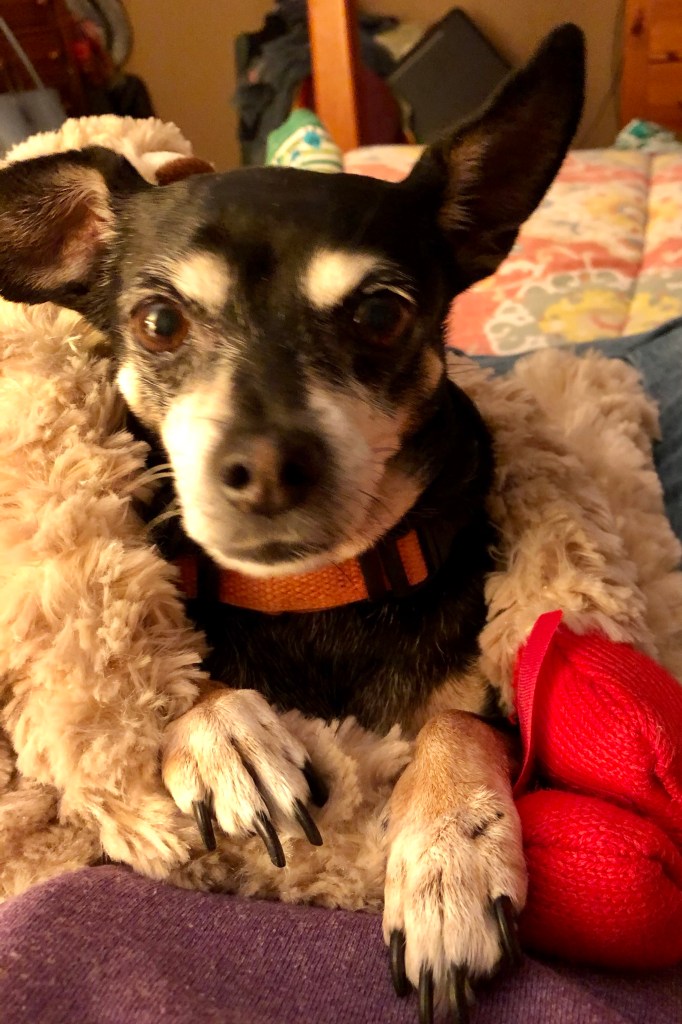
Glamour Pickle

It’s amazing how 15 minutes of meditation can help. After that, Anita came in, and we just chatted about stuff and played with little Pickle the dog. We just got goofier and goofier as the time went by. We were acting like high school Anita and Suna, laughing and picking on each other.

I have a stuffed sloth, who used to be a Christmas sloth from the late, lamented Pier 1 store, but he took off his outfit and is just my buddy Slothie. The house cleaner loves to arrange him in poses when she cleans, which cracks me up.

Pickle was chilly up on my bed, so I wrapped her up in Slothie’s long arms and legs, and she got all settled in and happy. She looked so darn cozy that I started taking “glamour” photos of her.

Then she started yawning while I was still aiming the camera at her. I moved quickly and succeeded in capturing the action (for once). The results were PRICELESS.
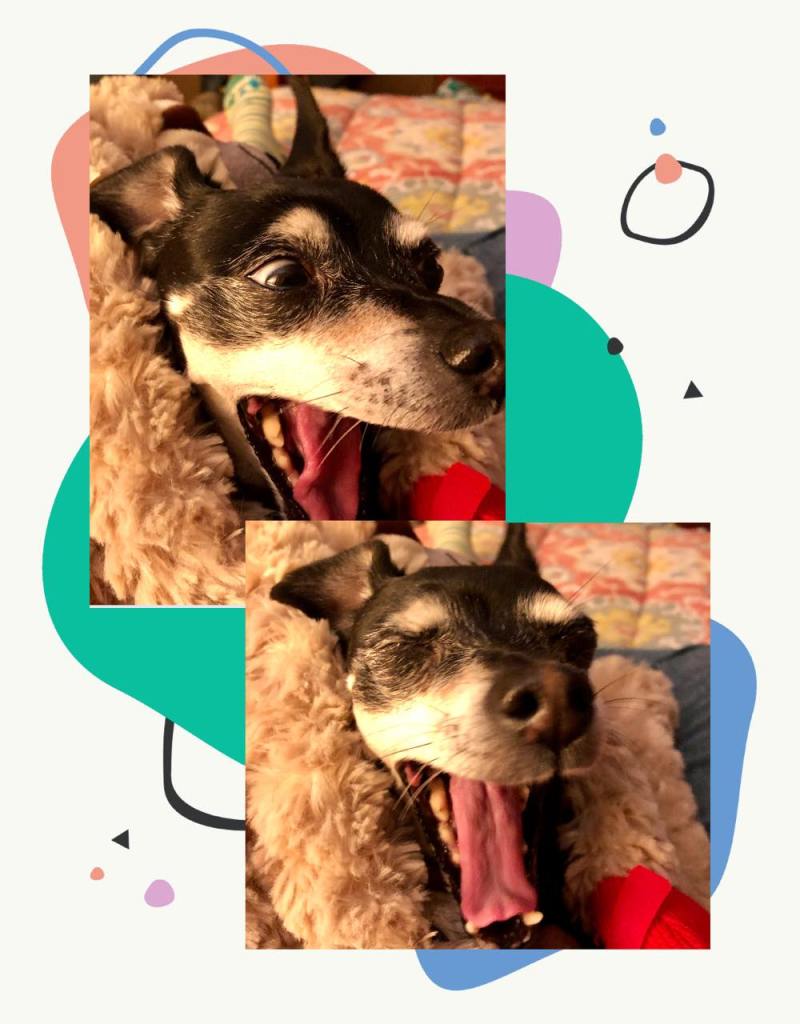
Yep, the dog was goofy, too!

That got us laughing even harder, and once Pickle got up out of my lap, Anita and I ended up slapping each other with those sloth arms and legs and making Slothie do funny things, just innocent, goofy fun. We both really needed some goofy time, not thinking about what we have to do, what we ought to be doing, or the complications of our life.
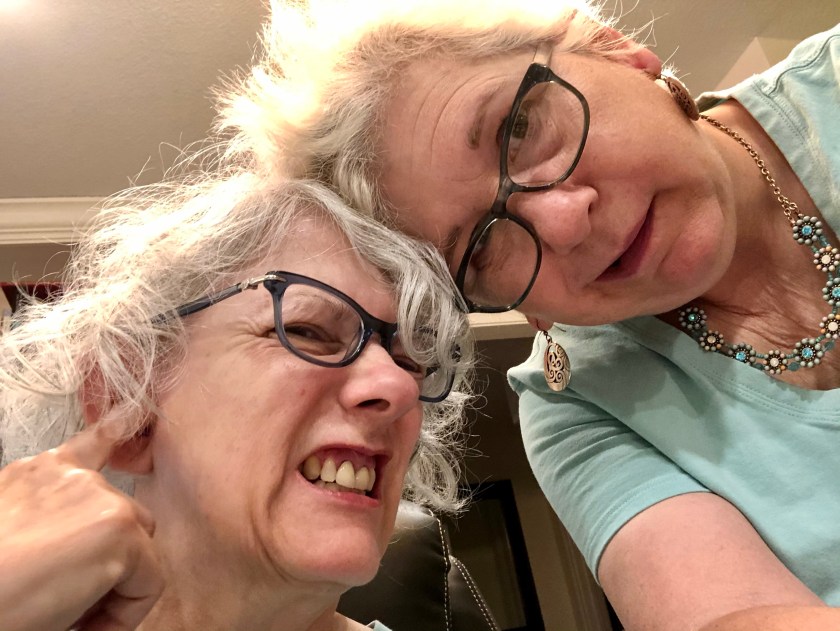
We’re not as cute as we once were, perhaps, but are still quite skilled in the goofiness department.

It reminded me of a recent episode of the Farmhouse Fixer show where Jonathan Knight from New Kids on the Block and his really fun sidekick totally stopped working on their renovation project to jump into a huge pile of leaves, rolling around, doing bad cartwheels, and throwing leaves at each other. I truly appreciated that celebration of goofiness! That let them get back to work in a good frame of mind.

Our fun evening led me to a good night of sleep, so I was ready to face the challenges this morning. Hooray for me!

Meditation + Goofiness = Relaxation.

Have you done anything goofy to relieve your stress?
Pet News, Some Good, Some Not

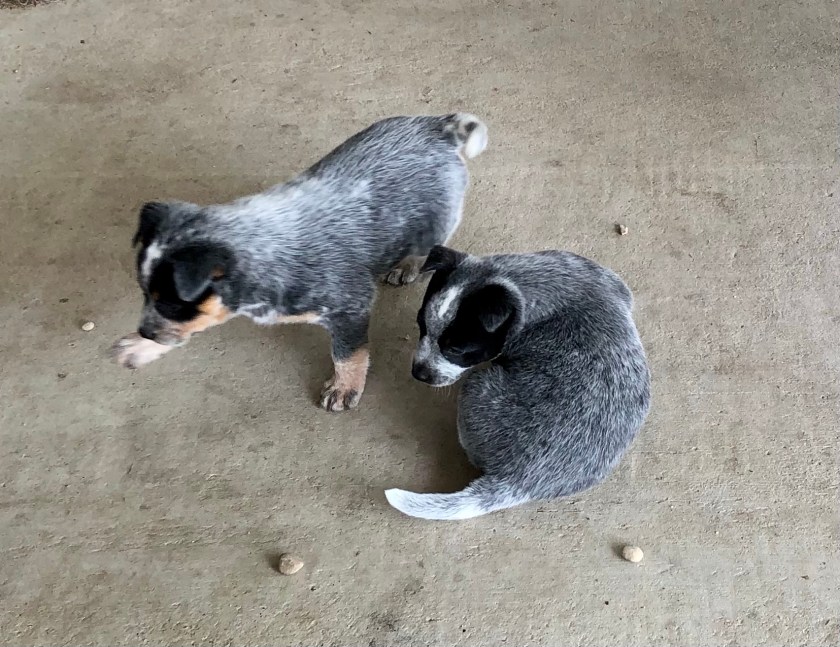
There’s been a lot going on in the pet department around our ranch community. The first is good news, which is that right now there are two puppies to enjoy over at the neighbors’ house. They use Australian cattle dogs as working animals, and the elderly matriarch (Tess) is no longer able to do much. So, they decided to allow their breeder friend to get puppies from their youngest female (Jess) and one of the breeders’ unrelated males. The two female pups and Jess came home from the breeder’s house this weekend, and I got to enjoy them. They are so soft at this age!

Bess is the one with brown on her, who’s on the go. The other one’s a real snuggler, so her new family will enjoy her!

One of the little cuties has another home, where she’s going in a week or so, but we get to enjoy the other one (Bess) and watch her grow. Nothing like a bunch of rhyming cattle dogs to brighten the neighborhood! They now have 5 generations of the same maternal line at their house.

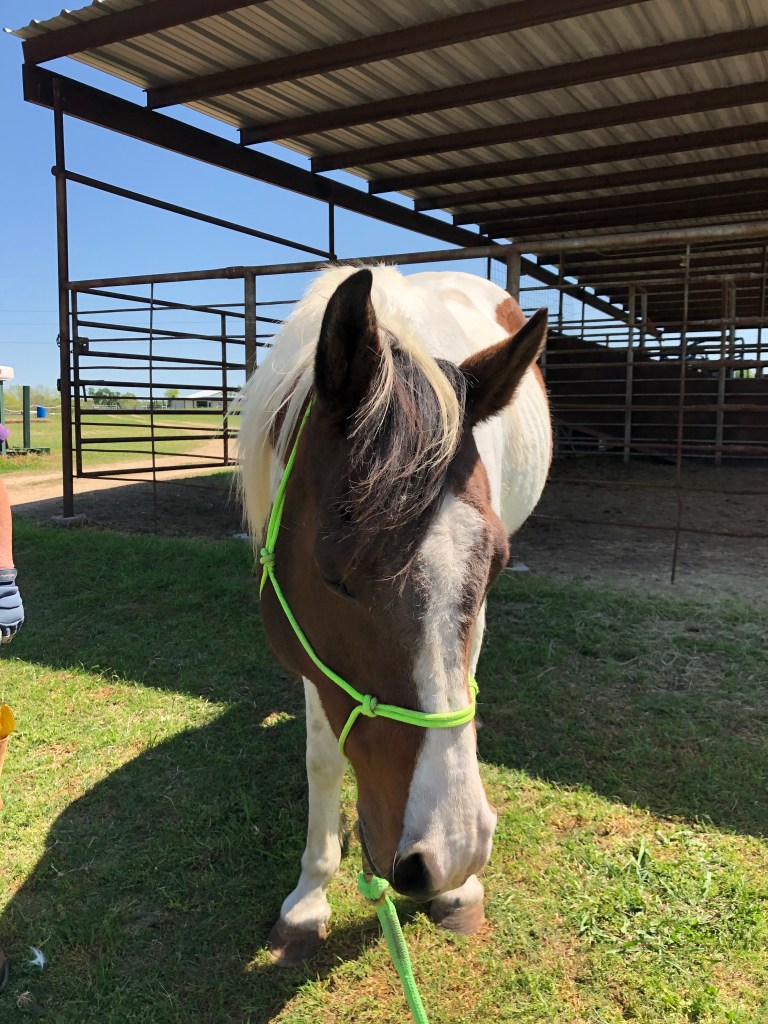
Other nice pet news is seeing how well Ace is fitting in with the other equines. We caught him touching noses with Fiona yesterday, which was so sweet. Immediately afterwards, though Apache broke up the love fest. I guess Fiona is HIS lady.

Hello, little buddy.

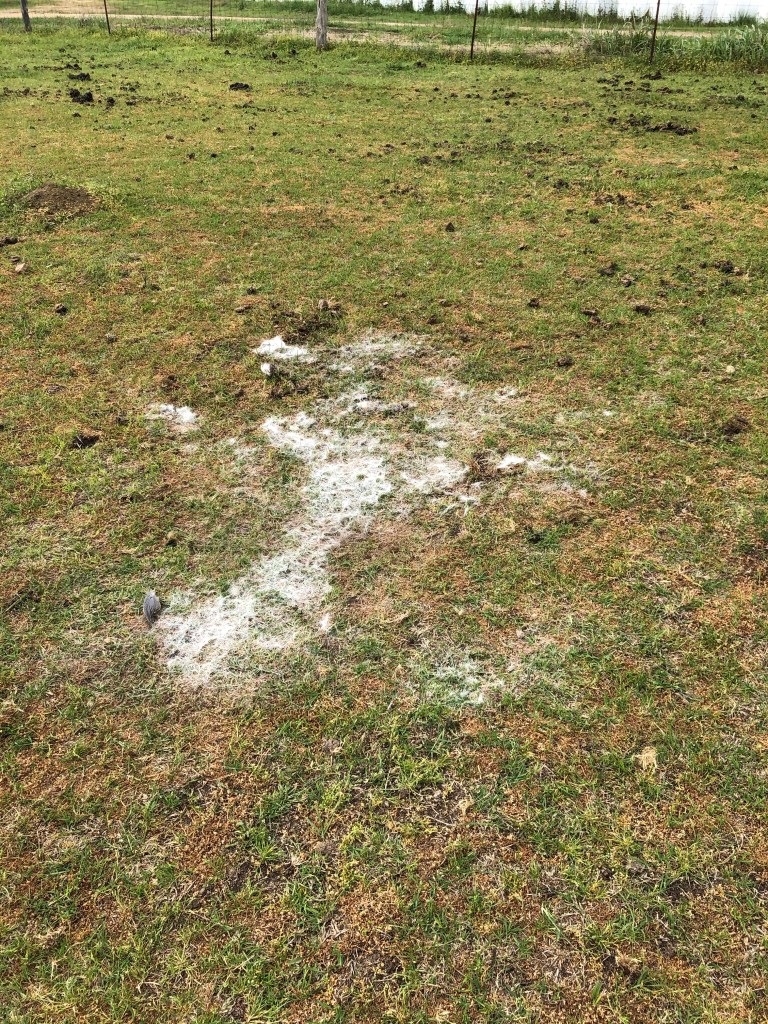
The amusement we’re getting out of the paint horses shedding continues. There are interesting areas of white in the pastures. When you get up close, you can see they are horse shaped, if that horse happened to be rolling on the ground. Spice left one where you can actually see her brown spots and her white ones, like a map of her coat. I couldn’t photograph that, since we were wrangling three horses, but I did get a picture of one from Apache, which is all white. Poor Spice will get brushed out next time I’m back at the ranch, since she looks like Apache did last week (since Sara hasn’t been riding her, she hasn’t had her usual amount of grooming).

It’s like Apache made a snow angel with is hair.

The sad pet news is that we appear to have lost Gracie Lou, Kathleen’s little white dog, and Vlassic’s favorite companion out here. She just never came in Saturday. We can’t keep her fenced in, because she’s so little that she slips through the gates, but she always has come in and asked to go nap in her bed in Kathleen’s room, and of course, to eat.

Gracie joined us last April.

We put a notice on Milam Touch of Love and asked all the neighbors (all four of them!), but no one has seen her. I went up and down the road and didn’t see any evidence of foul play, either. She just vanished. Maybe she encountered a hawk or a coyote, or a big cat, but only the hawk makes sense, because she disappeared in daylight, AND the harrier’s been around. Lee’s favorite theory is that she was sniffing on the side of the road and someone picked her up, thinking she was lost of something. She is very friendly and will jump into cars.

So, we’re hoping someone realizes we are looking for her and brings her back. She’s always been such a tough ranch dog, and more of an outdoor animal than indoor. It seems weird for something to get her after she survived the farm in Yorktown for so long, as well as our place for over a year! Keep your fingers crossed she turns up again.

A New Supporter!

Let’s end this on a happy note, though. I’m going to have to get those knitting needles warmed up again, because The Hermits’ Rest blog and podcast have a new supporter! Thank you to Kathleen Caso of Hearts, Homes and Hands for becoming a monthly supporter! She’s hoping to share podcasts about the ranch with our home-bound clients, who enjoy listening to stories. I enjoy telling stories, so THAT all works out. And then, if they want to see pictures, they can look at the blog. Great idea, right?

You, too can support us for as little as dollar a month by signing up at https://anchor.fm/sue-ann-suna-kendall/support – or just keep reading and listening. I’m happy to have all of you around!

Where Do Easter Eggs Come From?

Not bunnies. Not baskets. Nor roosters! Not even from capons (see below). Most of them come from the grocery store or the drugstore, as far as I can tell. This question is just an excuse for me to talk about chickens…again.

It ruffles my feathers to think I’d try to lay an egg!

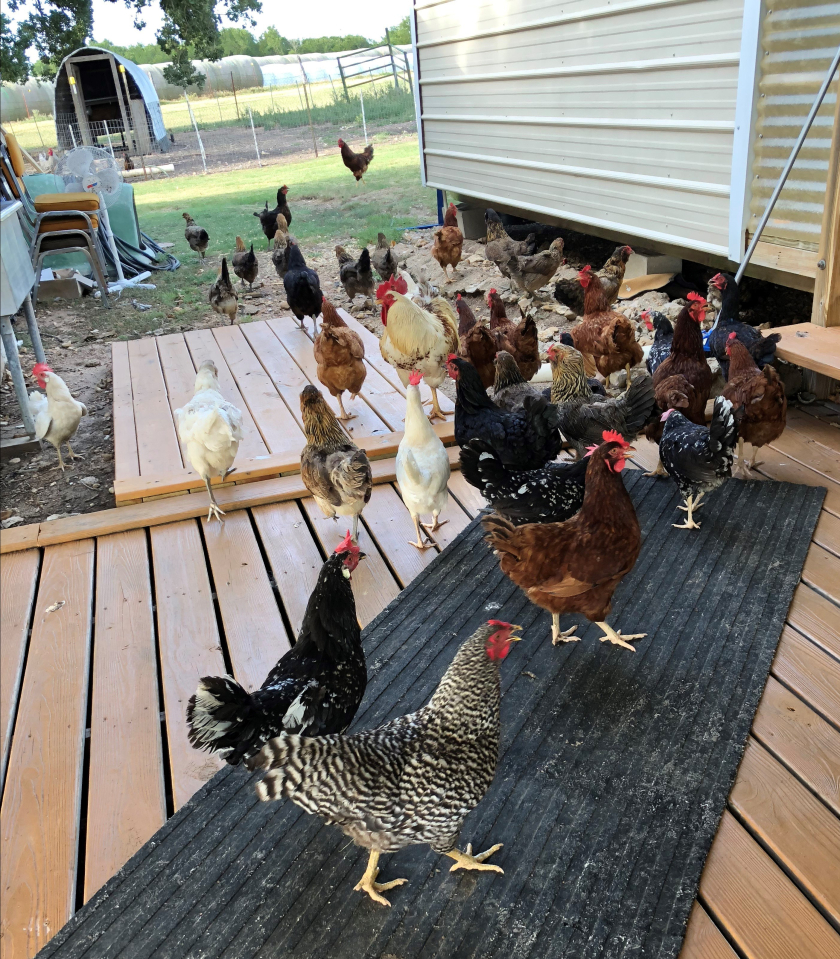
It’s been quite a time in my chicken-raising career, but it seems like things have settled down. I finally seem to have a bunch of hens and dear Bruce, who have stabilized and aren’t getting eaten by anything. I did see the harrier out yesterday, though. Beautiful hawk, but I’m keeping my eye on it.

I do want to get some more hens soon, as soon as the henhouse gets set up to keep young ones separate for a while. I now know which kinds to get, anyway. Tough ones.

Of course, I’m looking forward to seeing if the eggs Star is setting on will hatch. I’m hoping they’re hens, since I don’t know how to caponize (castrate) a cockerel (young rooster). I have no idea if anyone around here does it as a service. I did read, though, that capons make great brooders and surrogate mothers, since they have hen hormones, but don’t lay eggs. The things you learn on Wikipedia!

I actually caught star out on one of her daily food runs recently. She is all fluffy, I guess from sitting all fluffed up on the eggs. I took a peek at the eggs, and they all look fine. I debated removing the dud egg, but didn’t want to confuse her. I’ll remove it when and if the others hatch on the 15th!

Even a good mom needs a break sometimes.

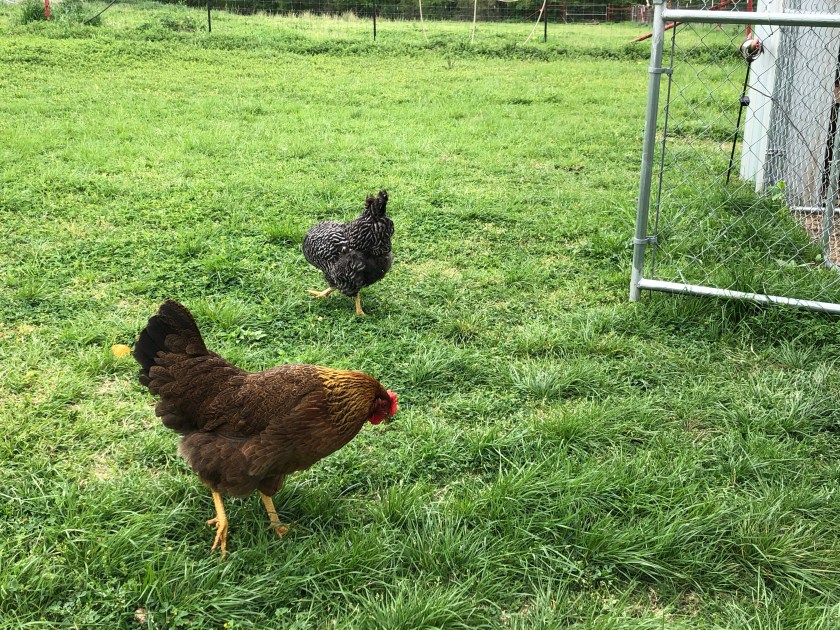
It just makes me happy watching them explore the area and down massive quantities of insects. We always seem to have plenty more, so I don’t think they’re ruining the ecology out here (it’s mostly ruined by herbicides the tenant ranchers put on the fields, anyway).

Henley says to leave her alone. She’s NOT sociable.

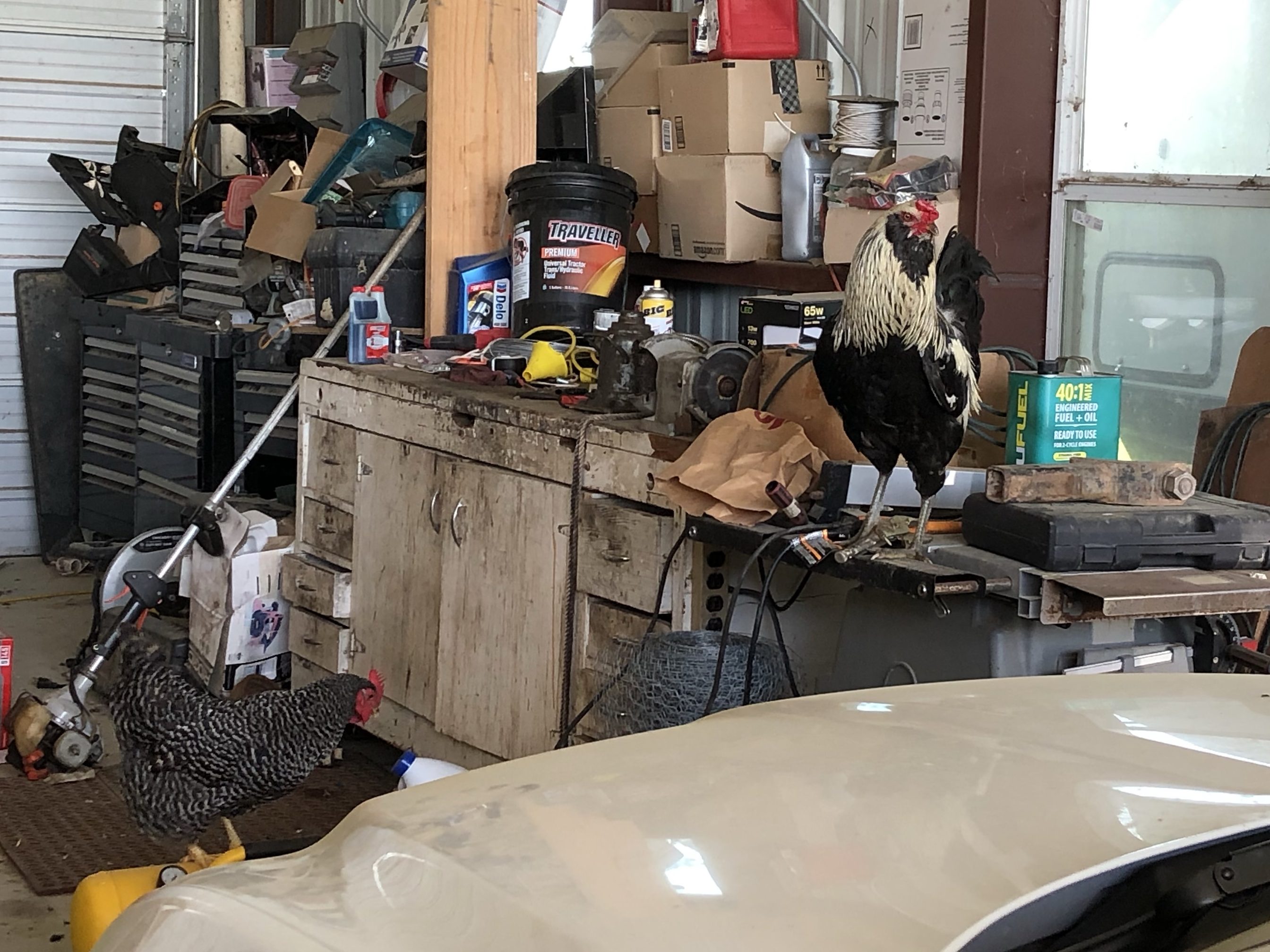
It’s so relaxing to just sit on the grass or in my official chicken-watching chair and enjoy what they do. And I guess I’ll always be looking for egg stashes, since I think that darned Bertie Lee may have gone somewhere else now that I took all her supply from under the work bench.

None of these ranch hobbies are inexpensive, but I do get a lot of joy out of the animals, and I think that’s what counts. They got me through the quarantine by giving me a purpose every day and something to do that forces me outside in the fresh air. I’m pretty grateful for the chickens (and the horses) for that.

If you celebrate Easter, I hope you enjoy your eggs, whether from a hen or from a rabbit that poops out chocolate ones. I haven’t had a chocolate bunny in years, though I do manage to snag a creme egg on sale after Easter every so often. They are tasty!

I hope you also are experiencing some hope for the future. I am, because it’s actually raining over here. Rain brings flowers and keeps those tanks full!

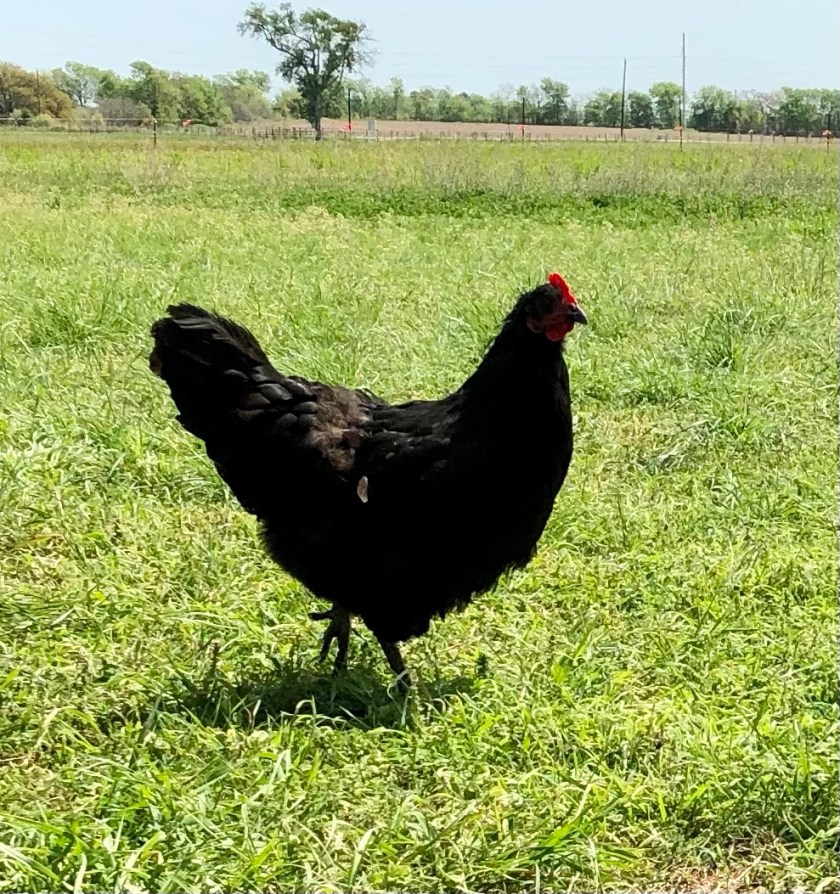
You don’t think I’d make it easy on you, so you? Says sassy Bertie Lee.
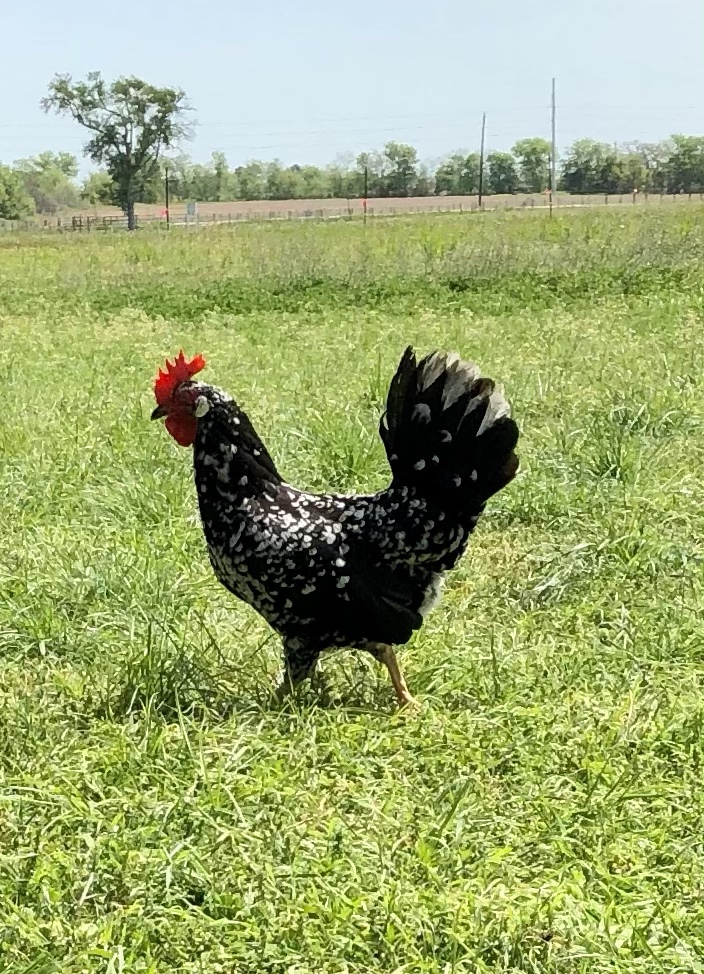
Springsteen, the Jersey Giant, reminds you that black IS beautiful, as are her pinkish eggs.

So tell me! What is bringing you renewed joy and hope this season? I’d love to hear from you! I’d also love to knit you some washcloths, if you feel like being a supporter of this blog and podcast. Click the support button on the main podcast page, or hey, you can even send me a voice message about what brings you joy and hope from there!

All the Hermits of the Hermits’ Rest send you lots and lots of virtual hugs and support, however you may need it.

Tanks? Ponds?
I live in Texas, on a cattle ranch, though none of the cattle here are mine. The cattle here mostly drink out of artificial ponds, because as any Texas naturalist knows, there’s only one natural lake in Texas (Caddo Lake, on the Louisiana border). Thus, any pond you see is made by a human or beaver.

There’s a tank in the middle of those flowers down the road.

However, any native Texan will tell you those cattle aren’t drinking out of (and cooling off in, and pooping in) ponds. Oh no. Those are tanks. Stock tanks or cattle tanks. You sound like a city person if you call them ponds.

Our lovely small pond that sometimes merges with the creek.
I don’t know how long they stay so pristine.

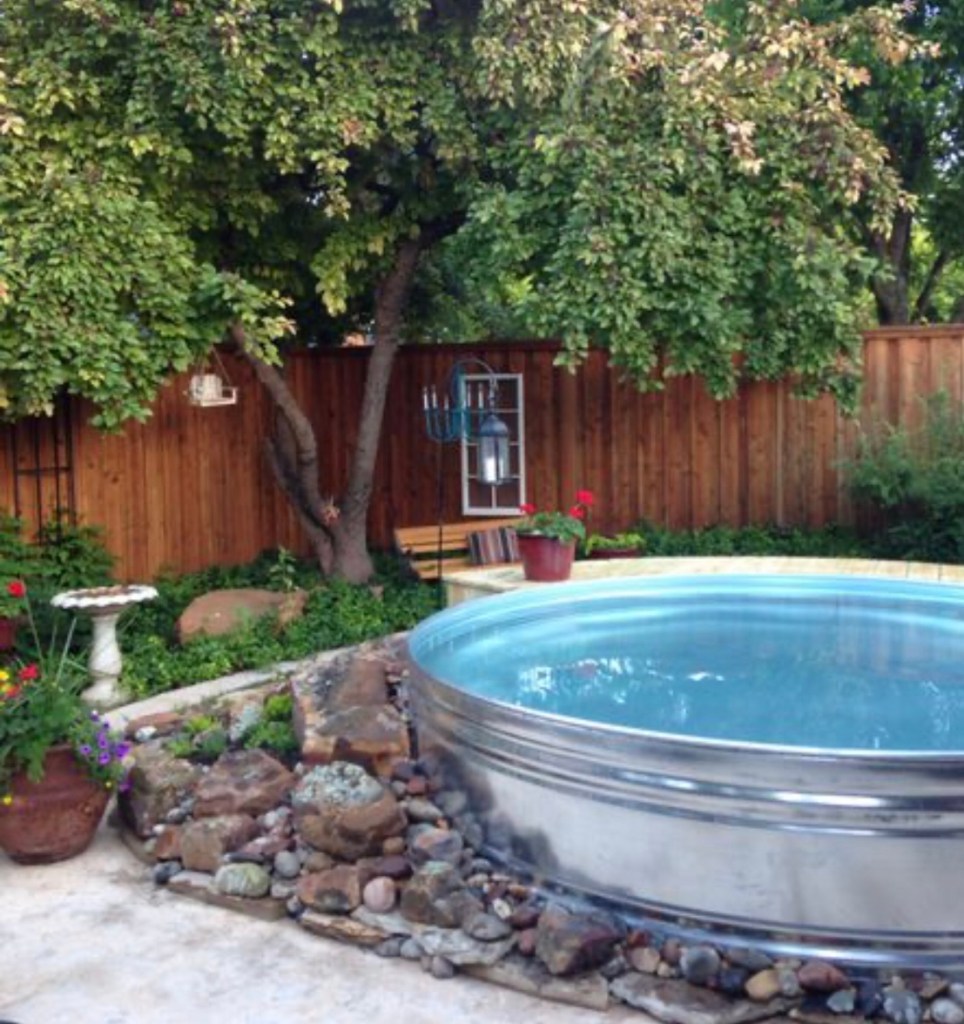
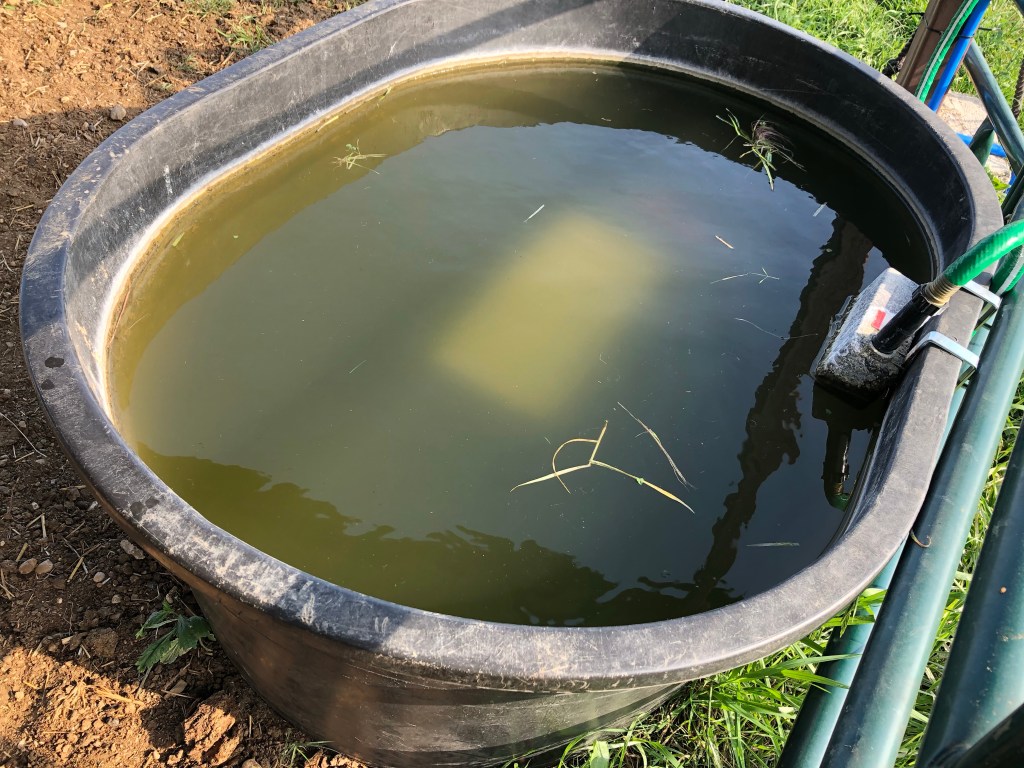
I’m telling you all this because I’ve recently had a couple questions about what the heck a cattle tank is. First, stock tanks in most places are like big water troughs made of metal or plastic. People like to make them into swimming pools. But that’s a normal tank.

These are attached to water supplies and have valves to keep water at the right level. We have some here, as well. The goldfish in there have really grown, to my happiness.

There ARE fish in here.

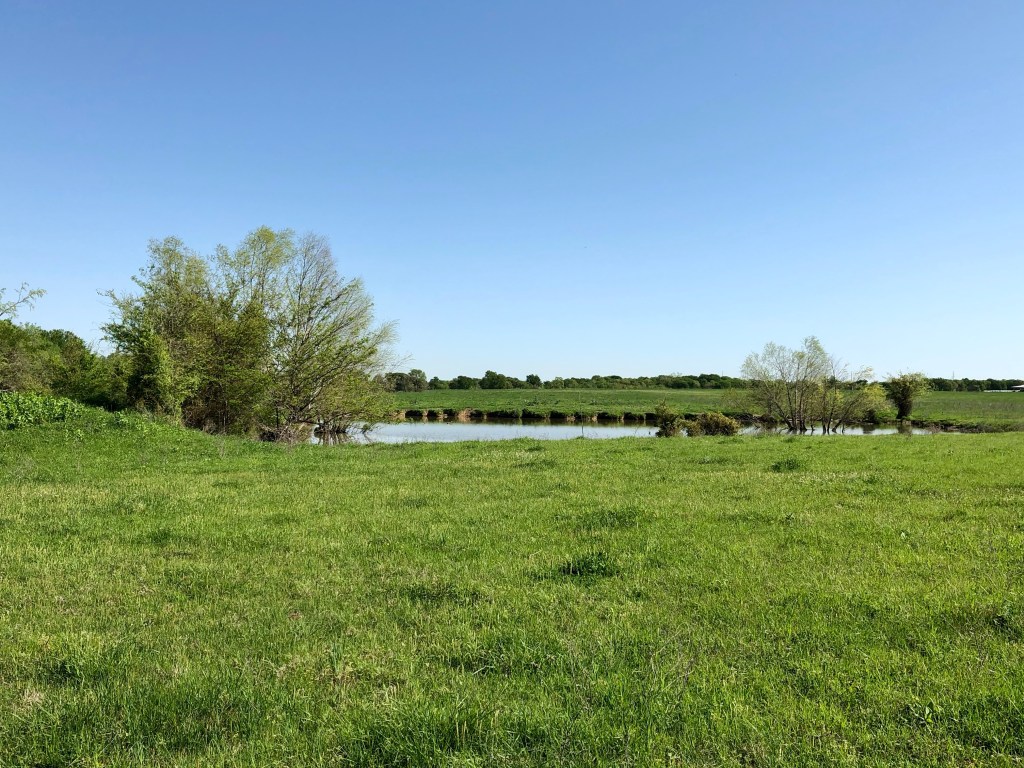
But most properties have one or more of these in-ground tanks, made usually by damming an arroyo or other place where water naturally goes, then digging out a big hole. This is how we made our front “pond.” Our driveway is the dam.

The tank we made. Those trees grew up since we built the dam/driveway.

All the other tanks on the property are much older. Our neighbor’s son remembers swimming in them. Um, I see too many snakes to consider that. The big tanks have very tall dams around them, created by digging the holes. The dam around the front tank next door is really tall, and Fiona freaks out at it. I still don’t know why.

Looking down the ditch that drains into the big tank. Look carefully on each side to see the dam.

Because I wanted to know more about the history of tanks in Texas, I looked it up and found a fine article from Texas Monthly that fascinated me. For example, I learned that 80% of the tanks in Texas have fish in them, even ones that haven’t been stocked. I’ve seen catfish in ours!

The tank behind our house has plenty of fish for the herons, and is popular with cattle and dogs for cooling off. There’s only a dam on one side, but it’s tall!

I also learned that there are subsidies for building tanks that prevent erosion. That may explain why Texas has more of these man-made bodies of water than any other US state. I actually think that’s what my neighbor does, advise people about building tanks. I should ask, huh. My friend Phyllis confirms this; I’d call them tanks, too, if I got paid!:

My Dad always said that the government would pay farmers to put in stock tanks in the early 1900’s. So if you built a pond for your livestock you paid for it, but if you built a “tank” for your livestock the government paid for most and sometimes all of it…

Of course, as my friend Lynn also pointed out, when you build a tank, the State owns the surface water. That’s one of those weird Texas technicalities.

One thing I do know is that it’s easier to build a tank when you have some clay in your soil. In sandy places, you have to add a layer of clay so it will hold water. We have a couple of dry tanks here, too. Animals like to hide in them. See, I paid attention in my Master Naturalist classes. I obviously think tanks are cool.

Some old tanks look pretty darned natural, like the one next to Walker’s Creek cemetery.

And finally I was happy to read my favorite thing about tanks is not just mine and my naturalist friends. Tanks now attract all kinds of plants and animals that might not be there if we hadn’t put the water there for them. Long after the cattle ranches are gone, the tanks will remain, drying up in drought and refilling when there’s lots of rain.

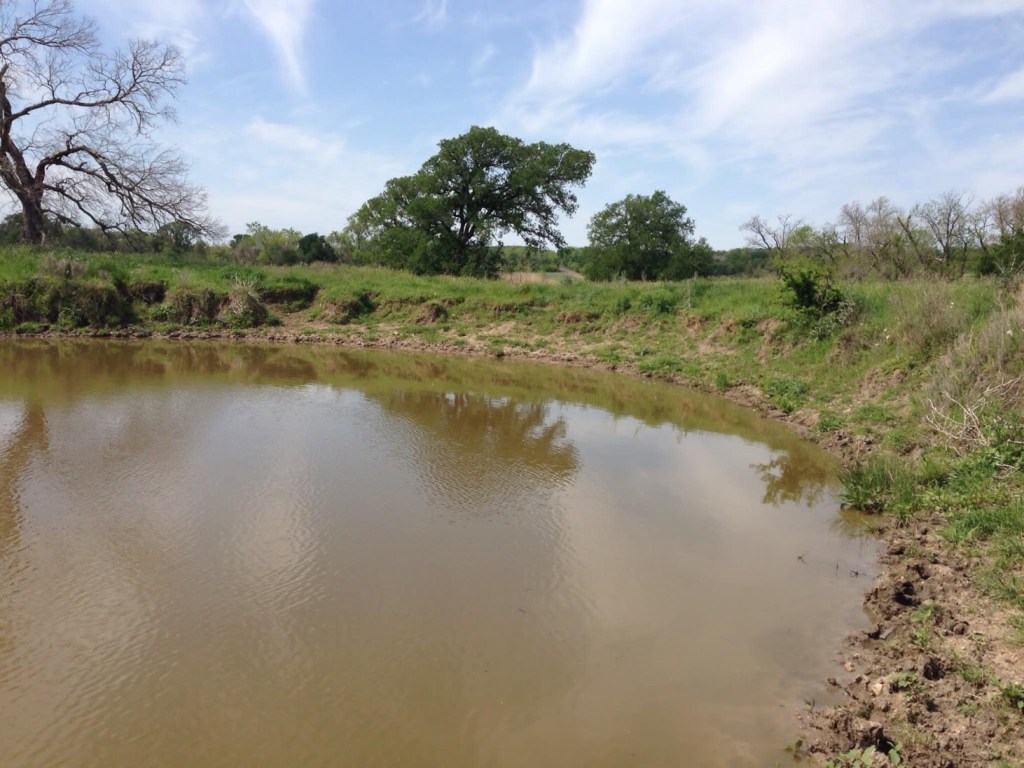
The little front pond in a drought. Not much water (2013)

Yes, pond, tank, or whatever, these artificial watering holes will provide us with ample nature watching opportunities and provide habitat for so much life. Hooray for tanks!

The Great Hen Detective Strikes Again!

Take THAT, Bertie Lee! You can’t fool us forever! You’re just a chicken, and we are human hen detectives! I think they could start paying me for this egg-finding work. Yep, I finally found where Bertie Lee is currently stashing her eggs. I say currently, because I only found ten. Of course, she could have just started again after finishing molting, or after the cold episode. I don’t know. I’m not a chicken.

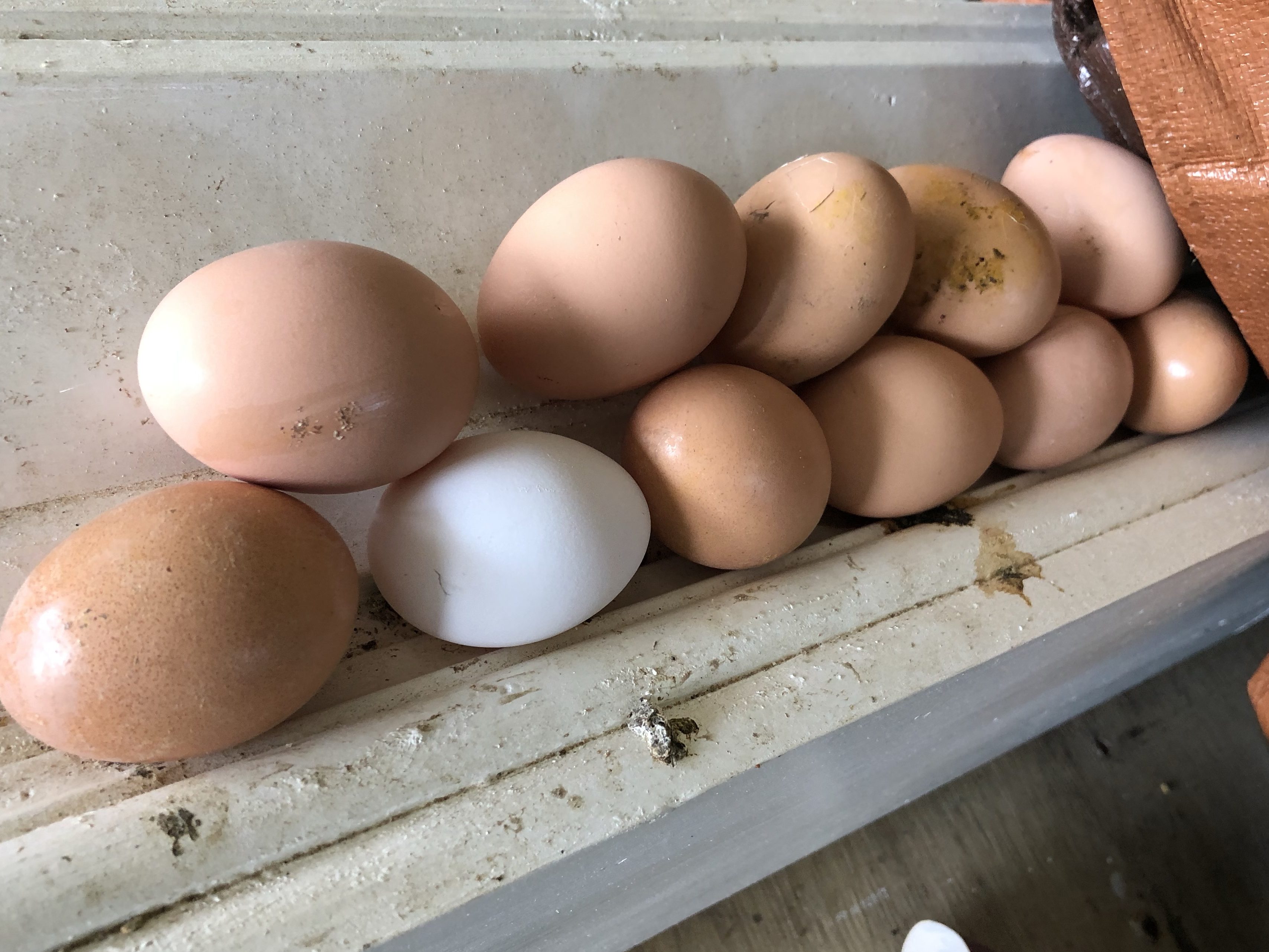
Look at all those sort of dirty Bertie eggs! And one very clean Henley egg that was just laid.

Lee helped on this one, because yesterday he said he saw her coming out from behind the work benches again. He thought maybe she was laying in her old spot, which she’d gotten chased out of. So, this morning, I decided to look even harder than usual, and used the step ladder to climb on top of the sturdy old workbench. I looked down behind it, and there they were! Eggs!

Bertie Lee tells Bruce that she’s glad the garage is such a mess, because it’s easy to hide eggs in. Her eggs are secretly under that white cabinet.

Of course, they were in a really hard-to-reach place, as Bertie Lee is a smart hen. She survived the 2019 and 2020 hen attacks that lost us a lot of our flock. I found the perfect egg-moving device however, our fishing net. I was able to carefully roll them forward and get them, without injury to me or any eggs. Well, two of the eggs were cracked, but I think Bertie must have done that herself, since the mess was dried up.

When I brought the eggs in, I immediately tested them for viability by seeing if they floated, just like I did a couple of days ago when I found Big Red’s egg stash. These were all in GREAT shape, with only one looking slightly iffy. I put it in with Big Red’s, along with a couple others, ready for becoming deviled eggs for Easter!

Bertie is trying to tell Buttercup to hide her eggs better, but Butter is focused on bugs.

Now I have seven hens capable of laying, and six of them are active (I hope; I couldn’t find Springsteen this morning, and she’s the low chicken in the pecking order). Theoretically, I may have enough to start giving eggs away again. And I can’t wait to see if Star hatches any baby hennie chicks! She’s still in there, setting away.

She knows she’s my favorite. Don’t tell Buttercup.

What a great way to start a day off! The Sherlock Holmes of Laying Hens strikes again! I’ve already had my personal Easter egg hunt.

The Ranch Resurrection

It’s the time of year when my Christian friends are thinking about resurrection. To me, Easter comes at the perfect time of year, since flora and fauna are coming back to life all over the place. The Hermits’ Rest Ranch is no exception, but this year, after the unusually cold winter, we haven’t been sure if everything was going to come back or not. Every time I look out the window and see a monarch butterfly feeding, I feel grateful that some of them made it here and have food.

Everywhere I look there are monarchs, and I know I have milkweeds out there for them!

I’ve been periodically patrolling the land around our house, checking to see if plants are coming up at their usual times and numbers, and what kinds of insects are showing up. The good news is that most of the old friends are returning, but the bad news is that some are not as numerous and are later than usual.

One plant I’ve been anxiously looking for are the Texas baby blue eyes (Nemophila phacelioides), which only grow in one spot on the edge of the woods near the house. Usually by this time of year, we have a nice stand of them. Today I finally found one blossom, along the fence. I hope there are more of them among the green things in the woods!

Well, that’s one, at least.

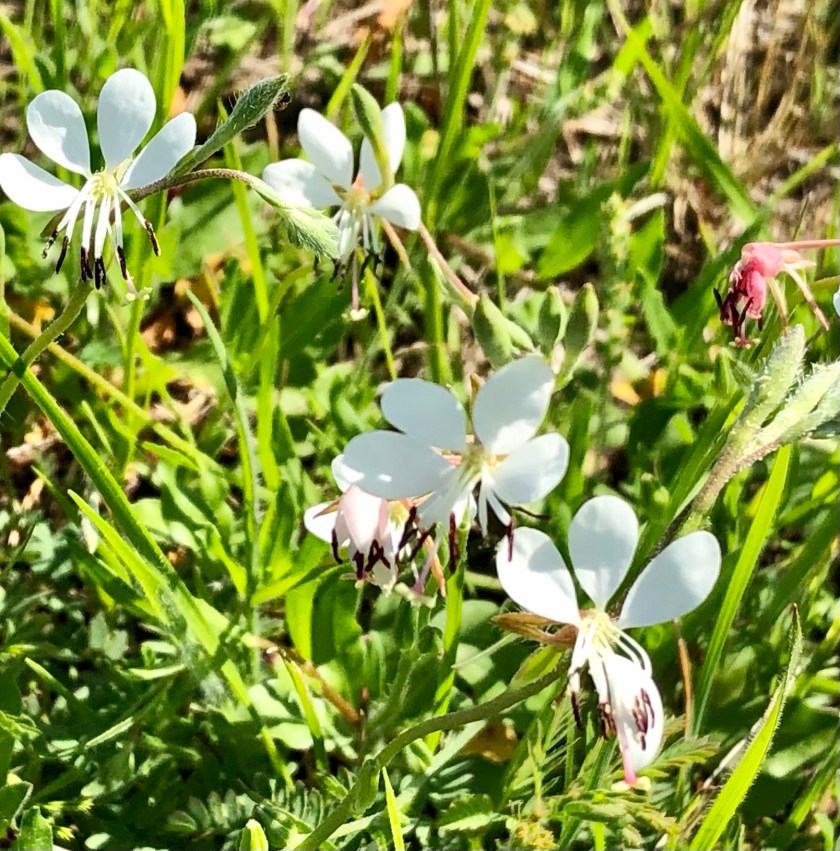
The Indian paintbrush that usually covers our front field and the one down the road are nowhere near as numerous as usual, but the fact that there are some gives me hope for future years. The bluebonnets are okay in numbers, but I haven’t seen a winecup yet. The delicate roadside gaura (Oenothera suffulta), however, has managed to come up, in such a pretty stand that I thought they were some other flower.

Usually you don’t see so many together. They turn pink when finished blooming.

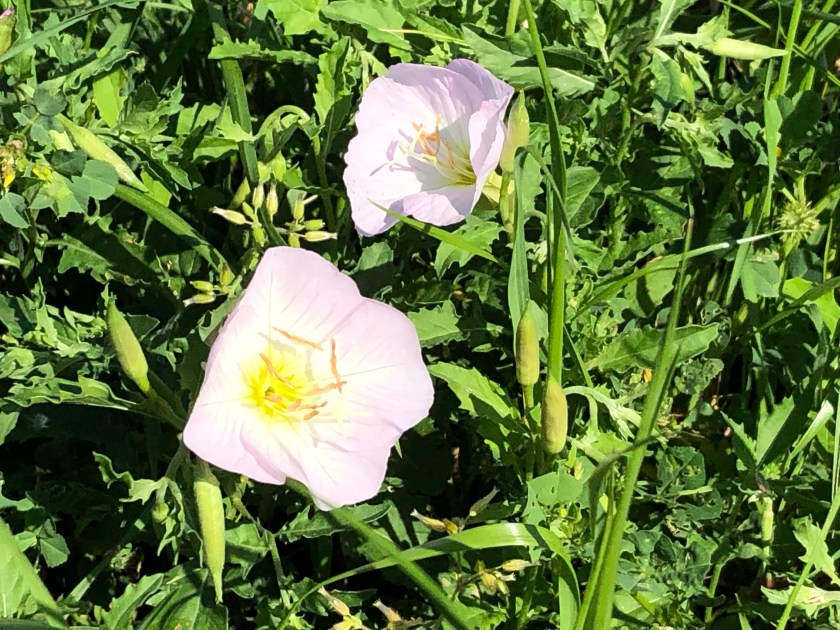
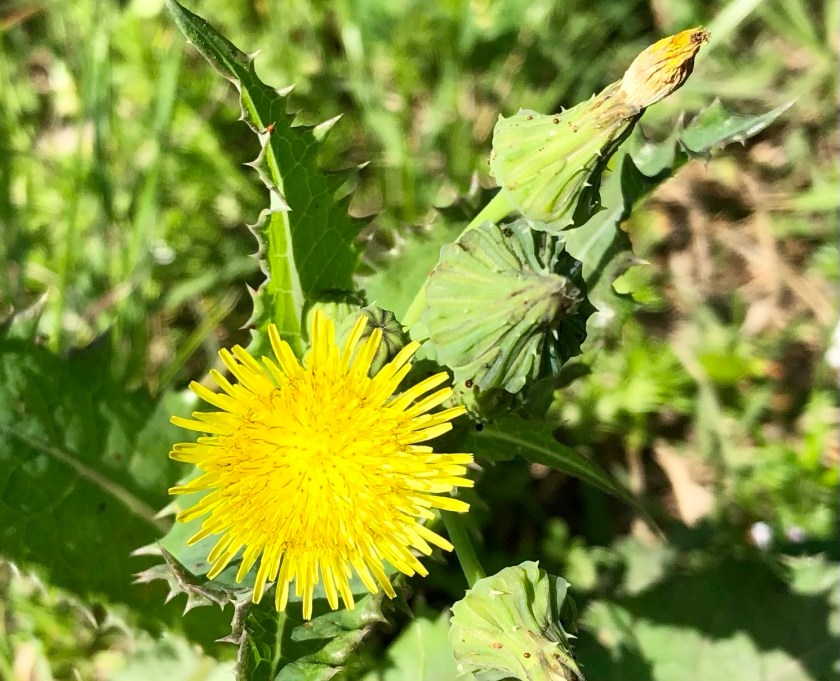
I was comforted today to see that the little spring is still flowing, and that plenty of prickly sow thistle (Apache’s favorite snack), yellow evening primrose, pink evening primrose, ragwort, and dewberries are blanketing the ground.

Future food for lots of birds!

And the big, purple thistles, which are a pain in the butt, but good for the soil, are getting ready to bloom.

I finally found a blooming example of one of the plants I’ve been watching, velvetweed (Oenothera curtiflora). It’s another gaura, but grows much bigger and has lovely soft leaves. Every year I forget what that plant is until it finally blossoms.

It will be much bigger and more showy soon.

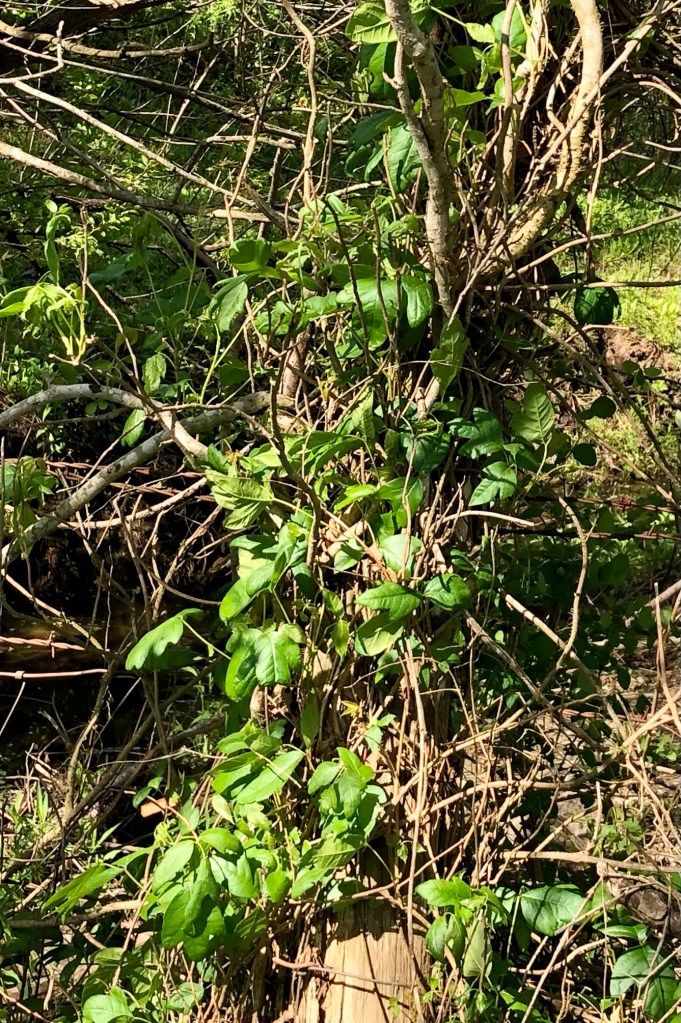
One plant I’d hoped the freezing weather would wipe out is the poison ivy, but I should have known, given how thick the vines are that climb the trees in a certain area, that they’d be back. Sigh. It looks so healthy and shiny, too. The mesquite tree, another one that’s sort of a pain (but also has its good points, unlike poison ivy), is coming back, as is the prickly ash, another Texas thorny tree. Well, at least they break up the monotony of our little wooded area, which has mostly cedar elm trees in it.

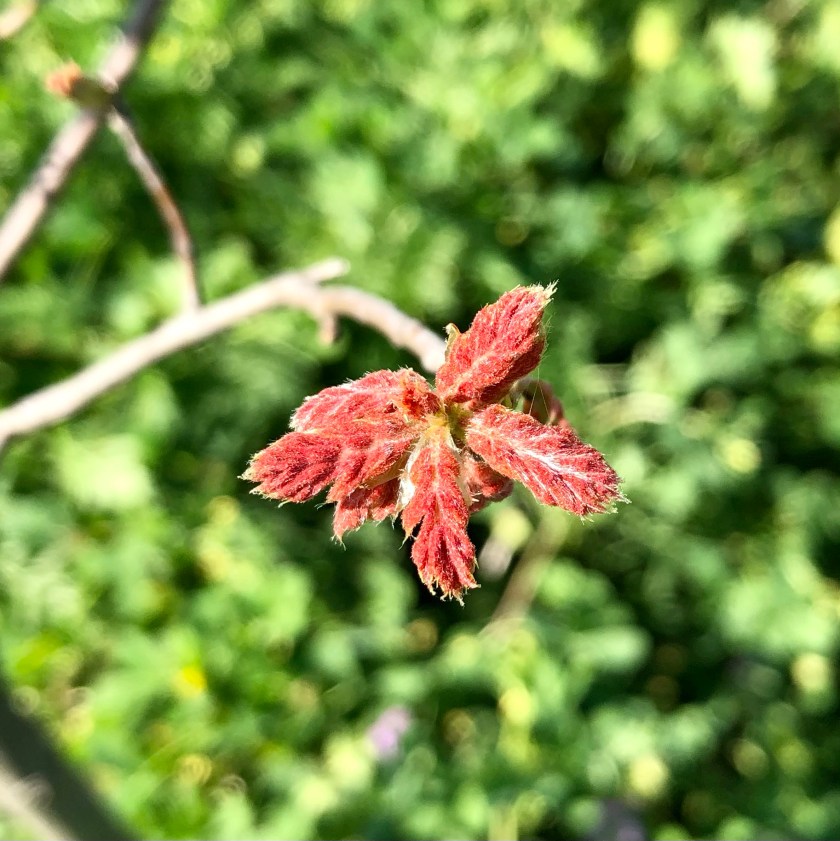
Now, I’ve saved the best news for last. As of yesterday, I was sure that the Shumard red oak that we’d planted last year behind out house, to someday shade the chickens, was a victim of the weather. I was not surprised, since it hadn’t had much chance to expand its roots. But, lo and behold, I spotted something red while I was out checking on the roosting hen. Little leaves! It looks like the tree will be with us another year after all. And that is good, which you will learn more about soon, when I report on the book about oak trees I just got!

Brand-new oak leaves!

No fooling, April 1 has been an encouraging day, at least for the plants around here! Our wildlife is returning to life and bringing us joy, in Nature’s yearly resurrection.

Still Working on Horse Feet

I’m working on horse feet in more ways than one these days. Animals have a lot to teach us, both scientifically and intuitively.

In science news, we learned a lot about horse feet (hooves) with Trixie’s latest visit, and we learned that Fiona loves Sara more than we ever realized. She spent a long time leaning on Sara and asking for hugs.

My feet are fine, I’m just spreading love — Fiona

Trixie has most of the damaged area of Apache’s feet trimmed off, but we were all shocked to see how much hoof separation he suffered. It’s scary. Laminitis can be deadly. We’re lucky we still have him.

The black crack shows damage.

We also talked about how he always does a little buck and stumble when transitioning to a canter (which explains my lack of cantering experience). Trixie did more chiropractic work in his spleen area. As always, Apache was a trooper and relaxed happily when it was over.

Whoa, I feel better.

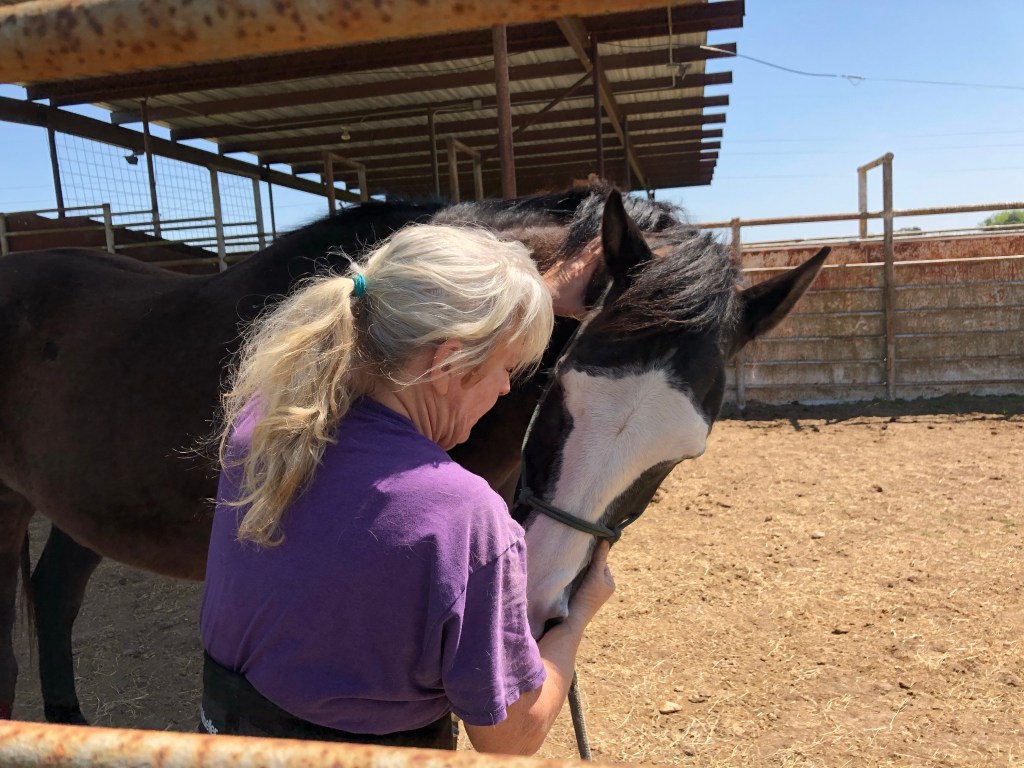
I got to watch a little of the work Trixie did on Ace. He wasn’t used to what she did, but he got a pretty funny look when he realized he felt better!

What are you doing?
Sara listens to Trixie explaining what good shape Ace is in.

Trimming his feet was a bit difficult, because it had been a while since his last trim, and I heard Ace’s feet were a bit sore yesterday. Today he was walking fine, but I didn’t see him run. it just shows how important horse feet are!

Apache has never had such fine looking feet before!

So, yesterday I went off and rode Apache alone again. He was feeling okay, but didn’t want to walk on the hard driveway. I don’t blame him. It was pretty challenging for a number of reasons.

First, it was really windy, which often gets the horses on edge. Second, our dogs were out, barking and chasing cows, which puts me on edge. And third, Fiona was in a mood. A really annoying mood.

Once we got near the front cattle tank, she acted like she was full of beans. She ran up and down the sides of the tank, ran back and forth in front of me and Apache, while braying endlessly, and kept doing sudden turns and pivots. Once or twice would have been fine, but she kept it up for ten minutes or more.

I tried to be good. But I love grass.

Apache had already been a bit of a handful, focused on grass and not me. I was a little worried she’d spook him. So, I stopped him and breathed deeply. He just watched Fiona acting like she had a bee up her butt. I counted that as a win.

It was still a challenge to get Apache to pay attention to me. He would duck his head, spin his feet, and do what he could to avoid my instruction. I kept asking, then resting, then asking, and finally, I could feel him settle down. He walked back to the barn calmly, like nothing had happened out in that windy pasture. I learned a lot. I can trust Apache even when he’s antsy, and we can get through weird days. Whew.

All’s well as long as us horses and people keep learning from each other and moving those feet.

I’m the Sherlock Holmes of Nesting Hens

This one had us laughing much of last night. You may remember that not too long ago, I used my chicken detective skills to discover that my Hermits’ Rest hens had decided to start laying eggs in an artificial Christmas wreath on top of our garage refrigerator. I’d looked high and low, but finally saw Springsteen up on the fridge in the middle of the day, looking very much like she was laying an egg. Now everyone lays there except Bertie Lee (mystery location) and Star, who’s brooding three eggs in the nest box, where they are supposed to be laying eggs. I just climb up on the fridge every day and retrieve the eggs. Not an elegant solution, but it works.

There’s one more chicken, though. Big Red lives with Apache and Fiona, and I hadn’t gotten an egg from her in over a year. Hmm.

I think I’m a horse.

What’s Red’s Story?

Well, once upon a time about three or four years ago, there was a chicken coop and run over the cabin on the greater ranch property. At one point, two people decided to raise some chicks, and got like two dozen production red chicks and two dozen black meat chickens. It was fun to watch them grow and grow. (Here’s a link to a longer story from 2018; podcast listeners can search for chickens on the blog and find it.)

I really loved these guys.

Soon we were getting a LOT of eggs (I say “we” because I took care of them when their caregivers were out of town). I dutifully trotted them up to the neighbors’ storage area and labeled them, where they got sold at farmer’s markets.

Fast forward, and one partner stopped coming around, the residents at the cabin moved out, and I ended up being the caretaker. More babies arrived, some we bought and some that came as gifts. I became the half owner. We ended up with Americaunas, barred rocks, leghorns, and more and more. I sure enjoyed all those chickens, and enjoyed selling my half at work.

Yep, the neighbors had a LOT of chickens back in the day. That’s Buckbeak, the nice rooster, in the center.

At some point, an owl began systematically eliminating the chickens, including the wonderful rooster we had back then. Sniff. I felt powerless, because there was no roof on the chicken yard, and a hole in the door to the coop, which allowed owls in. But it wasn’t my coop, so I couldn’t exactly work on it. The other partner was going to make the hens all into sausage, so I took over as the queen of the dwindling flock. It was sad.

I decided to let nature take its course (which was awful, with so many dead hens), and to just get myself my own chickens at my house, with an enclosed coop, where they would be easier to care for and less vulnerable. As we know, the joke was on me, because we still lose chickens to predators over at our part of the ranch, though we have been working hard on keeping the chickens safe…at least when they are young. The old ones insist on living outside.

Well, I thought all the chickens over there were gone and stopped feeding them. But, soon we realized there was still ONE old chicken left. That’s Big Red. She outlived them all. She was out scrounging for bugs and grain over by the horse area. That made sense.

Plenty to eat around here! (August 2020)

We’ve enjoyed her antics with Fiona and Apache, especially when she drinks from the big troughs. We never found any eggs, but once found her laying an egg with no shell. That led me to start bringing some chicken feed over to her, which we give her when we feed the horses.

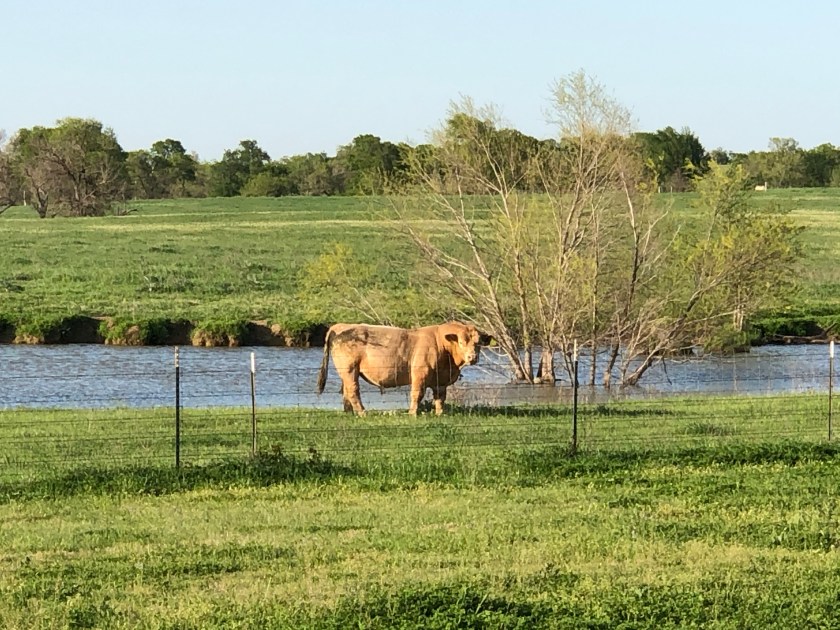
She’s a fine hen, and that’s no bull. (This beefy guy is behind our house.)

Once she started eating, she began to look better and better. She doesn’t look at all like an “old” hen, and she’s friendly as heck. She made it through the cold weather, too, and had a nice warm place to hide out. For the past few weeks, though, we’d been wondering if her improved nutrition has enabled her to start laying. I put on my detective hat again.

I’ve been looking in various spots, like the storage area, the cattle pens, etc. No eggs. Then, day before yesterday, I heard an odd noise in the old chicken run. There was Big Red, scratching away. Hmm, I hadn’t seen her over there in a long, long time.

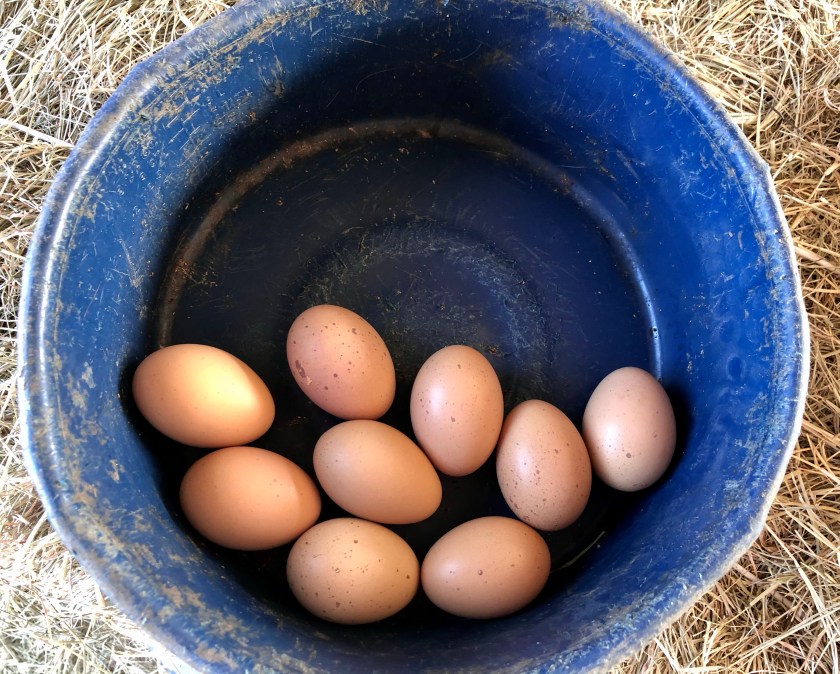
So, yesterday, on a whim, I decided to take a look in the nesting boxes where the hens used to all lay. Oh my goodness. There were 9 lovely Big Red eggs in there!

What??? Eggs!

Well, of course. The great egg detective figured out that the eggs were in the egg boxes. Go me!

Which egg in the Easter basket is not from Big Red?

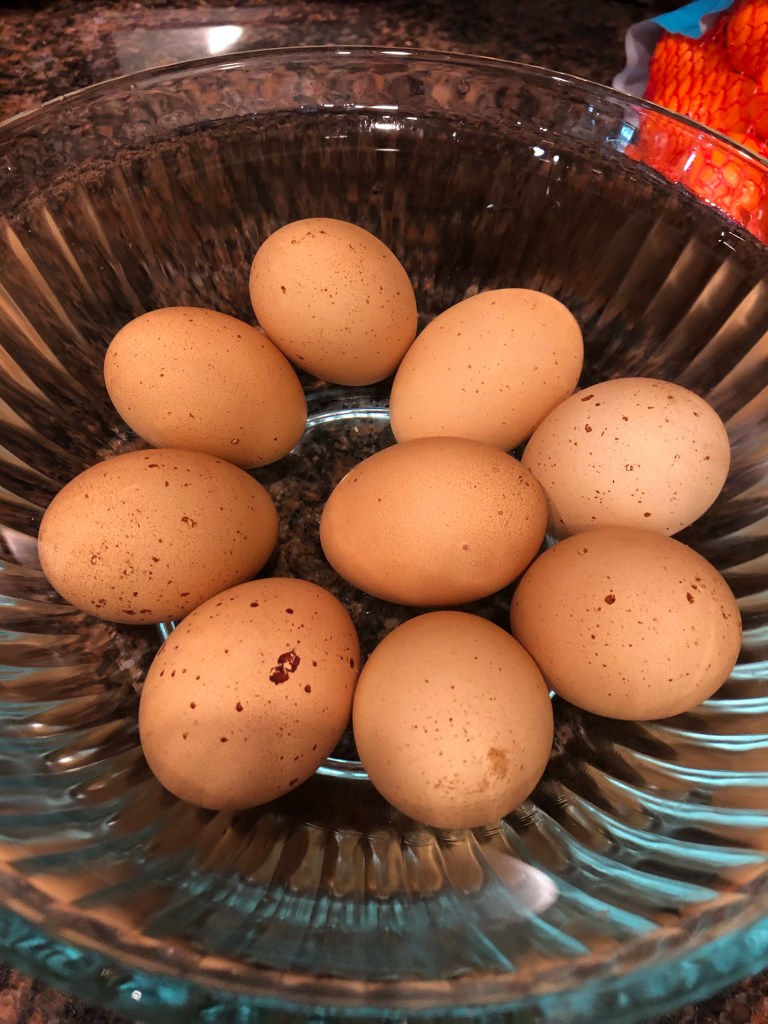
I took the eggs home, curious as to whether I’d found fresh eggs or ancient eggs. I tested them in a bowl of water, and while none of them floated (which means they aren’t old, rotten, bad, and such), a few of them were iffy. They are marked for future hard boiled eggs.

It’s hard to tell, but this is a picture of the eggs NOT floating.

My guess is that, at her age, Big Red is laying a couple of times per week, so these eggs may be from about the time the cold weather event occurred. I’ll be checking daily from now on, so I’ll know how often she’s laying. I’m so surprised and pleased that she’s still churning out eggs, especially since the production hens tend to lay a lot for the first year, then pretty much stop after their second year. Way to go, Big Red!

Now Suna the great hen detective needs to solve the Bertie Lee mystery. She should still be laying…somewhere.

The Student Becomes the Teacher

I remember, in my youth, the first time I became a teacher of linguistics in addition to being a student. It was a gentle introduction, since I co-taught with one of my professors, but it really did me a lot of good. They say that you really start to master a subject once you teach it, and “they” (whoever they are) are telling the truth! The stuff I learned when teaching interested college students about linguistics, as well as teaching grumpy engineering students about rhetoric for engineers sticks with me today.

Here’s a shameful admission: the ONLY writing class I ever took after high school English was reading the textbook for engineering rhetoric a chapter ahead of the students the first time I taught it. Yep, I taught myself technical writing. That seems to have worked out.

What? I can’t believe you never took a class. Also, I still don’t love this food.

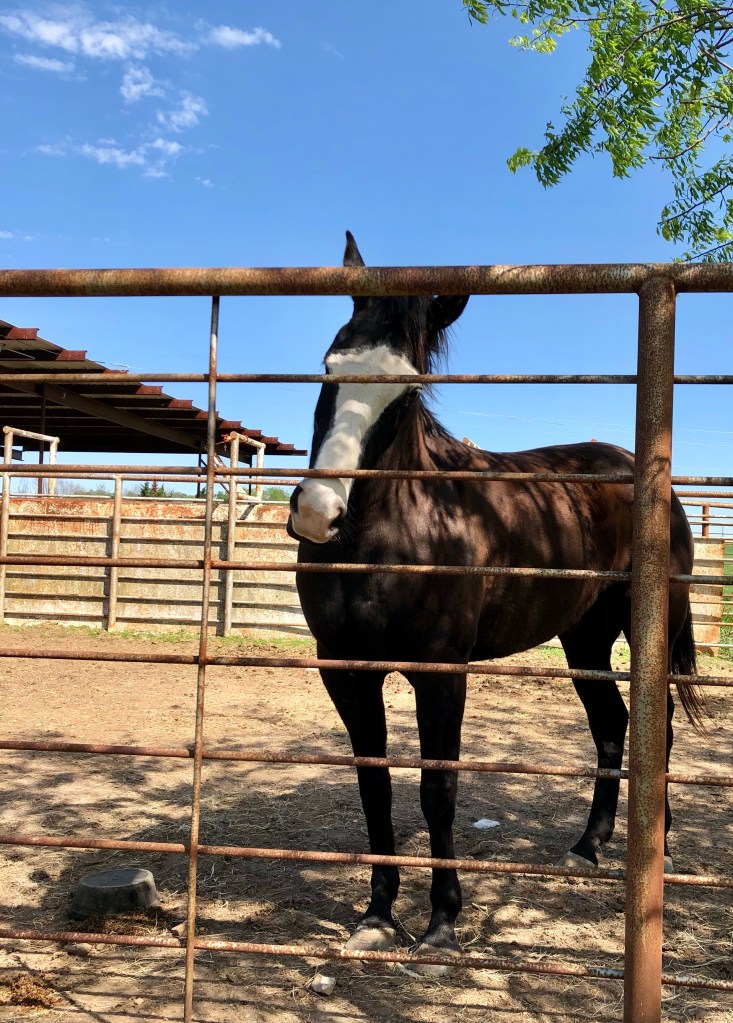
I watched this phenomenon of the student becoming the teacher play out yesterday, when we went out to play with the horses. Sara had already worked with Ace in the morning, so today she saddled him and put a bridle on him. The bit was a new surprise for him, but by the end of the day, he could eat grass with it. He’s no fool!

What the heck is going on here? Does this saddle make my butt look big? Photo by Sara.

So, I brushed tons of hair off Apache, then got him all saddled up, while Sara took Ace to the round pen for some groundwork (that’s when you teach a horse to follow your instructions while running around). I started groundwork using a rope, but she was doing it “at liberty,” which means you’re in the pen with a horse who can do whatever it wants to (including, one hopes, what you ask it to).

It was quite an active scene, with Ace running and bucking and doing the kinds of things a horse who’s learning will do. Meanwhile, I decided it would be a good opportunity to help Apache keep focused on doing what I ask him to do, no matter what’s going on around him. We did patterns and turns, and different ways of approaching obstacles, and he did an impressive job of not paying much attention to Sara and Ace.

Ace was making progress, but not finding it easy to settle down, being burdened with all this new paraphernalia on him. He truly did not want to calmly walk in a circle. So, we tried having Apache be his role model. We walked calmly around the outside of the round pen, while Ace and Sara walked on the inside. Sure enough, Ace matched Apache’s mood and pace, and we walked in both directions just fine. That was the perfect time to stop the lesson, while success was happening.

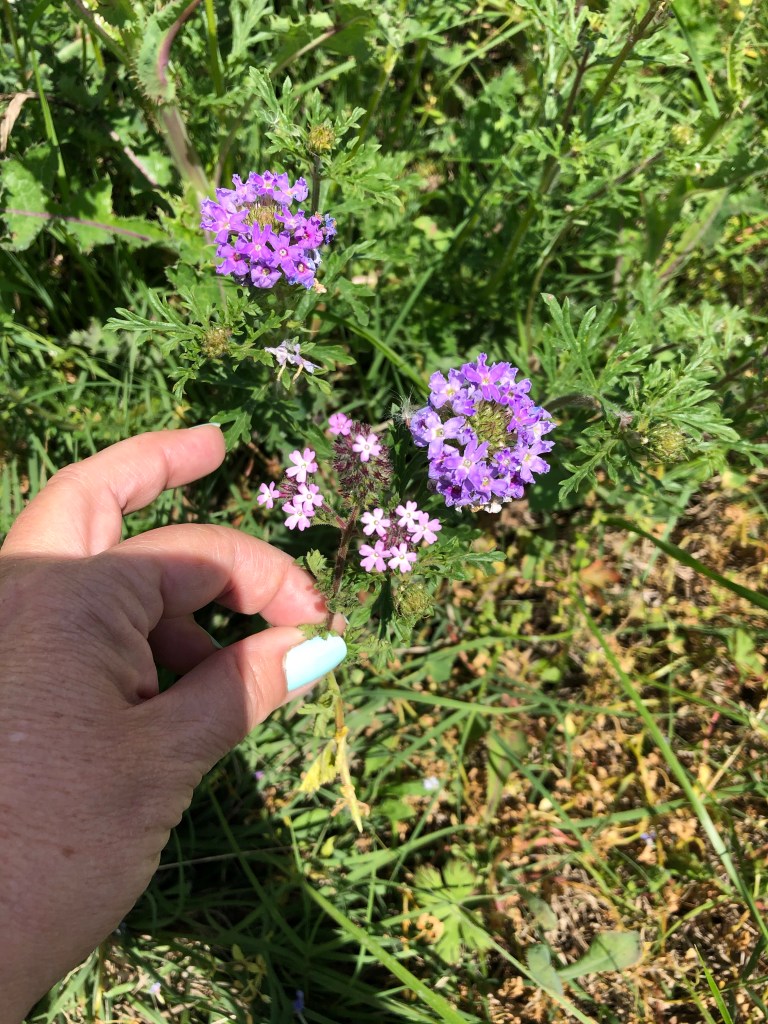
I also stopped to look at flowers. These two types of verbena look very different right next to each other!

I was proud of Apache for being a good teacher. Both horses got their reward when we walked to the end of the driveway again, me mounted and Sara alongside of Ace. Then we enjoyed a grazing break again. That was also good practice. It’s nice that these two get along so well.

We’re friends, so we don’t bother each other.

I know it’s really good for Apache to be the calm, reasonable role model for the first time in his life. I can tell he enjoyed doing it, and he didn’t even realize that yesterday was the second time we ever rode without another person riding with us. Score!

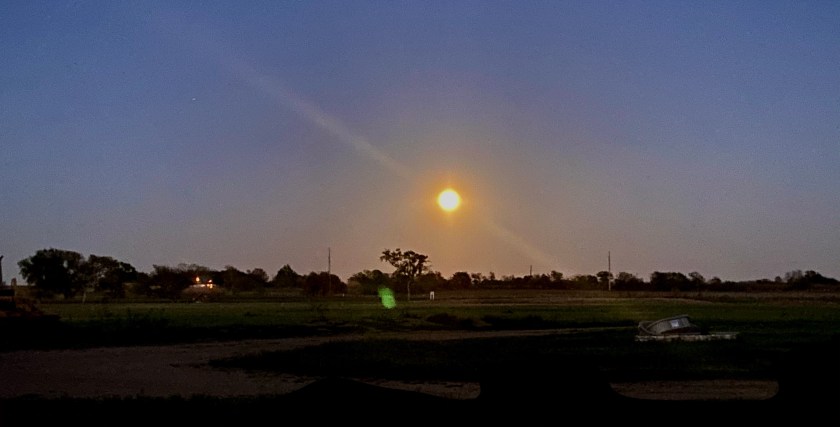
Plus we had a big ole full Passover moon! Photo by Lee.

That’s it for today’s horse report. Don’t worry, I won’t be writing about Ace progress every day, even though his owner says this makes him “famous.” But, Trixie comes today, so we may need a foot report!

A Familiar Bird All Dressed Up

It’s much cooler this morning than it was yesterday, so I wish today was the massive hay-bale unloading day. And, yes, I have a sore back and arms, but that’s not gonna stop me from getting out and doing things! Um, and theoretically today I’ll finally have time to work on the newsletter that’s going sort of slowly this week.

Anyway, I have a bird story. Every day when I wake up, I head over to our second-story bedroom window that faces the chickens and the pond to see what’s going on in the world. I can see dogs, hens, horses, cattle, and often birds.

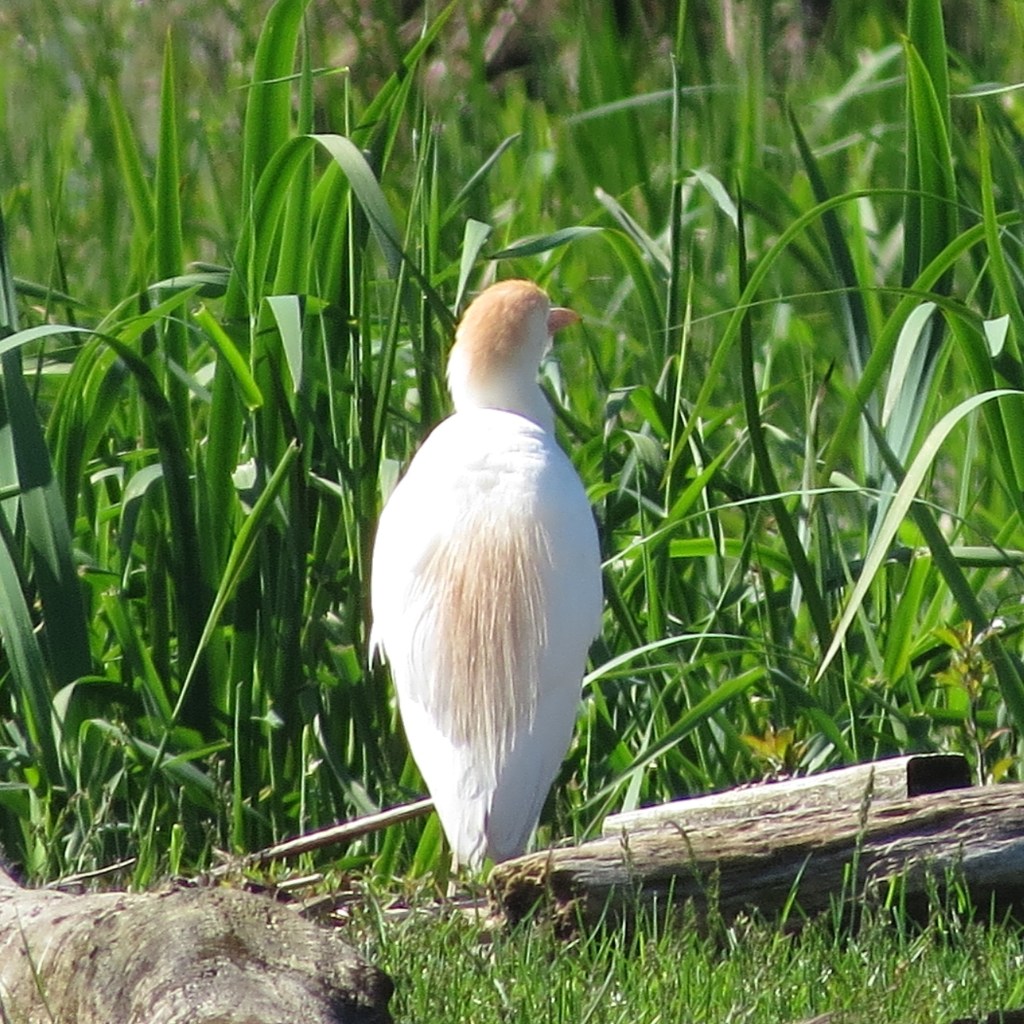
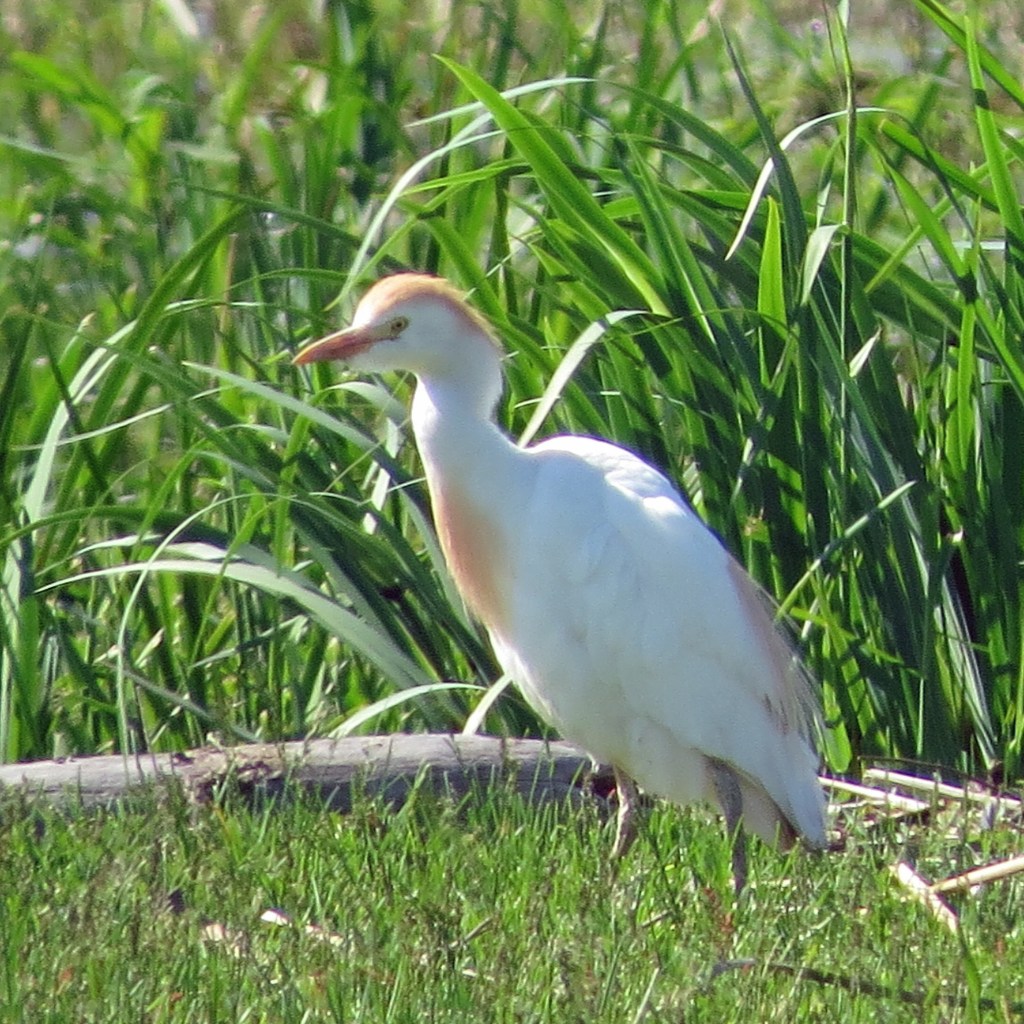
Today, I saw two white birds by the pond. Seeing a white bird is not uncommon, since we have a Great Egret who visits often. These two looked like egrets, but not so great. They were smaller and had patches of a pretty salmon color on their heads and backs. They looked like this:

Photo from iNaturalist, copyright (c) Charlotte Bill.

I couldn’t get a photo, since my phone was updating its OS. The nerve. I wracked my not-really-awake-yet brain trying to figure out what it could be. It had a poky bill, so it wasn’t a duck. It had a long neck, but not THAT long of a neck. And it looked like an egret with a short neck and a short bill.

Isn’t that a pretty bird? Photo from iNaturalist, copyright (c) Charlotte Bill.

The phone finally finished updating, so I could look it up on Merlin Bird ID. That is one helpful piece of software! I entered its size as smaller than a goose, and its colors as white and orange. I couldn’t wait to see what exotic creature I’d seen, but not been able to photograph. I had to laugh when I saw what came up. The birds are a pair of cattle egrets in breeding plumage!

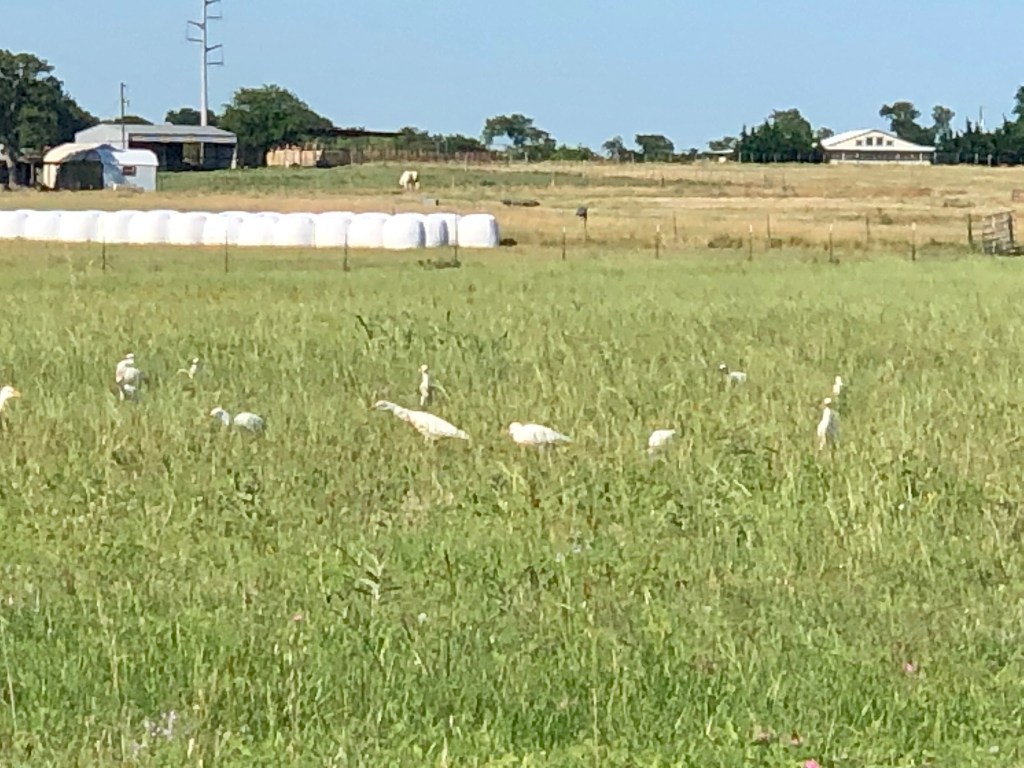
My own best picture of cattle egrets, in a large flock.

My gosh, I’ve been seeing these birds my entire life, but the color fooled me. Now I know they get all colorful this time of year. Looking through the photos on iNaturalist, I could see they can be quite colorful. I read that they get more colorful in some other parts of the world, too.

Learning about these guys (Bubulcus ibis) on Wikipedia explained to me why I’ve seen them my whole life. It turns out that they were first introduced to the US (escaping captivity) in Florida, where I spent my childhood! They were observed breeding there in the late 1950s, and had spread to Canada in just ten years. Wow. They also busily expanded from their native Iberian peninsula, too. I guess where there are cattle, they follow.

I have a vague memory of my mom mentioning that they didn’t see them when she was younger, which makes sense to me now. I strongly remember finding these birds very funny when they rode around on the backs of the huge herds of Hereford cattle we’d see in north Florida in the 60s.

I guess it pays to wake up and look out the window, because it can lead you to learning a lot more about a bird you’ve enjoyed your whole life! It pays to stay curious!