Riparian Knowledge Overload!

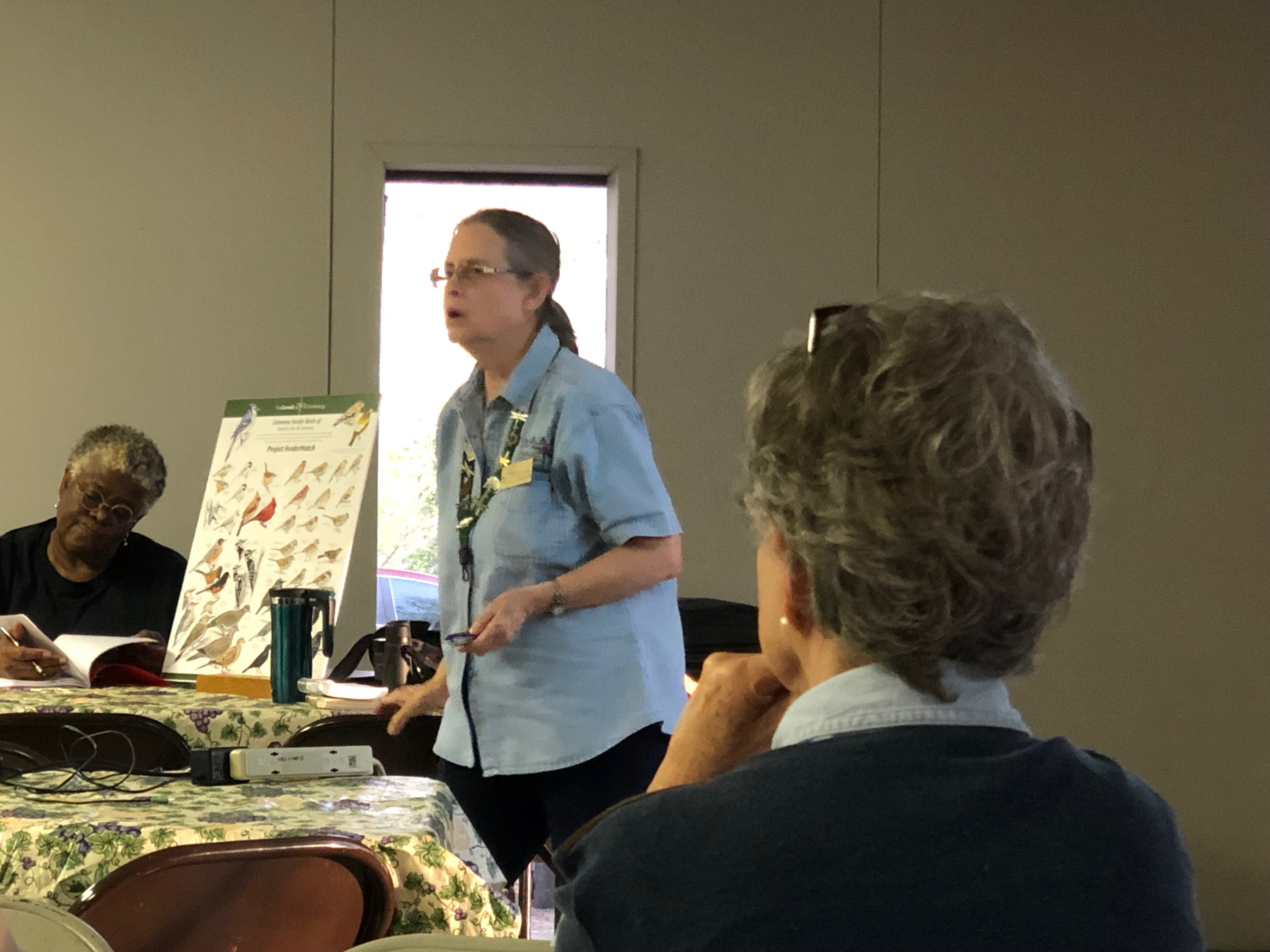
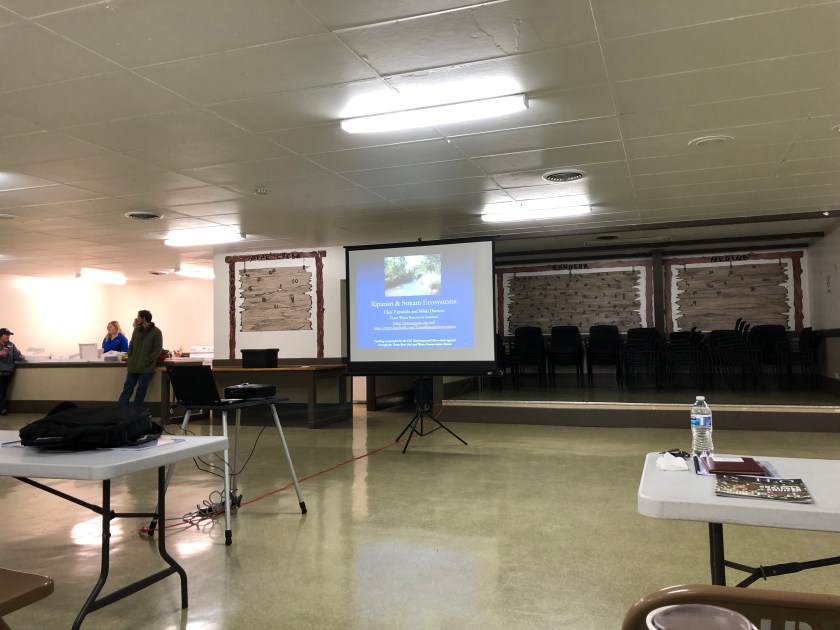
Here we are in Bandera looking at a slide show.

Now that I’ve slept, maybe I can share some of the depth and variety of the things I learned at the Bandera County Watersheds Riparian Training I attended on Wednesday, March 6. The event was held in Bandera (one of the most attractive small towns I ever saw and VERY consistent in its cowboy theme), and the weather improved enough that the outdoo parts were not unbearable. There were at least 30 participants, ranging from fellow Master Naturalists to water management professionals to interested landowners.

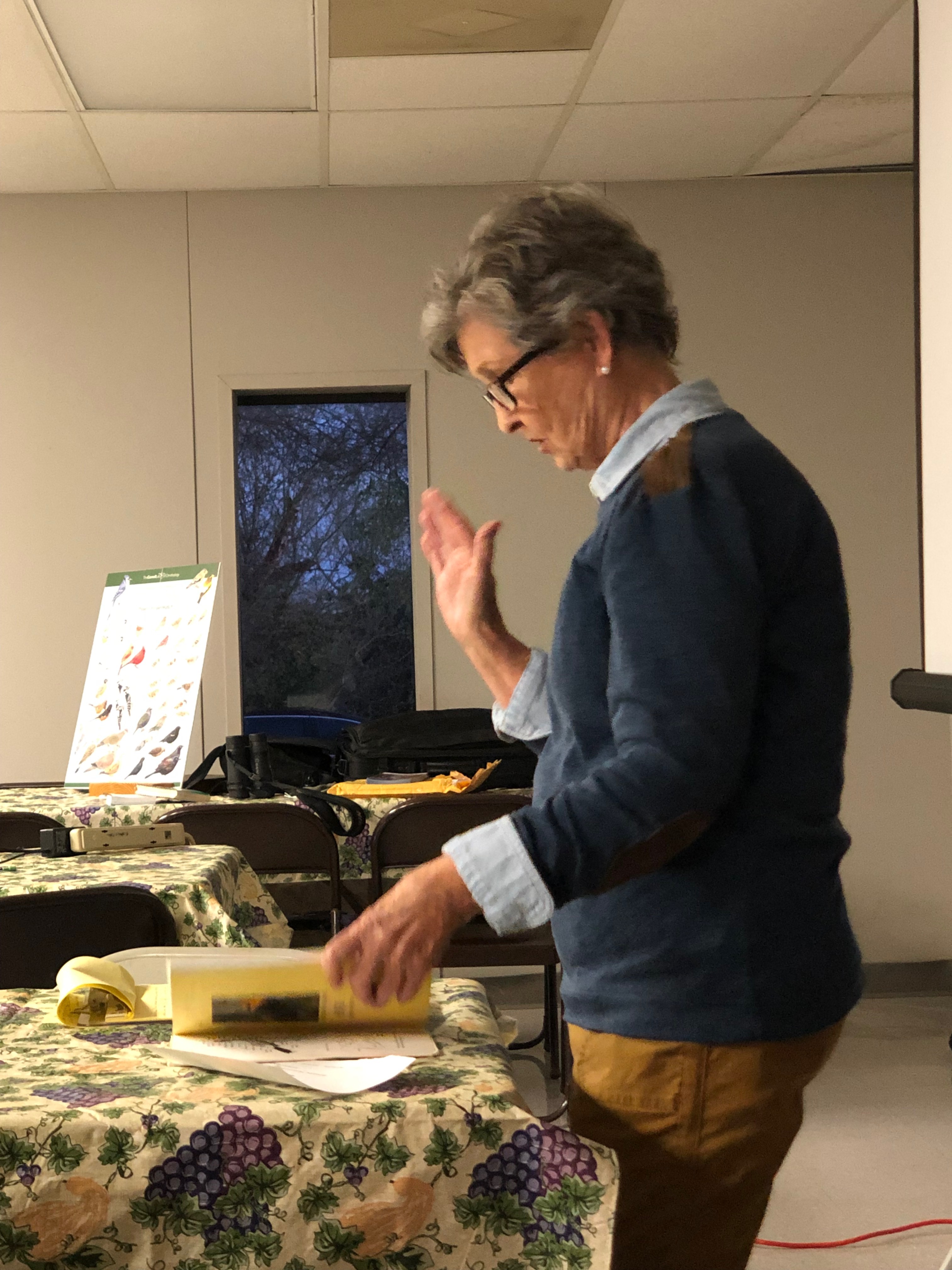
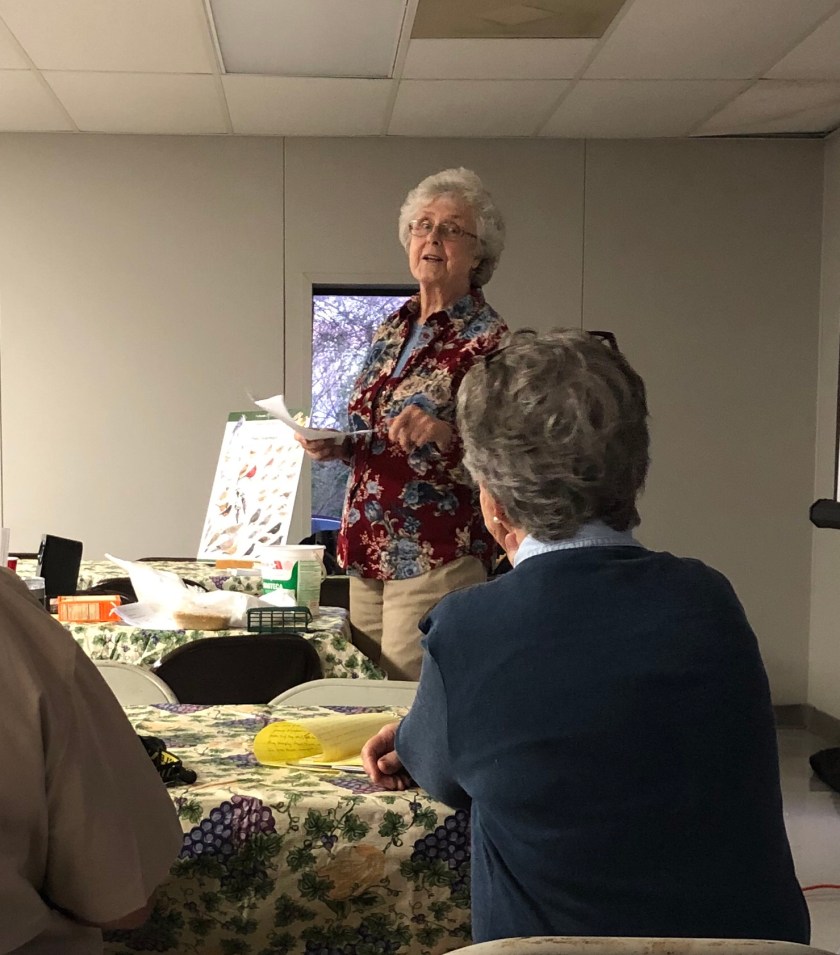
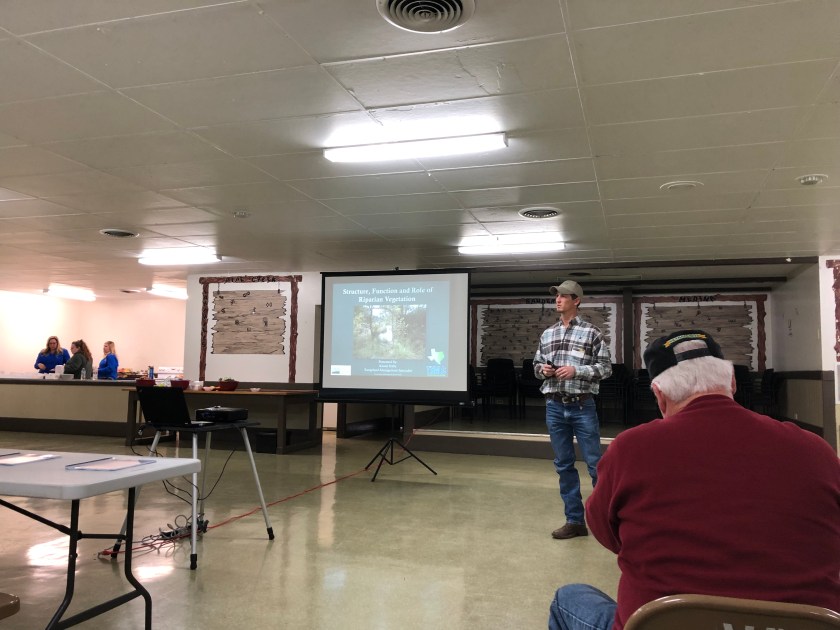
This young man was full of information. I’d love to hear him again.

Much of the day was spent indoors, however, as a team of water management experts from many different agencies shared their knowledge of managing the areas alongside rivers, creeks, and streams. These are called riparian areas, and they are a very important part of water management, but one that has been misunderstood a lot in the past.

Our scenic location.

Sadly, the beautifully manicured lawns and parkscapes we often see, where people walk up and down to admire the view, are not actually what our waterways need. The need a riparian buffer of plants that love water or theive near it and trees that are of various ages, so that when they die or fall into the water, there are future trees to replace them.

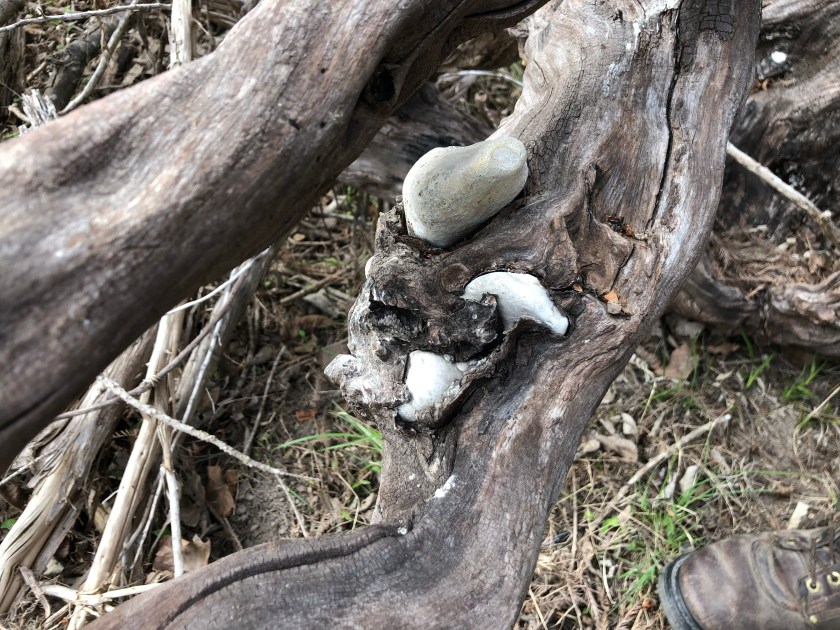
This root system washed up in the last floor. Look at the rocks embedded in there!
Continue reading “Riparian Knowledge Overload!”

Getting Ready for Earth Day

Happy Sunday! Yesterday I attended a committee meeting with our Master Naturalist group. Rather than write it up twice, I’m sharing my post on their blog.

I’d like to add that I saw a huge dead feral hog on the way in, and found some Indian paintbrush flowers on the roadside between Cameron and rural Rockdale!

Sue Ann (Suna) Kendall's avatarNature Along the El Camino Real

Yesterday, the Environment and Recycling Ad-hoc Committee’s Earth Day subcommittee met to continue to work out plans. I was glad I could finally attend a meeting, because it was fun to see the team at work. I was joined by Ann Collins, Linda Jo Conn, Joyce Conner, Catherine Johnson, Rosie Johnson (guest and helper), Larry Kocian, Kathy Lester, and Donna Lewis (the leader of the bunch).

Nandina and Texas mountain laurel added beauty and scent too the meetiing.

What’s going on with Earth Day?

The El Camino Real Master Naturalist Chapter’s biggest outreach project each year is to host an Earth Day event, to share ways to protect the planet with the community. This year it will be at:

Rockdale Community Center, 109 N. Main, on Saturday, April 20, 10 am – 2 pm.

We were excited to learn about all the planned activities and tables. Our team leader, Donna…

View original post 503 more words

What’s One More Blog, Right?

Because I am such a volunteering maniac, I said I would make a blog for the El Camino Real Chapter of Texas Master Naturalists. And I did it! Hooray for follow through and all that.

It just popped into my head at our last meeting that we had no way to share and archive our nature stories, reports on training, etc. It’s a lot of work to make a paper newsletter, so we haven’t had one in a while, and though we do have a Facebook page, it’s more about news, since member posts don’t show up on the main page. A blog is a great way to share.

Also, blogging is a great way to get volunteer hours. Master Naturalists like those.

How did I do it?

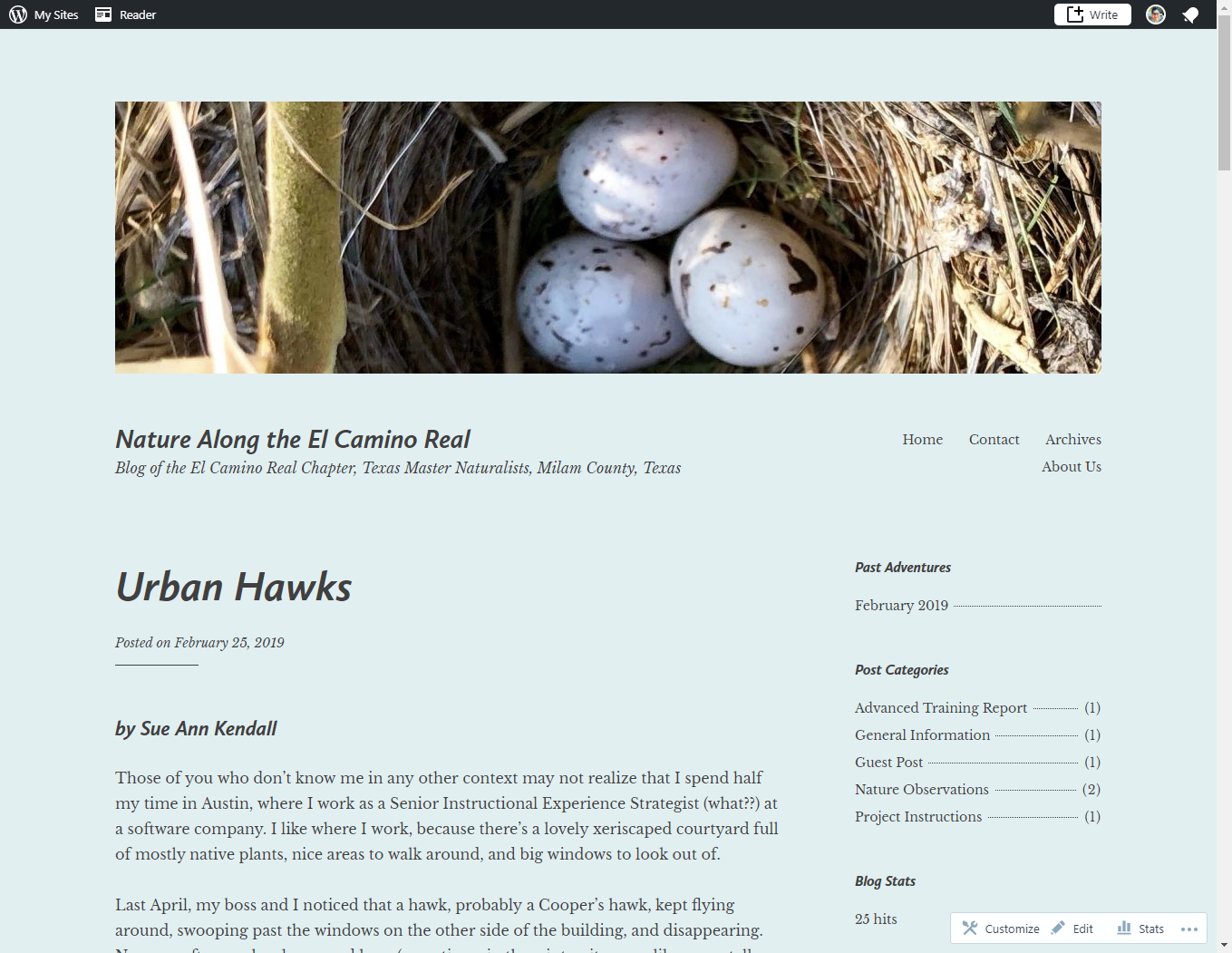
I always forget what goes into setting up a new WordPress blog, customizing its look and feel, and making it do what I want it to do. I like the theme I chose for this one, especially since the top menus stay at the top of the screen as you scroll down. I also think it looks pretty elegant and simple.

Here’s a blog page. It has a right column with archives, sign-up informatio,n and stats.

What I didn’t like about the theme was that there was no way to put a blog archive on the home page. The home page has no right column, and you can’t easily modify the top. I did put the archives at the bottom of the page, but, who’s going to go all the way down there?

This shows the small top menu that stays when you scroll down. Also, note that archives menu.

So, I made an archive top-level page. Problem solved, I hope.

Off we go

Feedback I got from the small group I ran it by was that it was hard to subscribe to the blog (I made sure to put both the email follow link and the WordPress follow link). And some typos got spotted, which I always appreciate.

I was happy to receive two items to post as soon as the group voted to start a blog. That way not all the articles will be by me! I plan to continue to re-blog my more naturalist-oriented posts here, but am looking forward to seeing lots more from my fellow Master Naturalists.

So, make sure YOU follow that blog, too!

Recycling. Complicated.

I’ll have a long and thoughtful post in the next few days on another topic, but until then, maybe I’ll just spew forth random comments from the past couple of days.

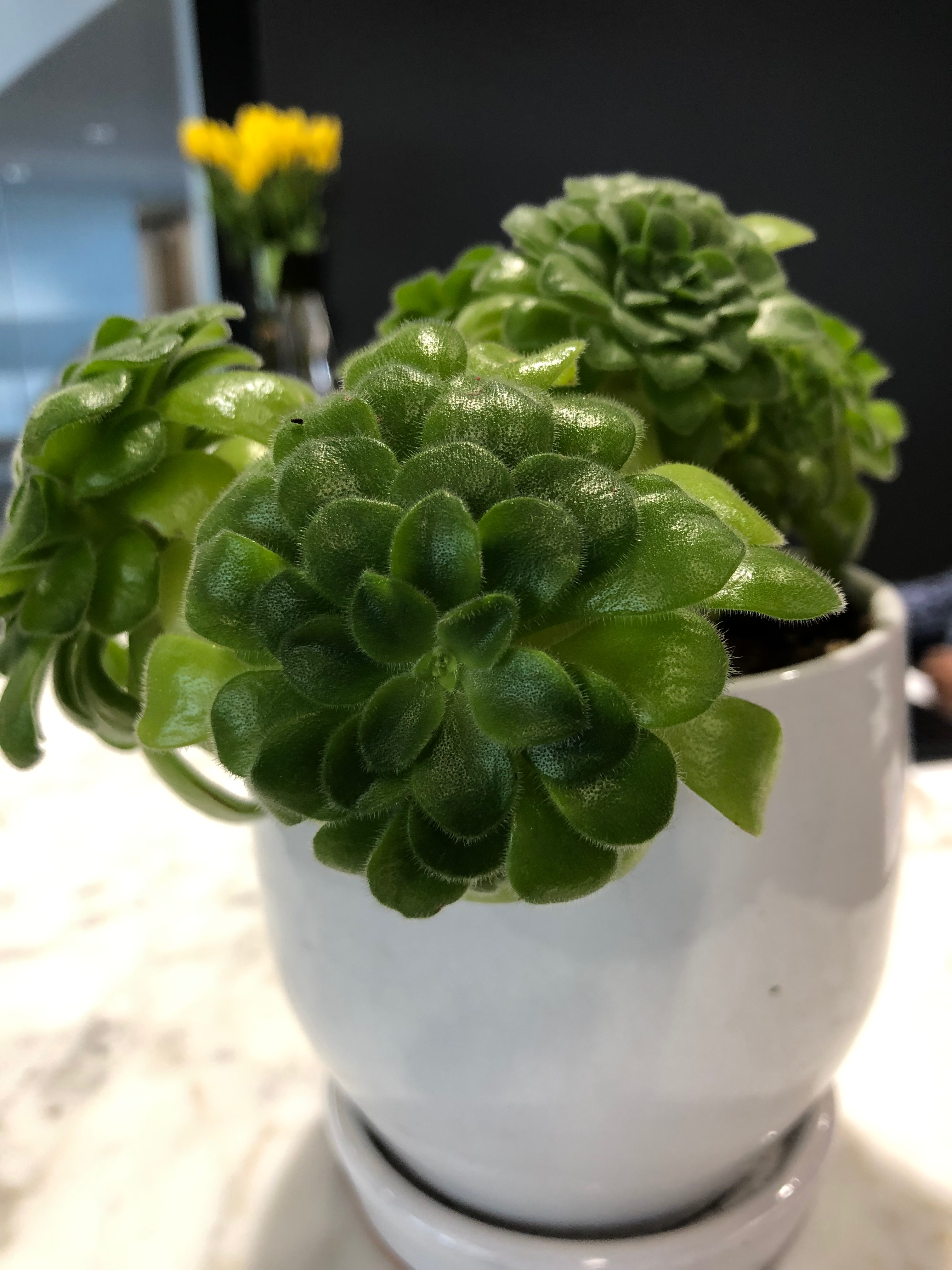
Maybe they aren’t really s pirals, but the symmetry attracted me.

I’ve been seeing spirals everywhere lately, even in the plants at the reception desk where I work. I wonder what all that’s about?

It’s prickly but darned pretty.

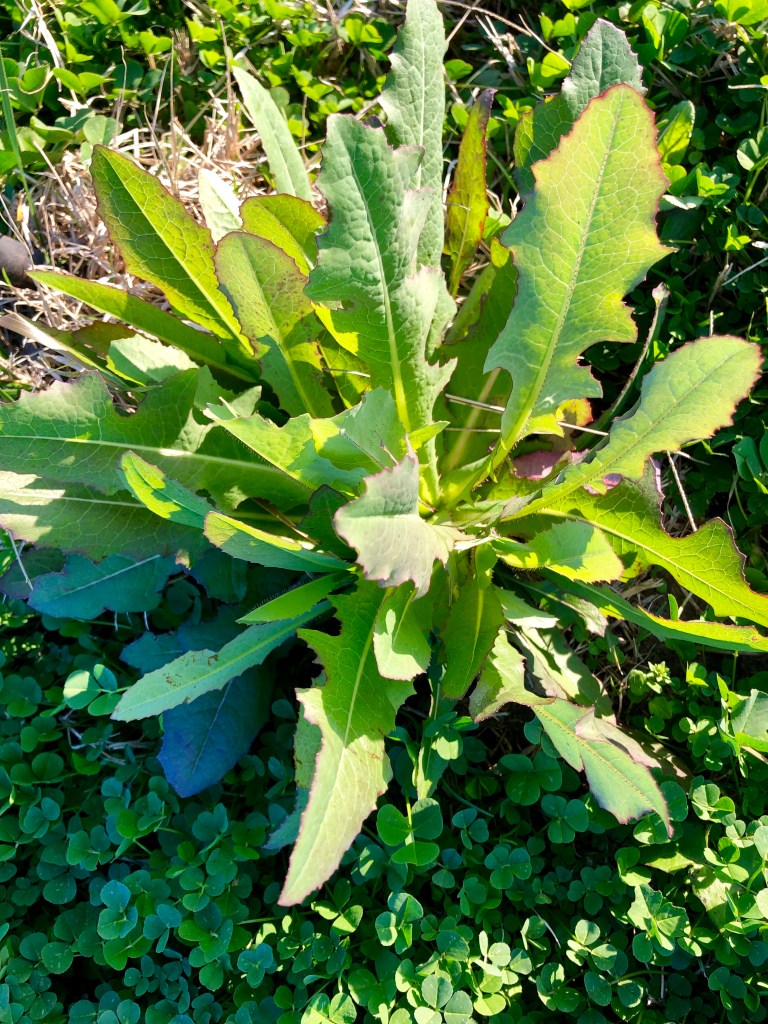
Maybe it’s just the time of year, when everything’s sprouting. I mean, wow, that is one attractive thistle.

All these lovely dandelions make me hungry for a salad or spring tonic or something.

Maybe it’s reminding me of recycling, which has as its theme image a mobius strip (which I didn’t realize until Joyce Conner mentioned it at our Master Naturalist meeting last week! Duh!).

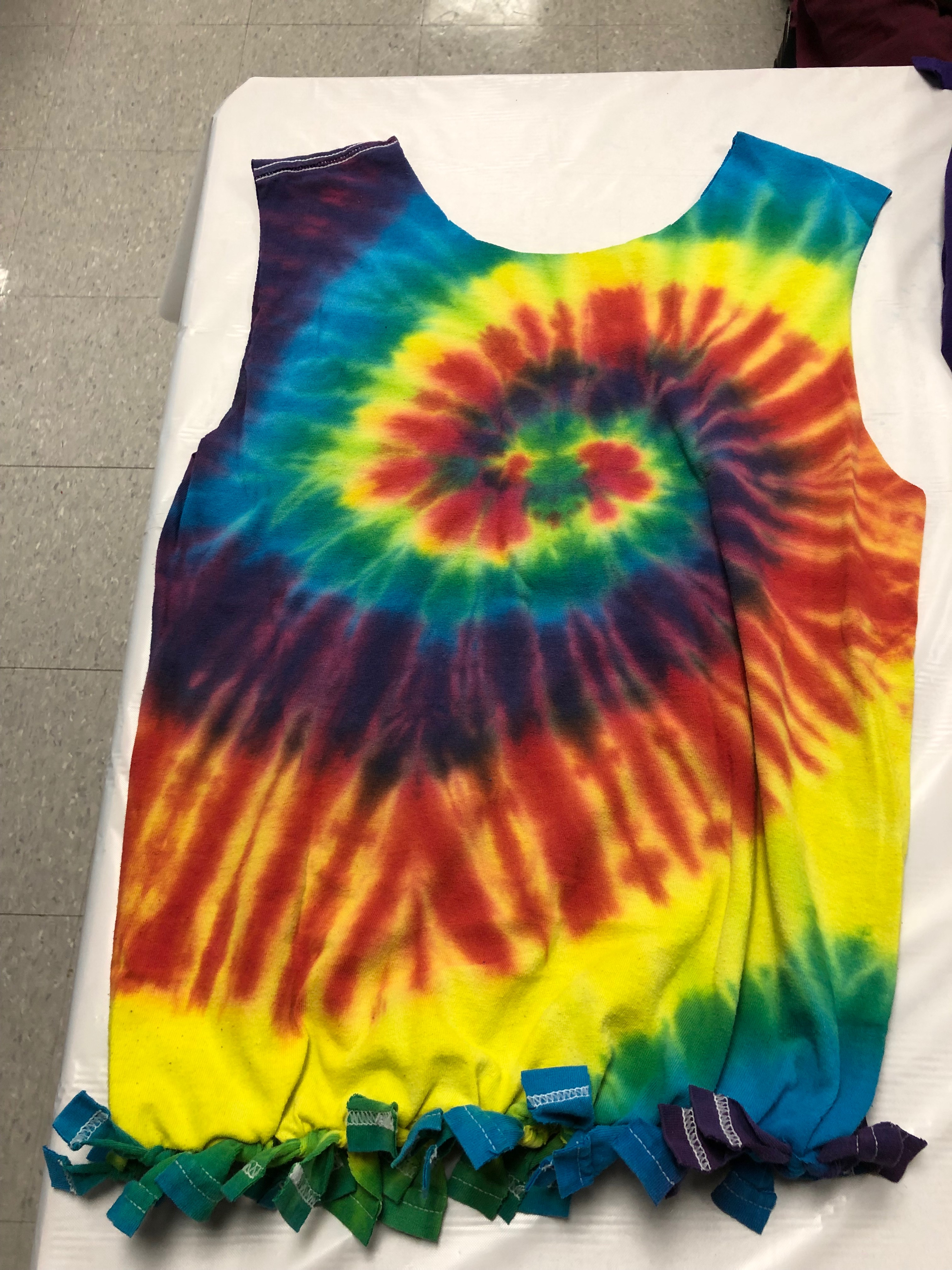
Spealing of recycling, we recycled old t-shirts into tote bags to give out on Earth Day!

Joyce is a very thoughtful person, and she has been putting a great deal of thought into recycling, its benefits and its issues. She shared a lot of them at our meeting, which no doubt got everyone thinking about their own beliefs about recycling our waste.

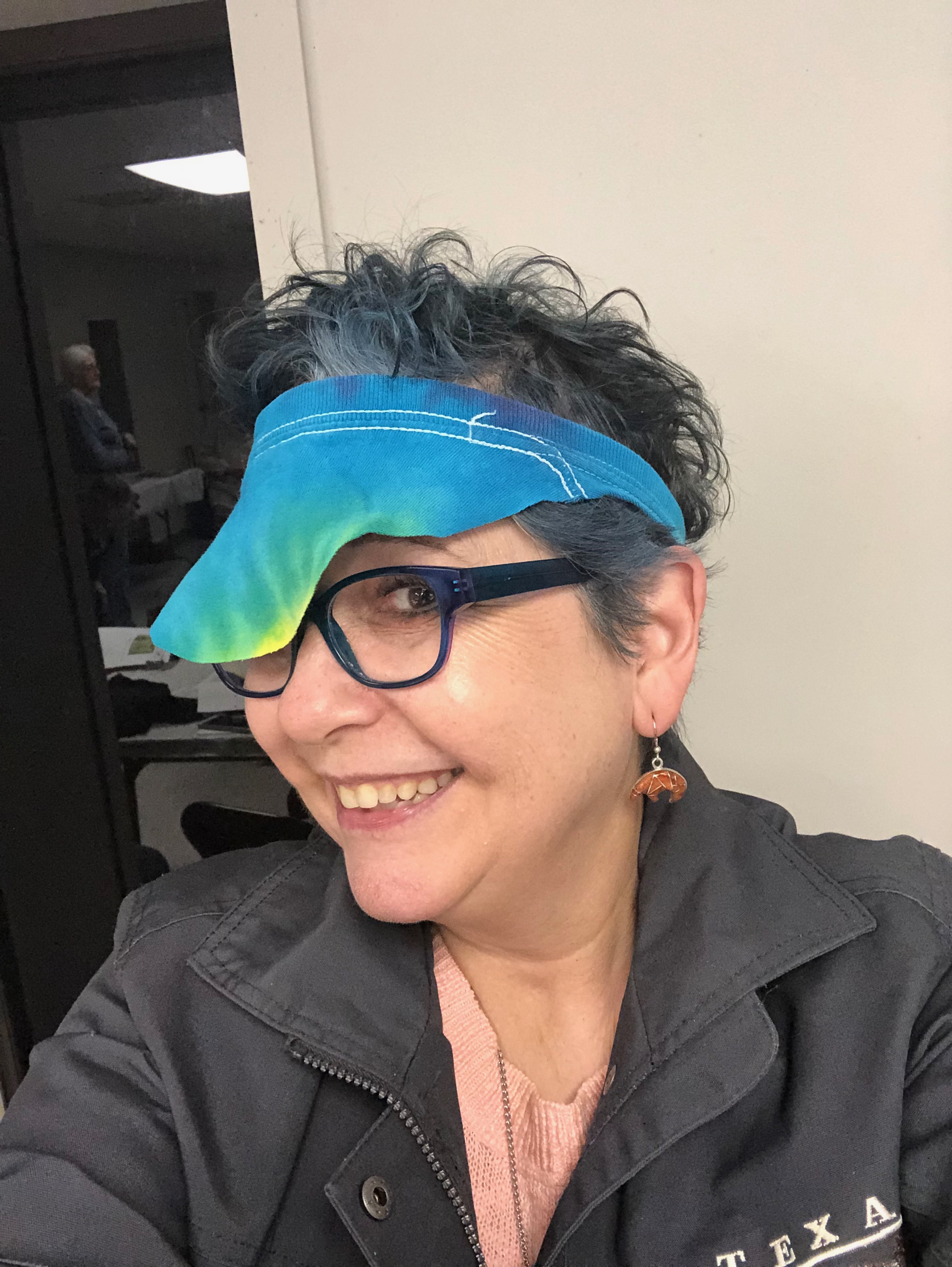
I attempted to recycle myt-shirt sleeve into a visor. I think I failed.

Joyce showed us how much of the stuff we carefully recycle goes straight into landfills, because no one wants to recycle it. Apparently, we used to send a lot to China, but they don’t want it anymore.

In the end, she suggested that we concentrate on the reduce and re-use parts of the reduce, reu-use, recycle trio. That made sense to me. We try to re-use a lot of the glassware we buy things in, and I have started recycling boxes by decorating them and using them for storage, rather than buying decorative boxes.

Many of my friends re-use yarn rather than buying new, too.

What are you doing to re-use items?

I Can See for Miles

Sunday I needed to play tech support for my Master Naturalist and artist friend, Pamela. I love the detective work aspect of figuring out why a computer doesn’t work.

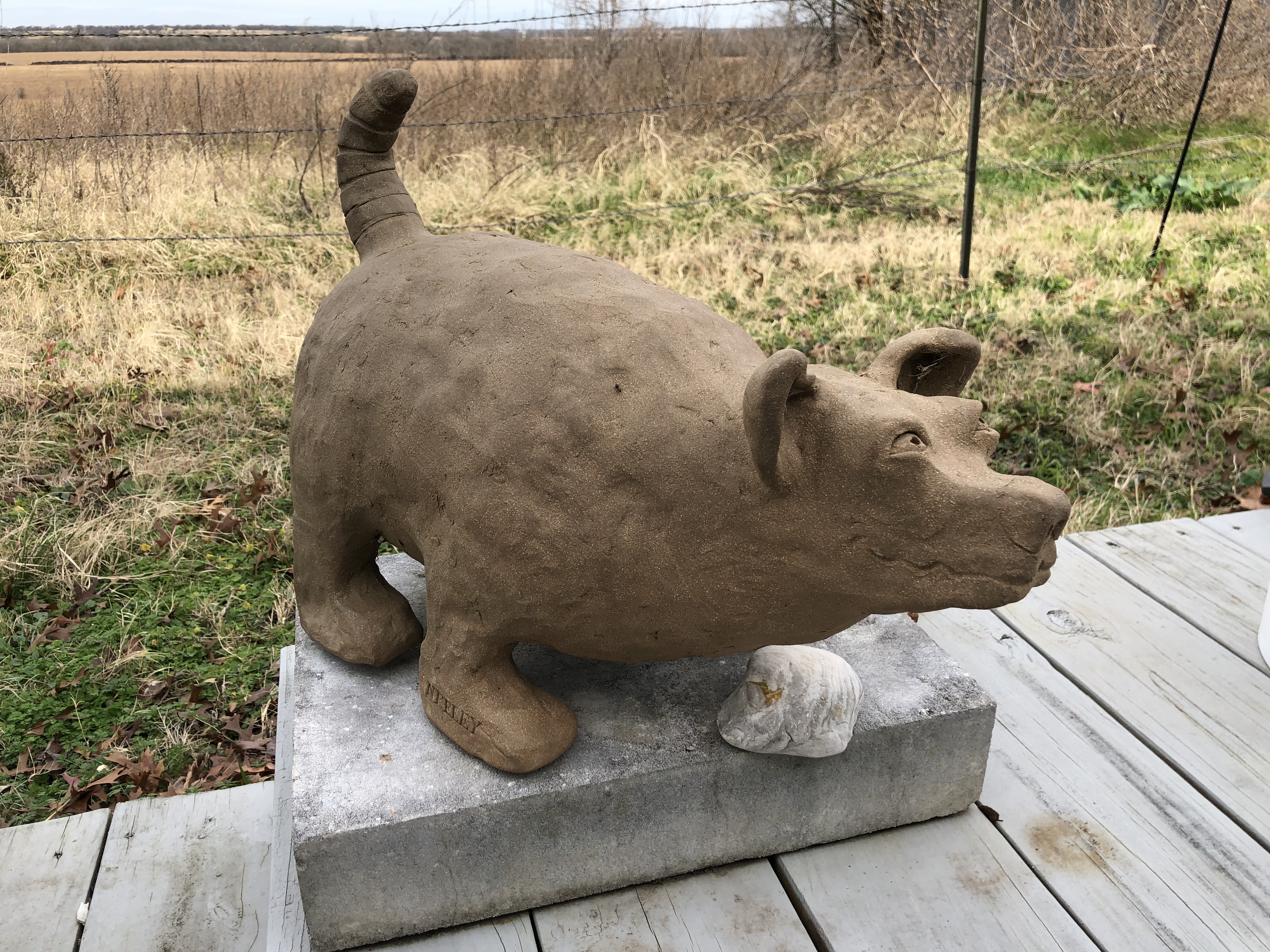
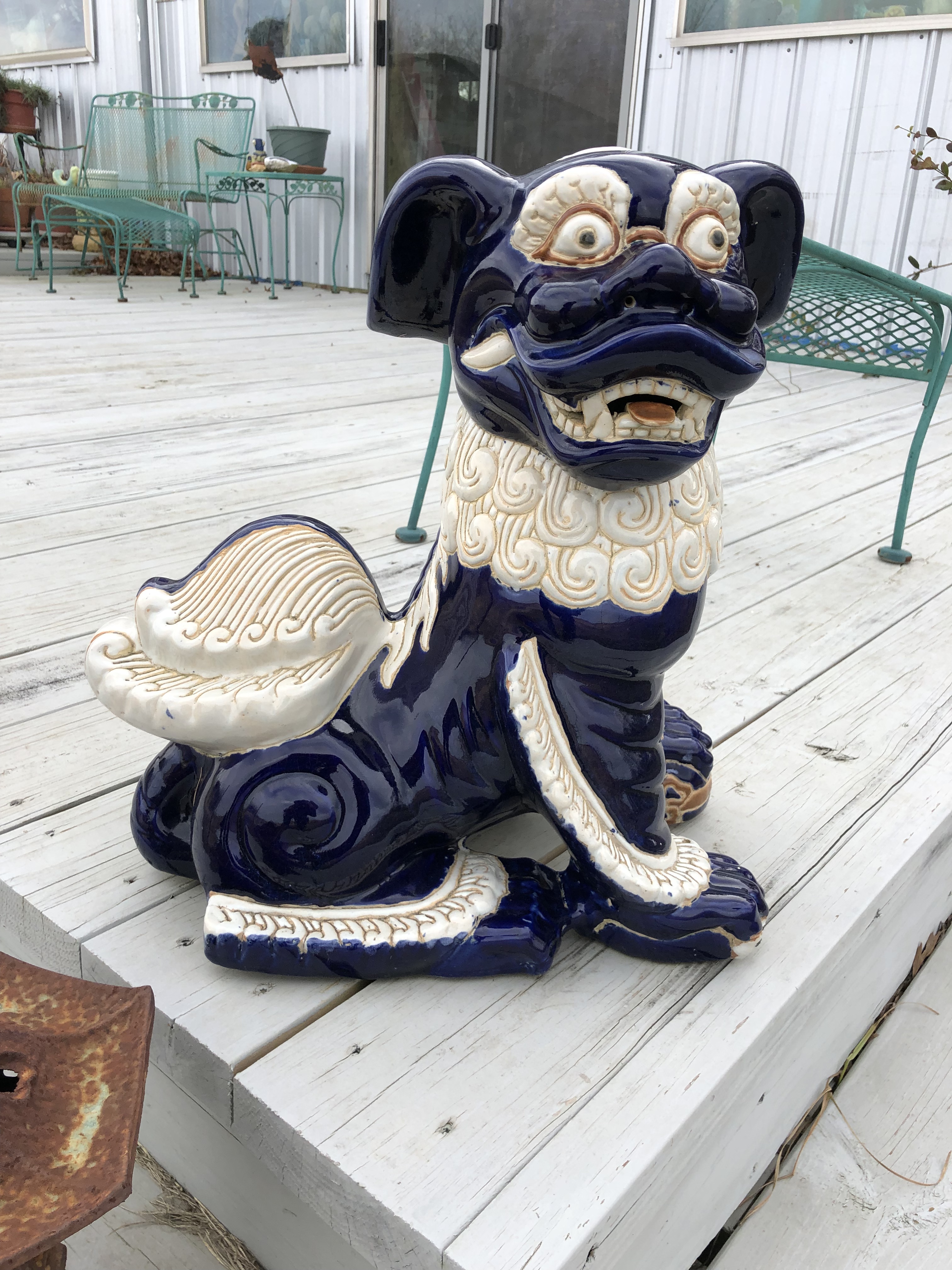
Greetings from the chubby dog statue.

I’m happy to report that I got her frozen computer unfrozen and set her up with WhatsApp so she can talk to her friend in India.

If you had binoculars, you could see the ranch house.

Then I got to have fun looking at her art-filled home and garden. One highlight was verifying that yes, you can see the Hermits’ Rest from her house.

You can also see the huge black scar across the land that a new pipeline is making. That thing goes through the whole area. At least land owners get compensated. As I recall, these companies make big efforts to put things back the way they were, judging from Lee’s dad’s old farm.
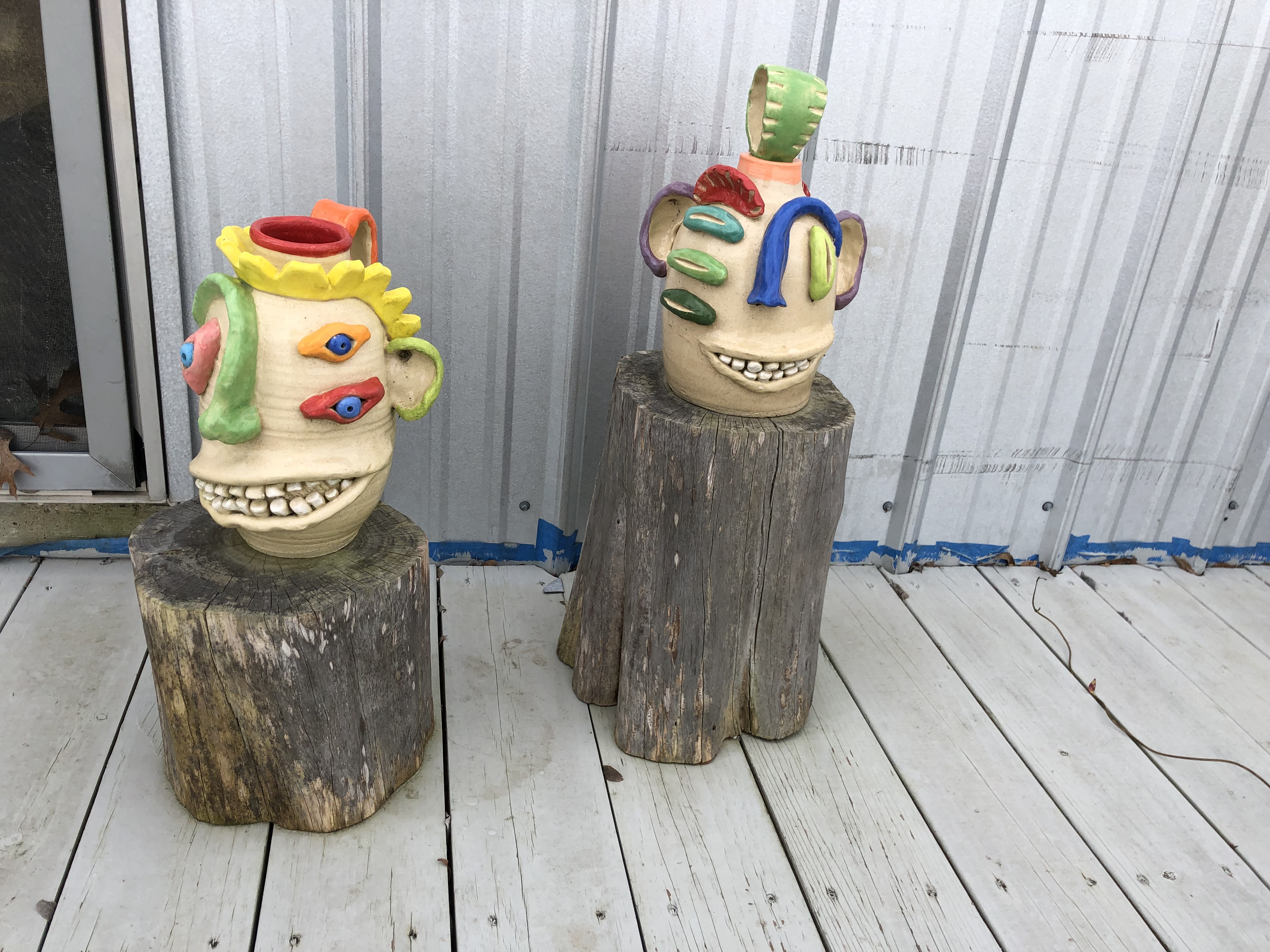
Happy faces on the deck.

After looking around outside I toured Pamela’s art studio and gallery, where there is much clay, tools, and a kiln where she makes beautiful pottery. Her work has both humor and grace to it. So, of course I love it and had to get some.

I got this one for me, since it reminds me of the labyrinth where Lee and I got married. It had been waiting a long time for the right person.

I’ll let you all know when her gallery re-opens! She’s renovating it now. You can find her work in the cute shop in Rosebud, too. Yes, Rosebud is a real town near Cameron. (Aside: I write much shorter sentences on my phone, so this text seems a little disjointed. I promise to use my computer for the next post.)

Fu dog, not by Pamela, says bye!

Like I was saying yesterday, it’s never dull around here! The people are both fun and fascinating. I’m so glad to be at the Hermits’ Rest.

Small Town Joys

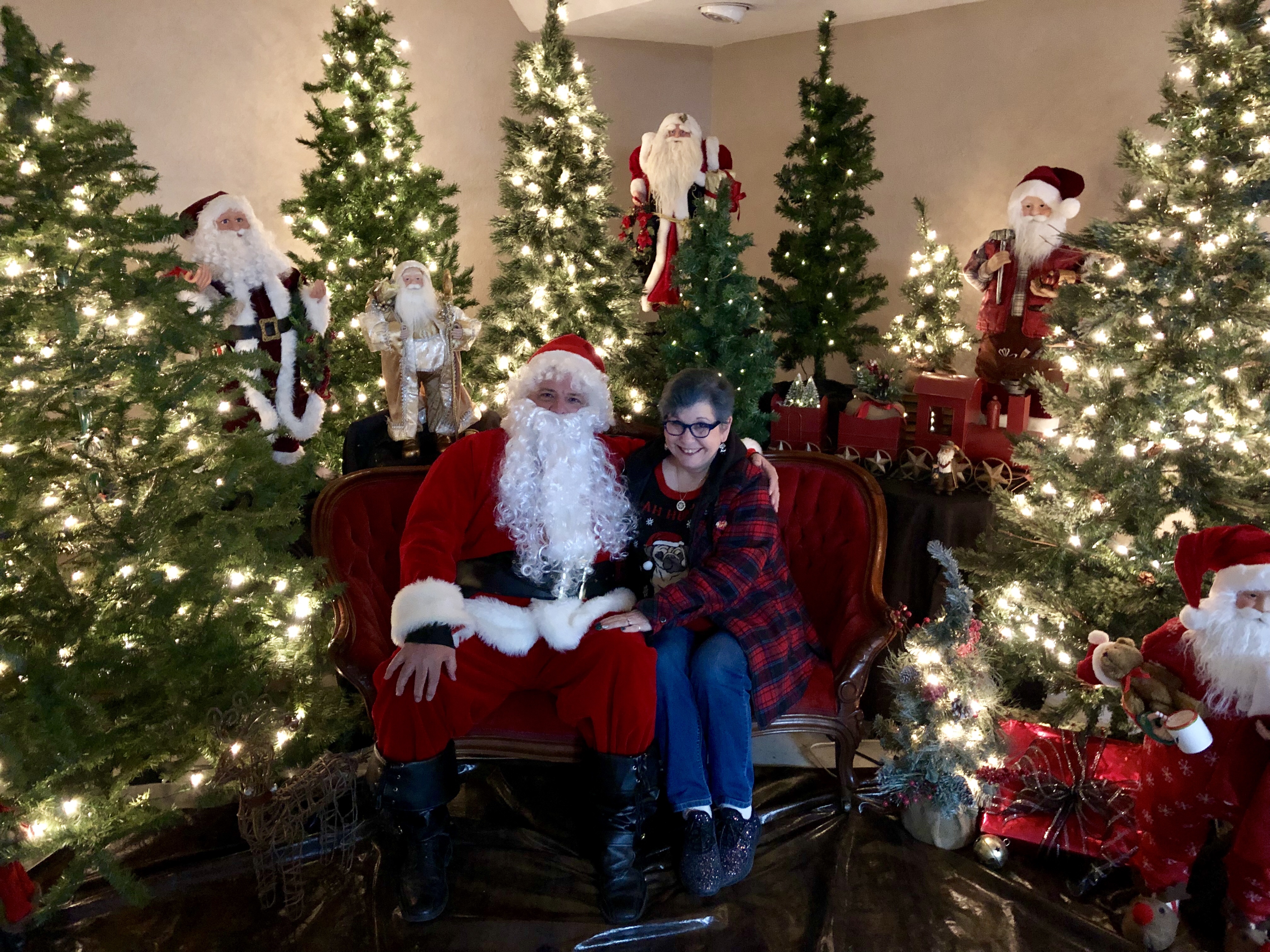
What a beautiful setting to sit with Santa Kyle.

A great part of living in a small town is community theater, which Cameron is great for. Jonathan Deal and the rest of the Milam Community Theatre board have been making some changes, but it’s still fun!

We went to last night’s performance of “A Fairy Tale Christmas,” which was cute as the Dickens. Dickens is capitalized because the play mixes the Scrooge story with fairy tales. I wore my Bah Humpug sweater.

Lee and I kept introducing each other to people, my Master Naturalist friends and his Rotary friends. And we knew most of the adults in the play. The child actors were all very good, with the smallest boy showing real talent.

Mandi and her fellow pigs. Photo from Milam Community Theatre.

Mandi made a great pig, and the pigs even brought me and my sister up to dance. The highlight, though, was Mandi’s dad, playing a hip hop King Midas. Hard to explain but hilarious.

There were cookies and cocoa, plus Santa photos afterward. Kudos to the team who worked on this cute play.

Land Snails! Everywhere!

Back to the Master Naturalist Conference postings, which I know you’ve been looking forward to (maybe?). Finally I get to share all the land snail information I learned on Sunday of the conference. This was a topic I knew very little about, so it was all new to me.

snail1
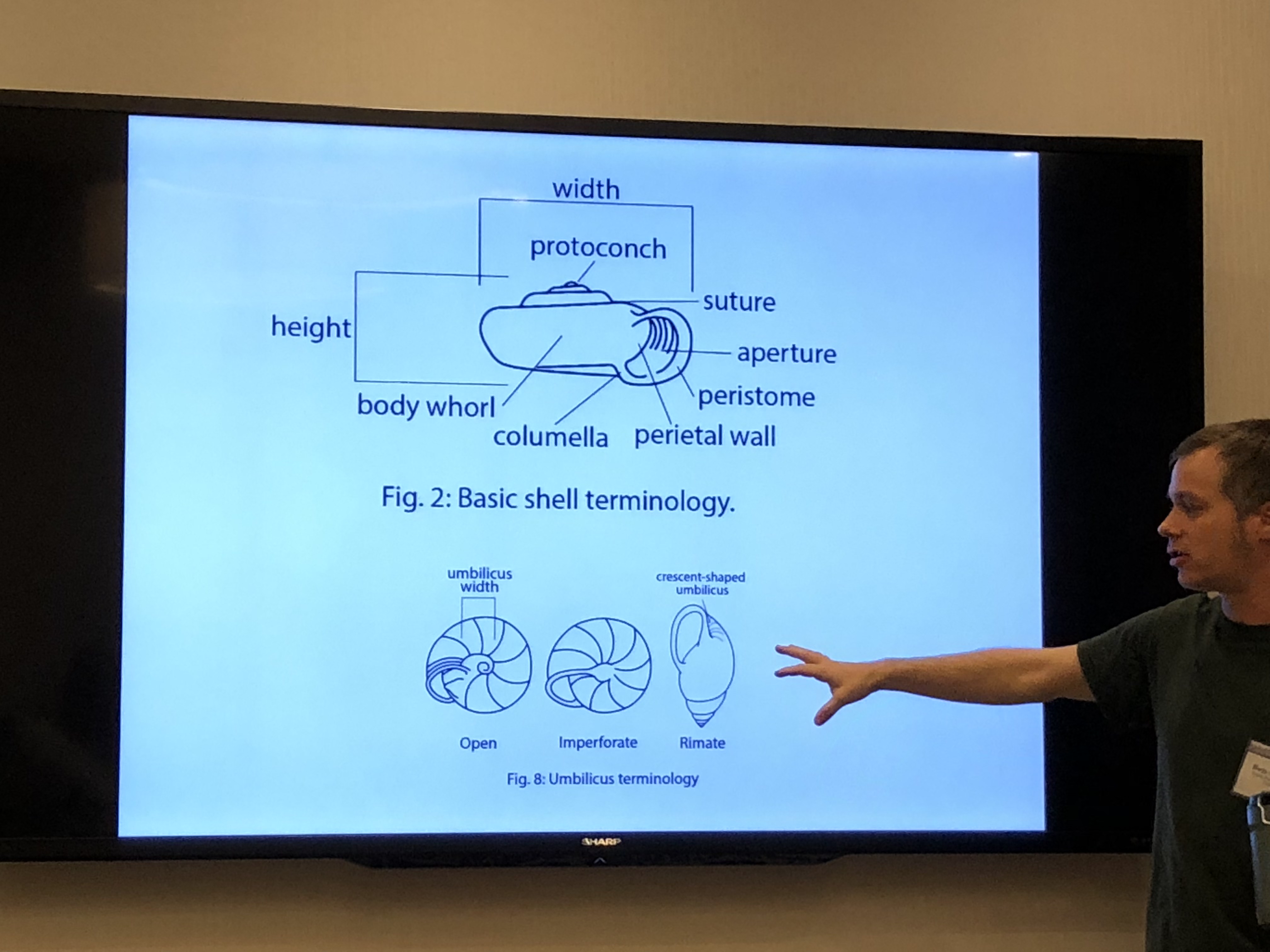
Here Ben shows us all the parts of a snail. I really like the umbilicus.

Ben Hutchins gave the presentation, and wow, that dude knows a lot about snails. He told us so much about the snails that live all around us. His enthusiasm was very contagious, and by the time he was finished with his in-class presentation, we were all dying to get outside and look for some land snails. So, we stepped out of the hotel and went to the conveniently located riverside park just a short distance away.

snail3
The small but mighty globular drop snail, and my hand.

We immediately started finding snails! First we found the tiny globular drop snails, which are the small white ones we’ve all seen, but had no idea what to call them.

snail4
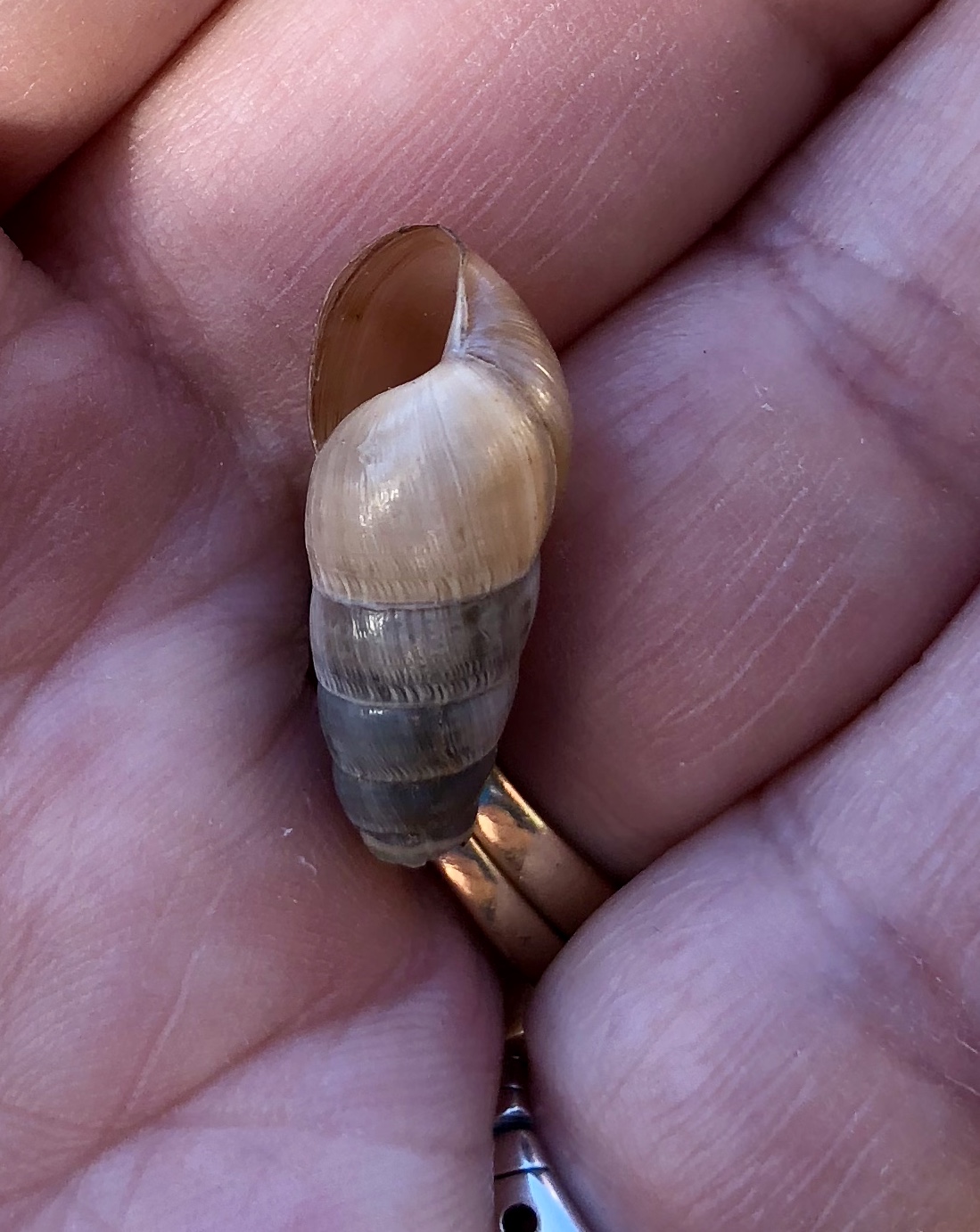
See how the end of the decollate snail looks like it’s broken off? That’s normal!

Then we found the decollate snails I’d always thought were broken. Nope, they all lose their tips as they mature. Huh. We found lots of living examples of those.

img_4593
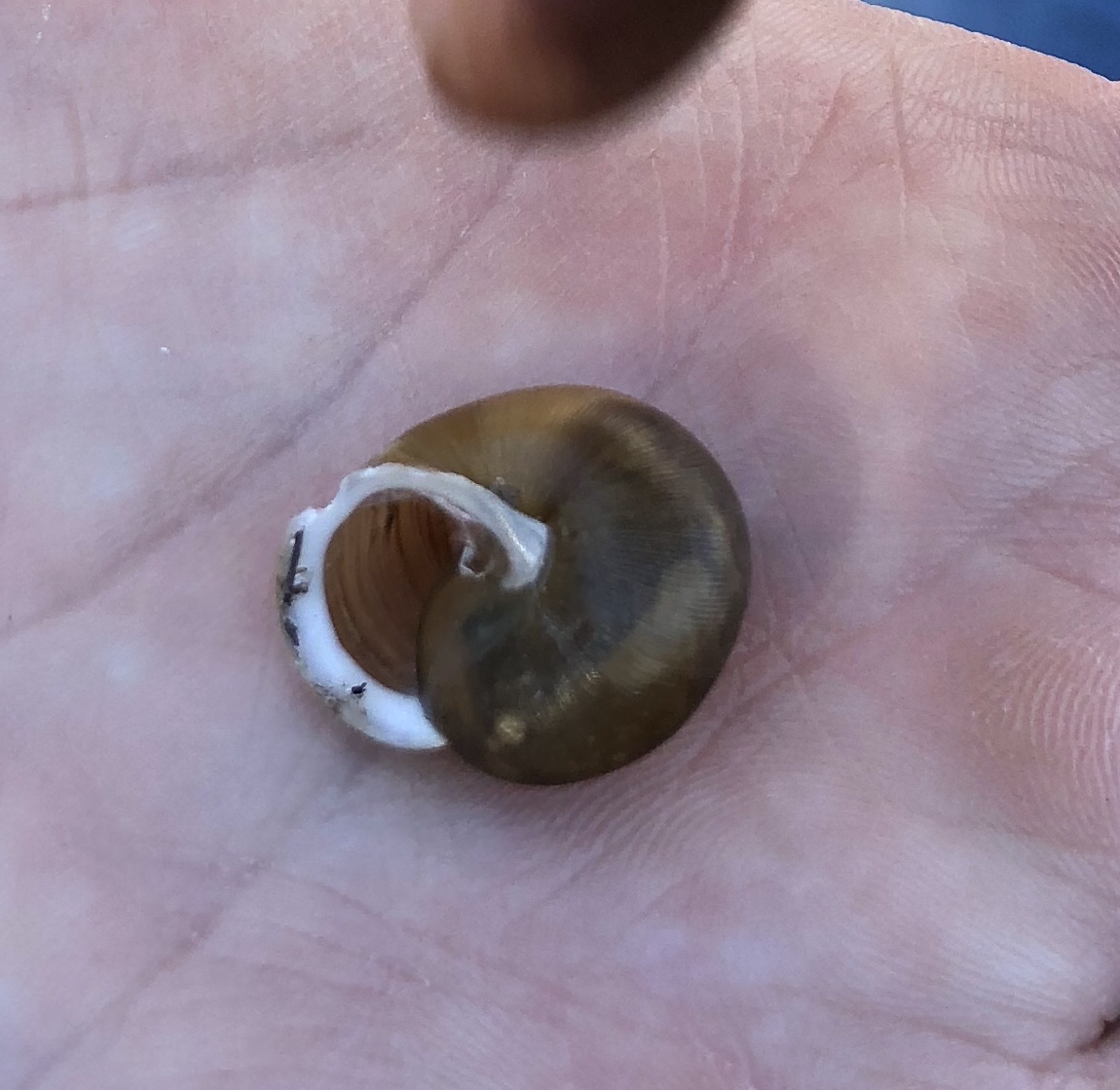
Rabdotus, front and back. Whichever is which.

We ended up finding at least five kinds of snails in our short walk. Others included white-lip globe snails, the very common Rabdotus, and the Asian Tramp snail.

img_4597
A white lip globe snail. So shiny. I think these are the ones with an operculum. I could be wrong.

We didn’t find any milk snails. Those are the ones I find a lot around Cameron. It turns out they aren’t native, but ARE the same escargot that the French eat with butter and garlic. My friend Pamela was extremely thrilled to learn this. She apparently has many meals’ worth at her house.

snail5
Ben shows us a snail he sorted out of the leaf litter along a path.

Salient Snail Stuff

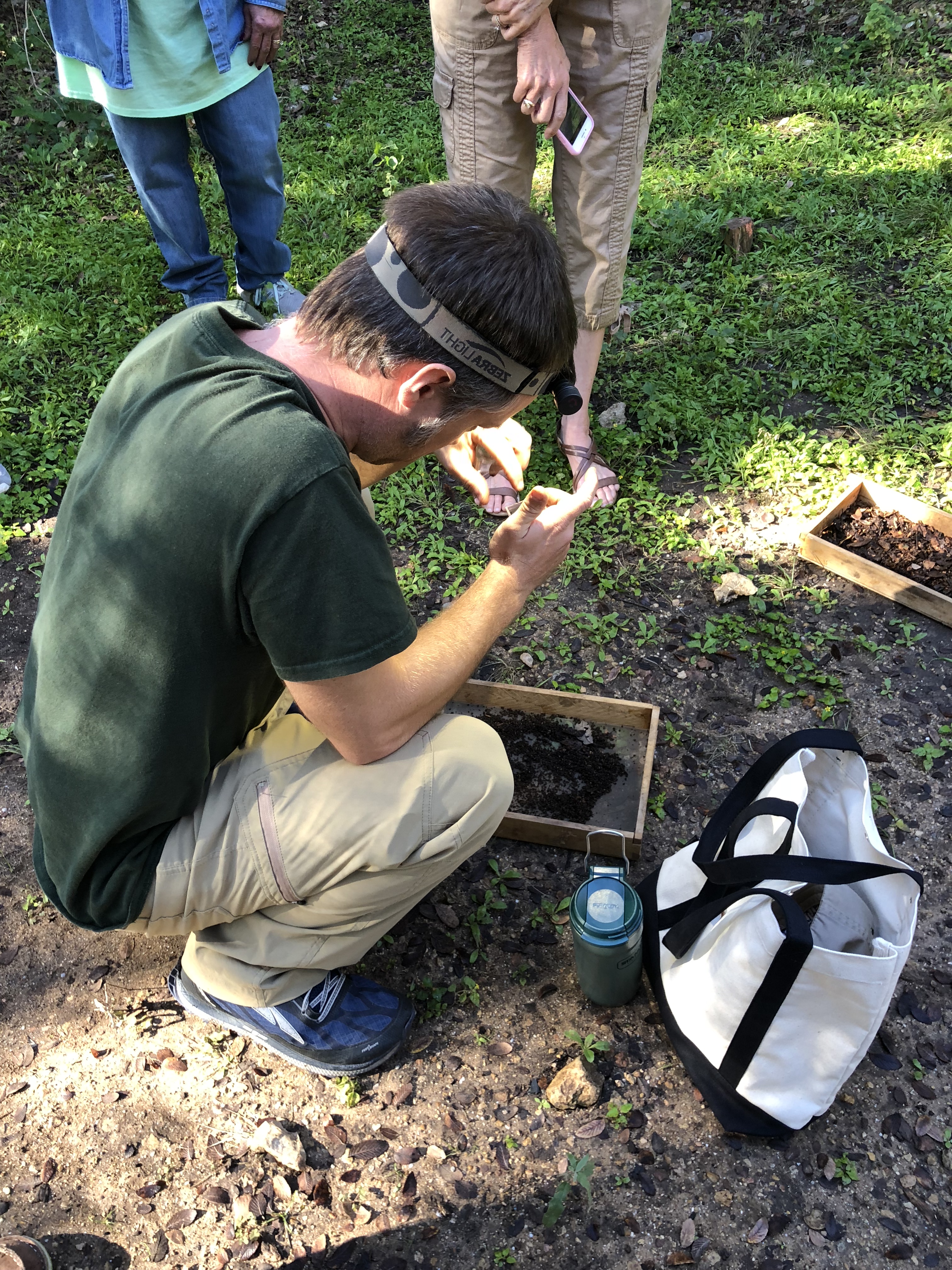
Did you know that most of the land snails crawling in our leaf litter are so small that they are hard to spot with the naked eye? The best way to find them is to sift leaf litter, which he demonstrated using a really nice hand-made sifter.

snail2
Ben has on a light, and is looking through a loup at a tiny jewel snail.

Did you know they have “teeth?” The teeth are really sharp protruberances on the shells.

Also, snails need moisture to be able to get out and about and do their snail activities. If it gets dry, many types of land snails just go into hibernation until it rains. And some of them have been known to hibernate months or years!

What do they eat? Well, your pet snail will love carrots and lettuce. I’m sure they are hours of entertainment…

The Key to Land Snails?

It turns out that it’s not easy to get more information on land snails, because the last comprehensive book on the subject came out in the 1950s. Good news, though! Ben is working on new material that will grow up to be a book. He’s also developing a key to help identify snails that you find (a key uses a series of questions do narrow down genus and species in a type of organism).

We all got a sample snail, and a microscope to look through, and we practiced identifying our snails using the key. It was really fun, and Ben figured out a place where he needed to add a question or two to make it easier to ID a particular type of snail. We did science!

I’m really glad Ben shared copies of his work in progress. I’m putting my copy of his text, photos, and key in a binder for future use. He was right. Land snails are fascinating!


Experiencing the Balcones Canyonland Preserve

balcones
This lush, moist, fern-covered scene is typical in the preserve.

My next Master Naturalist conference field trip was to see the part of the Balcones Canyonland Preserve that abuts Concordia University, in the beautiful western hills of Austin. This area is full of endangered and rare plants and animals, including the beloved golden-cheeked warbler (who is not here right now). In addition, this series of preserved areas is interesting because it’s administered by multiple agencies, which is unusual. It’s also very big, as you can see from this interesting map.

So, an intrepid group of naturalists took a van over to the beautiful Concordia University campus (it’s beautiful, because they made a ton of money when they sold their very valuable but confining old location and bought this large property with plenty of room to grow).

jared
This is Jared. He learned about nature from his grandfather, who shared his Cameron property with him.

We were met by the people in charge of the piece of the preserve that we were going to tour, and some really nice student workers who all really seem to love this property and know a lot about it. One student even had roots in good old Cameron, Texas (shout out to the Davenport family). I really enjoyed talking to the young people about their observations of the area. If they keep it up, they will sure have a fun life ahead of them.

Continue reading “Experiencing the Balcones Canyonland Preserve”

Karst Preserve Bonus Field Trip

karst
My exploring companions!

While we were exploring the Avery Ranch cave, I remembered where I’d seen other caves in the neighborhood over from the one we were in, Oak Brook. I suggested that, if anyone wanted to go look at other local caves, I’d take them there. Unfortunately, my memory issues made giving directions stink, and since I didn’t remember the name of the place we could not look it up. So, only one carload made it.

karst2
Typical karst pools that form in wet periods. I need to go back in spring to figure out what kind of little plants bloom here. They have yellow flowers and may be lichen.

However, we had a great time at the Oak Brook Karst Preserve once we found it. I have some bittersweet memories of this spot, because I used to go over there long ago, when I was sad about marital issues, to be sad where my kids couldn’t see me. I gave my troubles to Mother Earth, I guess. On a happier note, my traveling companions liked it for more Master Naturalist reasons—flora and fauna!

Continue reading “Karst Preserve Bonus Field Trip”

Caving in the Old ‘Hood

cave1
I had always known the mysterious fenced off areas in the middle of the neighborhoods, and some of the seemingly random “parks” were really where developers were hesitant to put houses because of caves.

My bucket list is one item smaller. Ever since I saw sealed over cave openings in my old neighborhood (the Brushy Creek/Cat Hollow/Avery Ranch area in Williamson County), I wanted to see what was under the neighborhood. The area is in a limestone karst formation (quite near many limestone quarriees). After a cave collapsed pretty near my old house last year, I REALLY wanted to go in, so when I saw a session at the Texas Master Naturalist Conference on “Caving in Avery Ranch” I signed up.

cave4
The mysterious entry, and all the caving equipment. Note helmets!

We carpooled over to the Avery Ranch Cave Preserve,* which is always fun (we learn so much from each other). Sure enough, there, right across from a park and another fenced in patch of land (hmm, wonder why?) is this little preserve. In it, was a locked metal door. Mysterious!

Continue reading “Caving in the Old ‘Hood”