I started reading The Power of Trees (2021, English 2023), by Peter Wohlleben, the German forester who also wrote The Hidden Life of Trees, last year. I had to put it down, because it was so depressing. It sure sounds like Europe’s trees are messed up and not much hope is shared in this book.
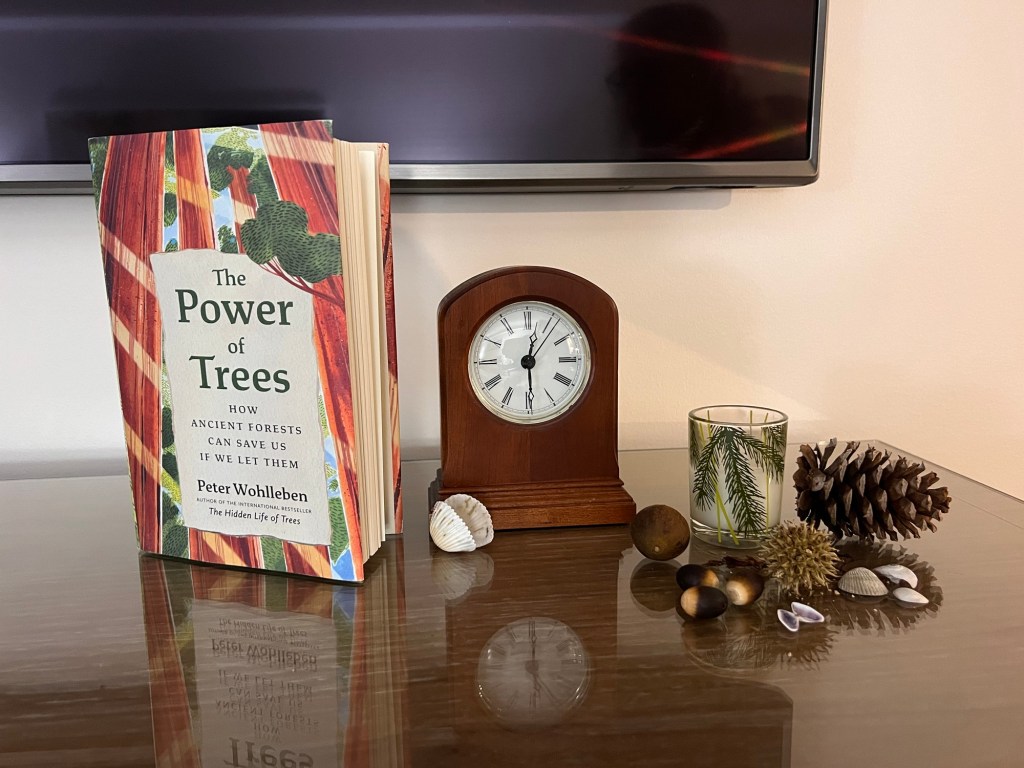
The book and many representatives of tree friends.
So, what a great book to read during an election where the non-environmentally friendly folks won bigly? But I got through it. I learned why forestry, with its great fondness for monoculture and treating trees like products rather than fellow citizens of the planet, has led to massive death in forests and loss of uncountable other species that support trees (what lives in the earth and helps trees do their work).
Trees get so tall when left alone.
Wohlleben shows how allowing natural forests to regenerate on their own and create old trees that are allowed to live on would help restore a healthy climate (trees cool it) and still provide for human needs, especially if we recycle old wood products rather than always making new ones.
We do a lot of that at home.
You’ll learn a lot about the complex interrelationship between trees and the other life around them as well as lessons that apply to forests around the world.
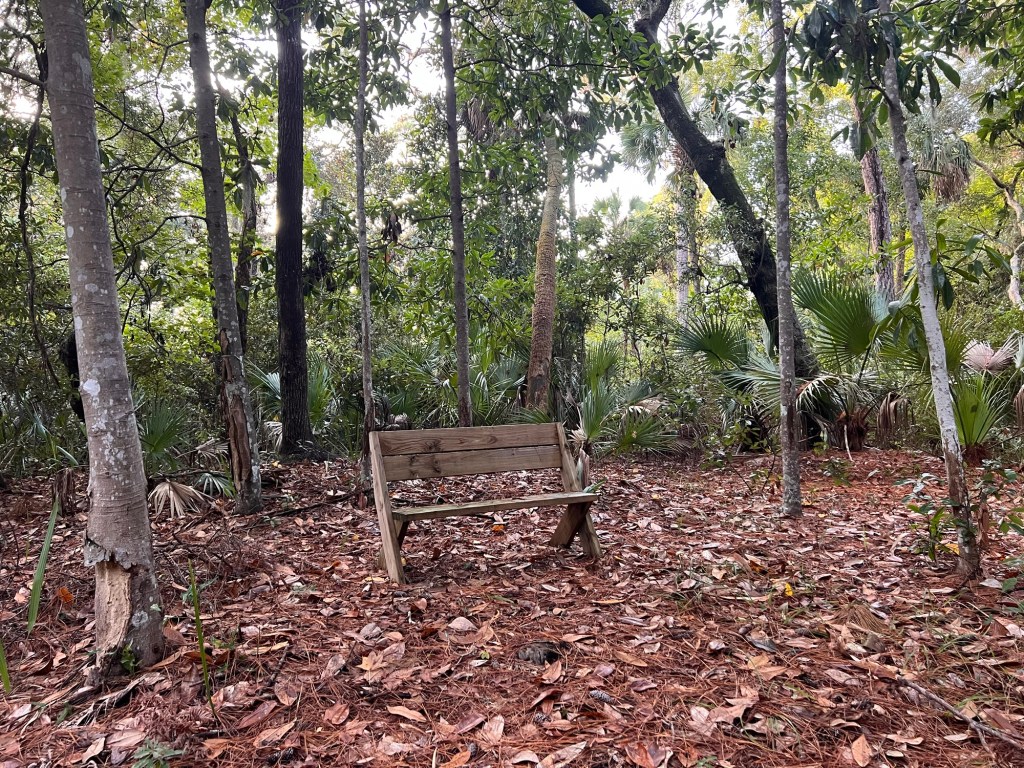
It’s wonderful that there are protected remnants of coastal forest here on Hilton Head. It helps that it was hard to reach for so long.
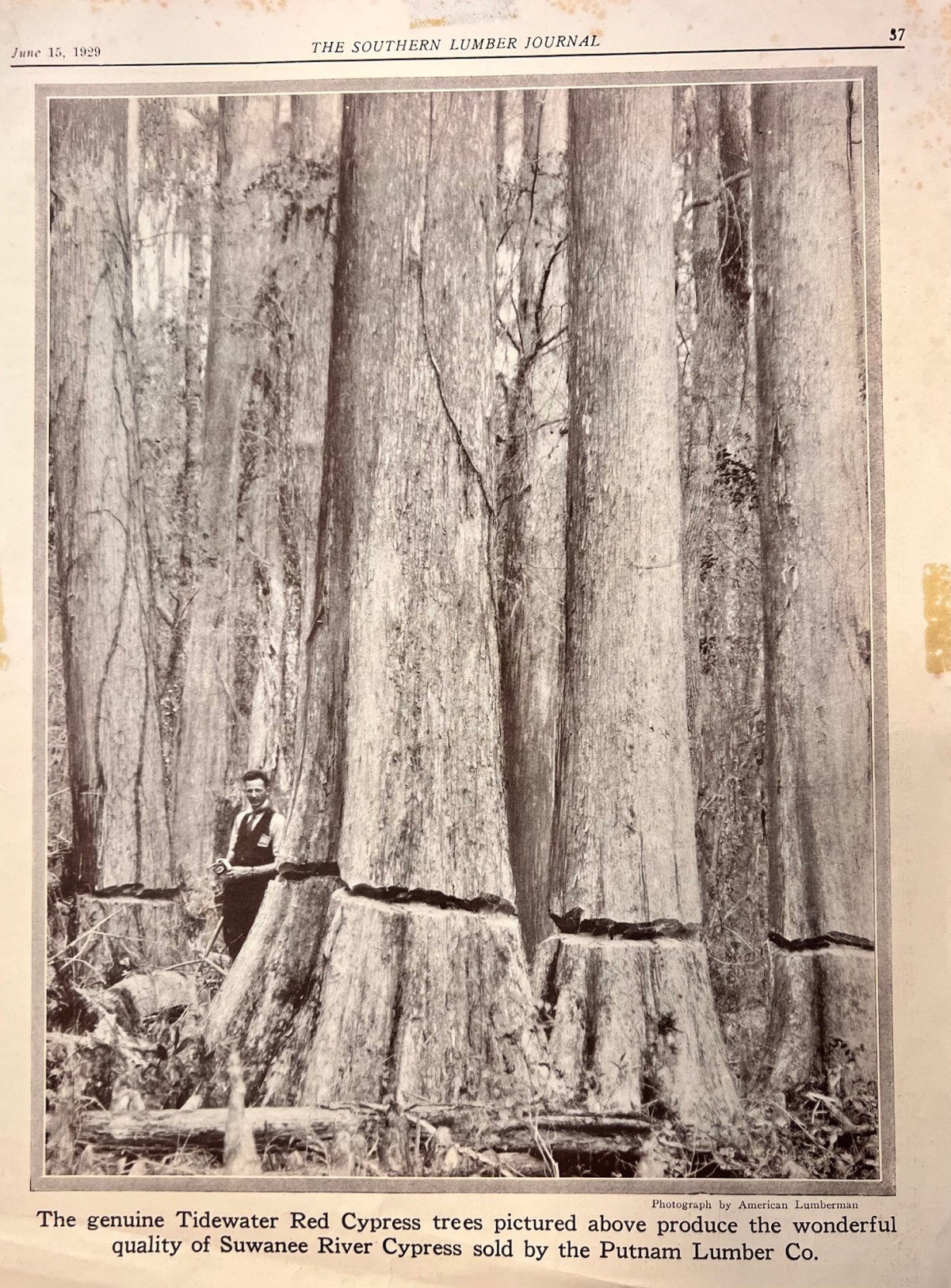
I always feel drawn to helping woodlands, knowing how many mighty trees in Florida my grandfather sent to sawmills in the early twentieth century. As I have resolved to focus on doing something kind every day, I’m keeping the remaining native woodlands in mind.
My grandfather dwarfed by the trees that are about to be killed.
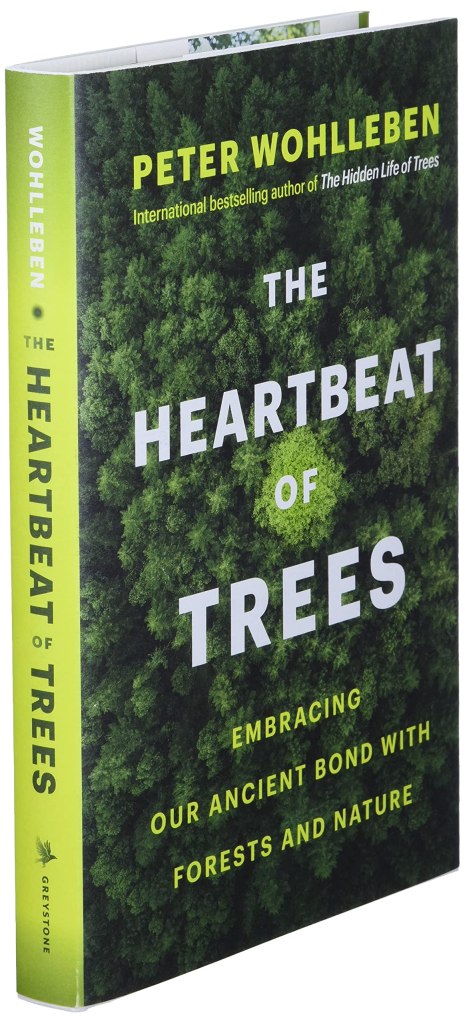
Yes, indeed, I read another tree book. In fact, I read another tree book by one of my favorite tree-hugging authors, Germany’s Peter Wohlleben. This one, The Heartbeat of Trees: Embracing Our Ancient Bond with Forests and Nature (2021), is the English translation of his latest book from 2019. It’s theme is that we are not so removed from trees (and the rest of life on earth) as we make ourselves out to be, and that it behooves us to listen to them and care for them as part of our family of living, thinking beings.
The book has some really comforting sections, along with simple and fun ways to remind ourselves of our connections to nature and the forest. I think that’s the part I enjoyed the best. There are reminders to breathe, listen, and observe when amongst our tree friends, not just plow through our hikes like we have to meet some goal of efficiency. Plus, Wohlleben shares scientific evidence of how being out in nature contributes to both the health and wellbeing of humans. Don’t you forget that!
A lot of the book made me incredibly sad, however. Alas, there are no, make that zero, examples of untouched old-growth forests in Europe. Humans have messed with that land so much that even the very old forests that do exist were originated by humans planting them in the past few hundred years.
Worse, foresters aren’t necessarily out there protecting the trees and looking out for their best interests, in Europe or in the Americas. No, they are “managing” forests for productivity. I think I read enough passages on cutting down ancient trees, clear-cutting entire forests, and strip mining to last me for a long time.
Now, Wohlleben is no fool, and he points out that we need trees to be harvested (you know, so his books can get printed, and such). He’s not unrealistic; he just thinks it would be worth it to come up with some management techniques that are more respectful of trees, kinder to the environment, and supportive of all the life that surrounds forests. Just because something’s small and insignificant to us (like a mold, an insect, or a fungus) doesn’t mean it has no role in the balance of life. You probably know that, of course. I’m just saying it, because I’m all filled with righteous indignation.
We aren’t all lucky enough to have our own woods (and I certainly don’t have any old-growth forests at the Hermits’ Rest, either, just some old trees in pastures, where they can’t reproduce because of mowing), so the ones that are out there to be shared with our fellow humans and others are treasures. This book tells us about how some people are working to make things better, and that’s hopeful. The fact that governments and industries are not convinced that using up every resource we have isn’t a good idea is NOT hopeful, though.
You’ll learn a lot of you read The Heartbeat of Trees, and my hope is that it gets you to pay attention to your surroundings, wherever you are, and to do whatever you can to help the earth maintain a healthy balance for all of its inhabitants. You will also have a more global viewpoint, since he focuses on Europe as well as North America.



 The Hermits' Rest