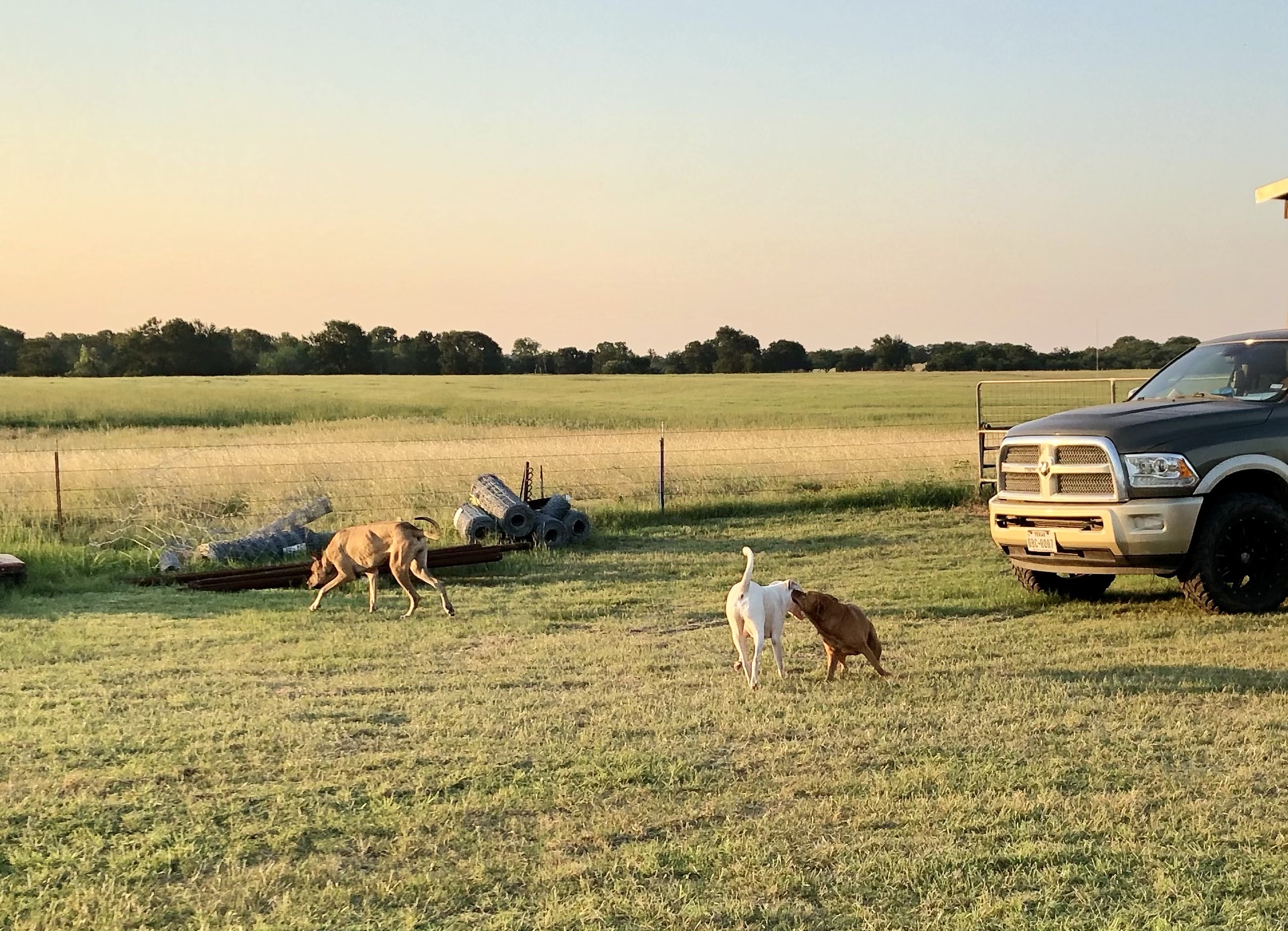
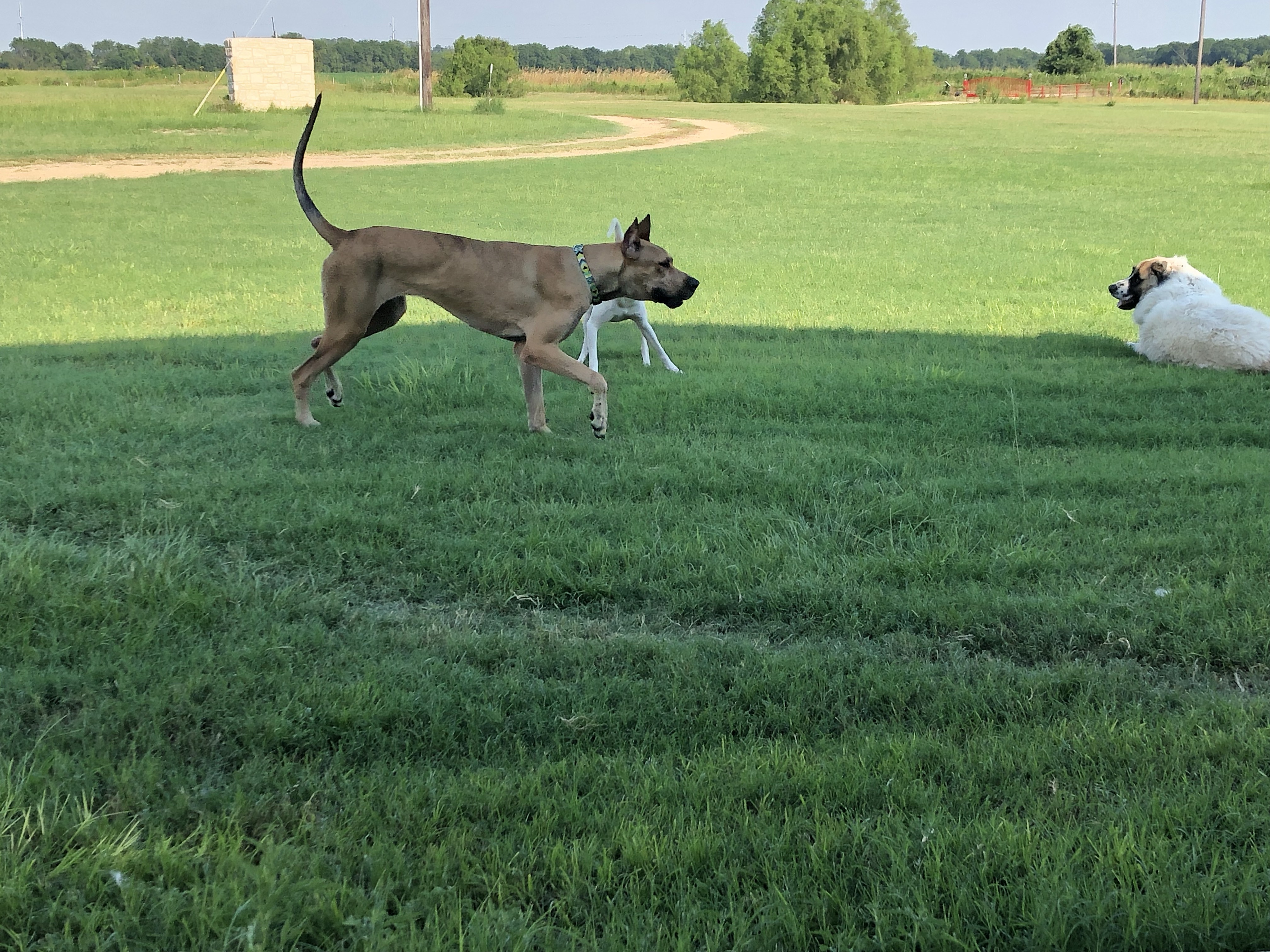
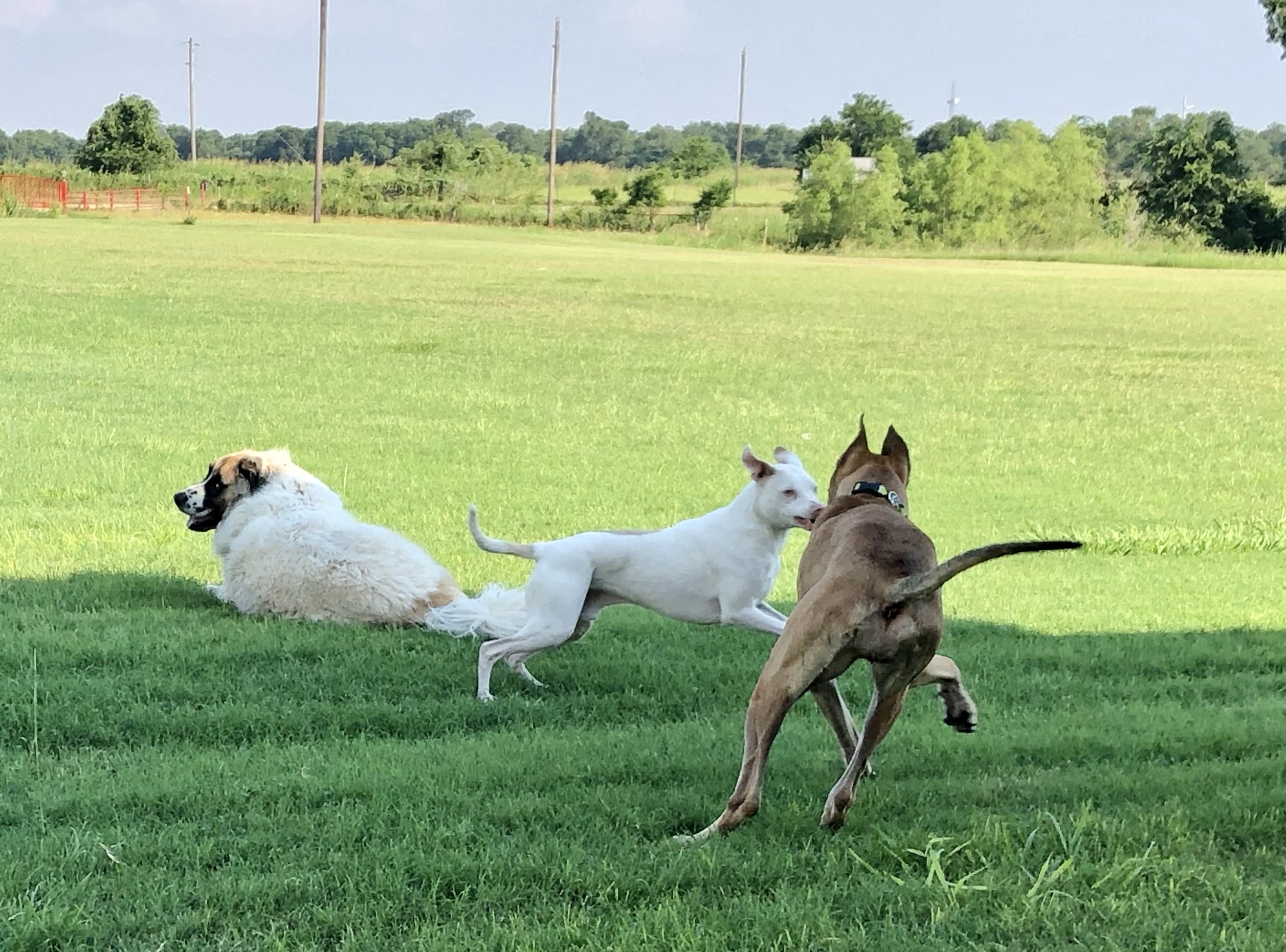
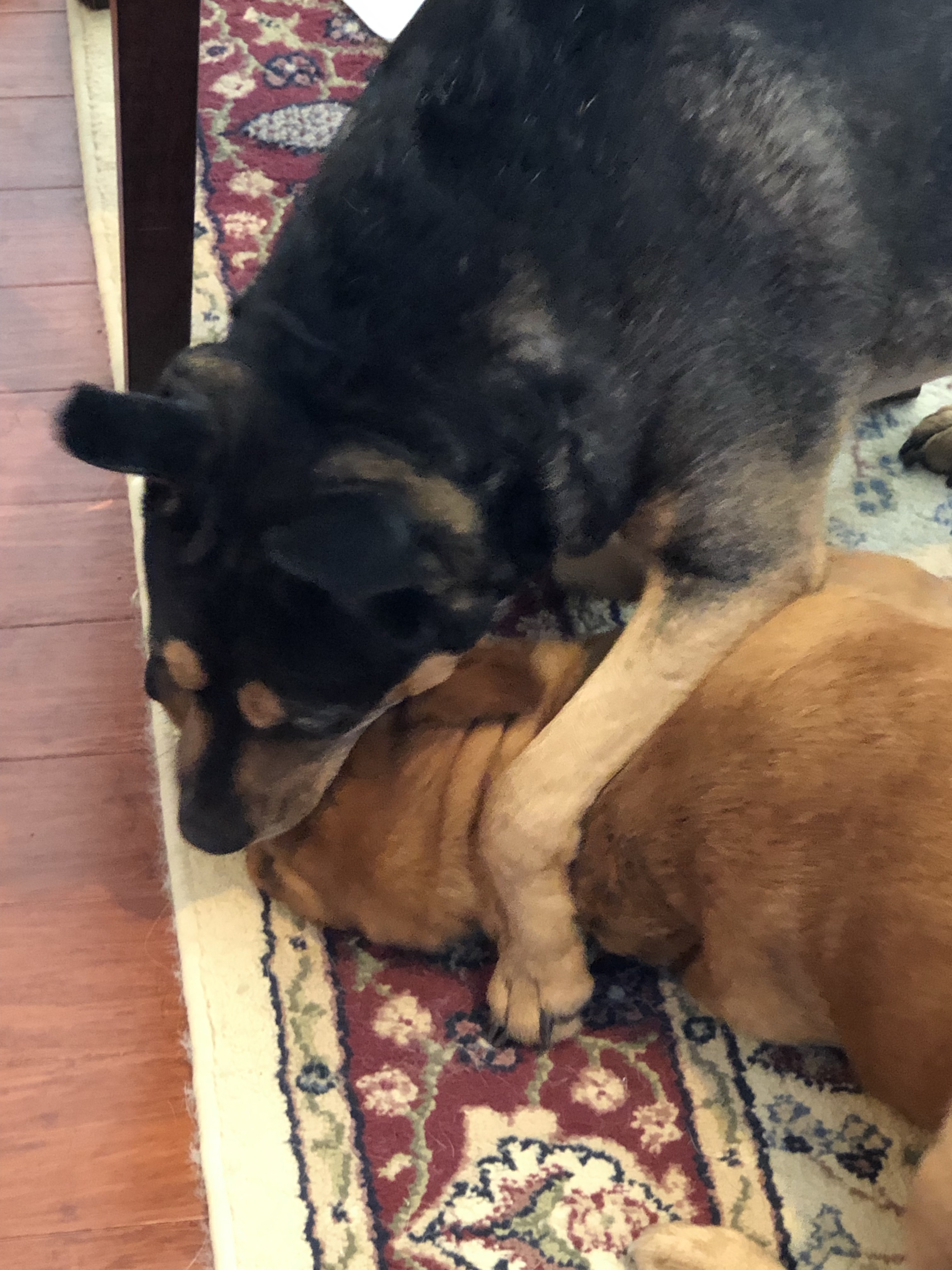
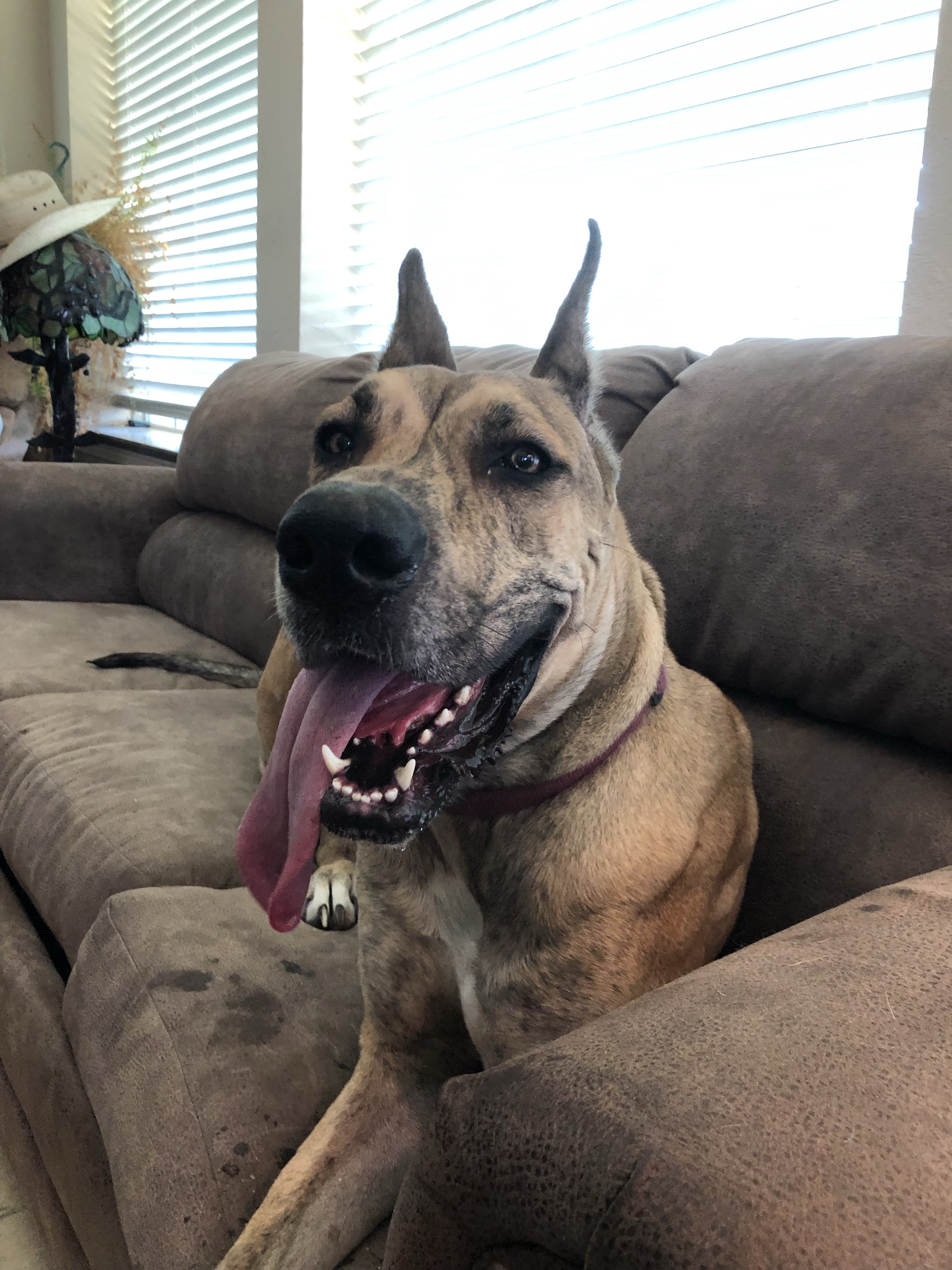
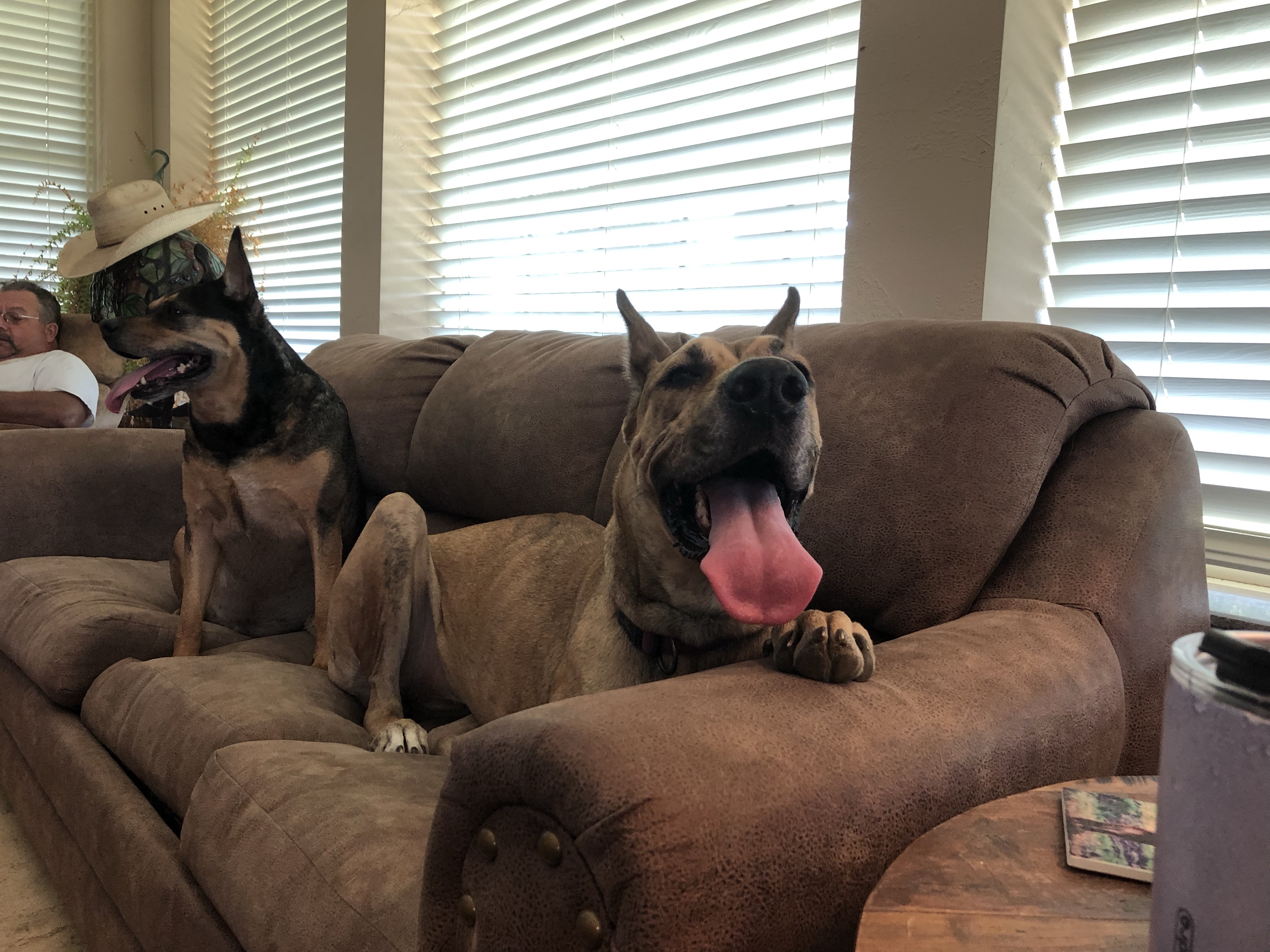
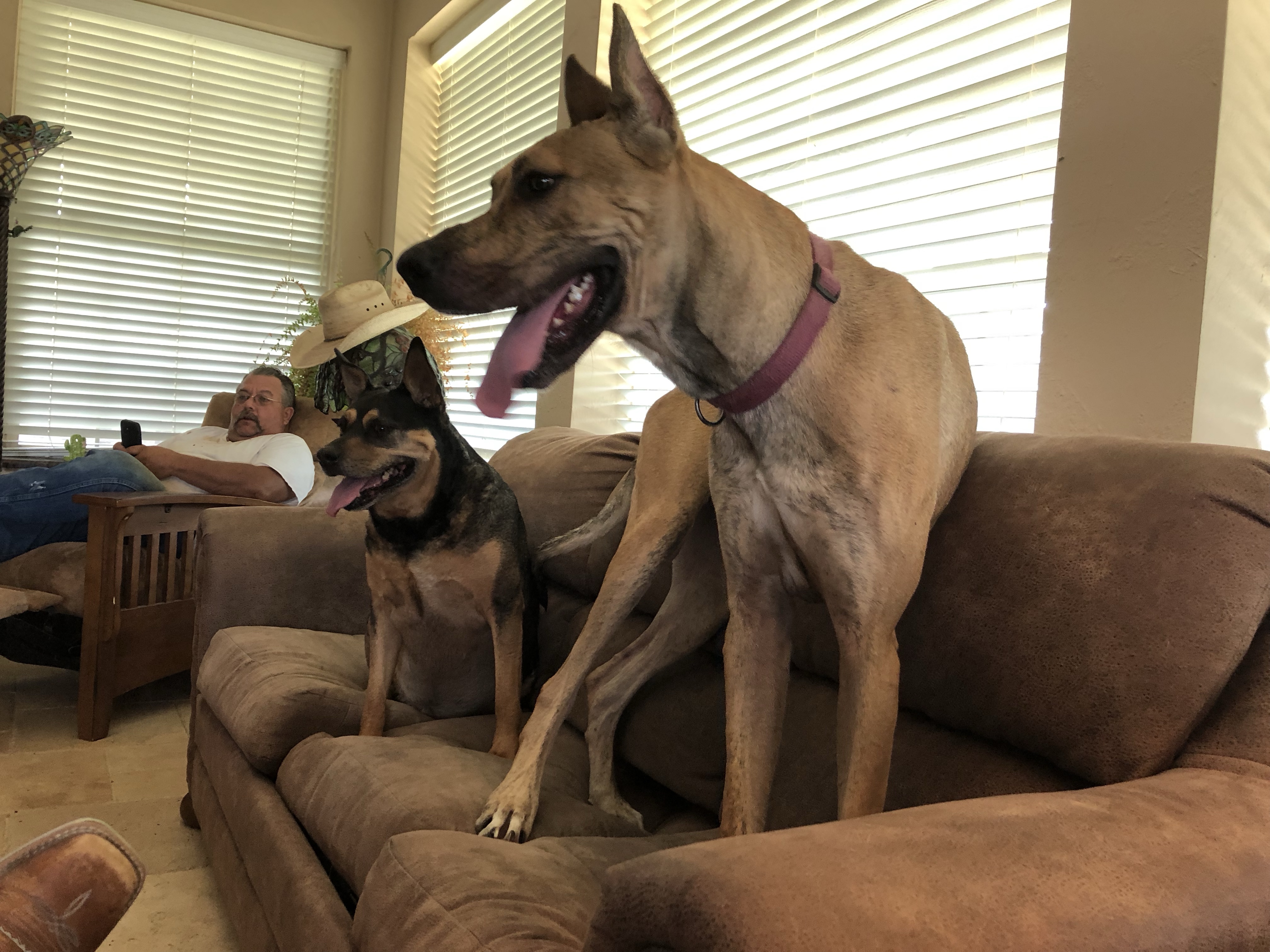
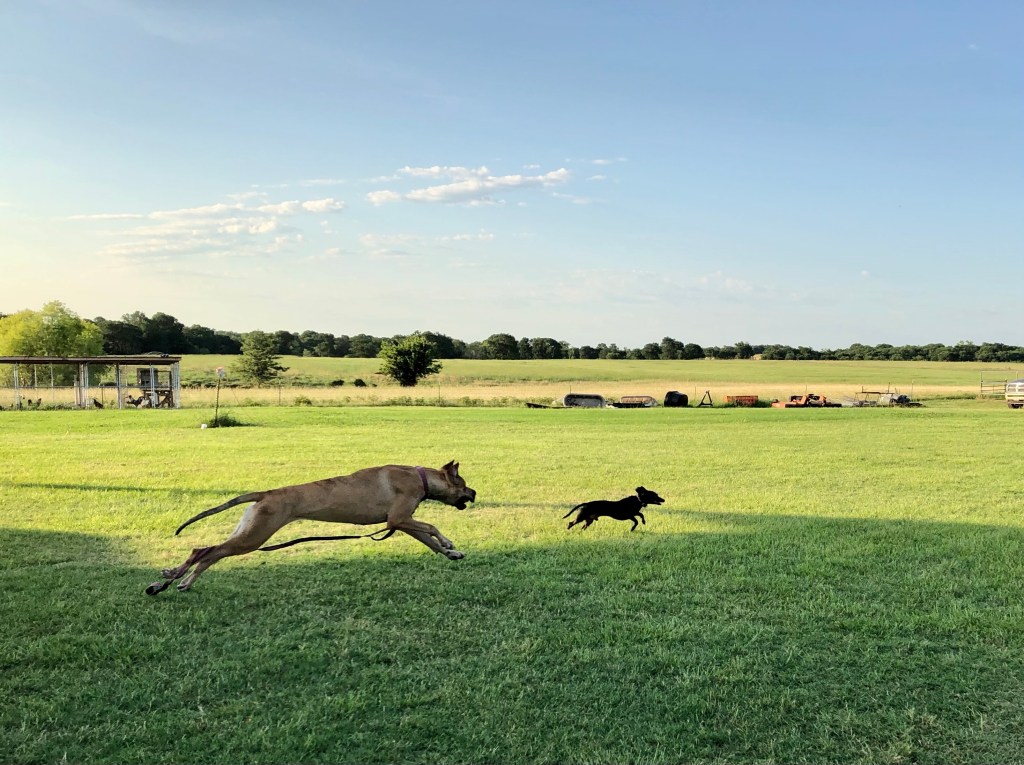
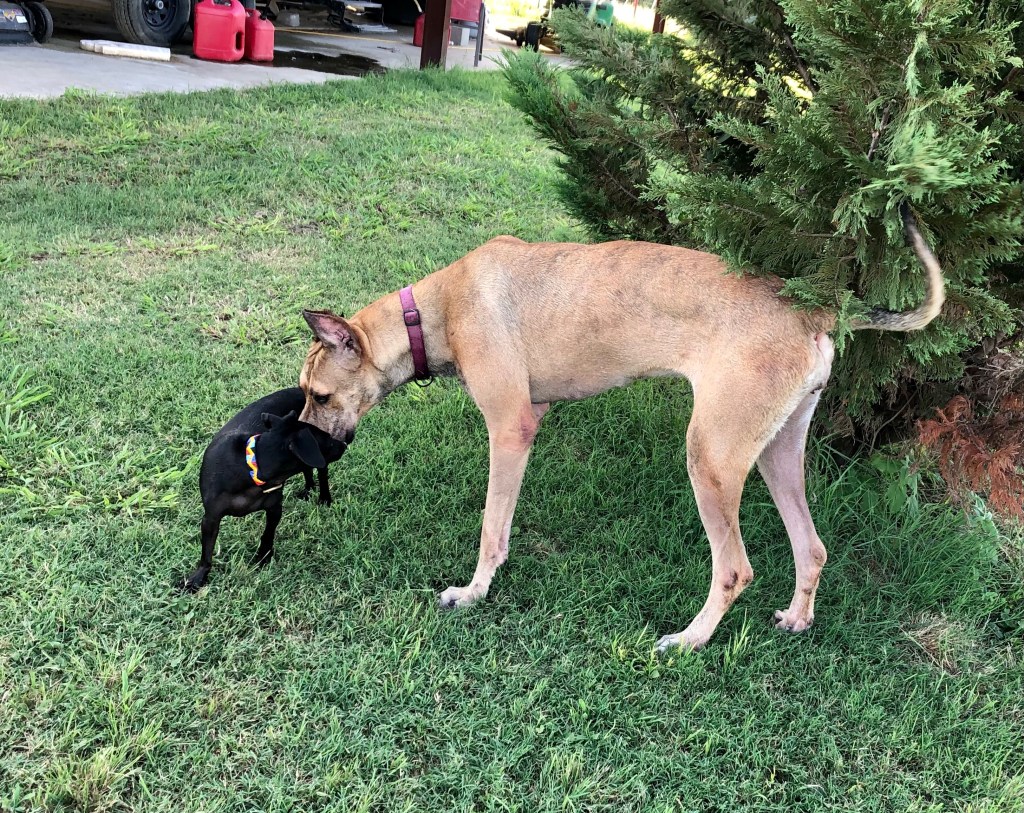
I must share this good news. All the other dogs are getting along with Goldie the Great Dane. But Penney has been snarly and snappy since Goldie arrived. Until tonight.
Even Gracie is shocked.
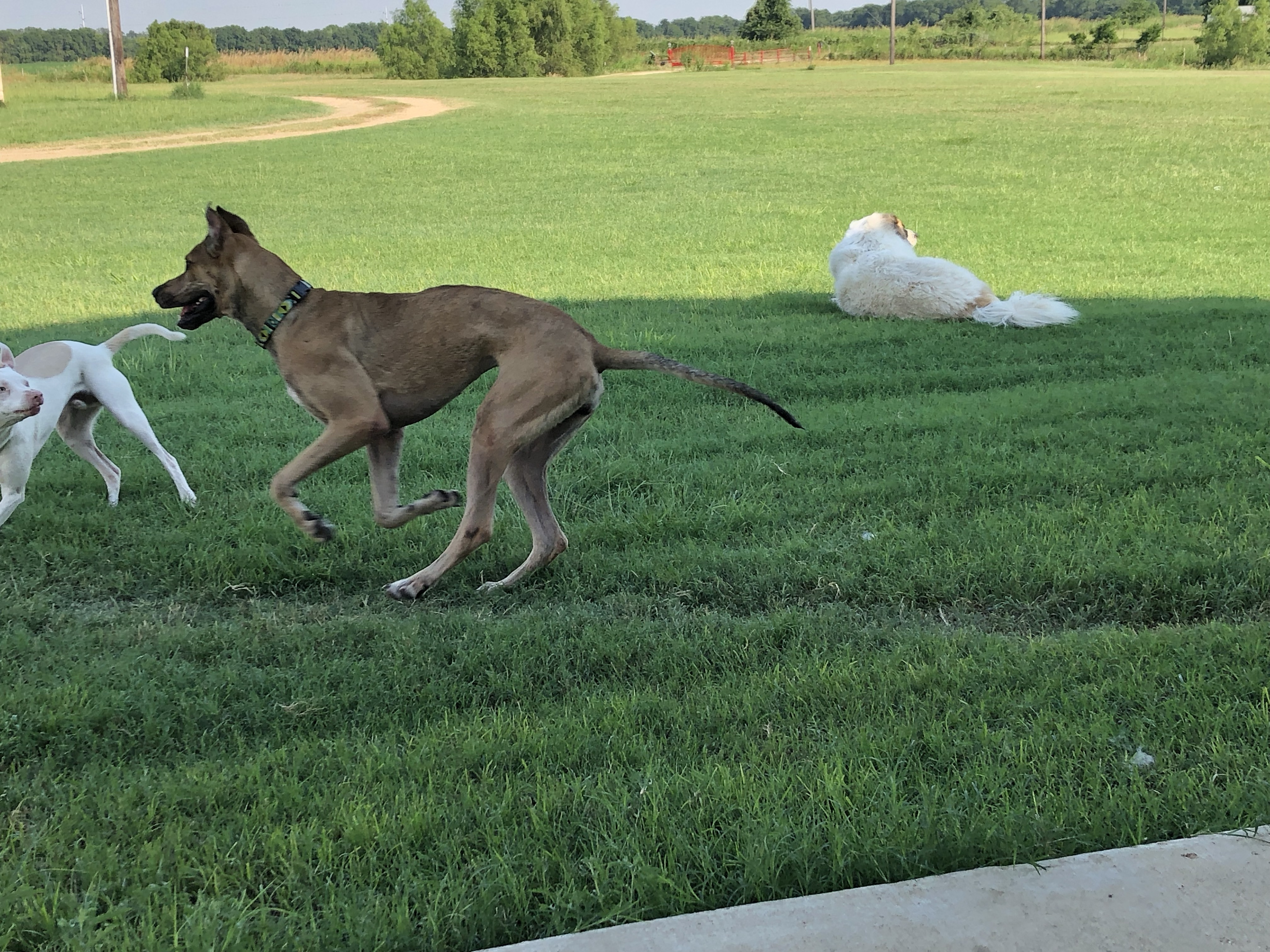
As the day went on, she was nicer and nicer when they passed each other. Alfred is the same. No mote gruff barks. This is great. But when both Carlton AND Penney joined in the puppy playtime, my heart just melted.
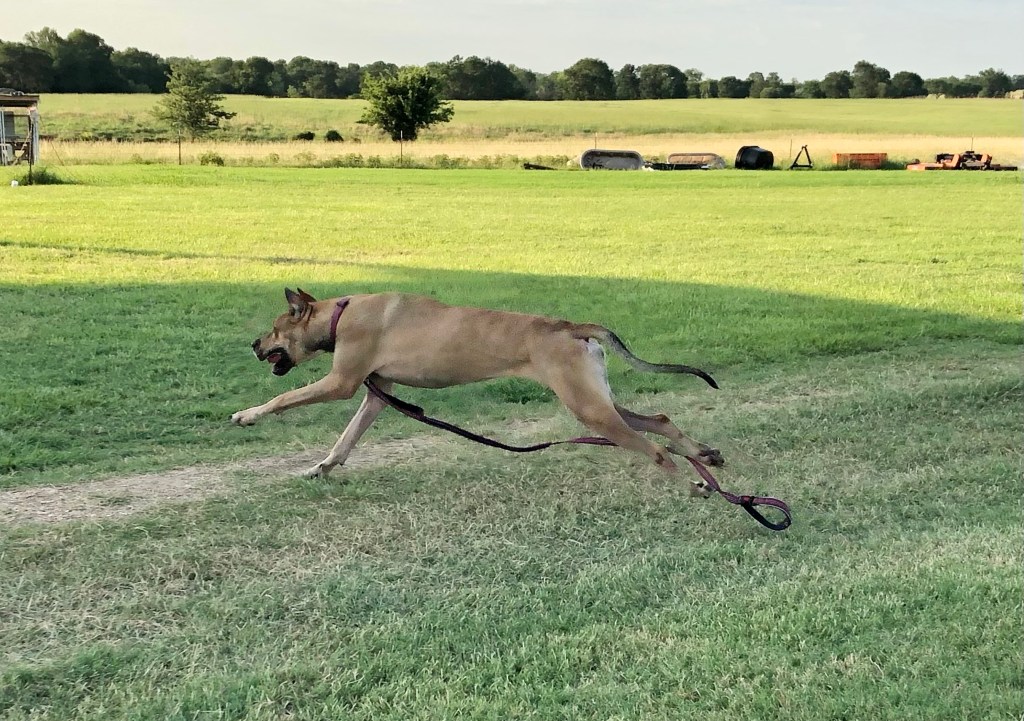
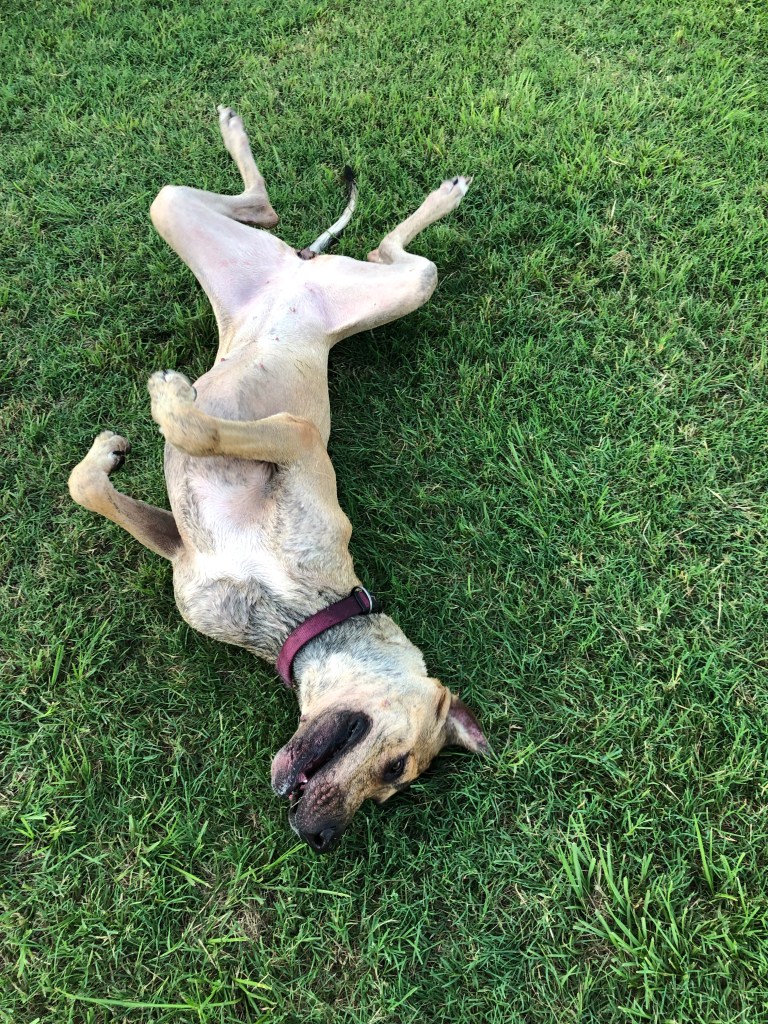
Goldie isn’t graceful, but she’s enthusiastic.
I guess we will get to keep her! Kathleen has been enjoying feeding the dogs and hanging out with them. I’m glad she has her dream dog. Life is good.
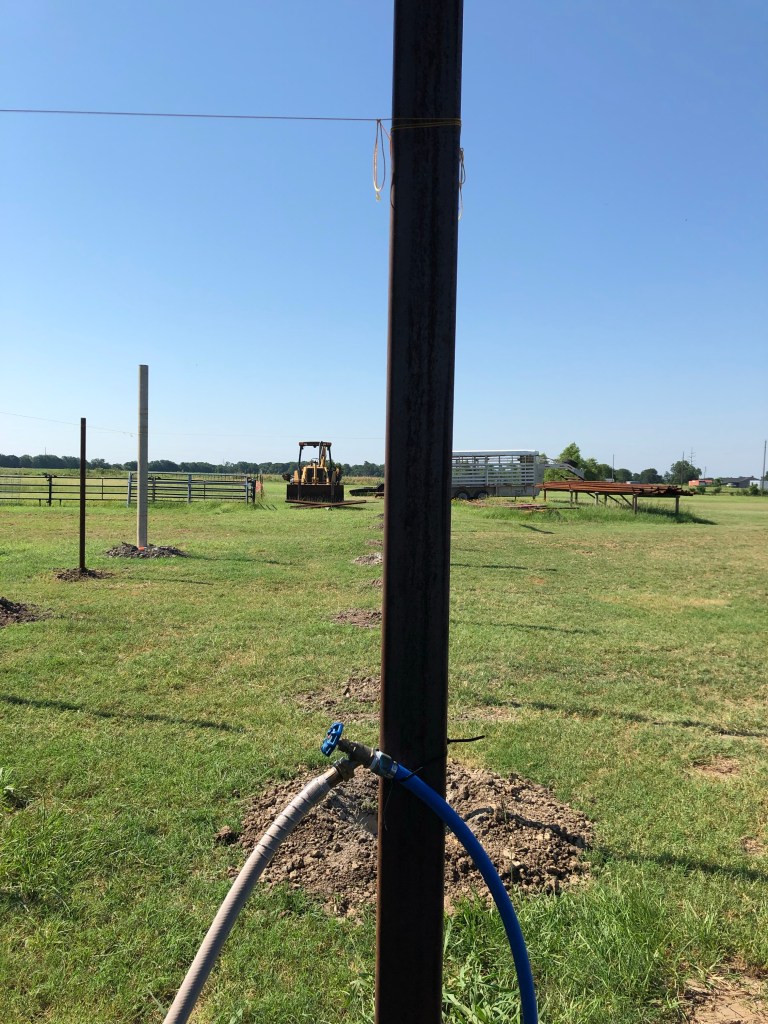
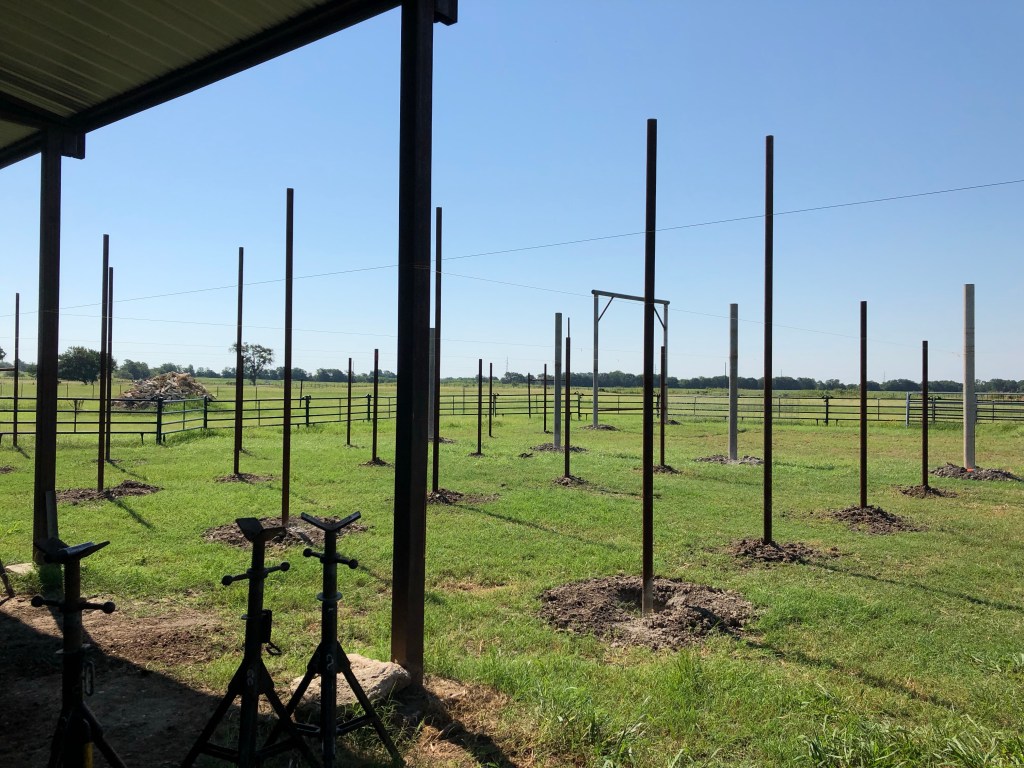
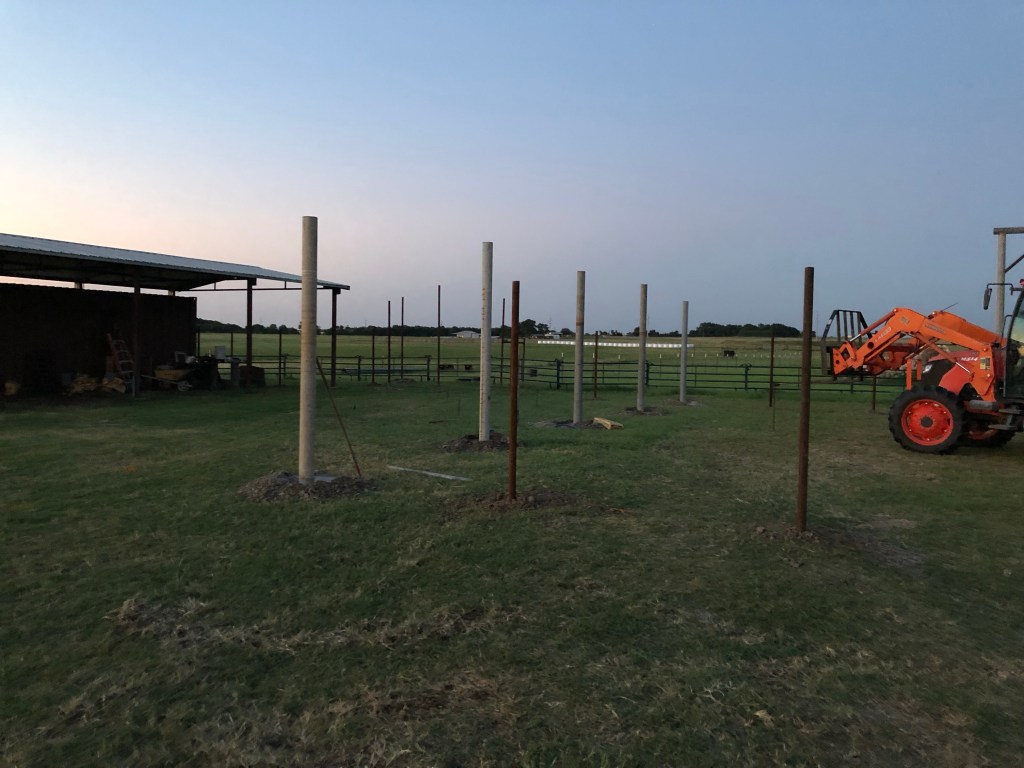
Wow, the fence posts/poles are all up for the horse stalls, and I have to say I am amazed at how straight and aligned they are. There are 5 poles behind the one in this picture, but so perfectly lined up that you can’t see them.
This is very perpendicular, too.
And they are all absolutely straight in the ground, too. I’ve seen the level as proof! It is hard to believe that one person was able to dig the holes, put in the poles, and fill them in with such accuracy.
It looks like one of those zig zag courses for dogs to run through.
The project of putting up the horizontal poles is next. Then rods will drop down from those poles. Those of you as fascinated by this project as me may wonder why some of the poles are taller than others. Well, looking closer, you can see they each have a line on them. Those are all 6 feet high, I think. They’re taller than me, in any case.
I think these will hold a horse or a cow.
There would be a lot more done, but the backhoe has decided it doesn’t want to start. That makes for more doggie playtime, or did until Harvey zapped his poor nose on the electric fence.
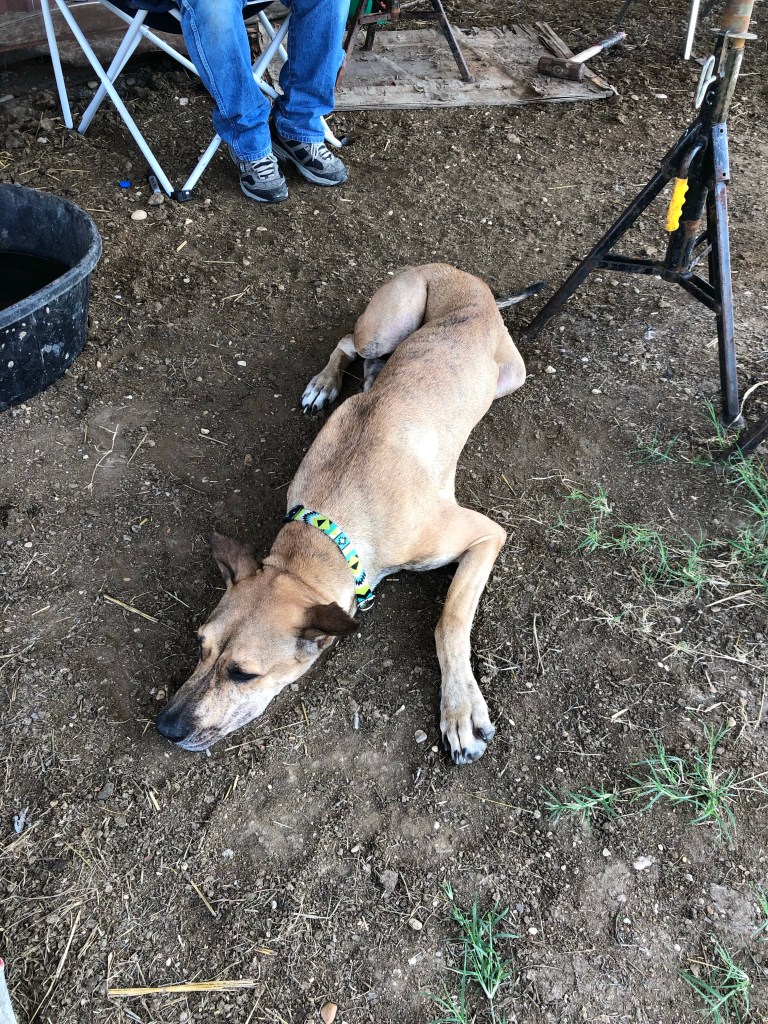
It smells good here in the dirt.
I am able to sit in the shade pretty comfortably, which bodes well for giving horses some relief in the summer. The way we are going to arrange the other shipping container will help keep winter bearable, too.
Ahh. Relief.
Today I’m very grateful for my family, who are helping make the ranch so much more fun (and profitable, eventually). And I’m grateful for coworkers who help keep me going and positive, even in weird times.
Perhaps I’m posting too many dog blogs, but who cares? It appears that the dogs have come to truces and are enjoying each other. There are still occasional growls and snaps (Penney and Harvey), but we all had such a fun and funny day that I had to share. Goldie had breakfast in my office, for privacy.
I just want to eat in peace.
Then she and Harvey joined Lee for some couch chatting time while he ate his breakfast. It was, I guess, cozy. Good thing she is gentle with furniture.
Couch time!
Much of today she stayed with me, but she did figure out the dog door at last, so she could go out. Carlton and Penney and Harvey made it mighty snug in my office, but they were pretty quiet!
Ahh, the cool floor.
After work (and a fantastic conversation with my wonderful dear friend formerly known as Nancy Jo), we all went out to play. At least it wasn’t as hot as yesterday! After running around, they had to cool off.
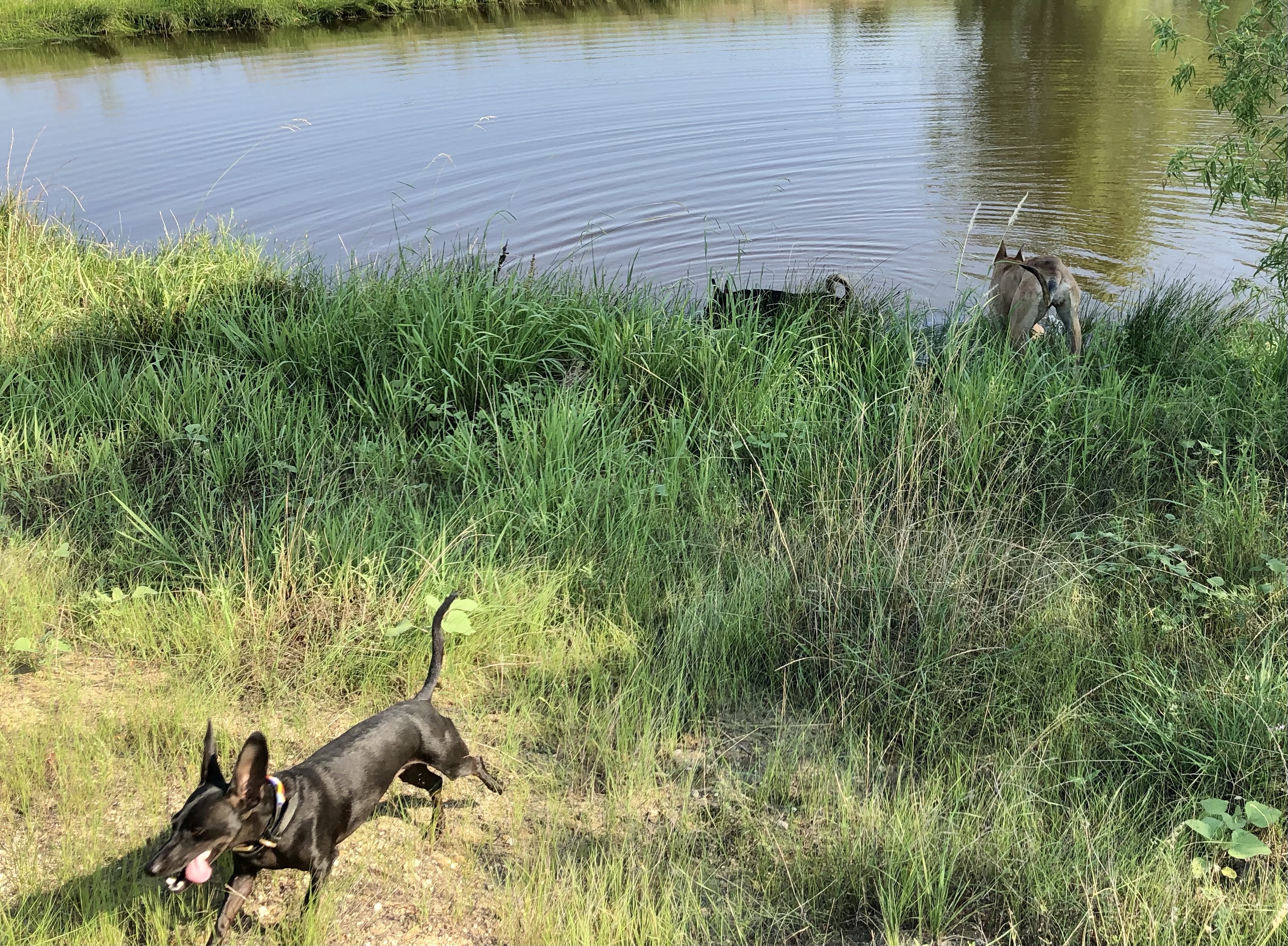
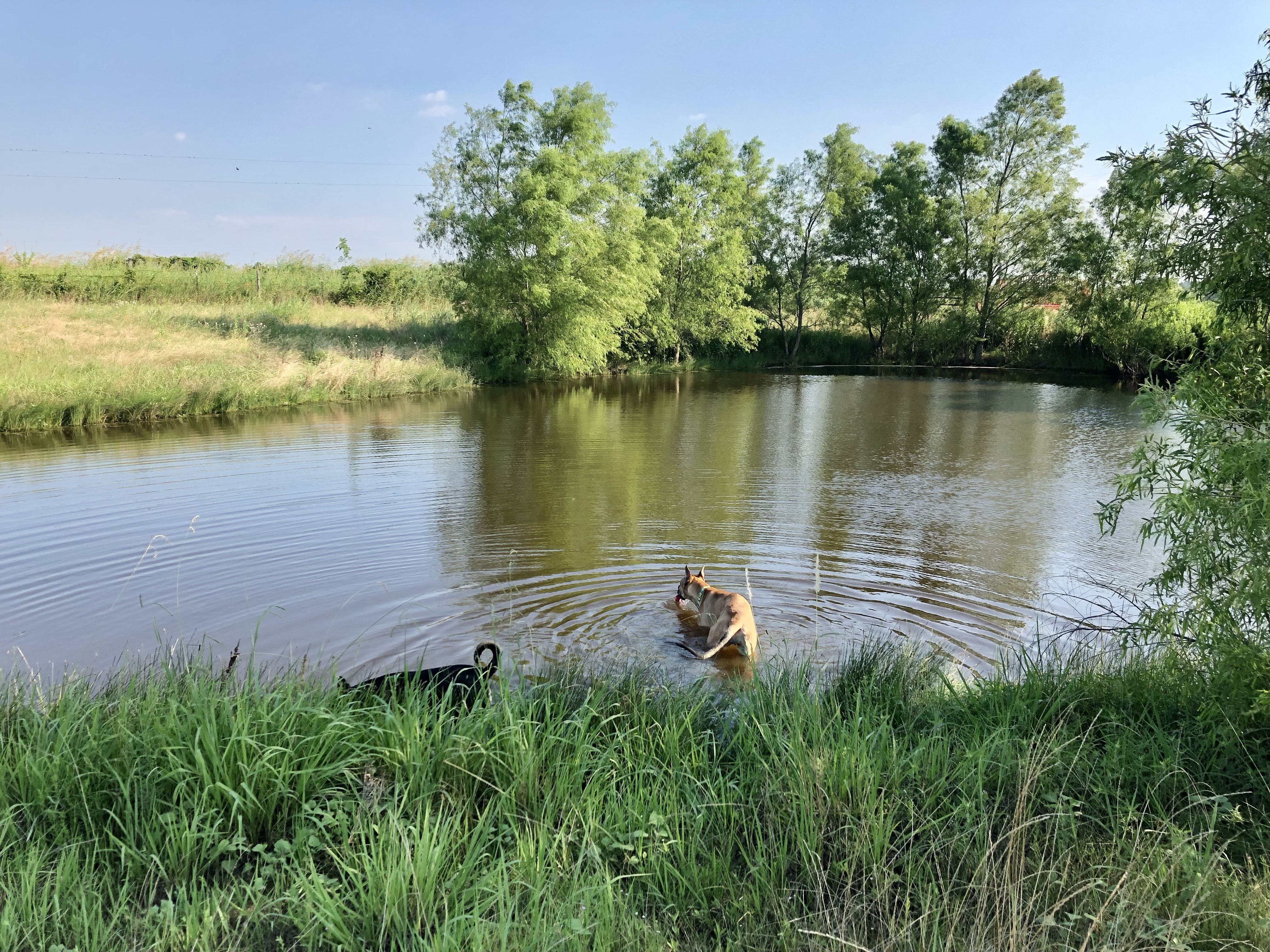
There was much water frolicking.
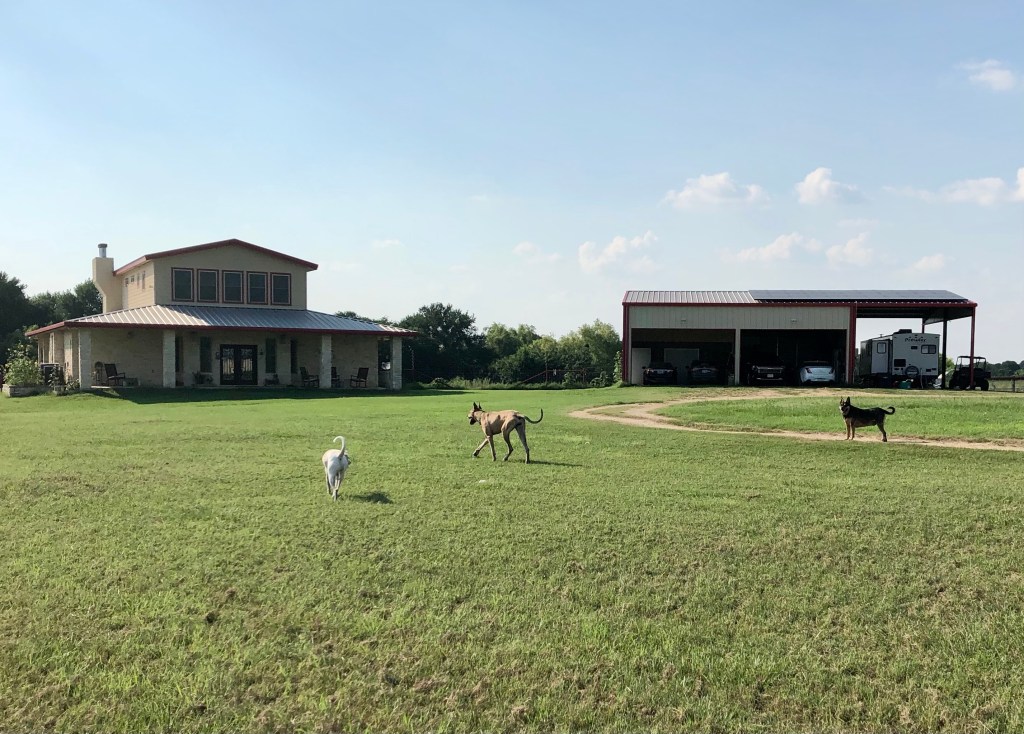
Alfred and Goldie looked like luxury liners out in the big pond. After explaining to the two guardian dogs that they did NOT need to bark at one of the cows, we all ran back. Well, Alfred and I walked.
Let’s race!
I sat on the porch for a while to enjoy the breeze. Since the dogs were cooler, they could play. Carlton and Goldie looked like they were dancing.
Alfred was referee
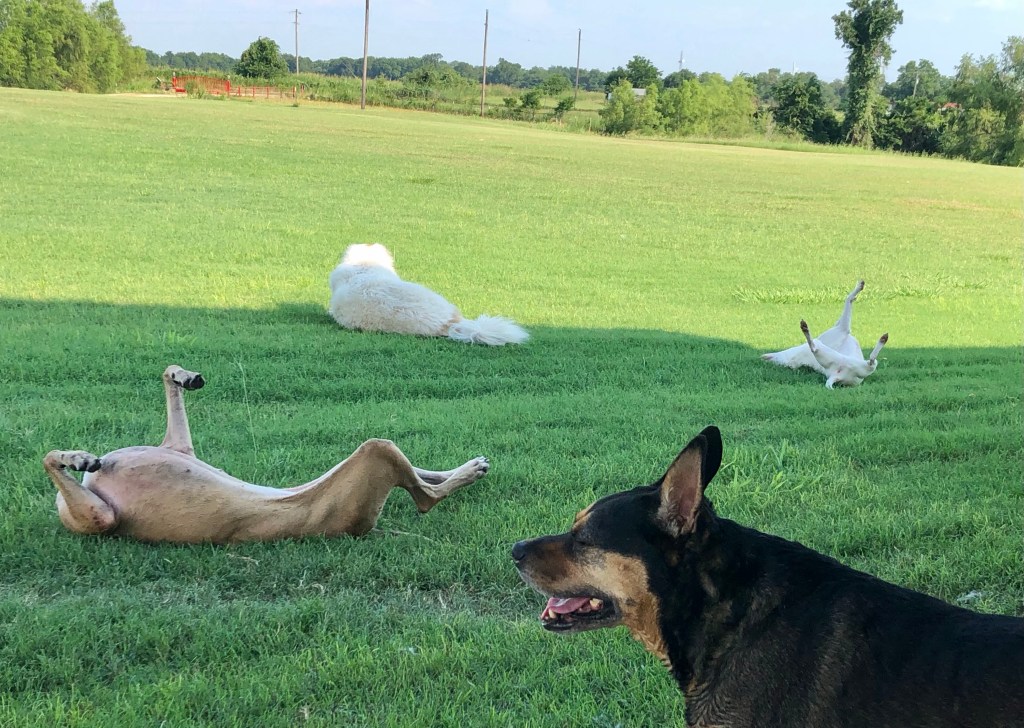
That tired them out, so they got on the ground to rest. Then they rolled.
Whew
And, as I knew it would happen, even Alfred rolled. He looks so happy.
See, I can roll, too!
I missed getting Harvey rolling, but there was quite a lot of it. The grass is so beautiful right now; who could blame them?
Were you worried that Penney didn’t get to play? Not to worry. She stayed upstairs with Lee, but Harvey went up and wrestled with her when we came back in.
Upstairs playtime
Now we are all cooling off again. I think Goldie is settled in.
These humans have nice houses.
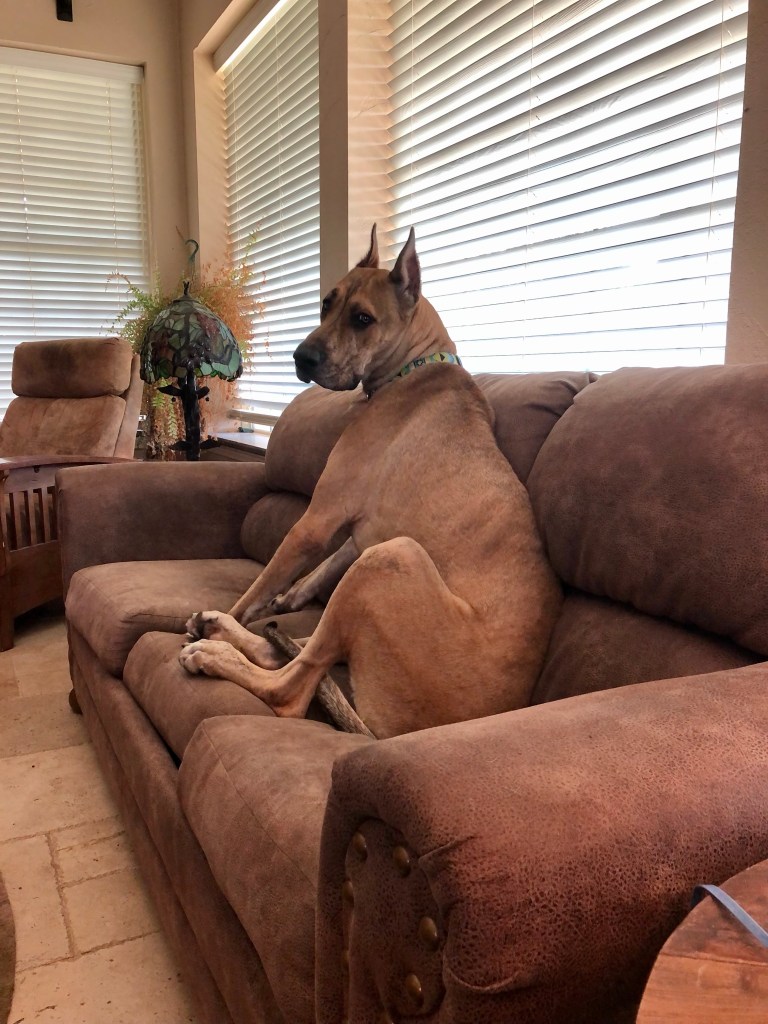
Geez. She is a big dog.
Who, me?
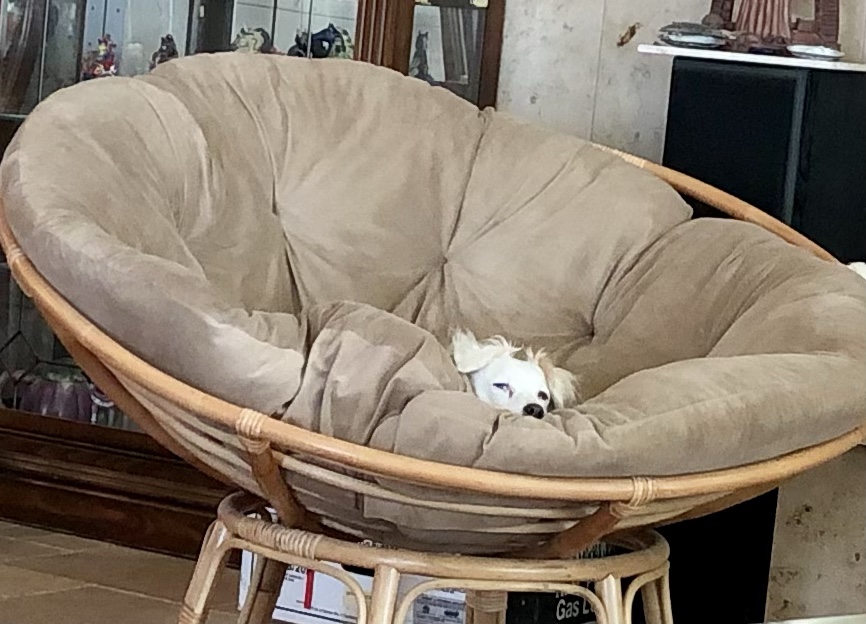
Gracie, the littlest Hermits’ Rest dog, spent the afternoon on the porch in her favorite chair. But she did get exercise. She moved to her favorite INDOOR chair. Cutie.
I have already been asked this today, so I may as well write a quick update for you. I’m happy to report it’s all good news!
Goldie is very happy and eating a lot, which she needs to do. She is also sleeping much better since her mommy Kathleen went out and got her a new and gigantic crate to sleep in. Ah, how I have missed having crate trained dogs. I’m told she slept like a log last night. She also got a fine and festive new collar!
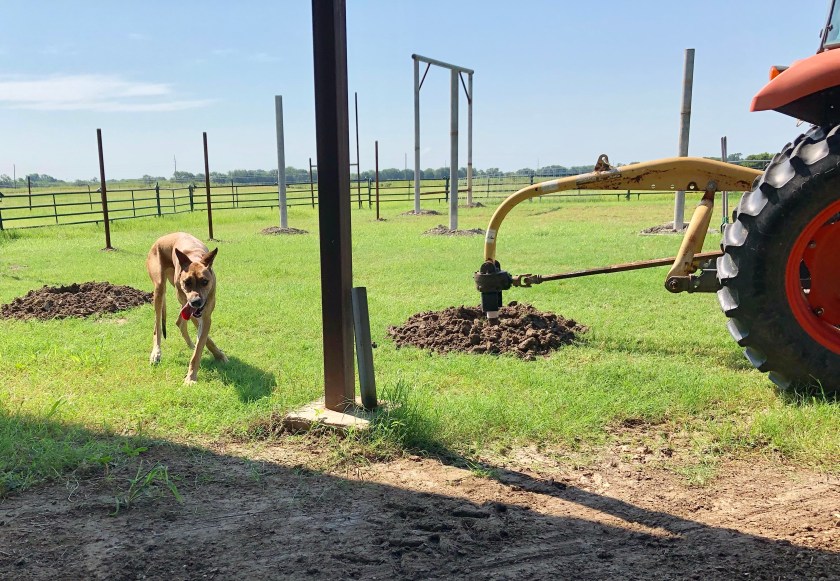
This morning on my chicken-feeding break, I looked over to the horse fencing construction area and saw Goldie and Carlton, happily in the shade, supervising the drilling of more holes.
We like the shade.
Goldie went out to inspect the auger when it stopped moving for a bit, but she got the heck out of there once it went back to scattering dirt everywhere.
Yikes!
It’s nice to see at least some of the dogs getting along together. Goldie is very persistent, and repeatedly asks Penney to play with her, but she gets nothing back but growls and snaps. That one may take a while. Harvey has gotten to where they have smelled butts, but he still growls at her (but less ferociously than before). Goldie and Alfred just stay out of each other’s way. Slowly but surely, everyone is adjusting.
I like it here.
As for the new pullets, they also seem to be acclimating well. They have their roosting spots and their resting spots, and are going through chick food like crazy. The two who had seemed to be having trouble are both looking a LOT better. Blanca was up and foraging around with the others this morning.
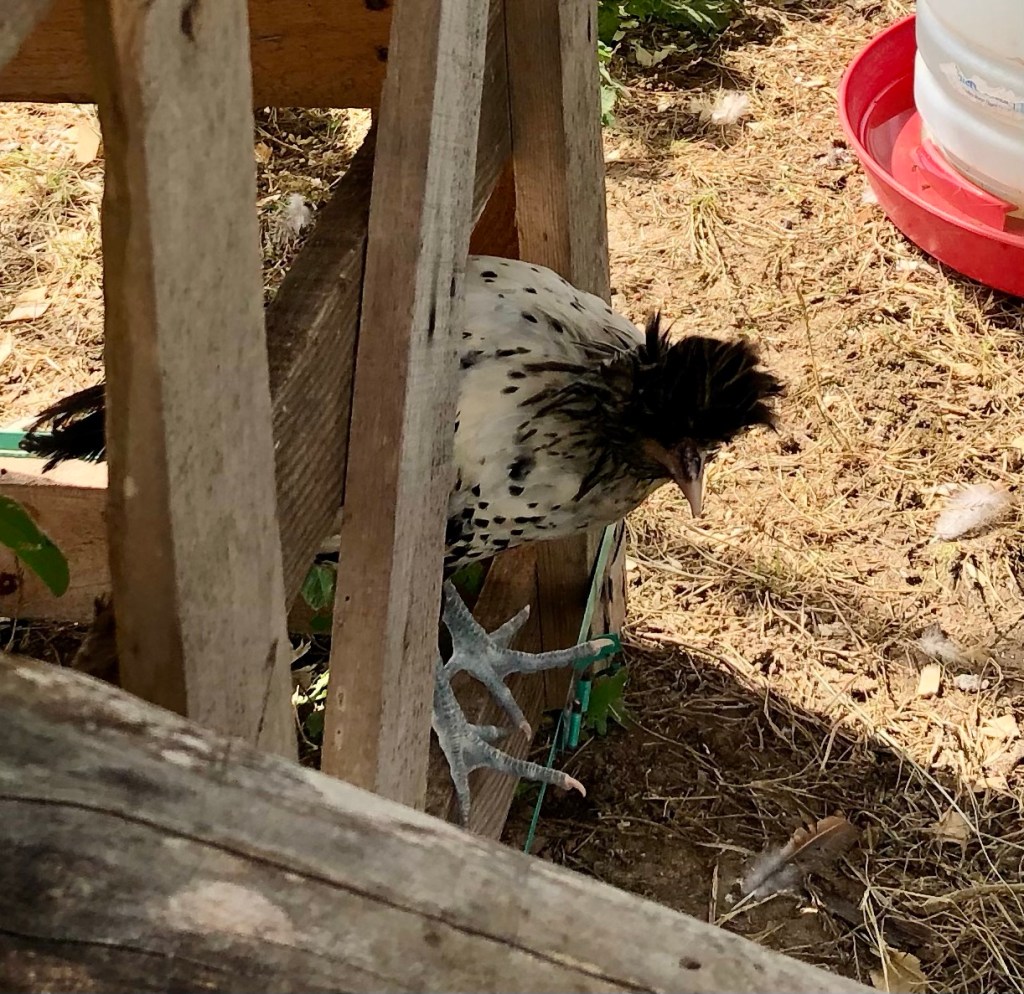
And little Billy Idyl has no more blood on her, and seems perky and chipper. I’m glad. She is so darned cute. She runs around like a roadrunner, too. In the photo, I was TRYING to get a picture with her whole head in it!
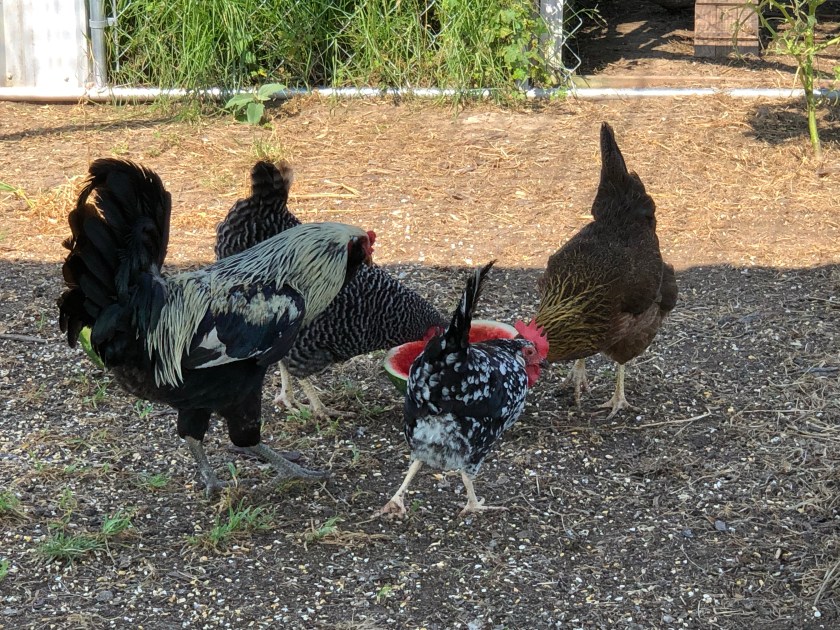
Of course, I DO have other chickens, and I haven’t forgotten them! We got a watermelon in the house yesterday, and it all got cut up for snacking (and a fine watermelon it is, too). Of course Bruce and his ladies got to enjoy the rind this morning.
It will be fun to see how long it takes them to reduce the melon halves to nothing but the very edge of the rind like they did last time.
Since all I’d given them yesterday was a green tomato that had fallen off the vine at the cabin, I feel better in the treat department. If they are lucky they may well get to peck at some ends of zucchini and cucumber that we were given yesterday!
Ain’t life grand, if you are a dog or a chicken? Especially at the Hermits’ Rest?
Now that there is no COVID here, things have started to happen. So, a bunch of Cameron Chamber of Commerce members joined family and friends of the owners for an open house at a beautiful new event venue, Reed’s Simply Local.
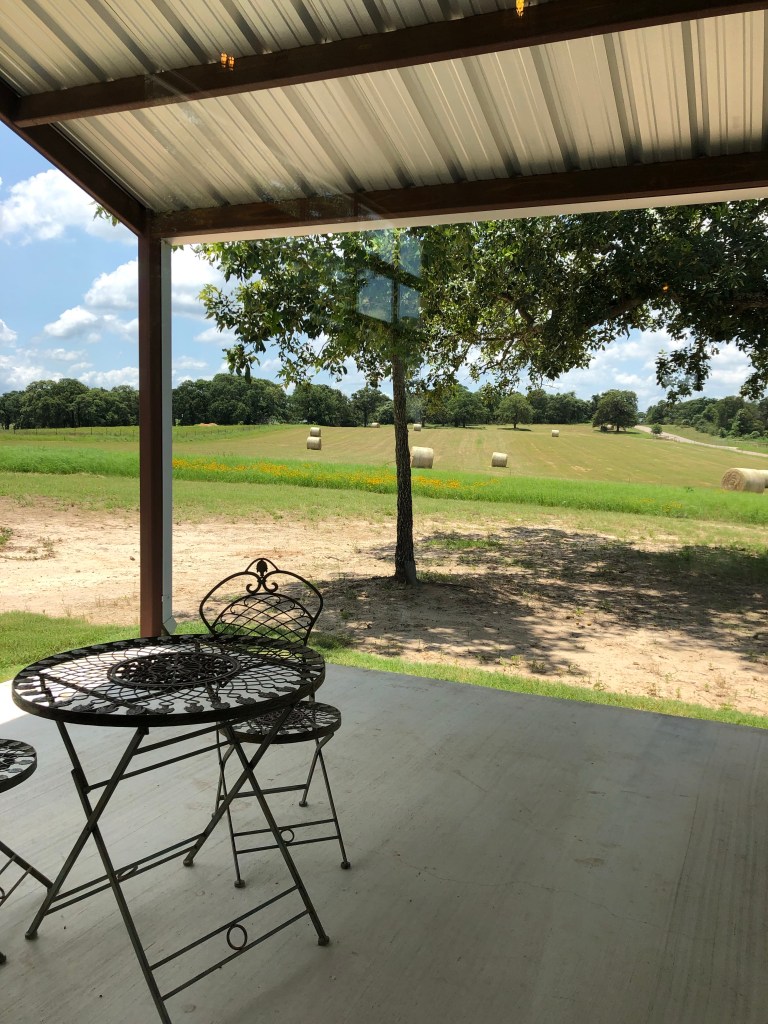
View from the back patio.
It’s out by Marlow, which is a place like Walker’s Creek, which everyone knows about but isn’t incorporated. In fact, it is under the water tower. Anyway, the place is beautiful.
Stained glass in the upstairs bedroom.
It’s very simply done, but with quality. The owner has done a fine job supervising the construction and making choices. Their Facebook page has lots of pictures.
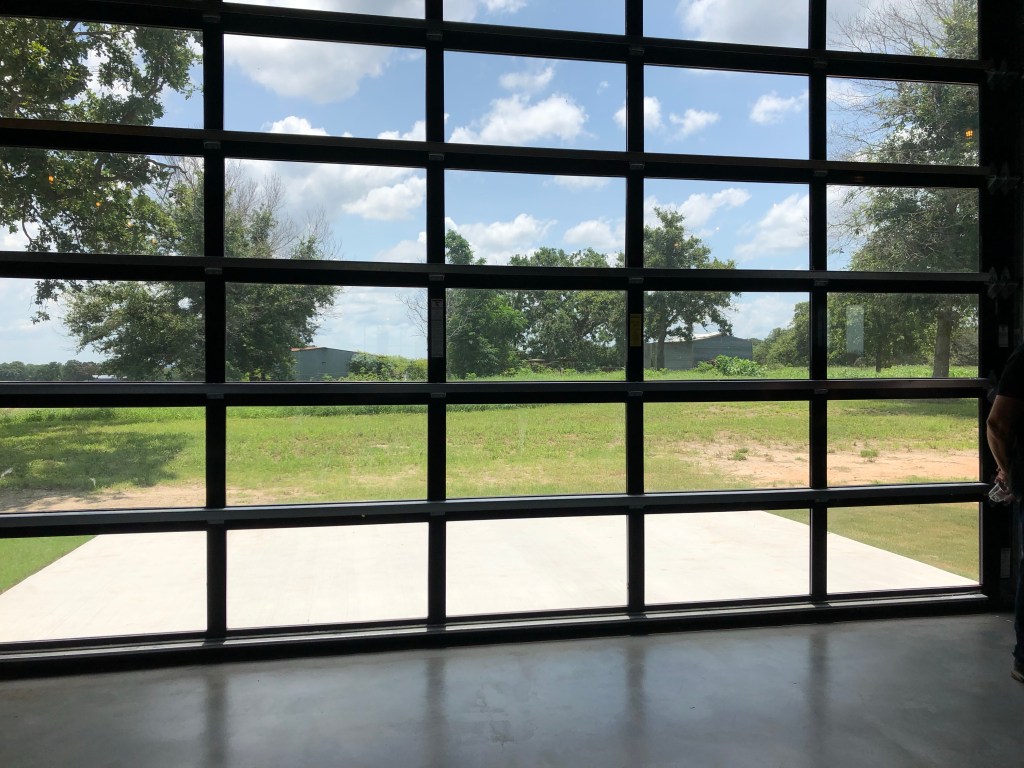
Great door!
I had a good time tasting wine, bourbon, hard soda and food. They had all the new local vendors that are cropping up. It felt so good to see such upscale stuff here!
So much to try! And they sell locally!
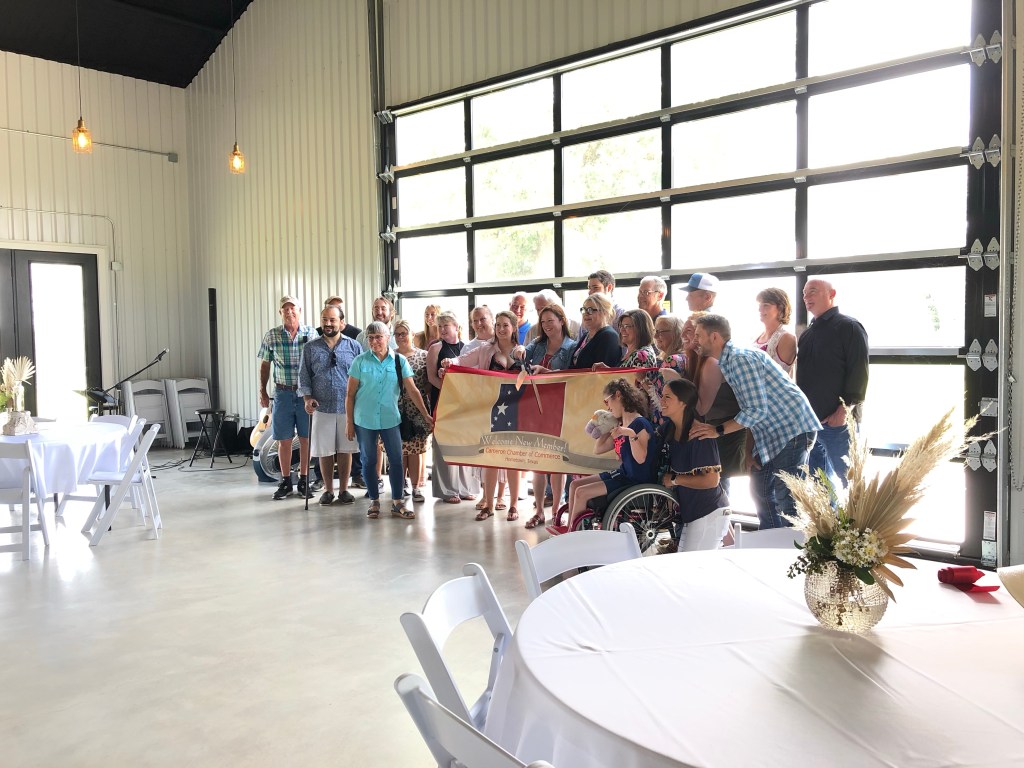
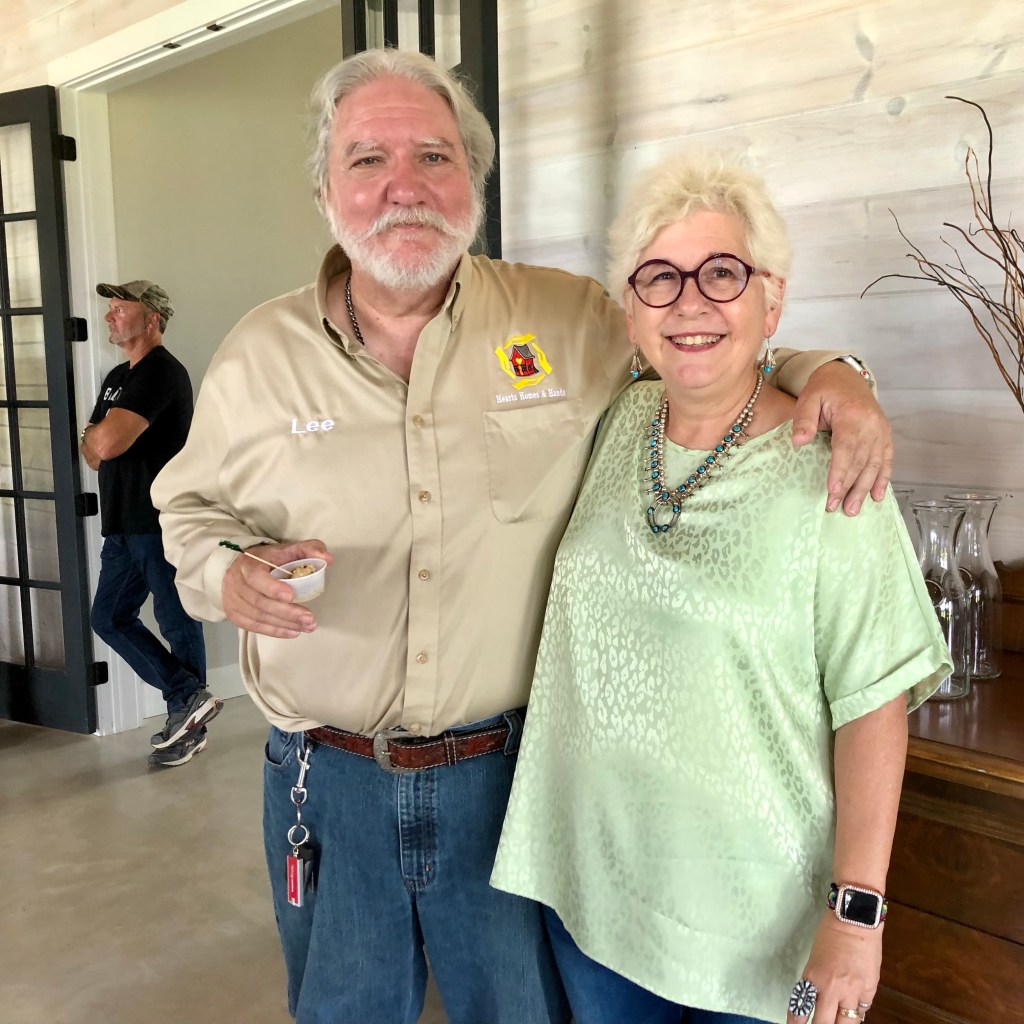
The best bonus was seeing and hugging so many of my friends! Second best was the ribbon cutting, where Lee and Kathleen got to be in the picture.
So many people!
I’m glad to have hugged so many times, though Lee got peopled out. I know hugging was ok, because even Judge Young hugged me, and he was the biggest social distance role model in the county.
I even hugged Lee.
It was fun looking at the views, too. They chose the site well.
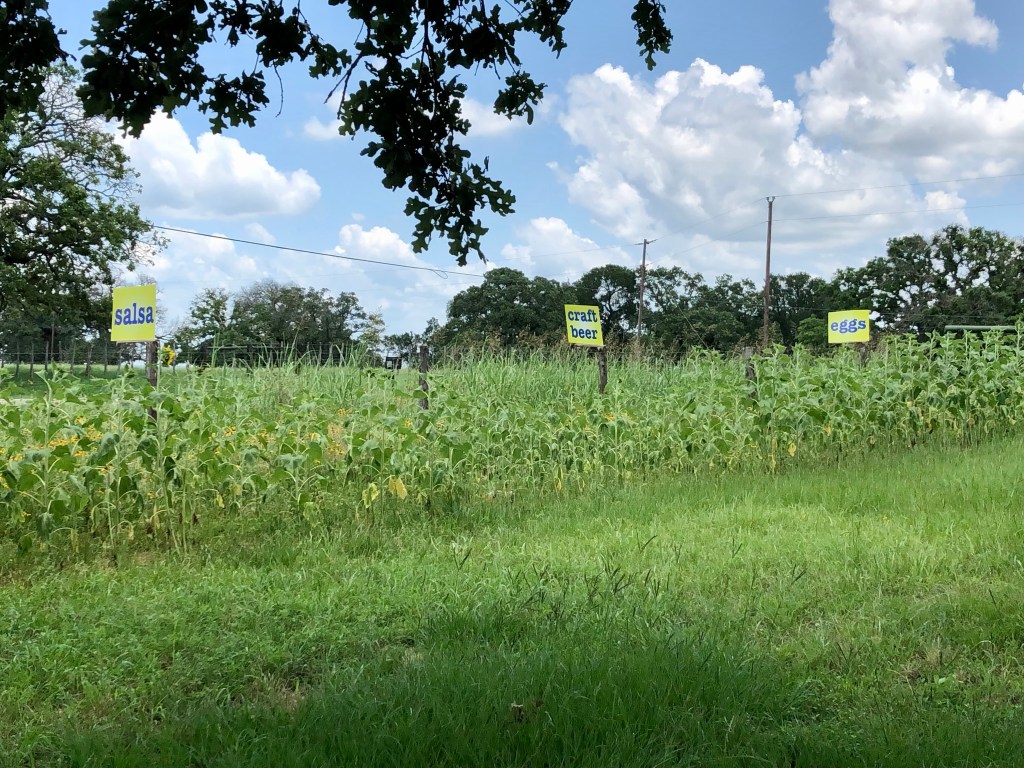
We left there and then visited one of the vendors, 4C Brewery, which has a charming store/restaurant out of town…somewhere.
The storefront
Mainly we went there, because they make their own boudin, a thing our family likes. They also have fresh milk and yogurt. Of course, beer and wine, too. It was quite cute.
That was a fine Sunday afternoon. Hope yours was fine, too.
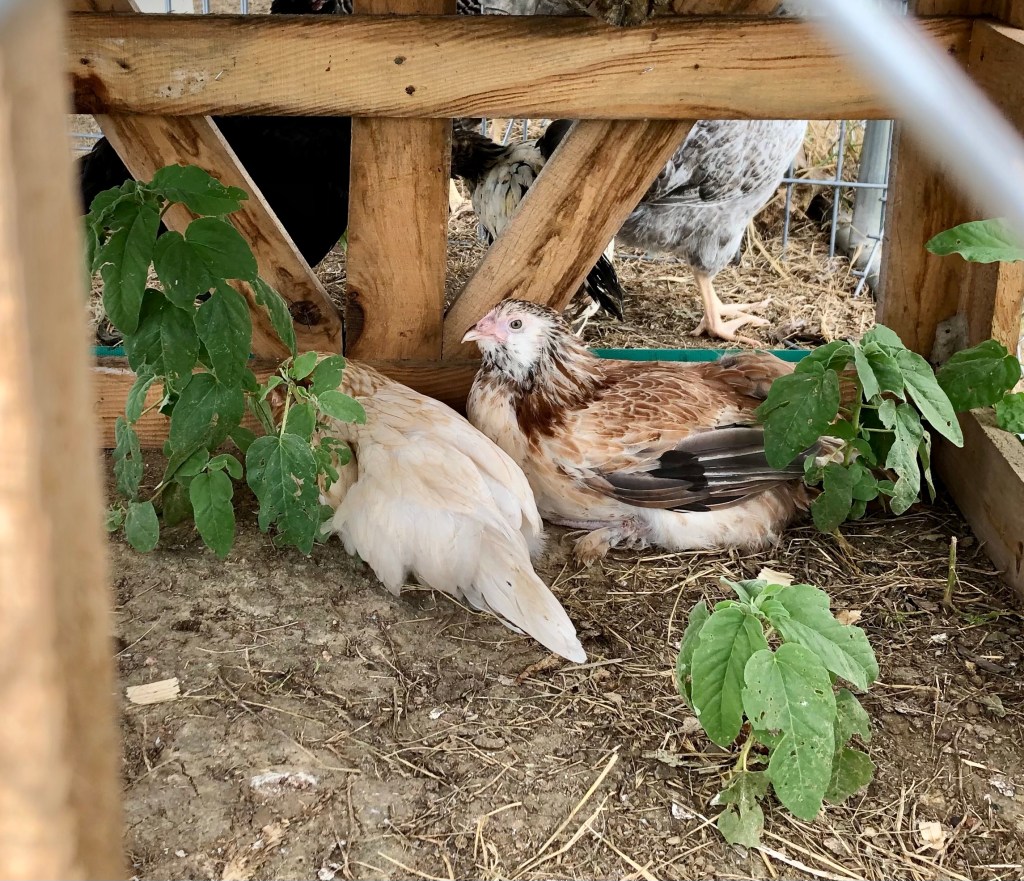
All the new chickens are currently okay. Blanca, in particular, seems a bit traumatized by her new surroundings, as well as the heat. She and Babette stay in the cool shelter a lot. But, she seems better today.
Blanca is hiding.
The little hens have a lot of shade and fresh water, so they should be fine.
We are fine and curious about everything.
Billie Idyl is by far the smallest. I should probably have asked Gene to pick out the largest of the Brabanters. I noticed yesterday morning that the others had been pecking on her, as chickens naturally do (source of the term pecking order). Billie’s tail area was bloody, which worried me.
I’m better now!
I wondered if I should separate her in the original chicken house, like I did the chicks. But, clearly that wouldn’t fix the problem. Maybe a deterrent would be better.
Barbara, at right doing major wing flappage, was the main pecker. She must be the Queen of this flock.
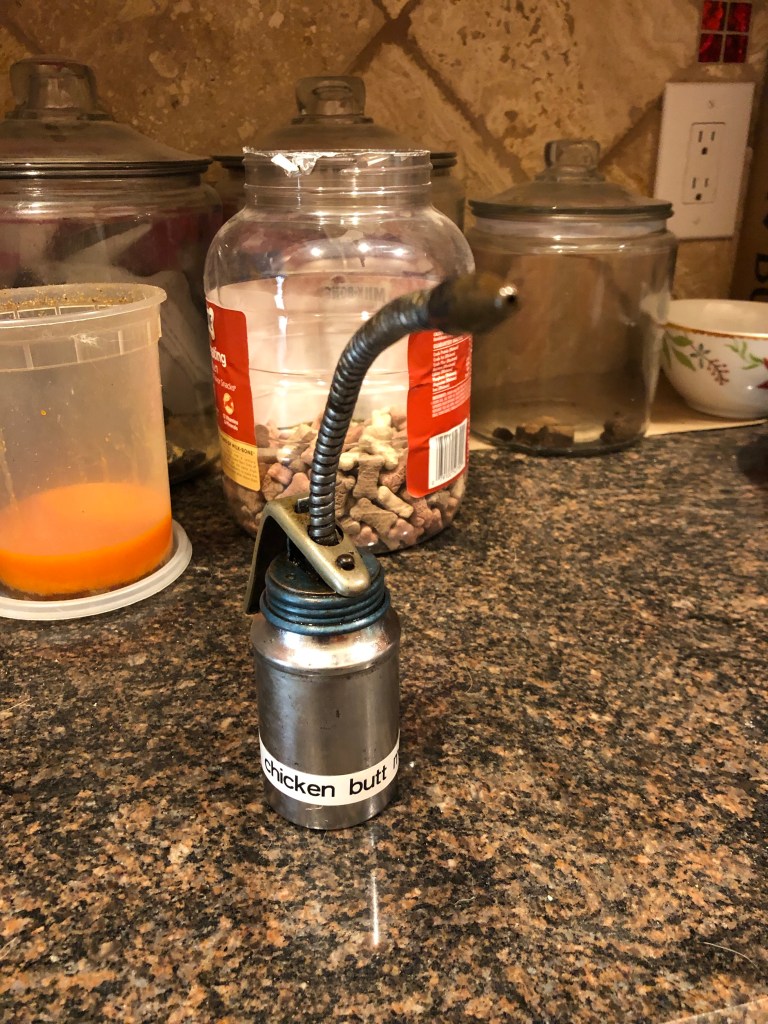
So, the nephew looked up what could stop hens from pecking and found a recipe or two. We combined two of them and mixed this:
Honey
Lemon essential oil
Apple cider vinegar
Small amount of Dawn detergent (in lieu of blue food coloring, which we didn’t have)
We think the blue was so you could tell where you applied it. But Dawn might help clean the wounds. We put it all in a cool old oil dispenser he’d found in an antique shop.
The resulting product was just right for spraying. Now, cornering Billie to spray her butt was no easy task, so the stuff got in a few other spots, but did hit her injured areas. We were worried it would attract ants or bees, but apparently the lemon oil repelled them. Whew.
Billie is at right. Barbara is pissed off that I made her target taste bad.
Today, there is no sign of new pecking or injury. There are no ants on her, either. Billie is running around eating, drinking, and scratching most cheerfully. Hooray for the chicken butt medicine.
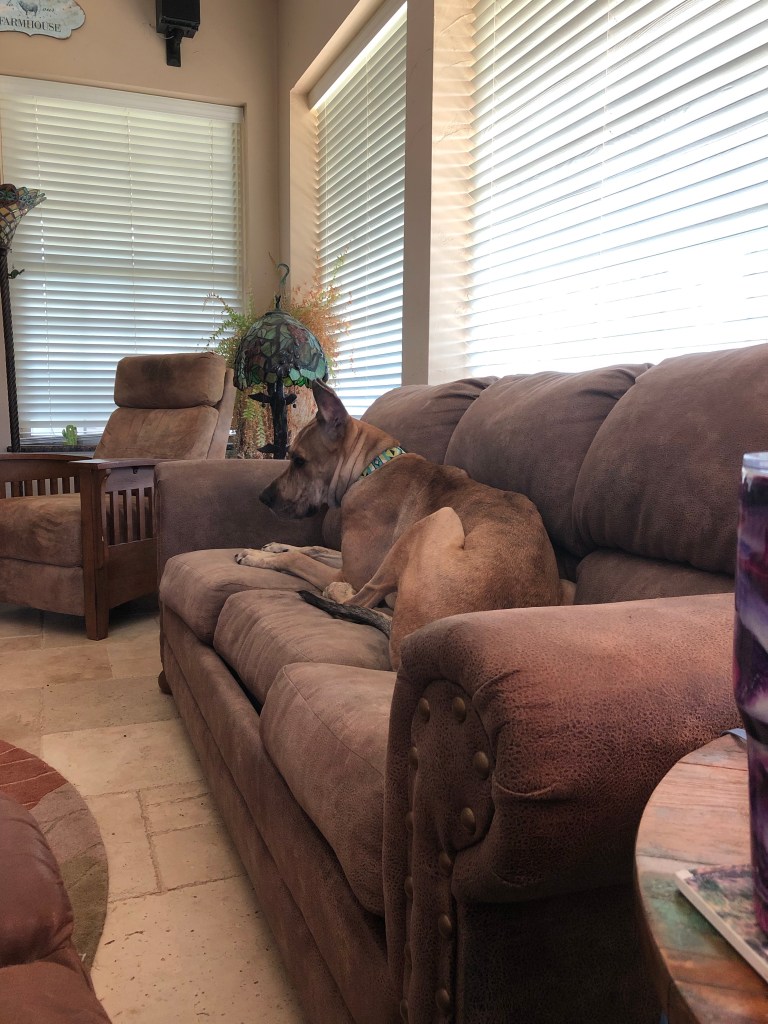
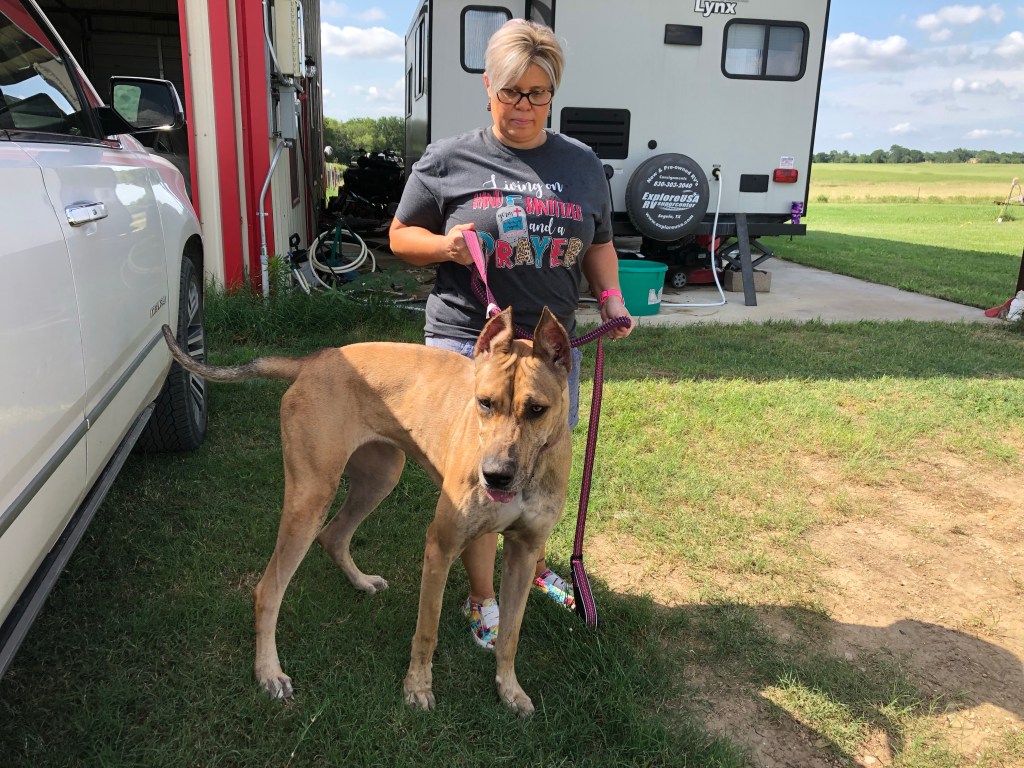
Apparently not, but Kathleen had her reasons for wanting to adopt this one-year-old Great Dane in need of a home.
I’m Goldie. I like couches.
For one, Kathleen has owned them before and loves them. For another, the dog has had many homes and owners, and her latest owner had bought her to breed, but she doesn’t go into heat. Sounds like she needs a permanent home with space.
She’s a little skinny, but healthy.
We all went out to meet her, and she was so sweet, calm, and well mannered that we took her home to meet the other dogs. She was good in the car!
She sat on my lap.
When we got home, the dogs barked and barked, then settled into just sniffing.
Meet and greet.
Then, someone let Goldie into the back yard, and they started working things out. Penney and Alfred are taking their time, Carlton is meh, and Harvey is pretty friendly.
You can see her white chest
Checking her out
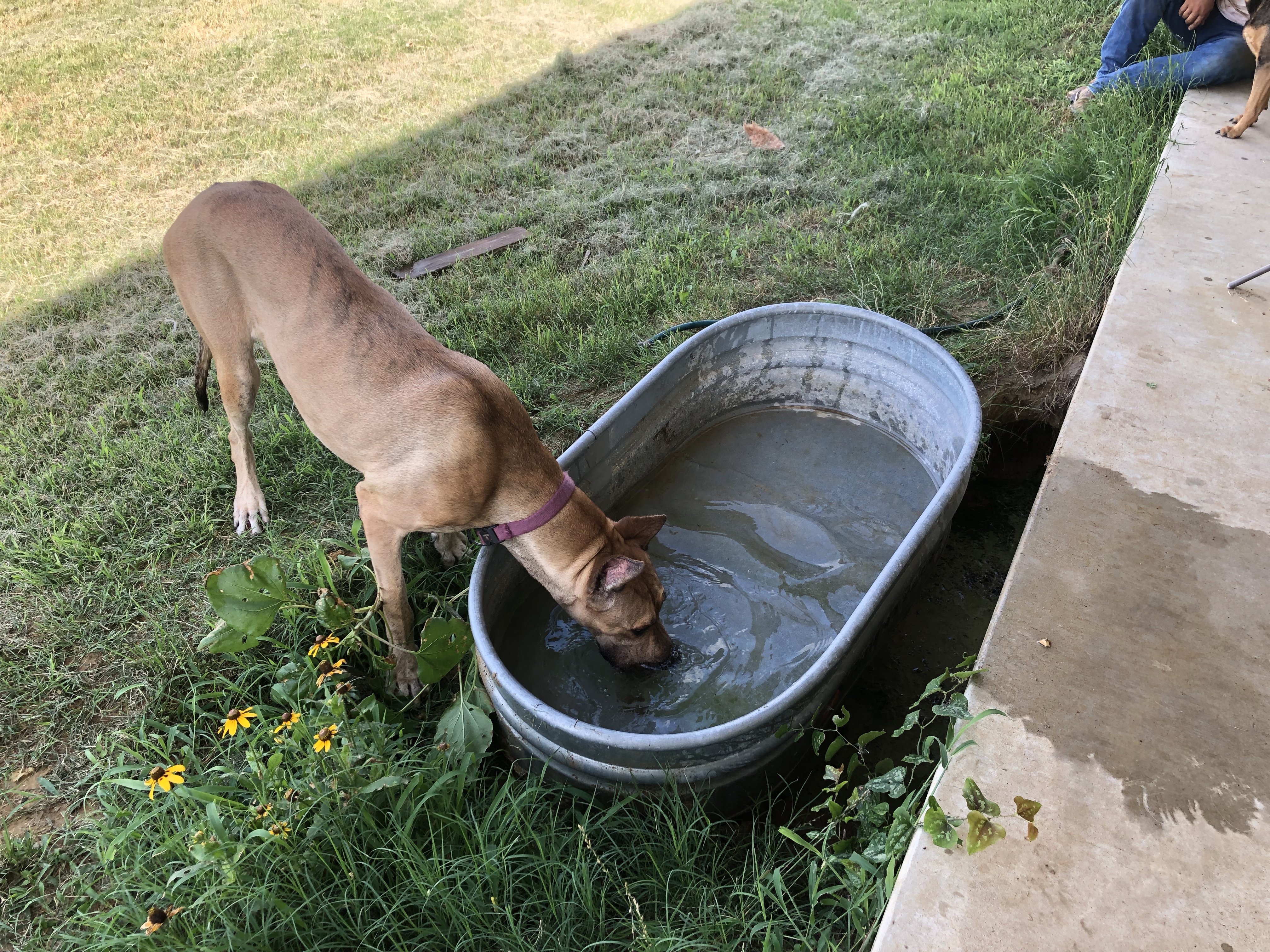
Goldie sticks her head down in the water up to her eyes when drinking
I let her into the house and she made herself at home. I thought it was touching when she and Harvey shared the couch.
Twins
Testing out the dog bed.
We later went on a walk, and everyone got along and had fun. Kathleen even let her off leash for free fun. Everyone got hot and had to swim, of course.
Ahh. Nice pond.
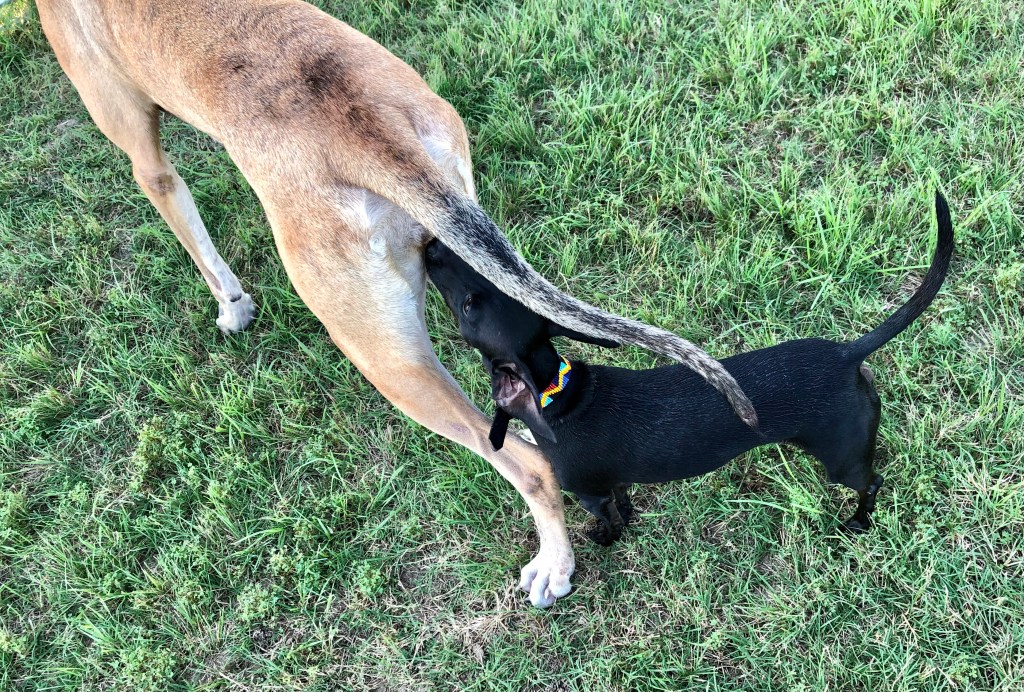
But the MOST fun came when Goldie met Vlassic.
Your butt smells great. You are my friend.
Once they decided they liked each other, off they went. Watching Goldie run freely was beautiful.
I’ll get you!
They went round and round but I only got this one image with both of them. Isn’t it great?
Zoom!
All that running wore her out!
She appears happy.
It will take some time for everyone to work out their relationships, but it’s looking good right now. Sure, we didn’t NEED Goldie, but I think she needed us. We sure are enjoying her gentle, kind spirit already.
Buddies
She still needs to get comfortable with the dog door, though! She is welcome here.
It’s still darn hot outside, but that didn’t stop all us hermits from heading back to the country near Milano to get more stuff from that sale.
The booty
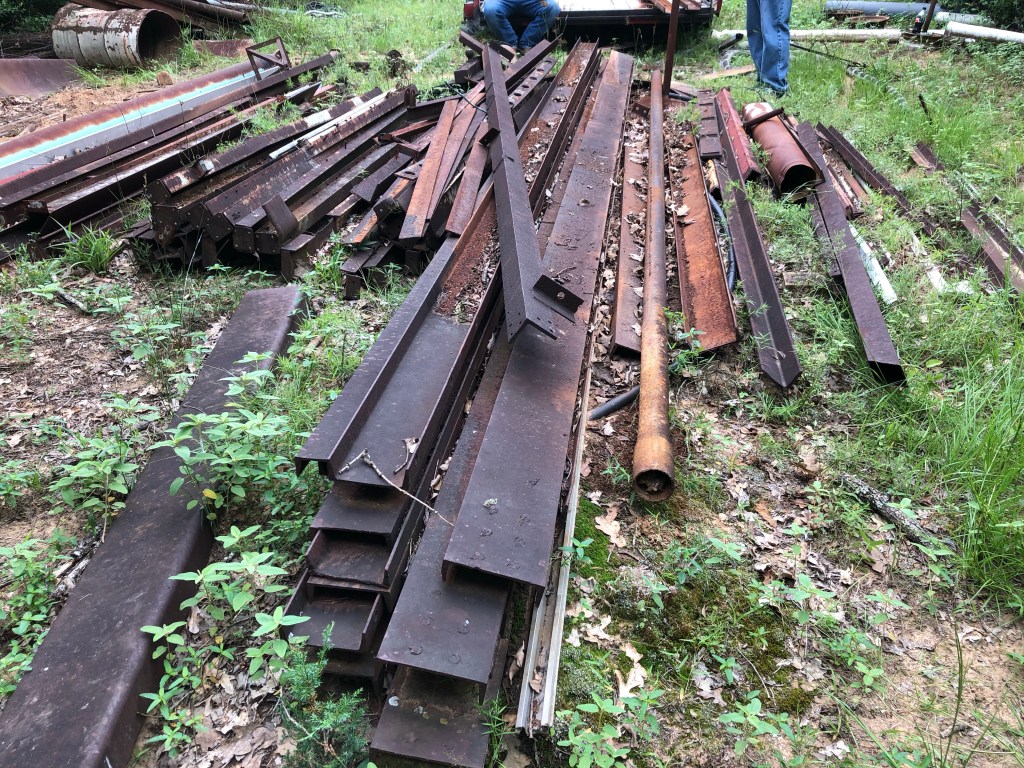
We went to get the metal beams we saw yesterday. They will grow up to be supports for the extended cover for the horse stalls. We spent all the money we each brought but got so much metal and other cool stuff. Of course, Kathleen found cool things to repurpose.
I kept enjoying nature, like this snake skin.
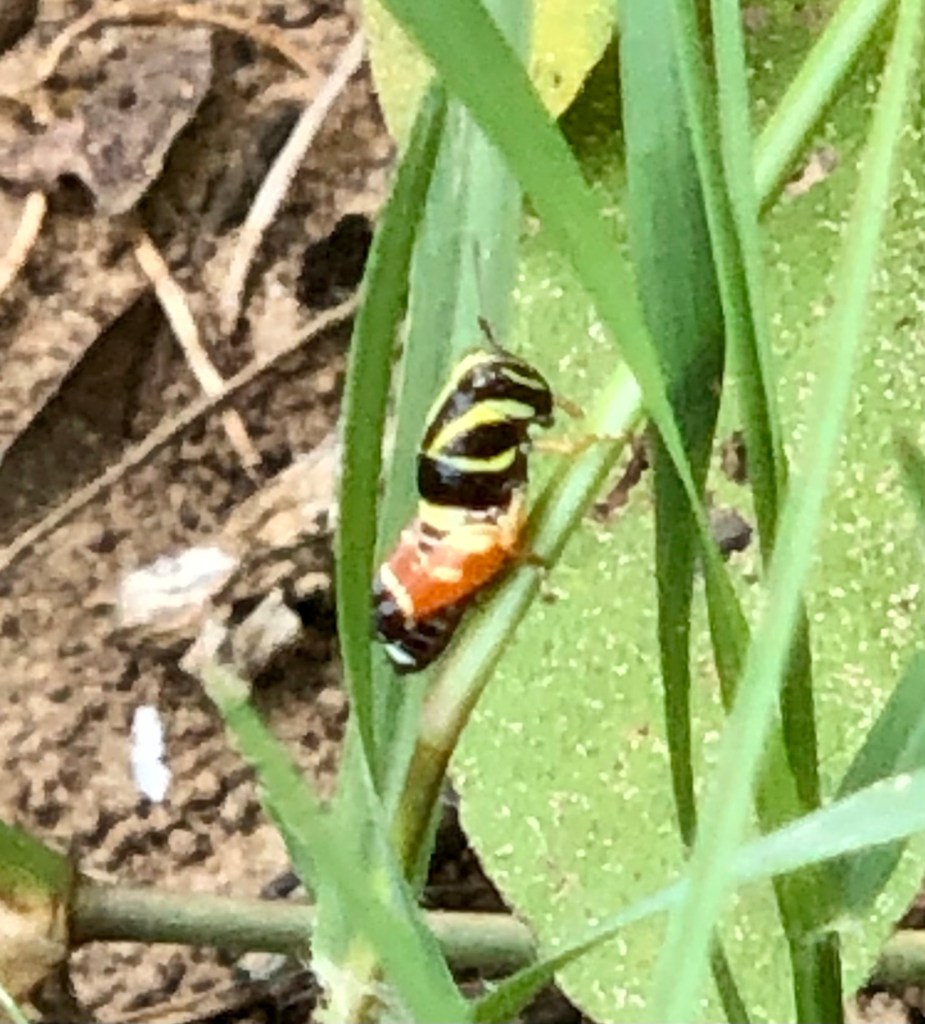
Of course, I mainly looked at nature, trying to find dragonflies. I ended up finding a lot of cool insects that were new to me. Fascinating!
Wow! This is a grasshopper! An Aztec Spur-throated one.
I feel like this next thing is stingy.
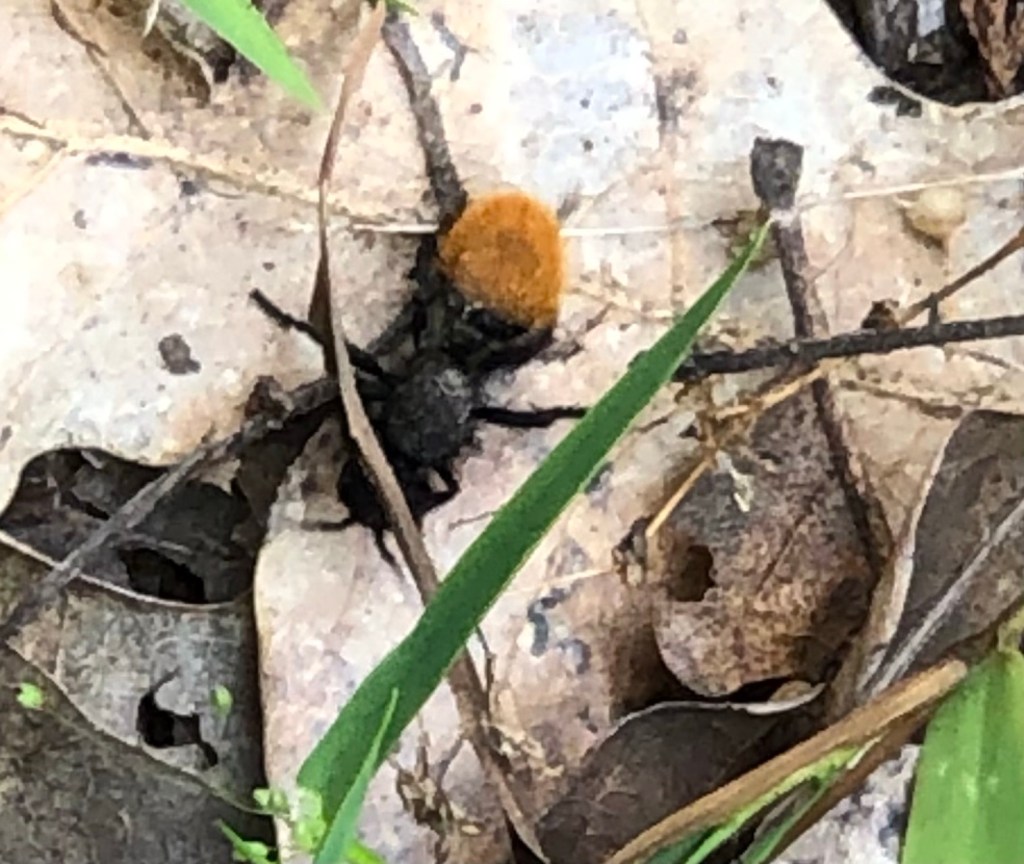
Dasymutilla klugii looks scary.
I saw two of these nasty-looking things. One was eating a fly. Really looks like it could sting badly.
Very ugly thing. False bee-killer. Promachus bastardii
Some things I saw were old friends like this guy.
Harvestsman on beautyberry
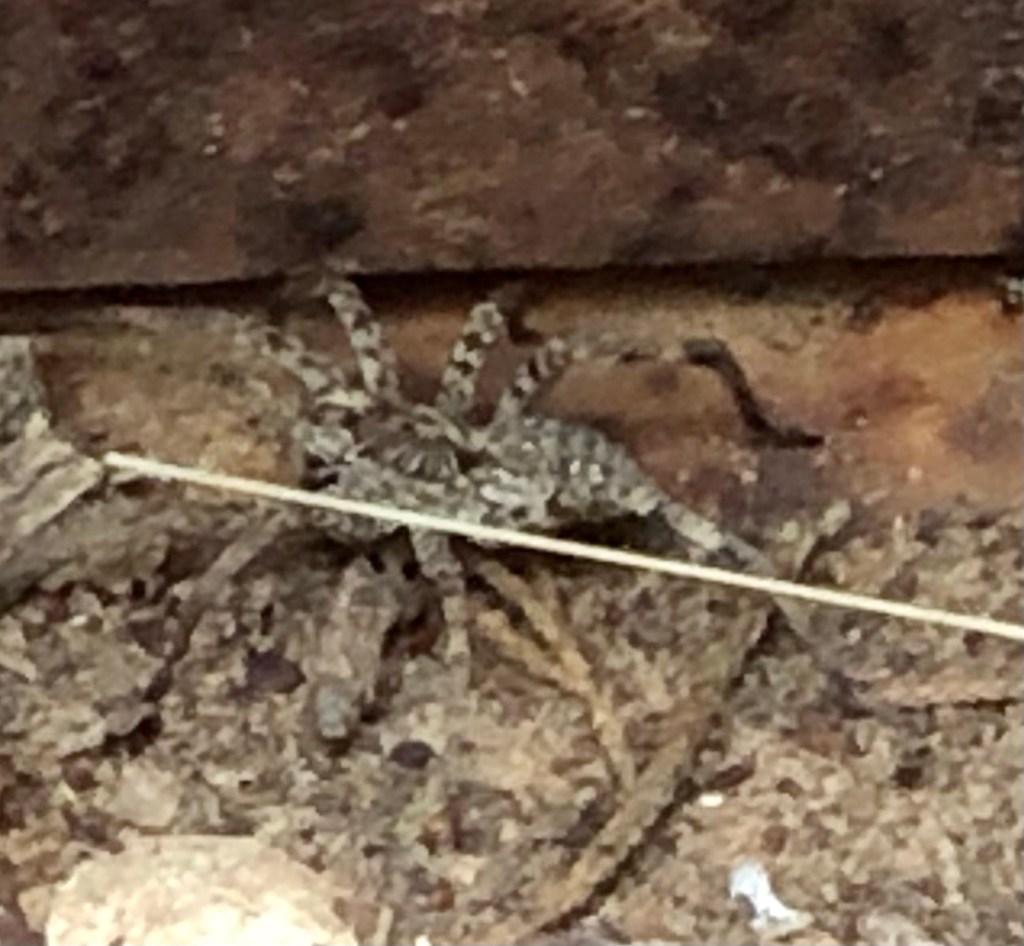
It’s blurry, but a wolf spider.
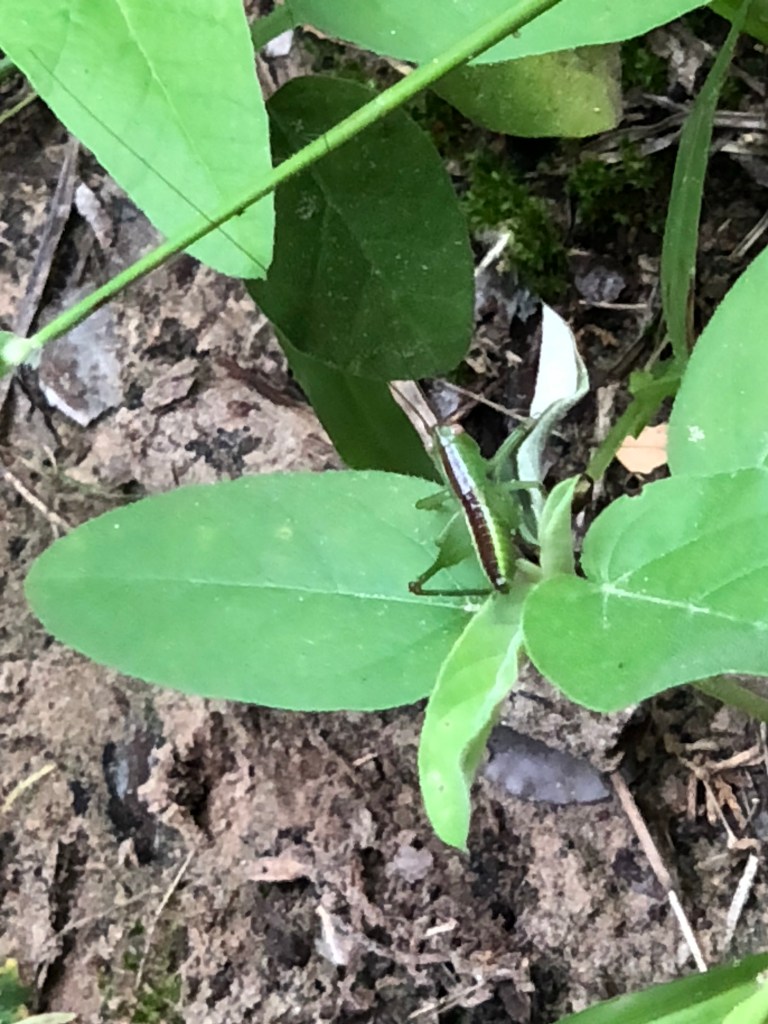
Some insects were cuter than others.
Katydid
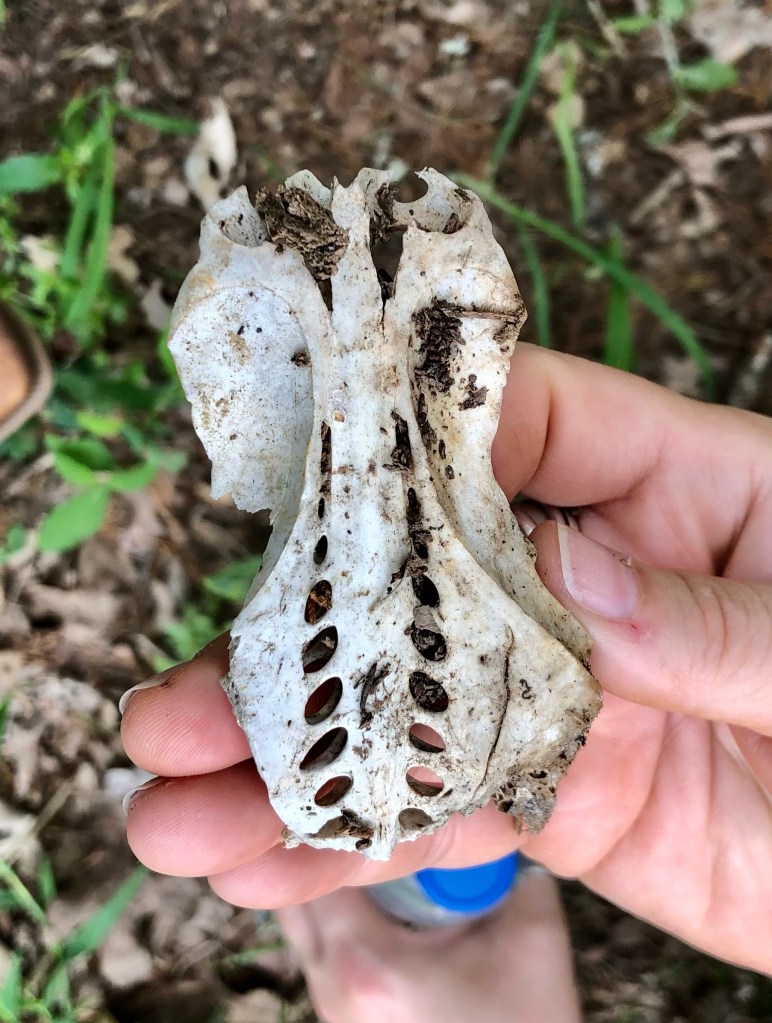
Anyway, it was fun. We stayed a long time, sweated a lot, and did a lot of negotiations. We even saw friends way out here! and a former friend of some sort. Kathleen found someone’s head.
A skull with holes.
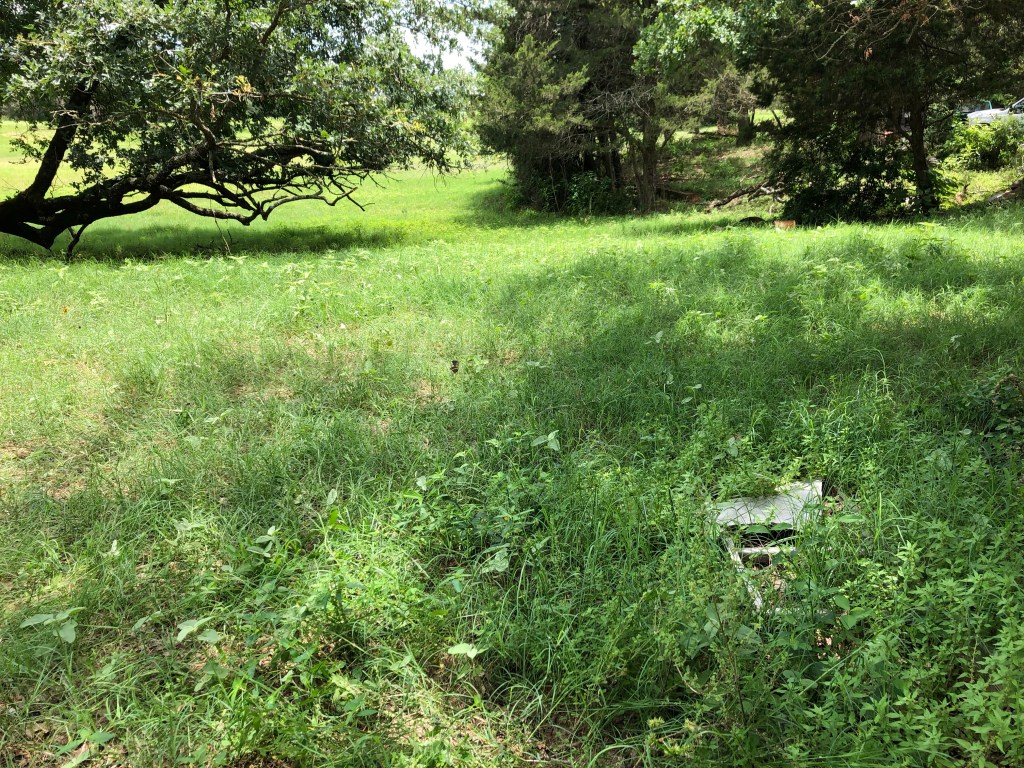
I’m glad we are easily amused by rusty metal and the flora and fauna of a post oak savanna.
Good old country beauty.
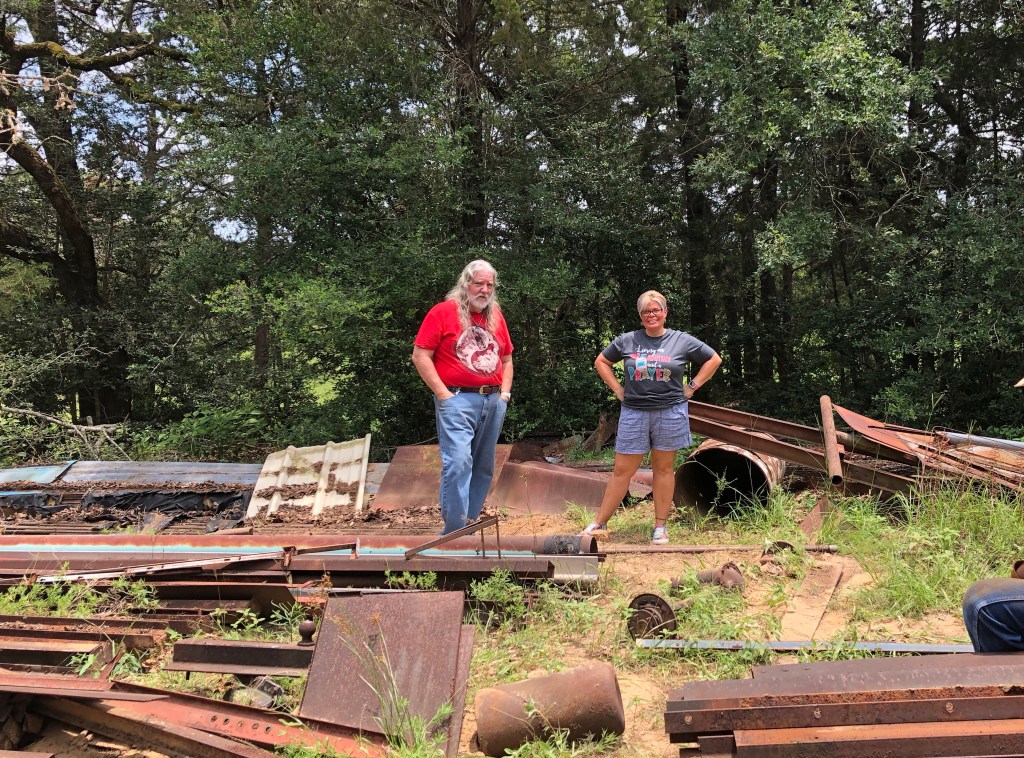
The good news is that even though we spent money, this stuff would have cost many times the amount new.
Treasure. Yep.
And we have all sorts of building blocks for future projects. We are all excited. Even though we were hot.
We filled a trailer with stuff, put sir in the tires, and made it home!
I noticed an ad in the Facebook Marketplace yesterday saying there was a large building full of stuff that was for sale near Milano (20-something miles from here). It sounded like it might be a thing the builder in the family might enjoy, I thought.
A beautiful place.
So, in a work break, we headed out somewhere in the area near Milano, Texas (mil-Ann-o). We hit a couple of bad train tracks, which was fun, then found the place. What a beautiful property.
And there were dragonflies!
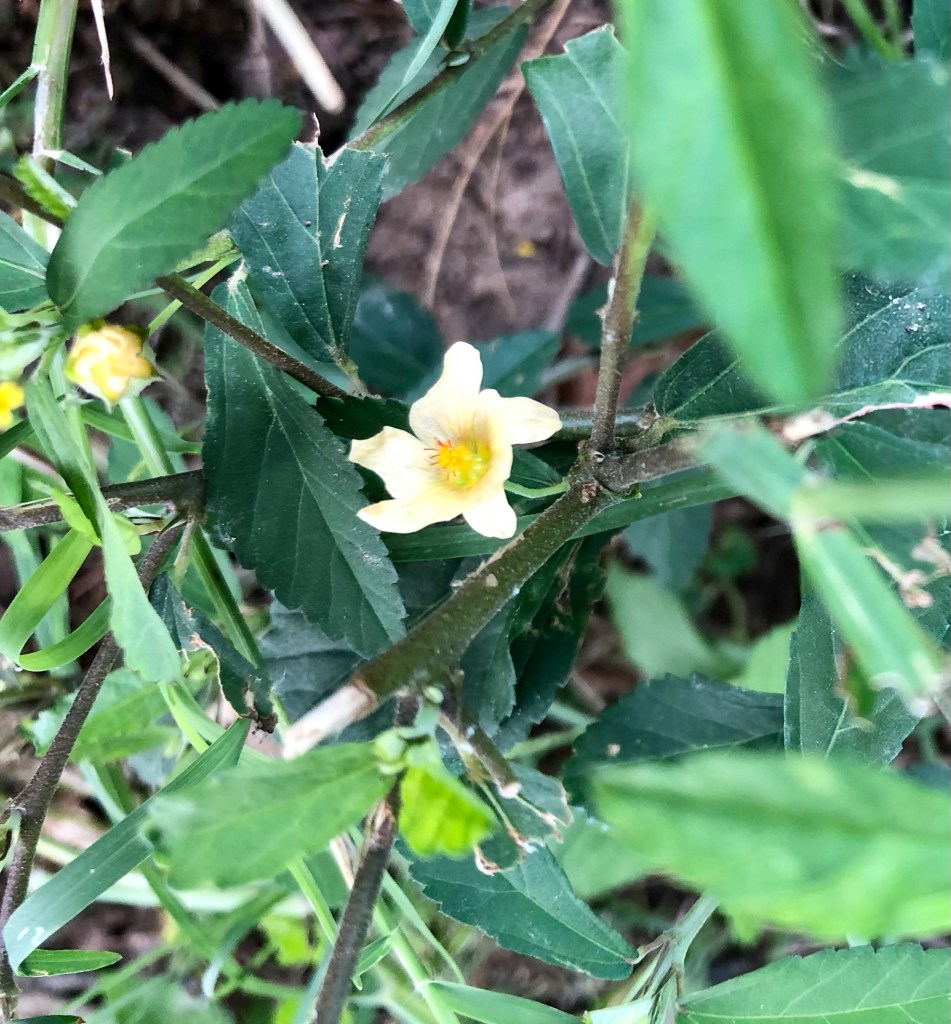
While one of us patiently went through a treasure trove of old tools and equipment, I wandered around and took pictures of the plants I found.
There were lots of these Cuban jute plants
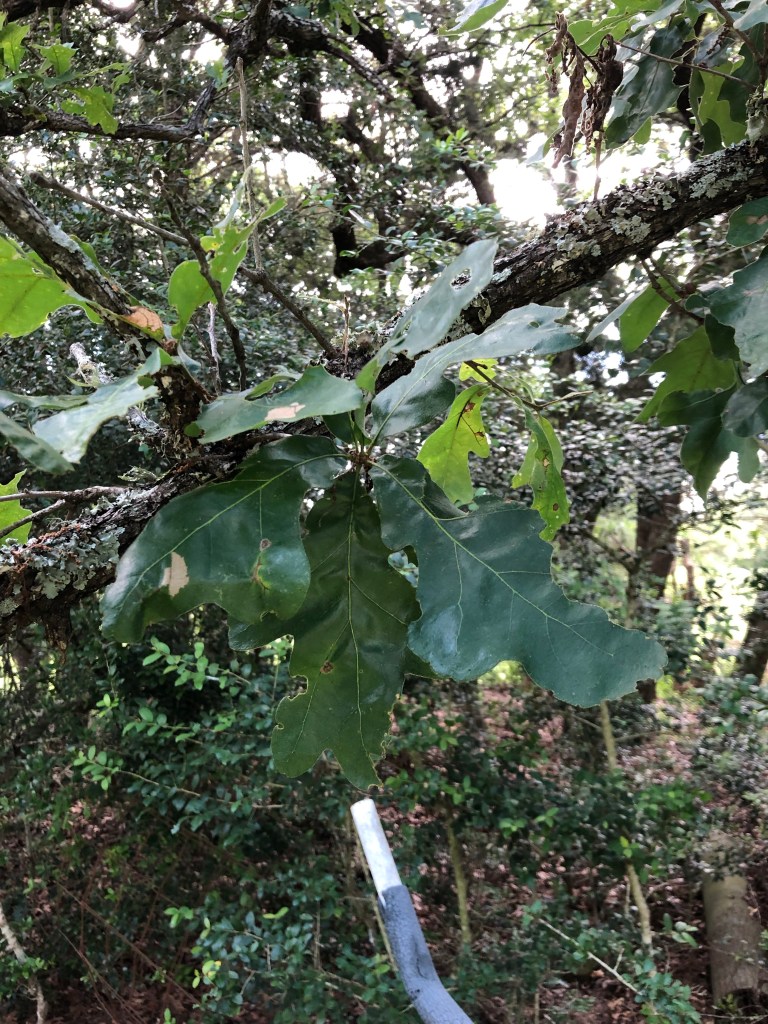
This is legit post oak savanna territory and the plants were right on! Gosh, the trees were beautiful.
Post oak.
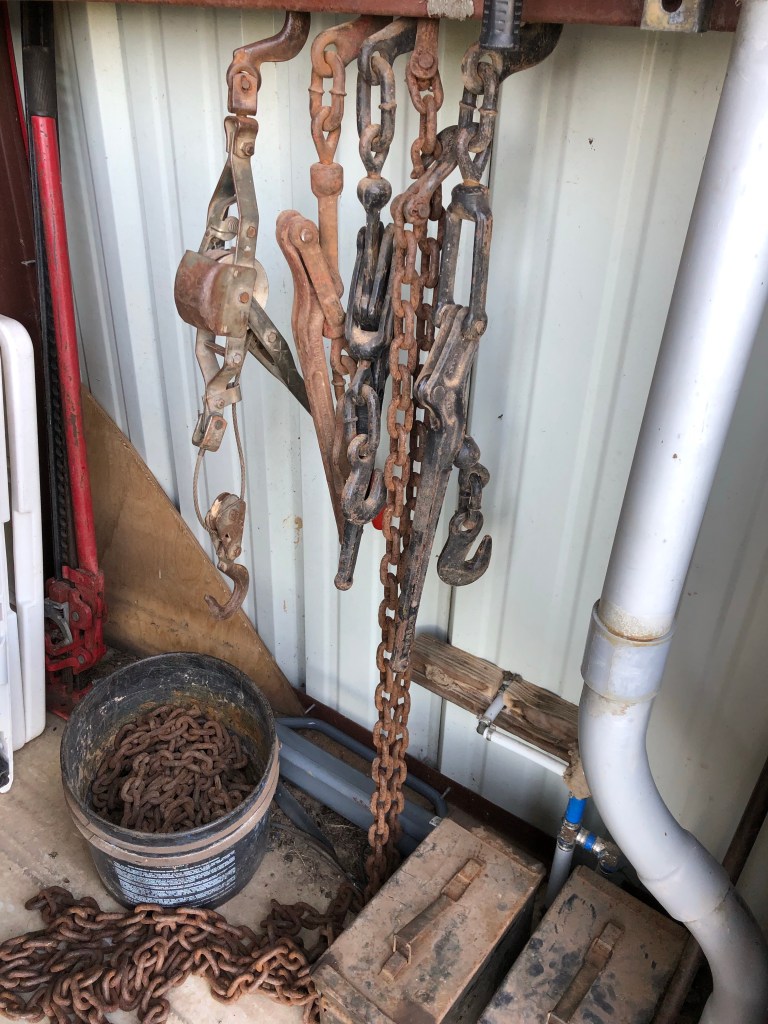
Meanwhile, the building full of tools was fantastic. It had so much cool stuff, including some antique tools and a lot of wire we can use to make fencing. We both had a great time!
Some cool chains from today.
So. We each got what we wanted out of that expedition! A bunch of tools and equipment and plenty of iNaturalist observations!
The guy at the sale liked me, so he gave me this old lamp.
After all that fun, it wasn’t over! Later in the day, more fence poles went in. You can really see the pens taking shape.
Fence poles at sunset.
I also had a blast this evening helping with Sara’s family, who wanted to give their toddler his first horse riding experience.
I feel pretty.
We did a group grooming on dear Lakota so he’d look good. The poor horse was like, “No one pays me any attention for a month, then, boom, three people are grooming me!”
Sara had fun.
The little fellow really enjoyed his ride, but I think I enjoyed watching his parents and Sara’s sister the most. It must be so great to have grandkids! So many firsts.
This evening I went out to check the new pullets, because I wondered if they’d roost in their cage. Sure enough, I found five pullets in the cage, but Babette was even higher, on top!
We are all up here.
The other chickens were ALL on one branch. I love how chickens sleep together.
Sleepy time.
All in all, it was a fun day. Things are fine. I’m just not letting things outside my control bother me. Maybe my philosophy is actually sinking in.
This morning was really pleasant. I went out to take a few pictures and check on the new pullets, then sat on the porch for a ten-minute coffee break. It was breezy, so the mosquitoes that tried to suck all my blood yesterday weren’t out. I took this picture to post on Instagram, planning to caption it “What I’d like to be doing the rest of the day.”
Just enjoying my morning.
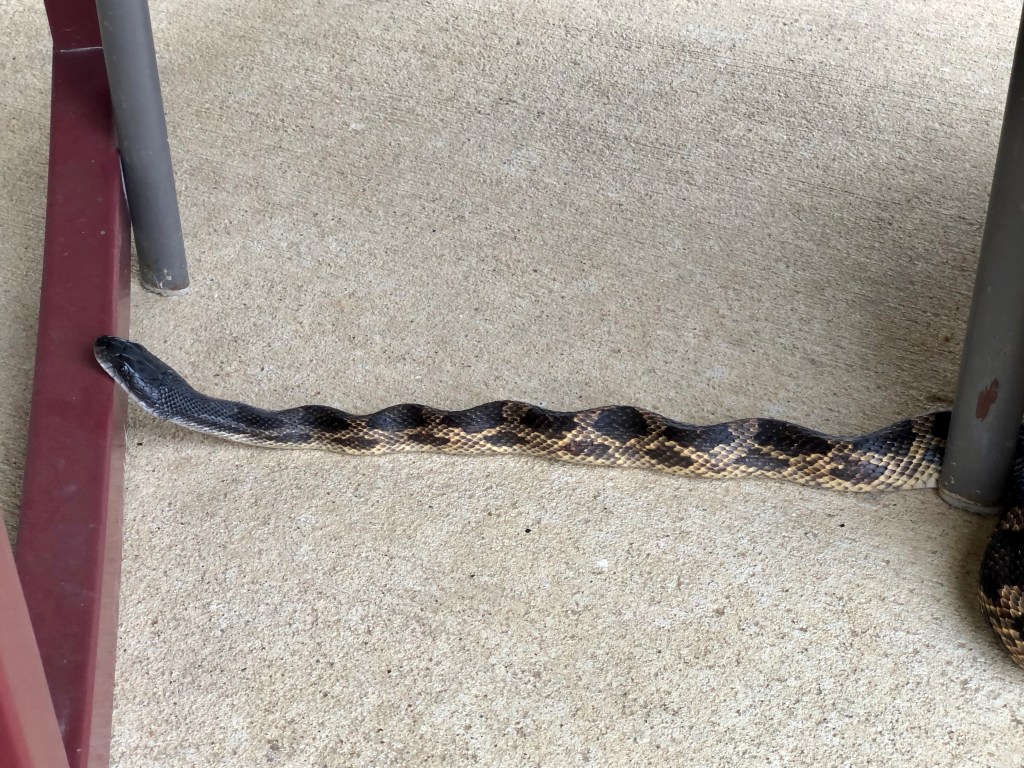
I thought I was alone on my break, but no, the rocking chair across from me had someone else enjoying a pleasant break.
I’m enjoying my morning, too.
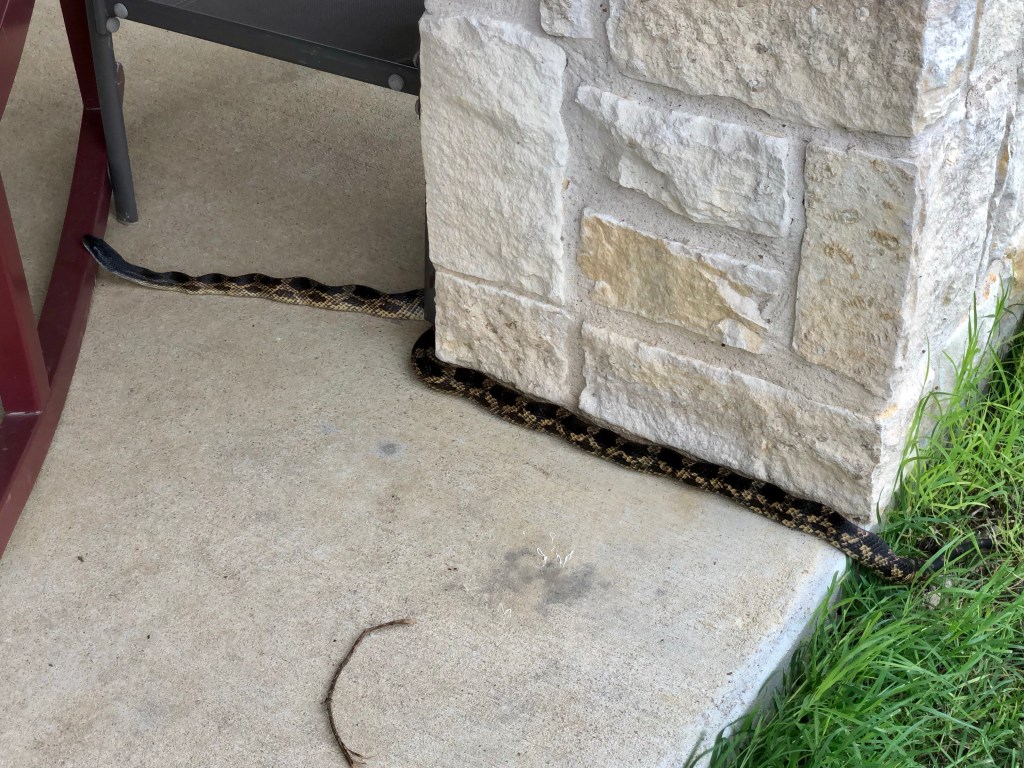
Well, hey there rat snake. I thought, wow, what a cute little snake, but when I got up to get a better photo, I saw it’s not a little snake, not at all. It’s probably close to my height.
The tail just keeps going.
Since it was not actively in the process of eating eggs from my hens, I left it to enjoy its morning. And it is why we are keeping the grass near the house mown nice and short (as long as we can keep lawn mowers going).
Speaking of which, in addition to getting new blades that cut evenly, our good old riding mower also has a new feature designed to keep my brother-in-law more cool and less heat stroked: an umbrella! Most of the area we mow has no obstructions, but he can lower it to get close to fences and the house. I hear it feels twenty degrees cooler under there! With summer coming up, that is a fine thing.
Fancy lawn mower.
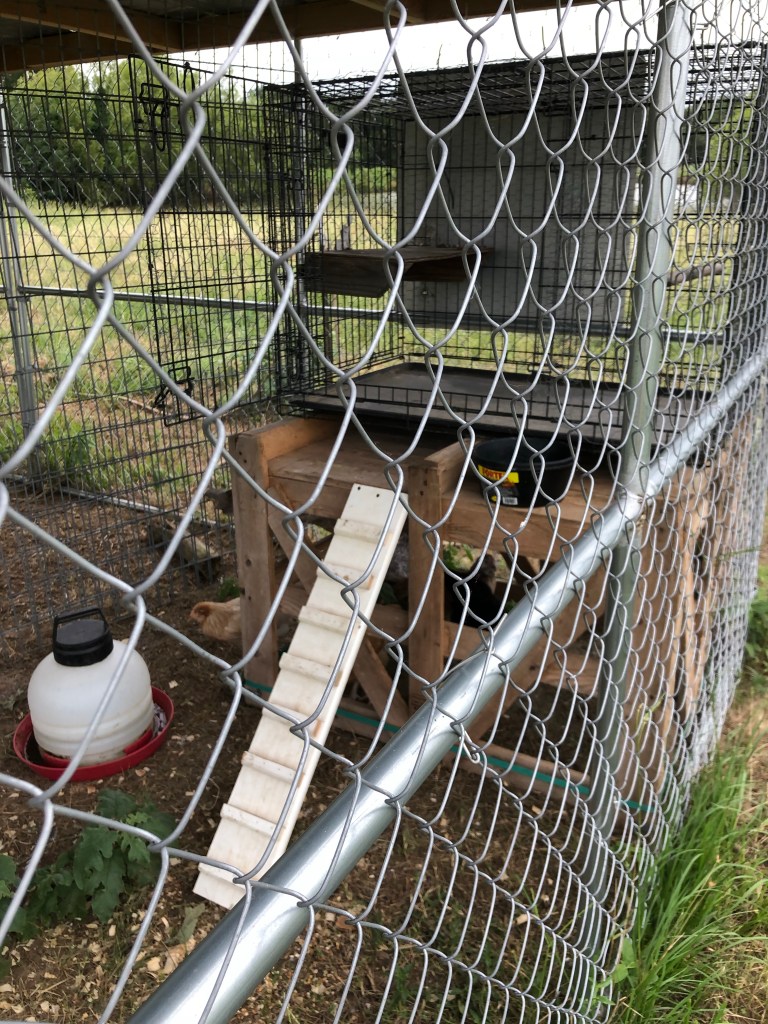
Other “home improvements” that I took pictures of on my morning walk include this chicken ramp. I had put a board up to help them get high in their roost area, but it was too slippery, so they now have a custom ramp made from scrap wood. I know they used it last night, because there’s poop in the roost area in the cage! Yay!
Stairs to the penthouse
Now the chickens have more area to spread out in, which is good, because they spend most of their time chasing each other, when they aren’t eating. At least they are all still with us!
Just being chickens
Peeeeep
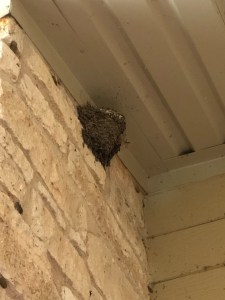
I also figured out why we hear so much bird noise in the evenings. The barn swallows are nesting AT LAST, right outside the back door. Since that’s where the dog door is, we can hear them well. I’m quite relieved to see this, because they are running late this year (no doubt thanks to that bad ole Uri storm in February). This is good news.
I’m not the only one who got to see a pretty snake yesterday. This garter snake was over at Sara’s. It got run over, though. They’re so lovely.