Sunday of Amazement

Wow, yesterday was just one amazing discovery after another around the ranch! The wind finally died down, which made it much easier to be outside, so I engaged in a lot of running around with dogs and exploring things, once the cattle moved off and the cattle torture ended.
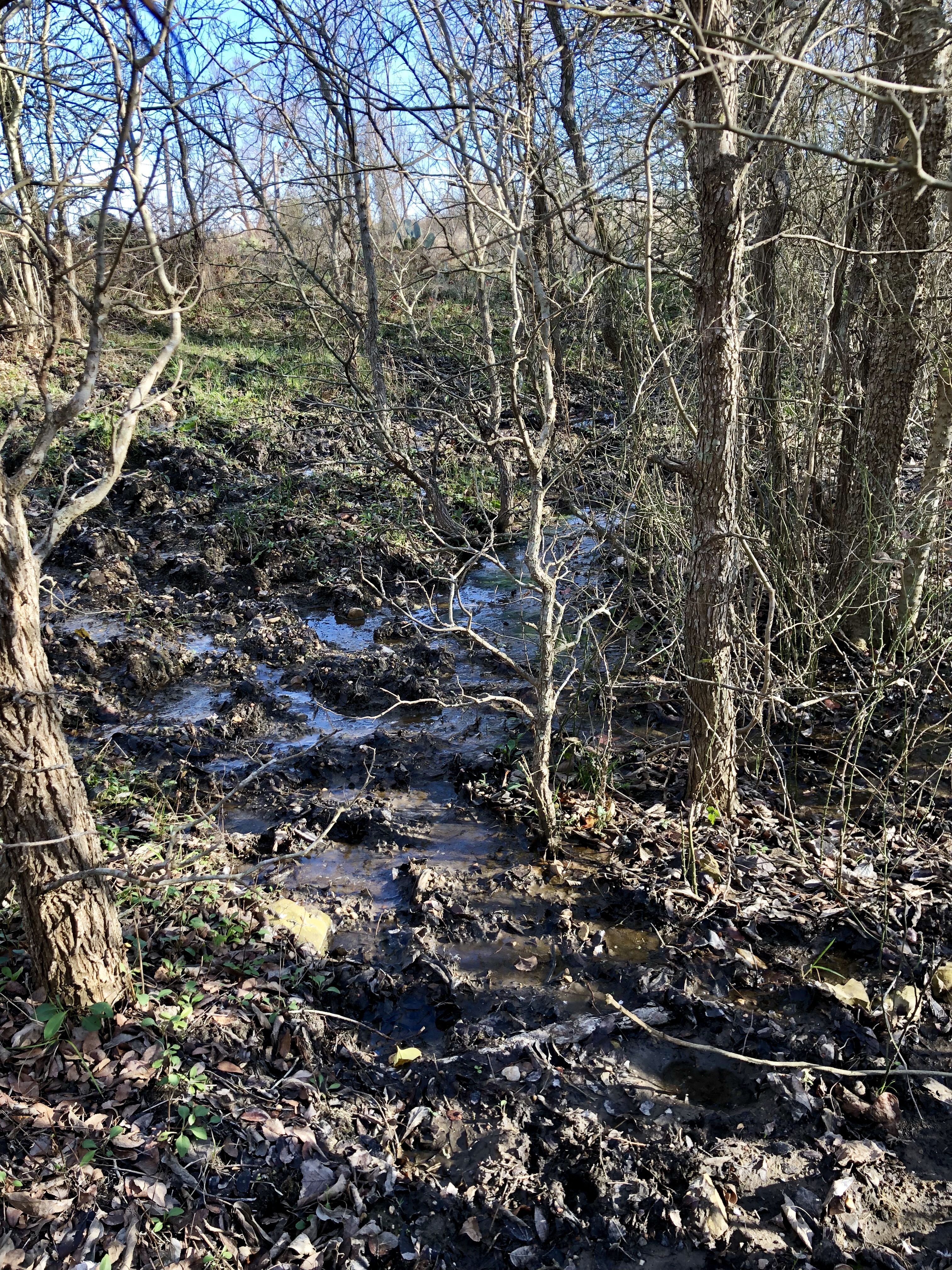
This is the “springy” area of the woods. It’s on a slope, and the water drains down to the Hermits Stream.

Our neighbor Mike came over earlier than usual in the afternoon, so that we could go check out a few things in the woods. Of course, the dogs went, too, which gave them more opportunities to irritate the cattle. Sigh. But the good news is that we found an old food storage container that had slipped out of Lee’s hands and disappeared into the woods during the summer, when you can’t see a thing in there.

There is a lot of moss, algae, and other moisture-loving foliage here. I wonder what the area would look like if cattle weren’t stomping all over it.

But, WAY more important was that I confirmed my suspicions that the last remnant of the big drought that was going on when we first came to this area is going away. It’s quite clear that our springs are back!

I’d been seeing a wet area from our side of the fence, but we wanted to see it up close. Sure enough, water is seeping out of the ground and heading toward the stream. I’d heard that there were springs in there before, but other than getting a little muddier than the rest of the area, it hadn’t showed any signs of flowing.

Carlton investigates the babbling brook. The tree bridge is getting less and less sturdy as time goes by.

We also noted that the little brook/stream that flows into Walker’s Creek is flowing pretty briskly. Two things could cause that. Either the pond is still getting water from runoff and flowing through the arroyo, OR the other spring is working. Mike and I confirmed that the culvert is barely dripping, so that brisk flow of water must mean that the big, deep spring is flowing on its own again. Hooray! There’s water under the ground again!

Heron or egret footprints in the mud.

Now that the flooding has died down, we can see lots of tracks in the mud that the flooding deposited. One thing is for sure, those herons are BIG birds.

And the chickens?

I am very happy to report that the longer days, increased food, and/or less owl stress have combined to ramp up egg production. We were afraid that the one who was still laying had been the last owl victim, but, hooray, we had three eggs today, and since two of them were white, there are at least two laying now! Of course, we are down to a dozen chickens, so we won’t have what we did before, but it’s an improvement.

THREE eggs! And the beautiful cutting board the neighbors gave us for Christmas.

And, by the way, Mandi is ordering some netting to help foil the predators.

And more mooning
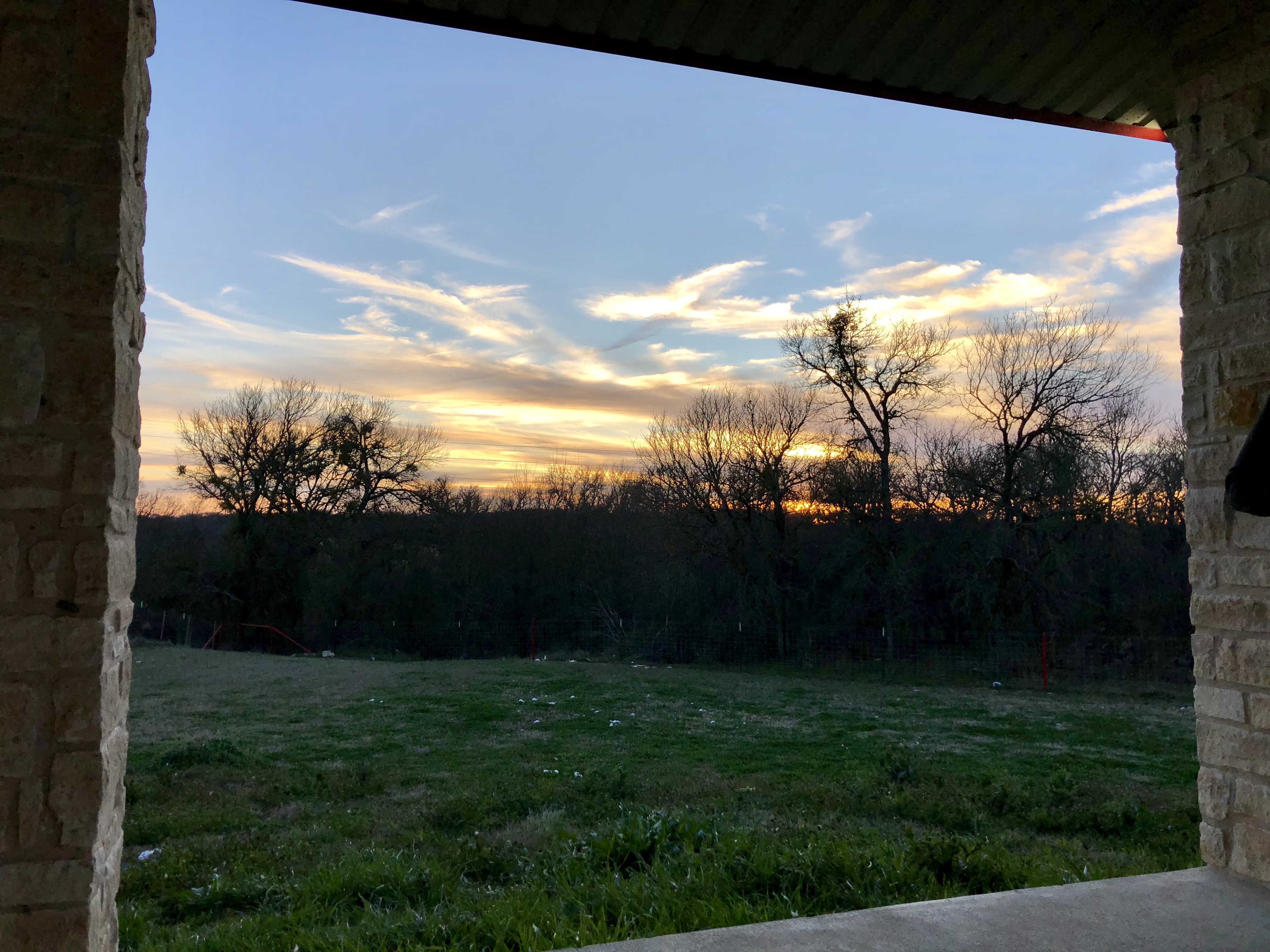
A picture-perfect end to the day.

We got back home and sat on the porch (it was cool, but not too cold) to enjoy blackberry wine and yet another lovely sunset, which I managed to frame in the porch, like a painting on a wall.
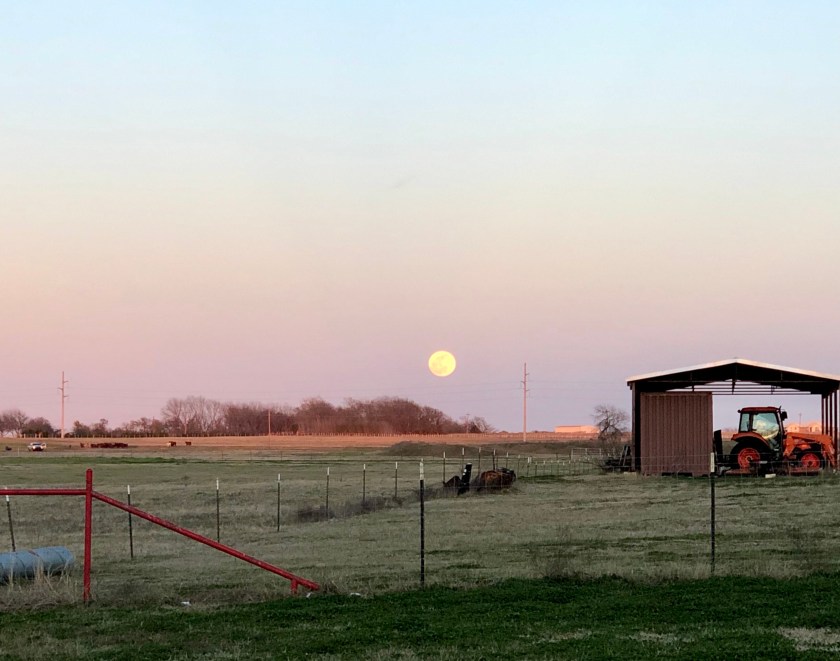
Here comes the moon!

Then we turned around to see the super moon rising in the east. Wow, that thing was big. My phone doesn’t do very good eclipse photos, but the red moon was very cool. I wish that happened more often. You know that sight must have been confusing to ancient people who didn’t know how the sun. moon, and earth coordiate!

Chicken Update?

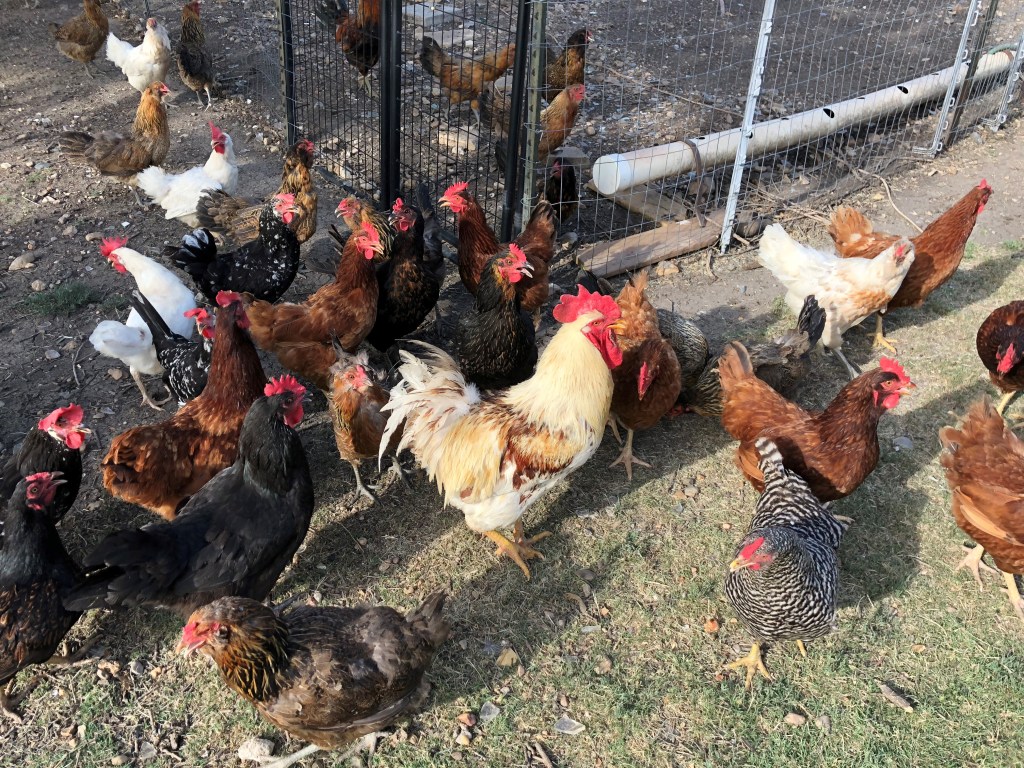
Feed us!

Just wanted to share that the owl seems to have literally flown the coop, and we haven’t lost a chicken in a couple of weeks.

As you can see, they are looking happy. Buckbeak is glowing! We have at least ten left.

  • And we are now getting ONE egg per day! 100% improvement over zero! Let’s hope things keep picking up from here. I’m still looking into coops, but it’s sorta complicated.
  • Other bird news

    I saw a cool bird sight on my way back from feeding the chickens yesterday. I stopped to punch in the gate code and heard a lot of commotion. Much screeching and cawing. I saw half a dozen of our large crows yelling at a hawk, who was yelling back.

    It looked like the hawk had robbed the crows of something. The crows took turns pecking until one of them got the hawk away from crow territory. That crow kept circling back and making it very clear that Crows Rule!

    Late-breaking news

    Look at this Austin sunset! We’re having a bumper crop this year!
    Not So Cheerful News

    RIP Big Red. You were a good guy.

    When I went to feed the chickens yesterday, for the first time since I got back from vacation, I was sad to see that one of the latest victims to our resident owl was Big Red, the rooster with the red eyes. He just loved sunflower seeds, and Mandi said she realized he was gone when no one came to the stable for their treats.

    I’m really sad about the chicken situation, though we did get the first egg in many weeks yesterday. The only way to keep the owl out would be to cover the chicken yard, but it’s not my chicken yard, and the person who built it is not interested in adding netting. Plus, my house is too far away to keep an eye out on the poor things.

    Here’s Buckbeak and the hens back when we actually had white ones.

    That leaves me and Mandi with the not-so-fun task of coming in every few days to find we are down another chicken. I feel like it’s sort of cruel to subject them to nightly terror like that. I am also not thrilled with having to dispose of them, even though I am trying to be the “tough ranch person.”

    Before you ask, the chickens are much too old to eat, not that I want to eat them; that’s why they are now MY chickens. My former co-owner wanted to make them into sausage, and I didn’t. Who knows, maybe he had the better idea after all.

    So, if you would like a nice chicken, I have a variety to choose from. We still have a few Americaunas, some red ones, some black ones, and two black-and white ones. And Buckbeak, the older rooster, is still with us.

    I don’t have any chicken transportation devices, but I’d give you food and stuff if you want to get them. I am sure they will start laying again soon, now that the days are getting longer and if they aren’t so worried about owls. I really like these guys, as you can see in my first chicken post.

    It’s illegal to kill an owl, you know. I learned that in Master Naturalist Class! I’d just prefer not to provide them with so much food. There are plenty of free doves out there.

    Future Plans

    Both Mandi and I want chickens, so I hope to be able to get a secure chicken house with a large covered run closer to my house. Alfred might be able to help guard them, and it would be easy for me to lock them inside at night. Mandi hopes to put a chicken house on her property, too. I hope this is soon. I miss sharing eggs with my coworkers.

    Birding at Christmas

    There’s always an Audubon Society-sponsored Christmas bird count that naturalists and bird lovers do every year. While I didn’t do that, I did enjoy the easiest bird watching ever, right outside the door of our rental house.

    I shared the photo above on Facebook already, so you may have already seen it, but I was so happy to get a good shot of the cedar waxwings taking off from the tree where they’d been feasting on berries. I love all the different wing positions.

    The waxwings were there all day, singing harmony when my kids were playing music, and just being beautiful.

    I did try to get photos of the other birds, but I had to do it through the patio door, and that was awful. So, here’s a plain old list of who I saw!

    • Cardinals
    • Cedar Waxwings
    • Eastern bluebirds
    • English sparrows (of course)
    • Mockingbirds
    • Robins
    • Tufted titmice
    • Yellow warblers (yay!)

    As you can imagine, it was quite colorful!

    Meadow of Meadowlarks

    When I woke up this morning, my Facebook feed was full of beautiful pictures of the heavy snowfall in North Carolina last night.

    Gina’s puppies didn’t even wait for daylight to check out all their snow. Photo credit: Gina Loffink

    My friend Gina has two labradoodle puppies who experienced the joy of snow for the first time, and I just had to share her photo of their adventure.

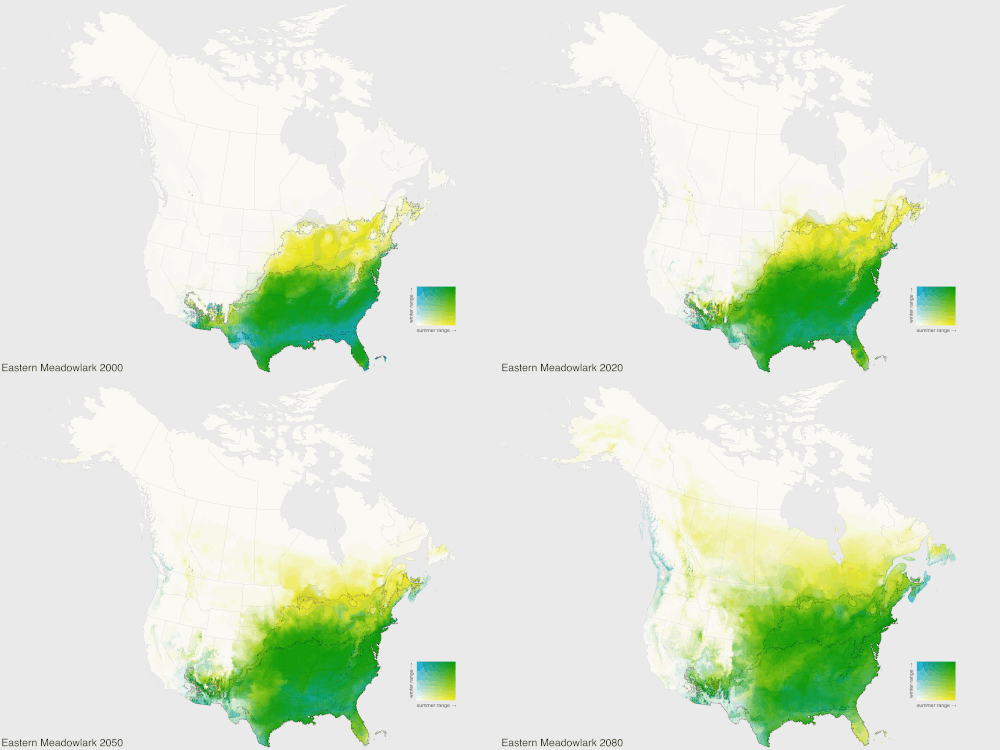
    Here it’s just wet and cold, but still beautiful. When I looked out the front window this morning, it looked like the ground was moving. My binoculars revealed there were dozens and dozens of Eastern Meadowlarks bobbing and hopping in the meadow.

    If I go out and take pictures, they’ll fly away. So here’s a stock photo.

    It’s great to see them in such large numbers, because they are one of the species in decline due to loss of habitat. I’m happy to say that our meadows full of native plants (and tasty bugs) are just what these guys want!

    Meadowlark migration from Giphy.

    Welcome, winter visitors! Migrate here any time!

    The Loggerhead Shrike and Friends

    img_4618
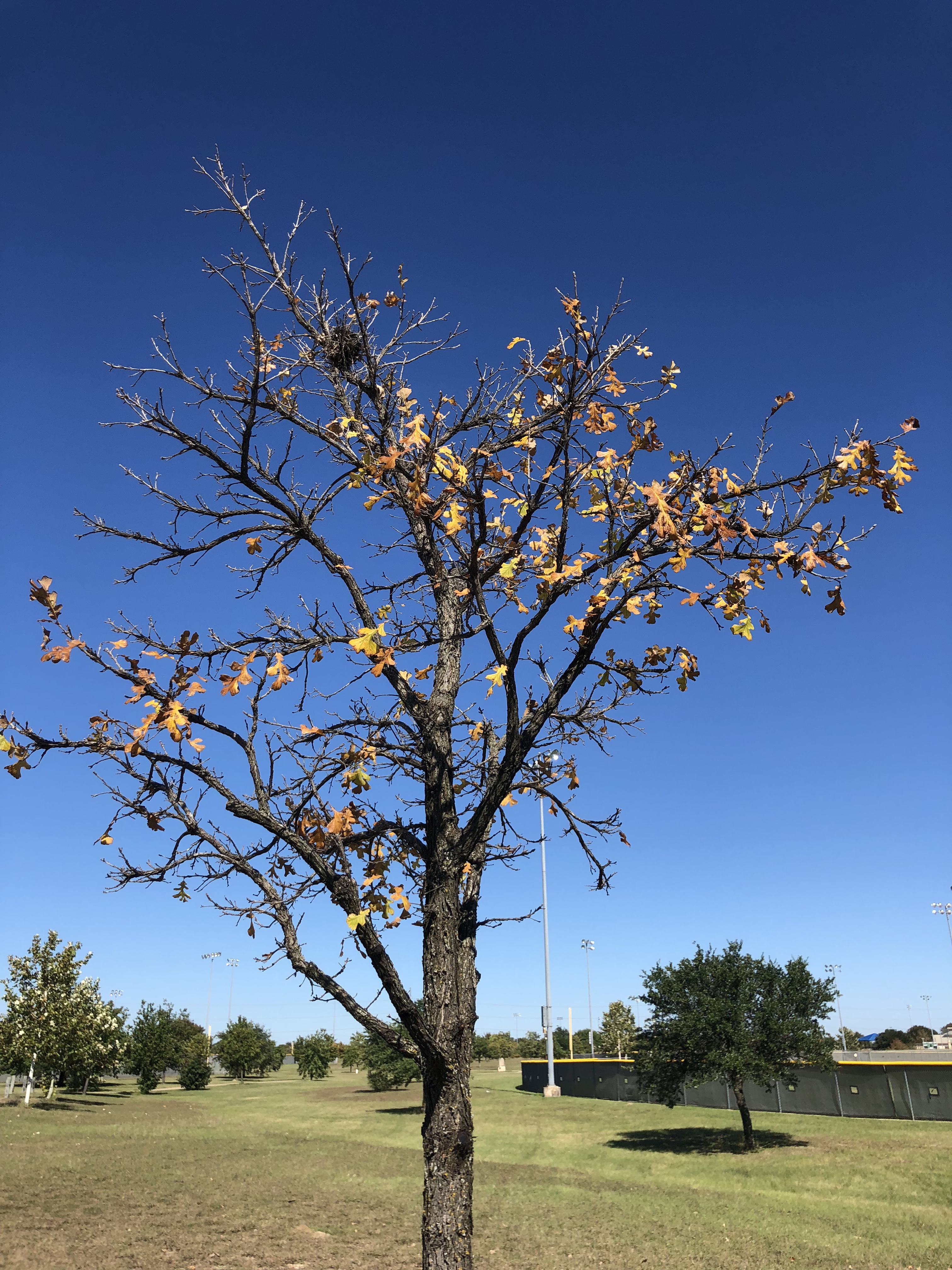
    A loggerhead shrike nest in a bur oak tree in Old Settlers Park, near baseball fields.

    My time with the Master Naturalists ended on a high note with a post-conference outing to Old Settlers Park in Round Rock. The idea was to observe how a declining species, the loggerhead shrike, has adapted to using the park as a habitat, and is thriving.

    img_4619
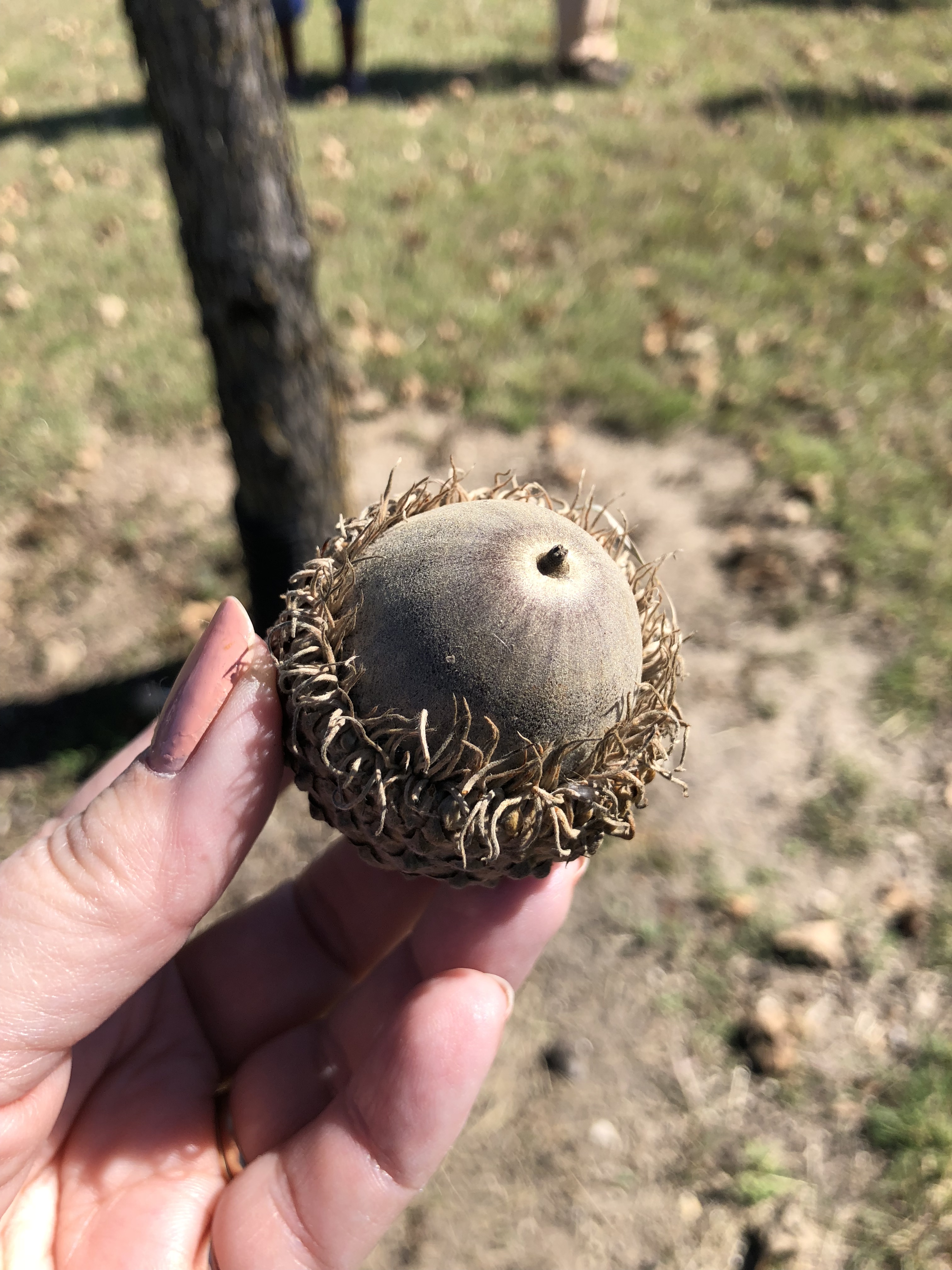
    Bur oak acorn. Huge and tasty.

    Before the outing, I’d attended a session led by Jim Giocomo on “The Geography of Grassland Birds: How International Bird Conservation Efforts are Linked.” He talked about how agencies and Master Naturalists can help provide these birds with more appropriate habitat, track their locations, etc.

    img_4670
    Jim Giacomo (center) and some of the other experts he brought to our field trip in Round Rock.

    In that talk, he mentioned his own work with the loggerhead shrikes (the only songbird that is a predator), which conveniently nest right near his house and showed us some great footage of baby shrikes. In one film, the parent birds keep trying to stuff a dragonfly in the mouths of the babies, but it keeps getting stuck. It was hilarious.

    img_4669
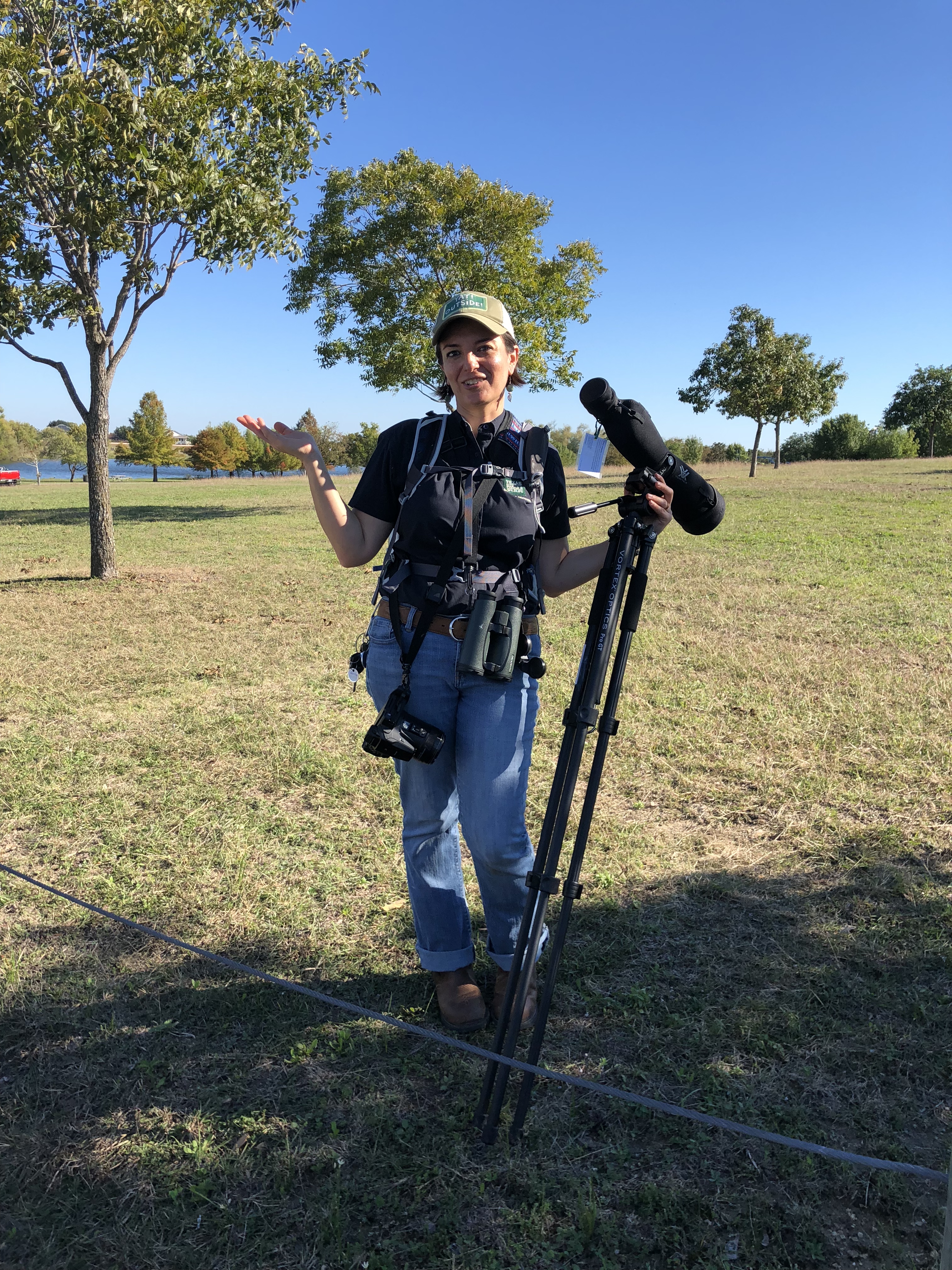
    Tania’s Halloween costume was “nerdy birder.”

    Jim’s luck in finding birds to observe over entire breeding seasons has given him lots of insights, so it was really fun to go with him and fellow biologist Tania Homayoun out in the field to see what he sees.

    Continue reading “The Loggerhead Shrike and Friends”

    Glorious Autumn

    I interrupt my sharing from the conference I attended to share what a lovely afternoon my spouse, dogs and I had at the Hermits’ Rest yesterday.

    buttefly back
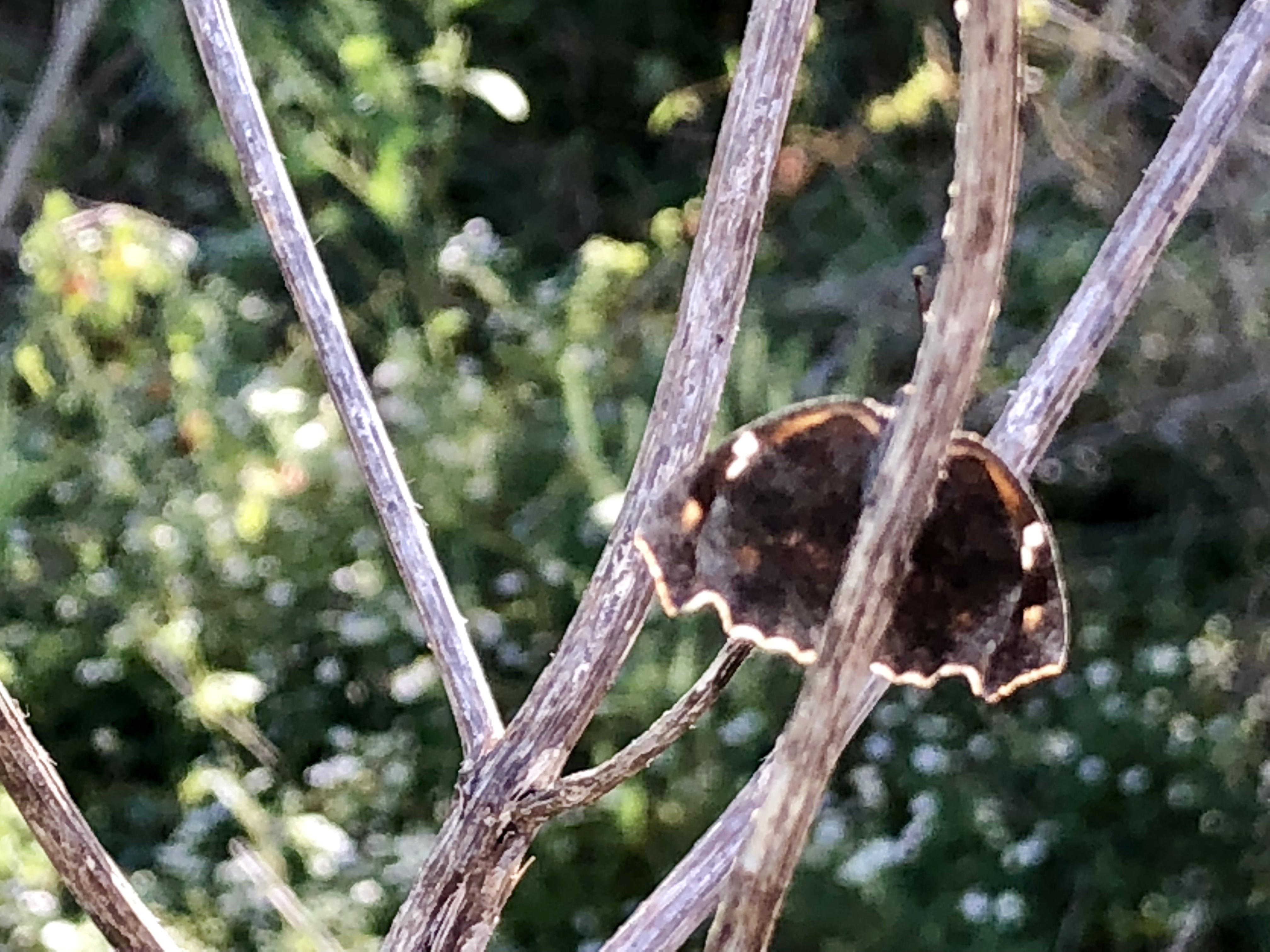
    This is the back of a red admiral butterfly. I just love how this photo came out.

    I came home from work, and just felt like taking a long walk. I gathered a few dogs and started my usual route around the property. As I went down toward where the arroyo stream meets the woods, something smelled wonderful. I realized it was a large bed of fall asters. The little valley had trapped the aroma.

    monarch
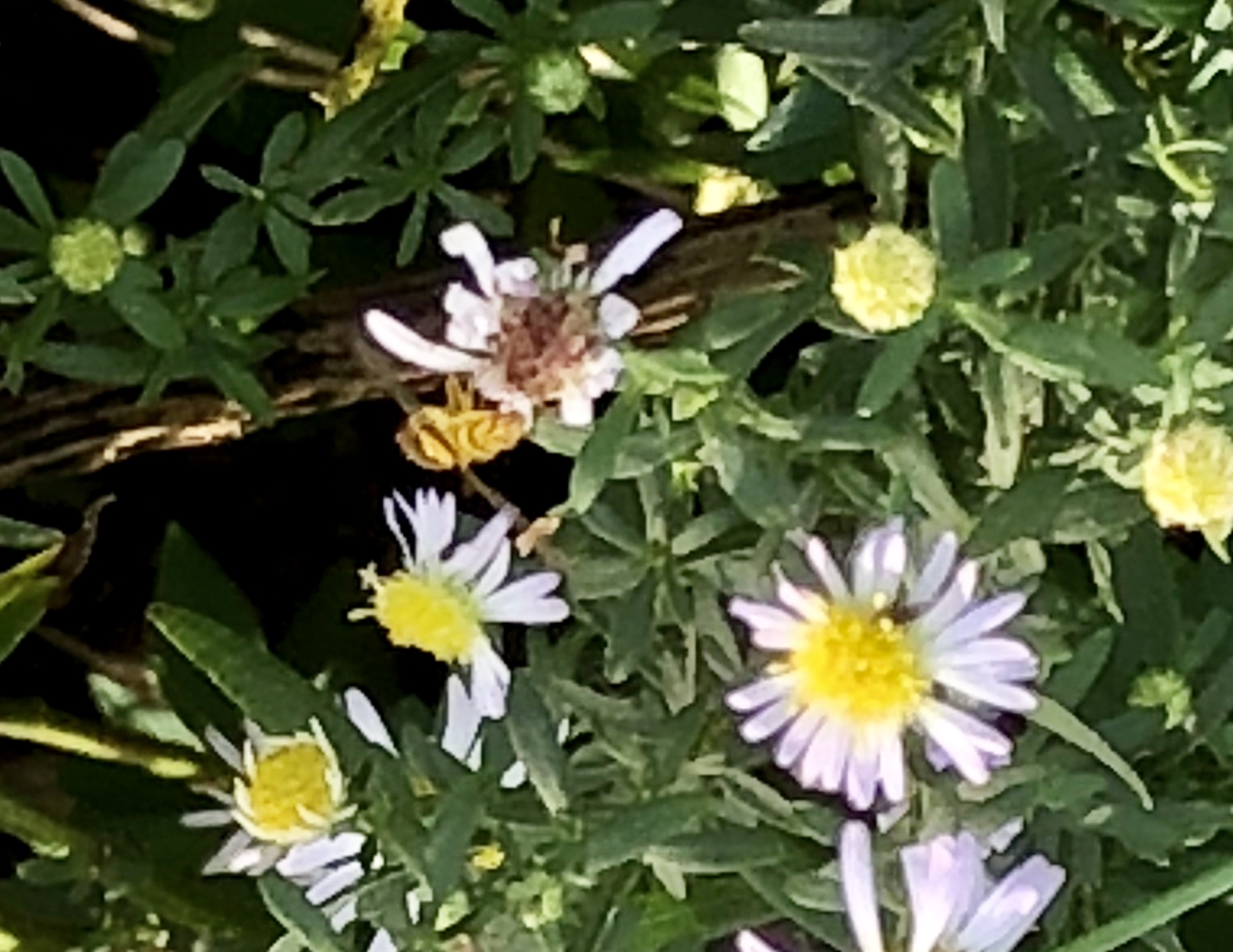
    Asters and small bees.

    The aroma had attracted more than just me, too. The flowers were literally abuzz and aflutter with bees of all sizes and at least six types of butterflies. I was really happy to see Lee come down to see me, so he could enjoy the sights, smells, and sounds with me.

    not_bee
    The monarch was in flower heaven.

    I really didn’t take all that many photos, because we were just observing. Still, I have to share that we got at least one migrating monarch in the bunch! There were also Gulf fritilaries, a red admiral, fiery skippers (lots), and some painted ladies.

    Continue reading “Glorious Autumn”

    A Grand Welcome Home

    cranes
    Sandhill cranes, just passing through. Loudly.

    We returned to the ranch over the weekend, with zero seconds of downtime, but we jumped right into the swing of things and enjoyed visitors, both human and otherwise.

    Flying Friends

    The most glorious visitors were just passing through. Many flocks of sandhill cranes flew over. We also saw a few snow geese. I just love the sounds of the cranes!

    blue_heron
    One of my favorite neighbors.

    While I was taking crane pictures, two blue herons squawked, so I got nice close photos of them. Of course, they are blurry iPhone pictures, but some day I’ll get a new battery and learn to use the good camera again!

    There have also been a lot of visiting starlings, which we don’t usually have. One thing I’ve noticed about them is that they make lots and lots of noise when they are all lined up on the electric wires, but when they take off as a flock to rearrange themselves, they are totally silent. It’s really eerie when you are standing around in the field listening, and suddenly all you hear are the coyotes.

    bluet
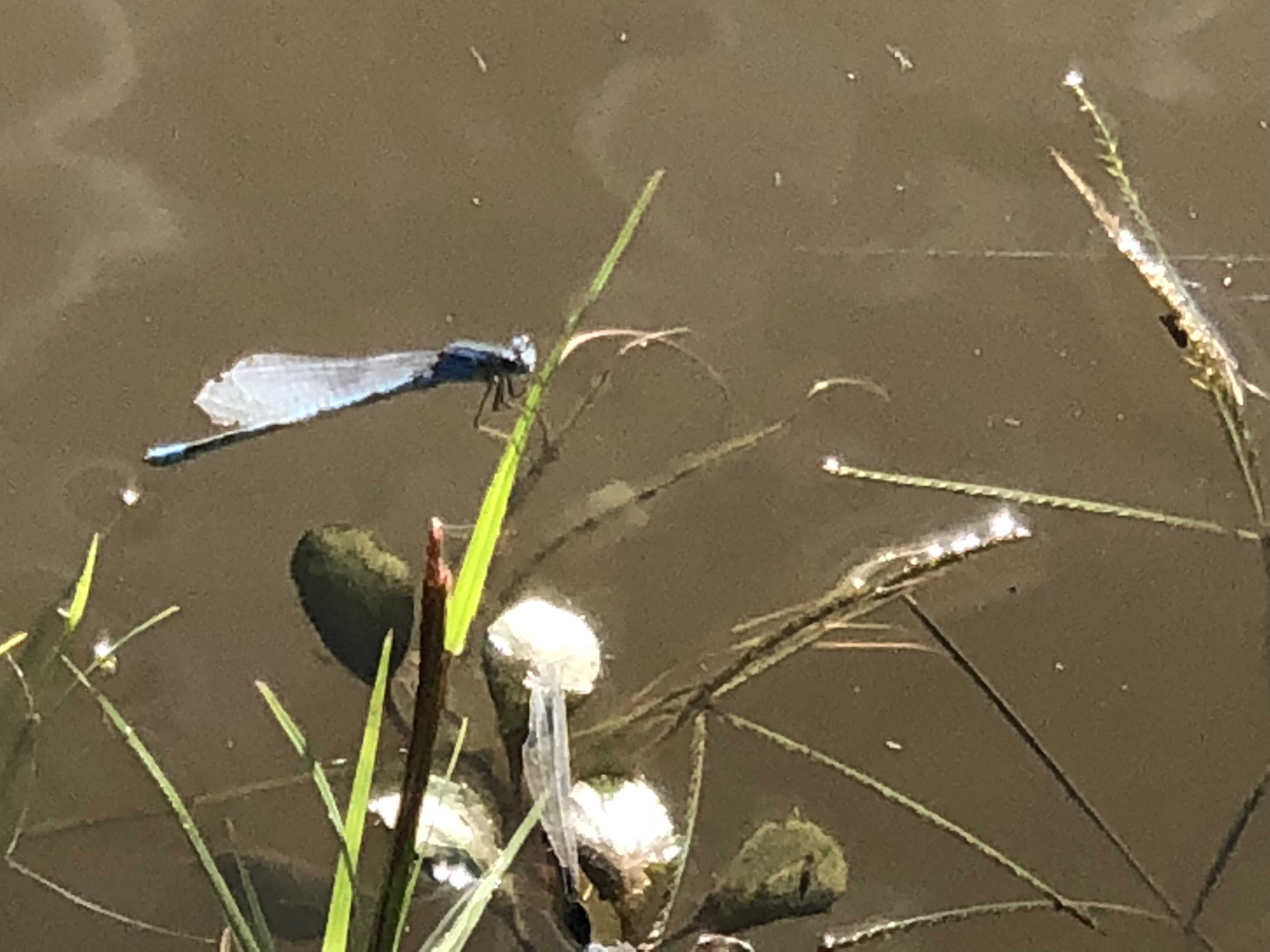
    These are so delicate.

    Most of the dragonflies are gone, but we did see a lovely bluet by the small meadow pond. These sure are pretty. They curve their bodies where you see the stripes.

    turtle
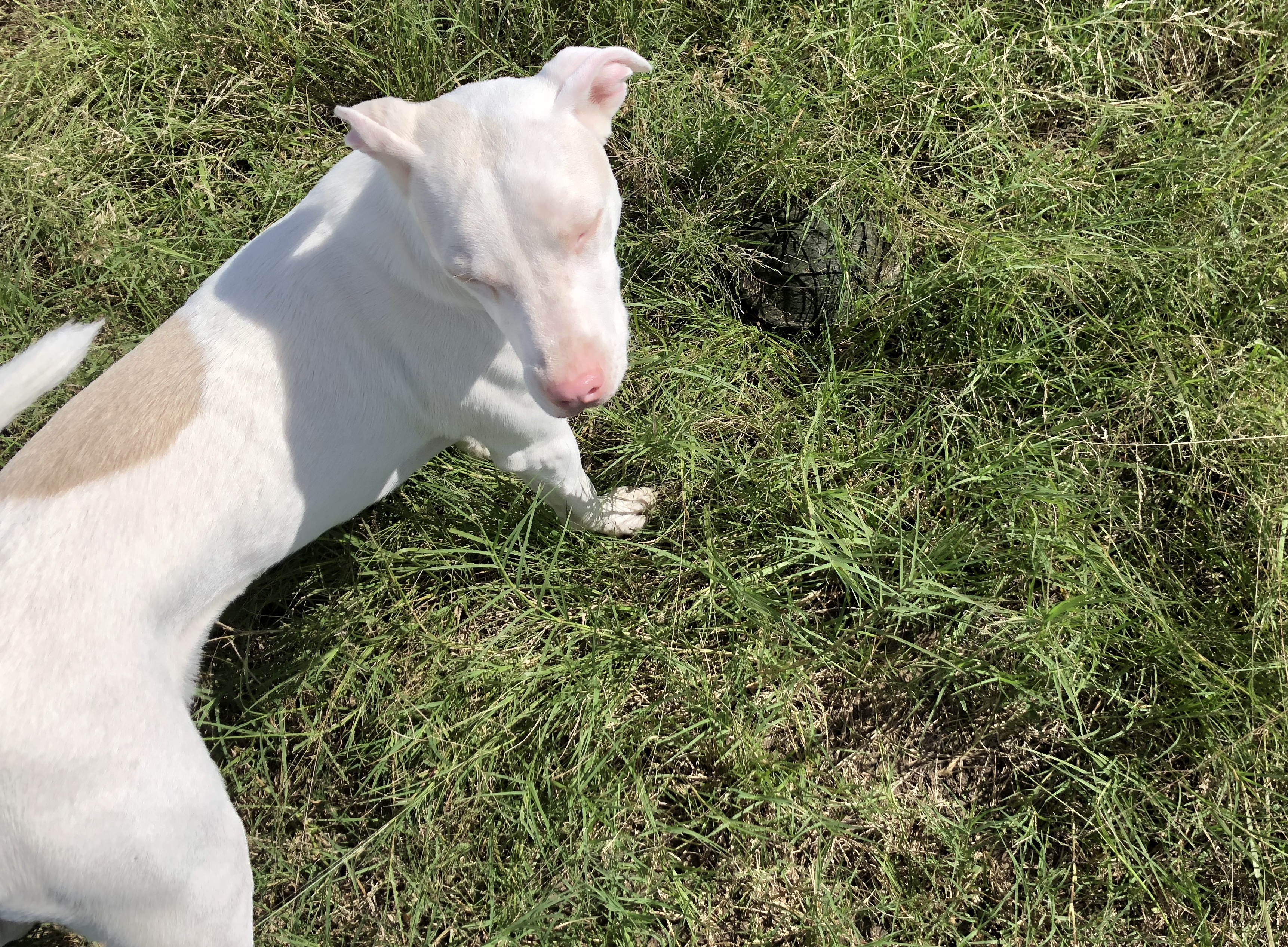
    Why won’t the turtle play with me? (You can sort of see it in the grass.)

    More “Friends”

    Because it’s rained so much (have I mentioned that? Lots of flooding while we were gone), animals seem to be wandering around. Yesterday, Carlton the dog found an extra large pond turtle in the middle of the pasture. He was most dismayed that it would not come out and play, so he stood there for 15 minutes and barked at it, poking it with his nose a lot. Treats had to be used to save that poor turtle from the torture.

    water snake
    This dirty part of the porch is where we harmless snakes like to hang out. I want to date this electric cord.

    And later yesterday, I once again spotted a large snake on the front porch, in the icky dirty part, of course. I was pretty convinced it was a water mocassin, but the folks at iNaturalist talked me down, and asssured me it was a water snake trying to look like a poisonous one. I am pretty sure this is the same snake I’ve seen over by the pond. It hisses. We kept the dogs away, and it slowly meandered off.

    Our house guest was not thrilled that we didn’t kill it. I repeated a number of times, “I don’t kill snakes.” I do understand many people aren’t good with them. My dad sure wasn’t! He’d kill them 3 or 4 times!

    scorpion
    It’s a scorpion, all right. Small.

    In the early evening, we found our first scorpion at the ranch. It was pre-dead, so we didn’t have to do anything to it. We used to see lots more in our house in the karst area of Williamson County

    Not Friends at All

    We apparently have a visitor over to the chicken coop who is not our friend. It has killed at least 4 of the chickens (at least two roosters, who were probably trying to defend the flock). It gets them IN the chicken coop. Yet another reason for them not to lay eggs in there!

    The Neighbor is sure it’s an owl. I think it might be a bobcat, since both hunt at night. A cat could get in there easily from the tree, then scale the fence to get out.

    sheep
    Leave us ALONE! We just want to eat grass. And escape from these non-sheepproof fences.

    Something also went after the four new sheep the Neighbor brought in, and one of them lost a LOT of wool and some flesh, but seems OK. We are hoping the culprit is not the cabin occupant’s dog, who went after the sheep when he first saw them, so they don’t want to leave the pen to eat in the pasture.

    Nice of all these creatures to wait until I got home to show up, isn’t it?


    A Visit to Audubon Newhall Preserve

    woods_trees
    Lee took this pine panorama photo.

    Hilton Head Island is a beautiful place, and there are lots of regulations that keep it that way. They do their best to preserve vegetation, signs are kept small (making it hard to find restaurants until you pass them), and building colors are regulated. It’s all very soothing, but a lot of what you see is carefully manicured.

    woods_sun
    The light was beautiful, since we were there in the late afternoon.

    That’s why, after a day of real estate stuff, it was wonderful to visit the Audubon Newhall Preserve, which is 50 acres that will never be developed. While the area looks “all natural,” there has been careful restoration and preservation of native plants, which has brought all sorts of wonderful birds and other wildlife.

    pond
    The pond was filled with life.

    The pond was made out of a natural depression that was made deeper, but there are also areas that show what the original island topography was like, with rolling terrain that allows plants that like it moist and sand-loving plants to live very near each other.

    asters
    These asters were covered in a variety of butterflies, including these lovely long-tailed skippers.

    I enjoyed seeing plants I was familiar with from my childhood in the Deep South, plus some new plants that are native to South Carolina. There were also lovely butterflies, and I’m thrilled I actually DID get a good enough photograph of the asters to identify the long-tailed skippers, which are everywhere right now.

    oak
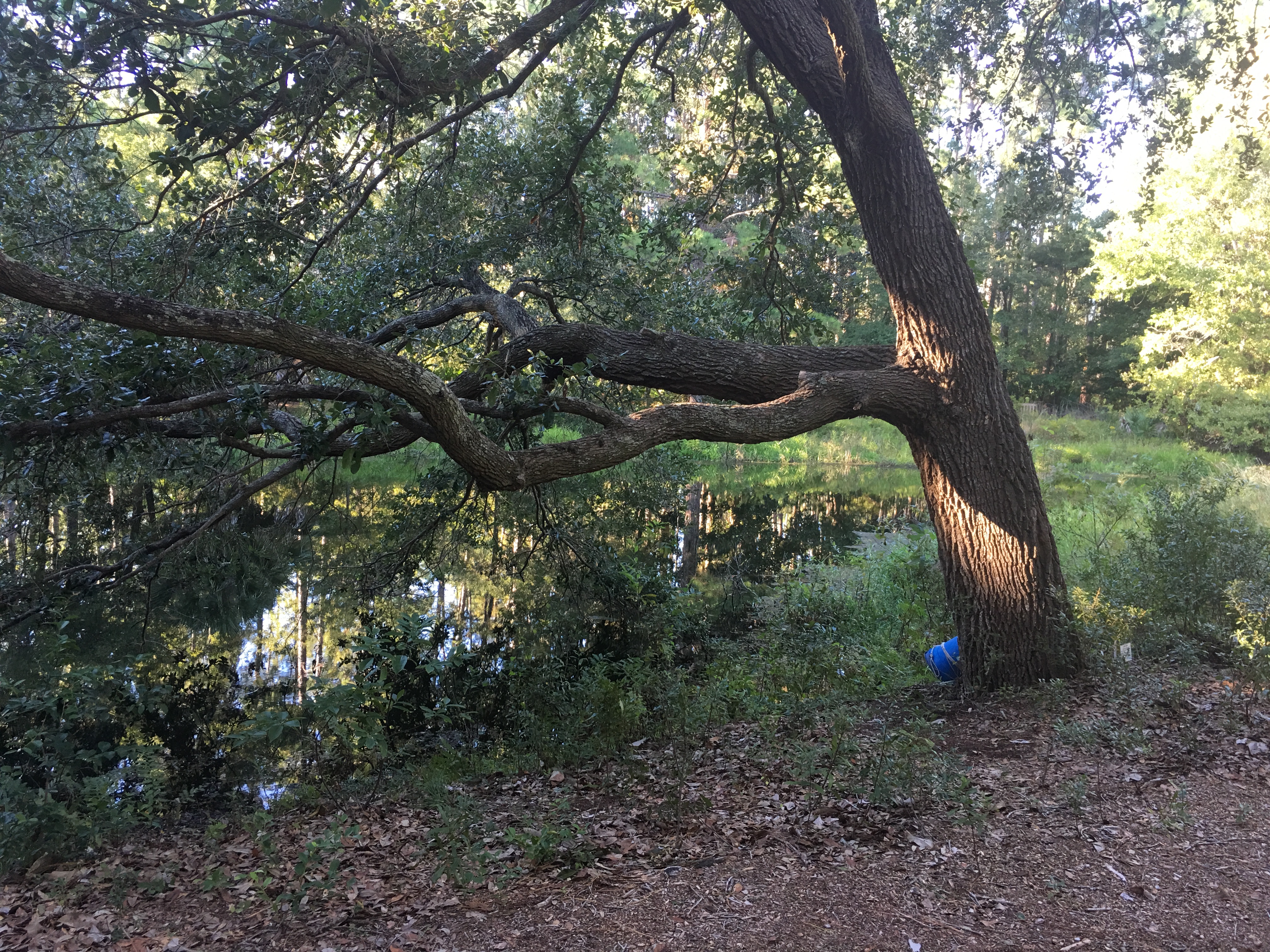
    Beautiful tree, and someone’s sample bucket.

    I saw a yellow-bellied sapsucker and a number of warblers, including one with black and white males and brown females. I think they were black-throated blue warblers. Plus there were crows, mockingbirds, Carolina wrens, and a nuthatch.

    sign_sample
    Here’s an example of one of the interesting signs around the preserve.

    The people who maintain the area have been planting many new specimens, and they’ve also lovingly labeled many of the specimens with some details about them. That made it a lot of fun to learn as we wandered around.

    path
    I wish you winding paths, peace, quiet, and nature’s beauty.

    I guess the best part of the place was that it was not over-developed or full of loud people. Mosquitoes were the only drawback!

    Territorial Battles at Wild Type

    prey
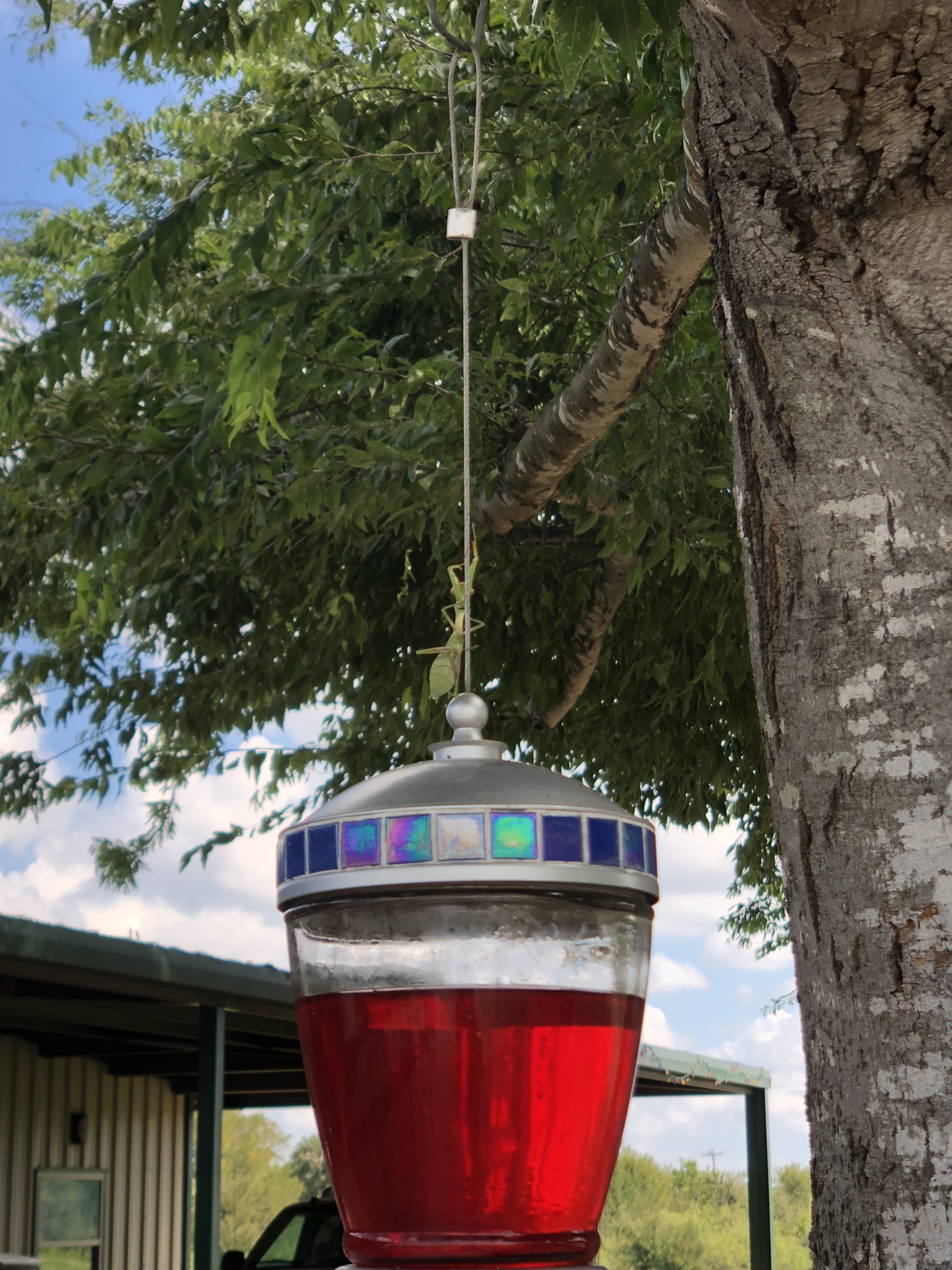
    This is MY sweet, red water, dammit!

    Over at the neighbor ranch, Wild Type, there’s been a battle going on for a few days, involving the black chinned hummingbird population and one persistent praying mantis.

    Sara and Ralph noticed that hummingbirds were approaching the feeder but not feeding. They were displaying their tail feathers and darting around. That’s when the mantis became obvious. It had settled in around the feeder, apparently waiting to catch one of those hummingbirds.

    As you can see from the photo, this is not the largest praying mantis. It may well be another Carolina Mantis, which is the kind I’ve seen in Austin, but I’m not really good at differentiating among mantids.

    I know hummingbirds have been caught by praying mantises, though. I even checked on Snopes to be sure it is true! So, no wonder the hummingbirds are annoyed.

    prey2
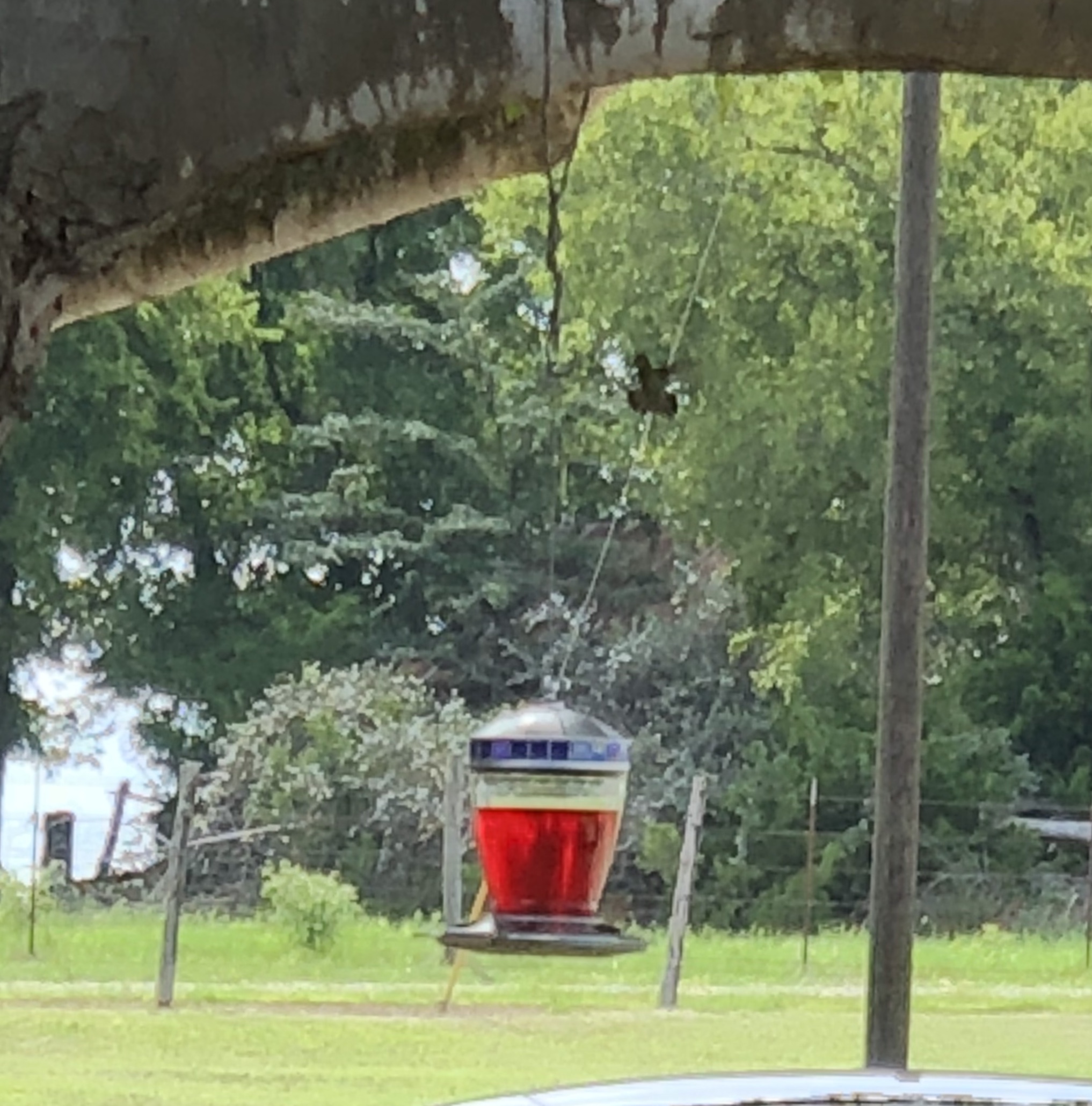
    This blurry action shot shows the bird making itself look big to impress the mantis.

    It’s fun to watch them, and I am hoping that Ralph has gotten some action shots with his good camera and tripod. I also hope no hummingbirds have actually been caught. What would the mantis do with such a big prey?

    As an aside, I have seen more than one type of hummingbird at their feeder in recent weeks, since migration time has started. I’m sure I saw a ruby-throated one, and there was another I can’t identify. It’s a fun time of year.

    (Also I am not participating in a debate over red vs. clear sugar water. I’ve solved it by not putting out feeders this year, since it’s a big commitment: my fellow Master Naturalist, Phyllis, has put out an astonishing amount of hummingbird food this summer!)