
I guess that gives me hope on US Independence Day.
I went out to the front pond, which we enlarged in the drought last year to be bigger and deeper. All the dirt that was dug up became a large berm that the horses just love. We call it their hill.

The horses and Fiona are always up on the hill eating…something, now that the heavy spring rains got things so soggy (though it’s droughting back up again).
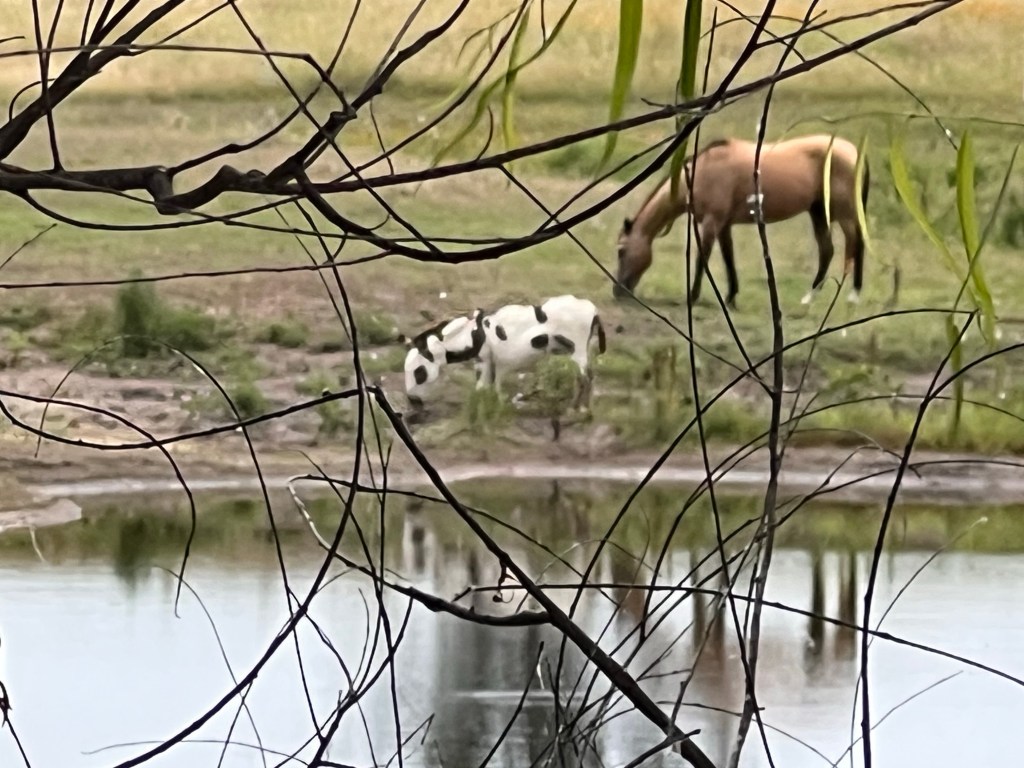
I decided to go out there and see what is growing on what was a big pile of dirt at the end of last summer. I knew there were seeds in the soil, as well as wind blown seeds. And I learned in Master Naturalist training about plants that thrive in disturbed soil, so it was time to check out the renewal process!
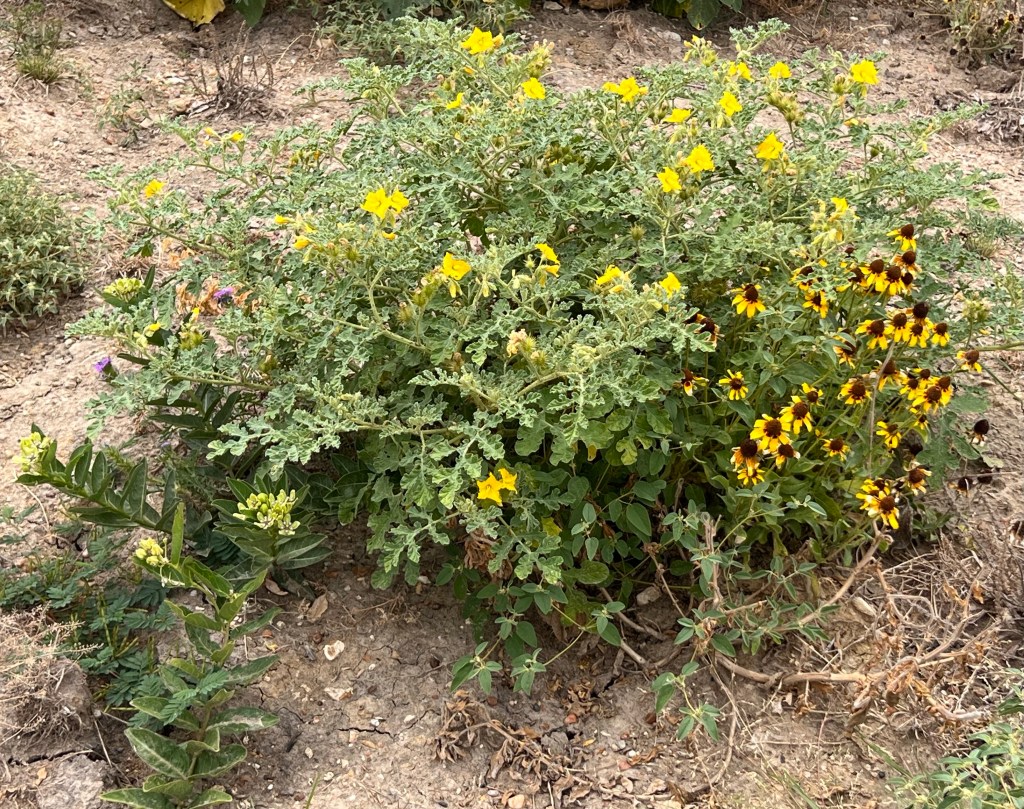
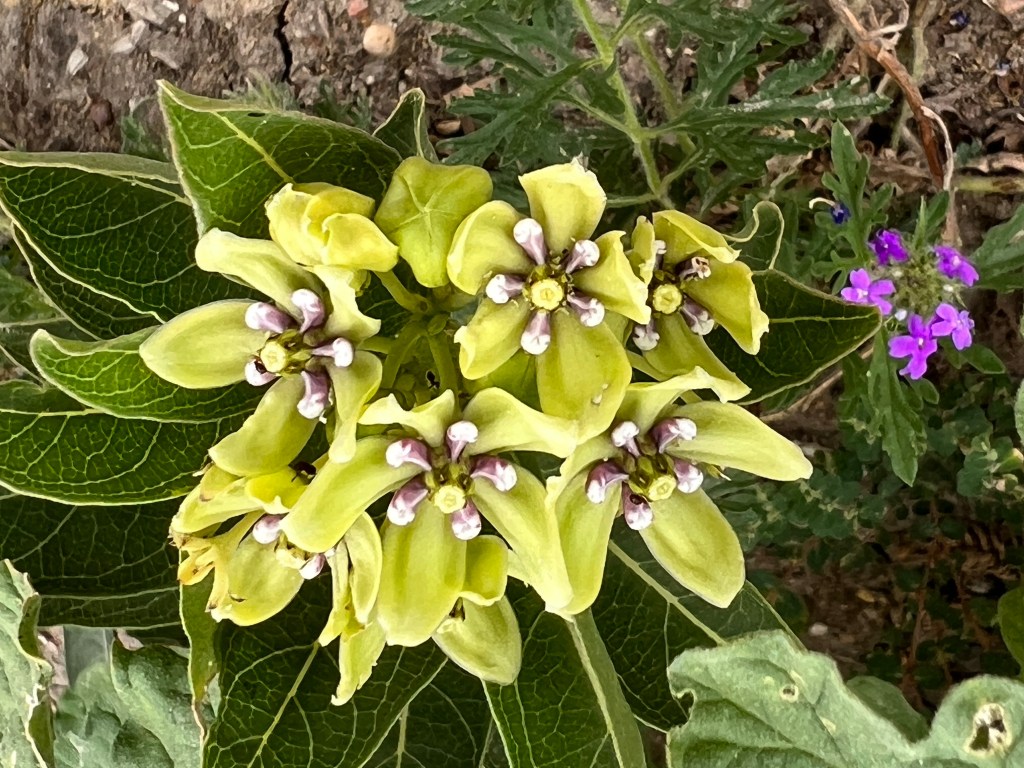
The clump of plants you see above is typical of what I found. At right are annual black-eyed Susans. They are all over the area, so I was pleased to see them. The green stuff in front is prairie tea (Croton monanthogynus) another annual whose roots are helping to stabilize the soil. All the pretty yellow flowers in the middle are the decidedly are the dreaded buffalo burs (Solanum rostratum) that will cover the horses’ manes and tails, as well as the entirety of Fiona if they don’t get mowed down. You will also see green antelope horn milkweed (Asclepias viridis). Those seeds are wind born. There’s even a small Dakota mock vervain (Glandularia bipinnatifida), the most common verbena here. It will be back. Whew, that’s a lot in one clump.



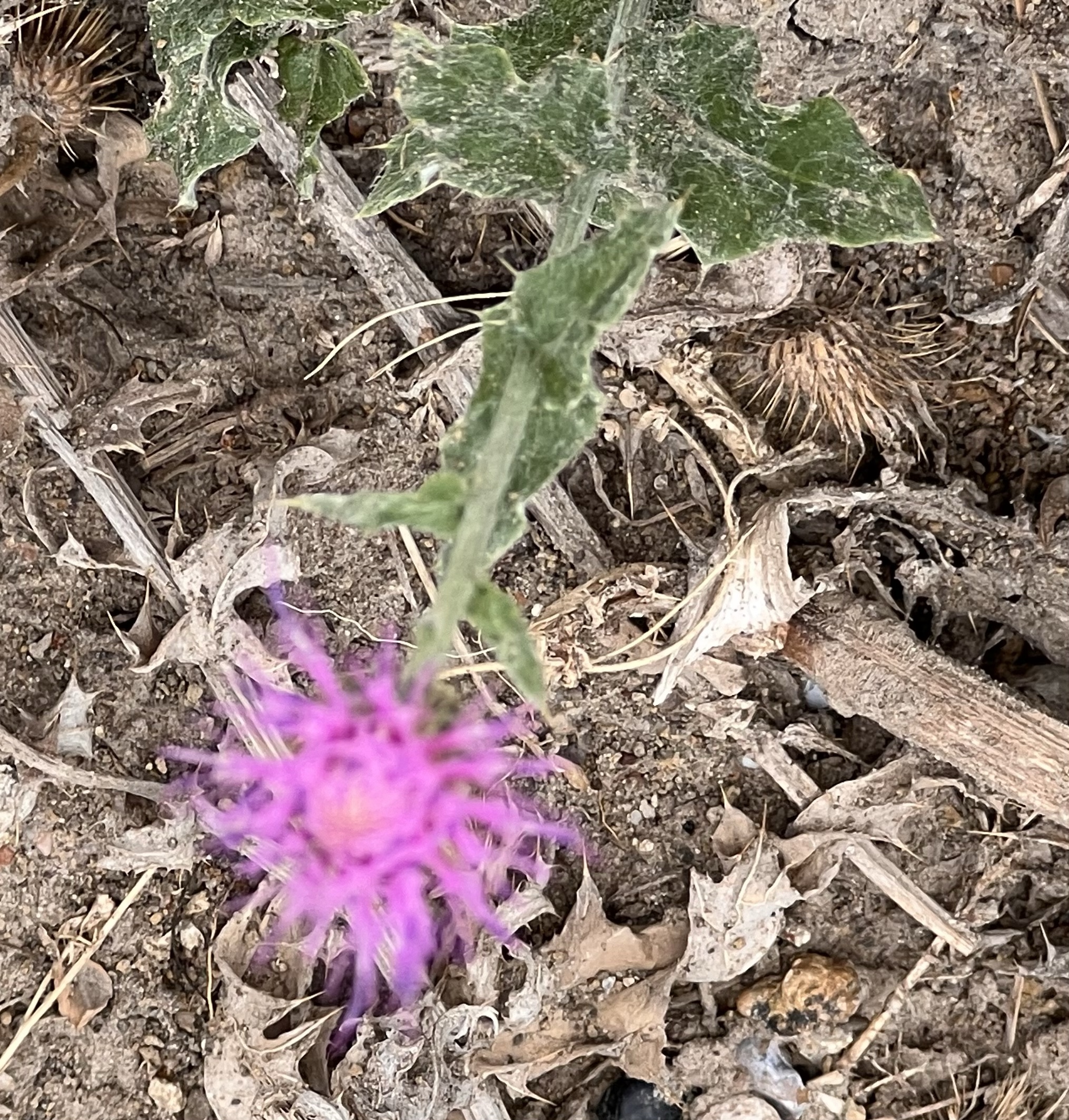
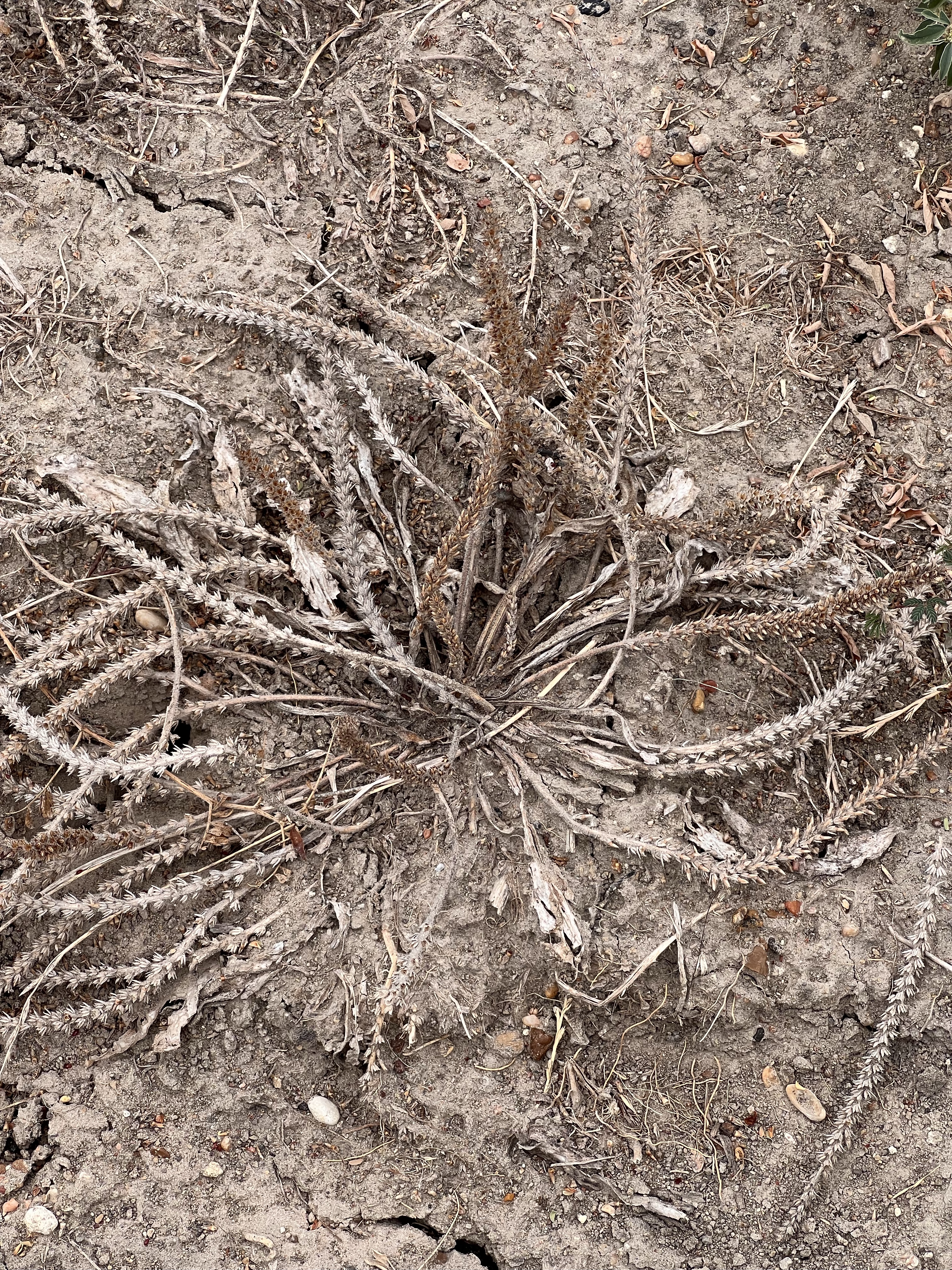
Elsewhere I found many plants had already passed their season, like the red seed plantain and the thistles. There were a few pink evening primrose that give me hope that they’ll be all over the slope soon, like they used to be. I didn’t see any bluebonnets. Maybe next year, but some upright prairie coneflowers/Mexican hats were ganging on. Their roots will help with runoff, too. It’s a plant that does like disturbed soil, like the plantain.


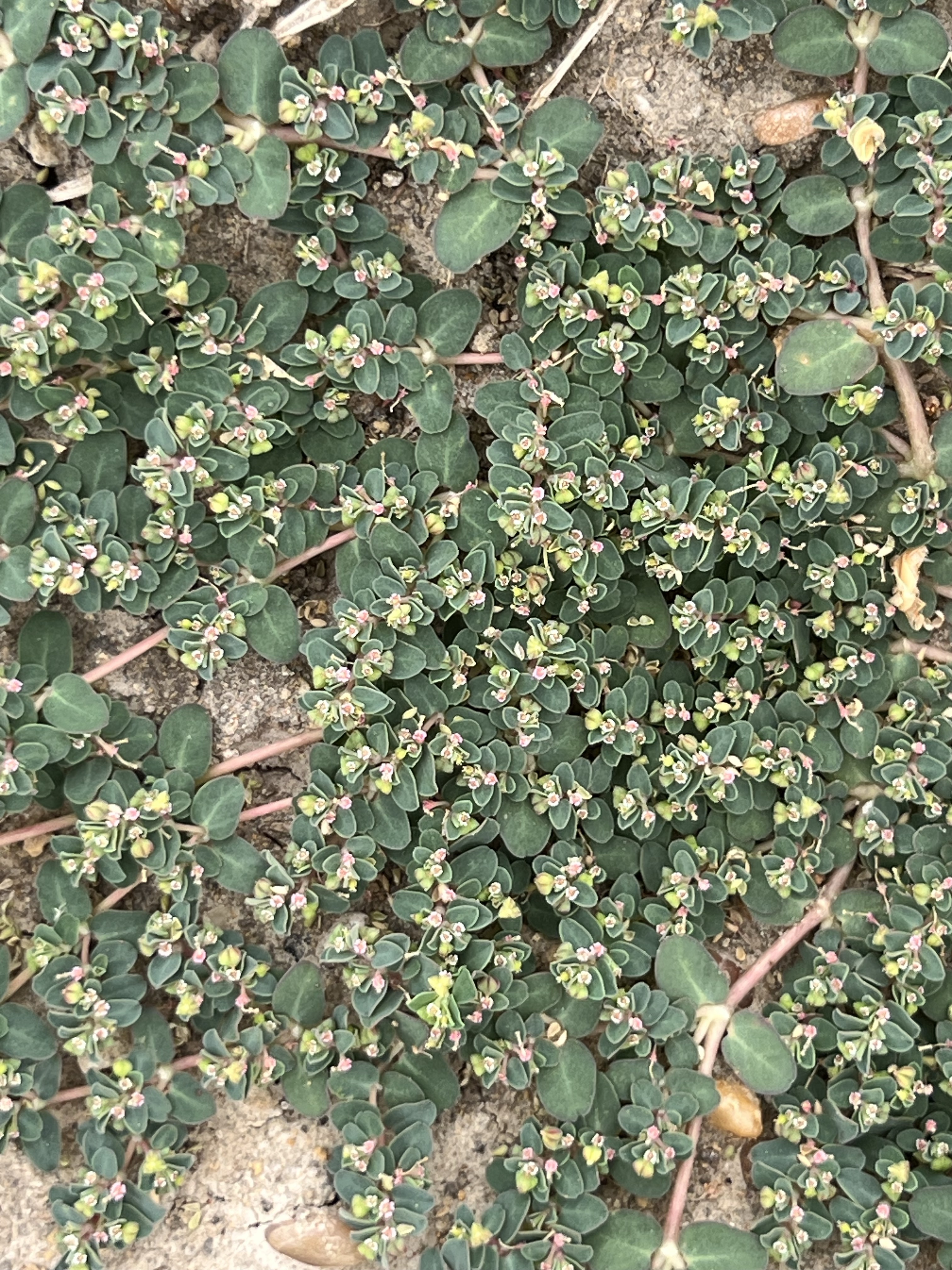
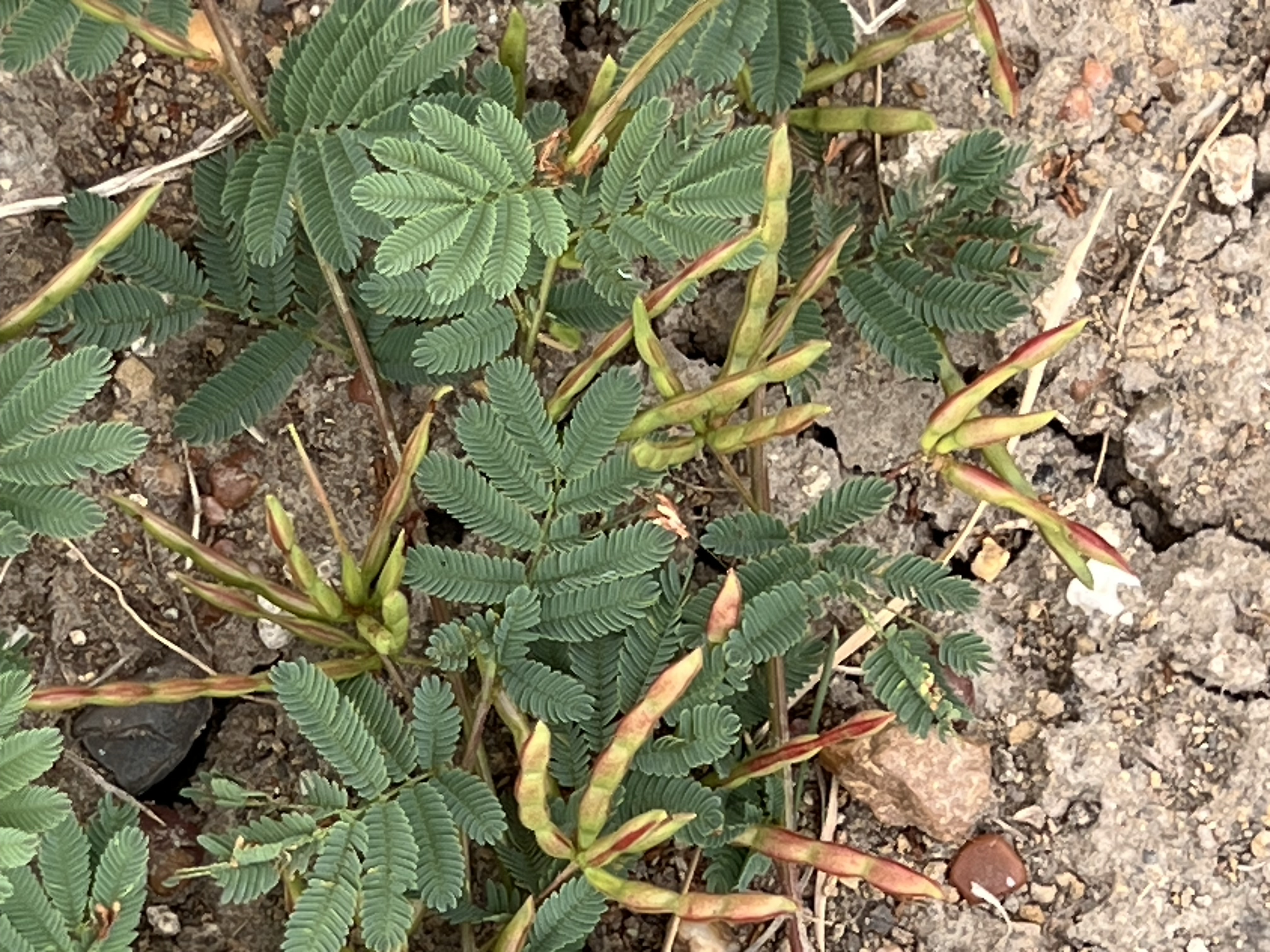
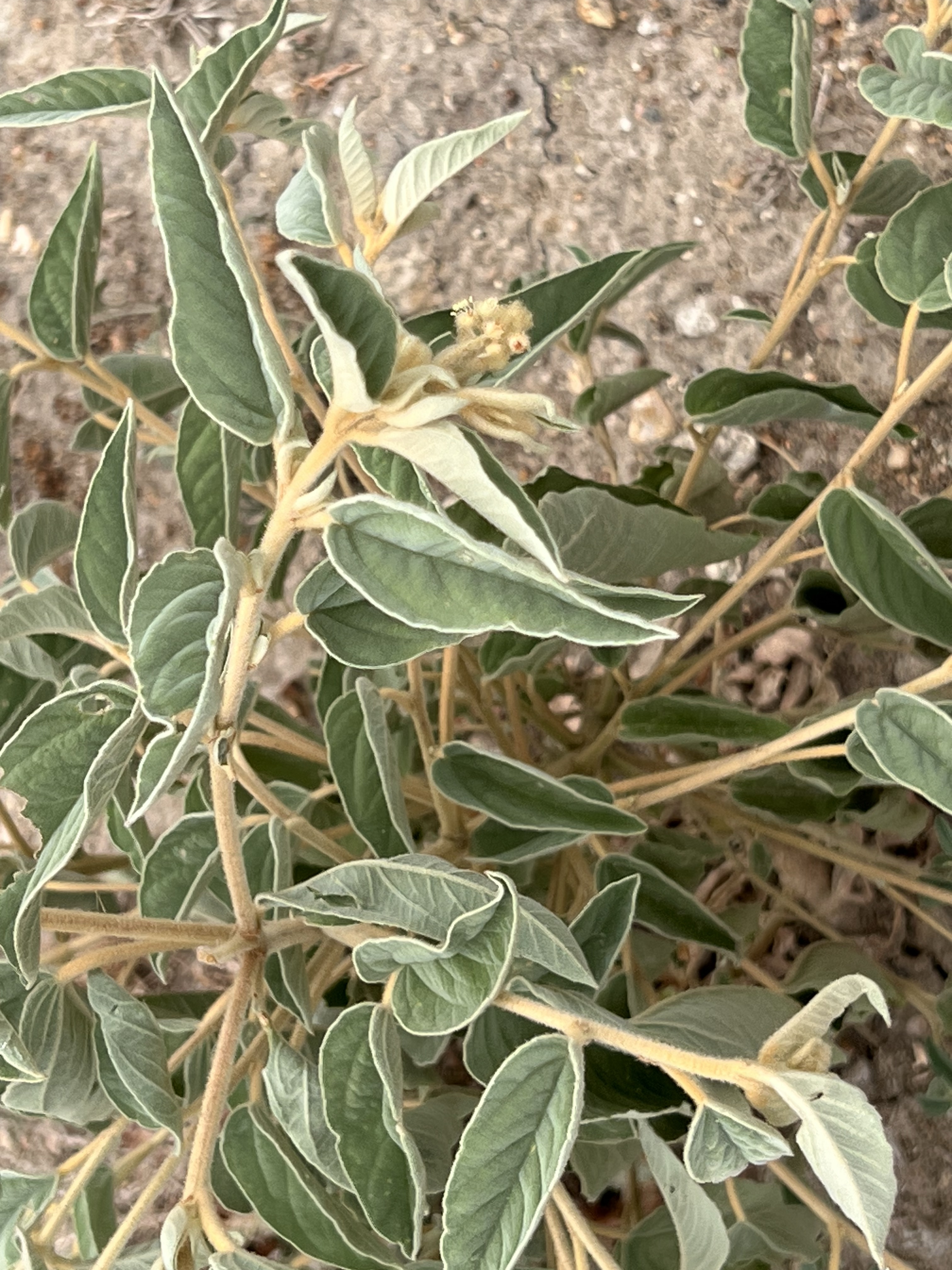
Other common plants that appear in disturbed soils include sand mats like matted sand mat (Euphorbia serpens) and prostrate sandman (Euphorbia prostrata) my least favorite weed. Here, they are helping cover the bare soil and help prevent more erosion. Prairie bundle flower (Desmanthus leptolobus) is another low-growing stabilizer plant.

Vines are also useful for holding the soil down. Two I saw were Texas bindweed (Convolvulus equitans), one of our wild morning glories, and balloon vine (Cardiospermum halicacabum), a pretty but non-native and invasive ground cover. These seeds are brought in from upstream. Some years they totally cover the creek banks, because they also love disturbed soil, like after a flood.


Vines I did not see but expect soon are the dewberries, tie vines (the other wild morning glory), saw greenbrier (Smilax bona-nox), and passion vine. Those take longer to get started. I could do without more of any of these, along with the mustang grapes, which I’m still snacking on. They are as bad as kudzu for covering trees and bushes.
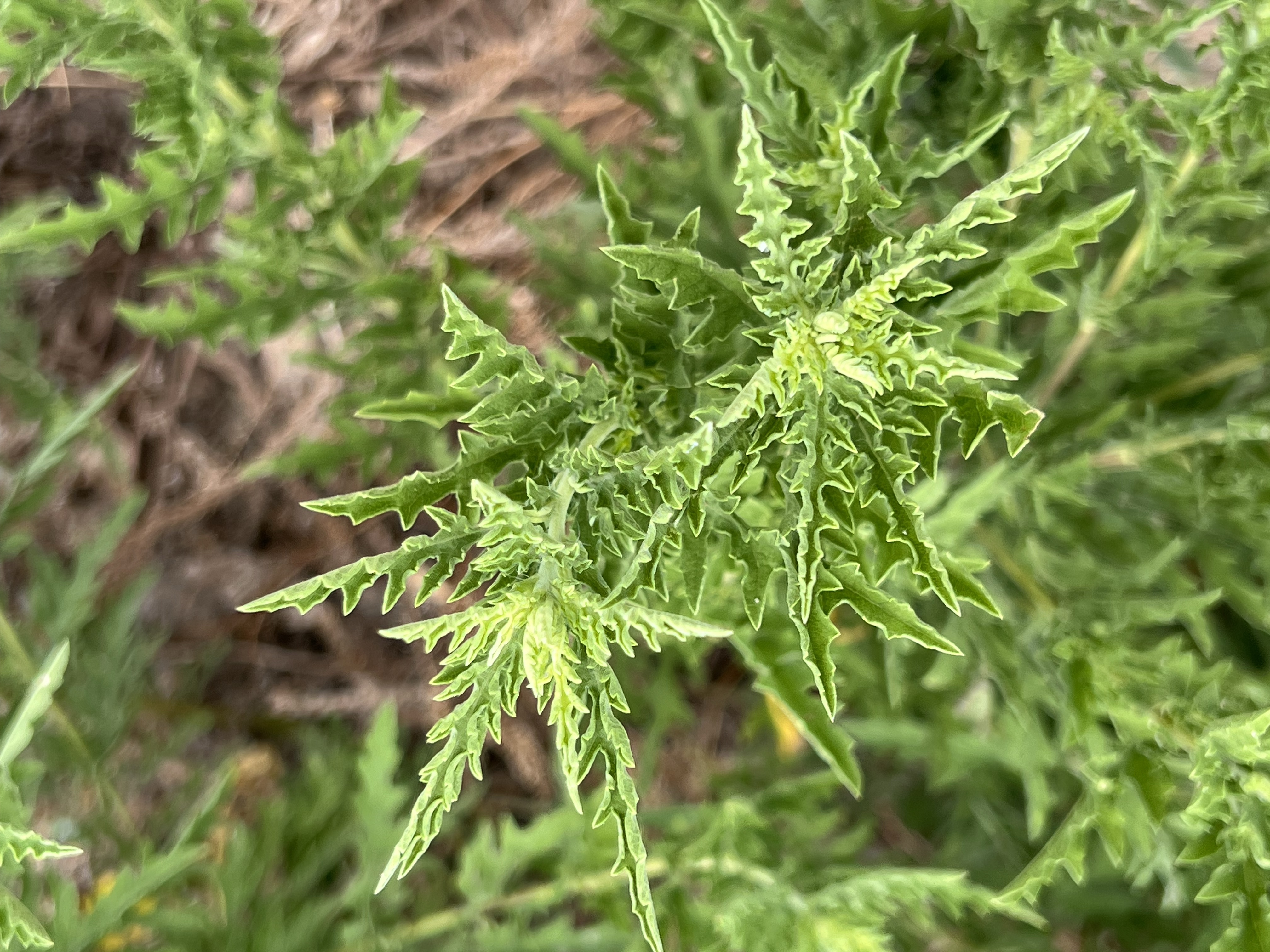
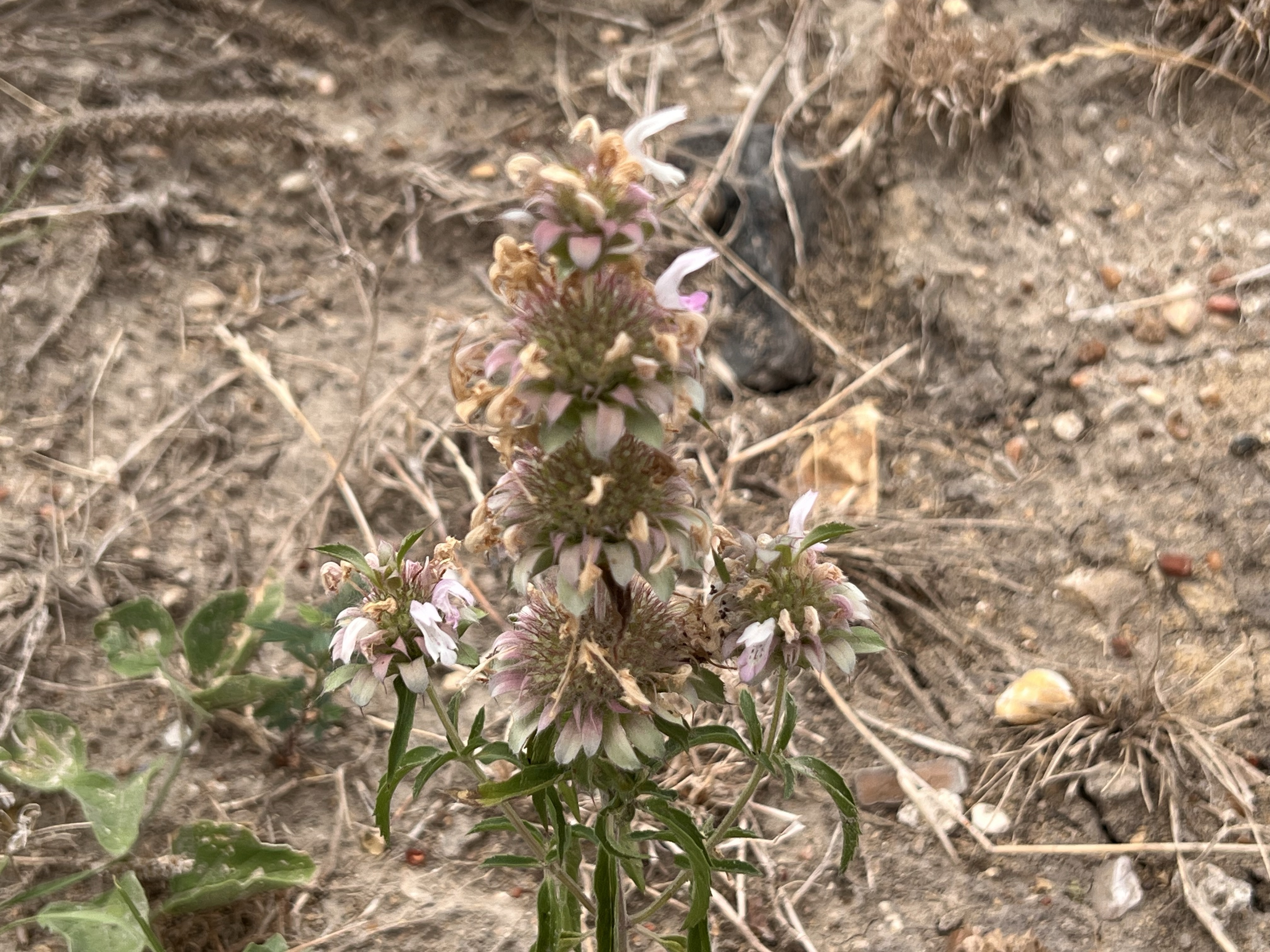
Anyway, nearly all the rest of the plants I saw are other opportunistic pioneers. Ragweed (Ambrosia psilostachya); curly dock (Rumex crispus), a common plant in damp areas here whose seeds feed birds; willow dock (Rumex salicifolius); dove weeds (Croton lindheimeri); and Carolina bristlemallow (Modiola caroliniana), which also grows low to the ground and earlier in the year had pretty flowers. And I almost forgot two flowers, the common sunflower (Helianthus annuus) and lemon bee balm (Monarda citriadora). The latter is just about done for the year.



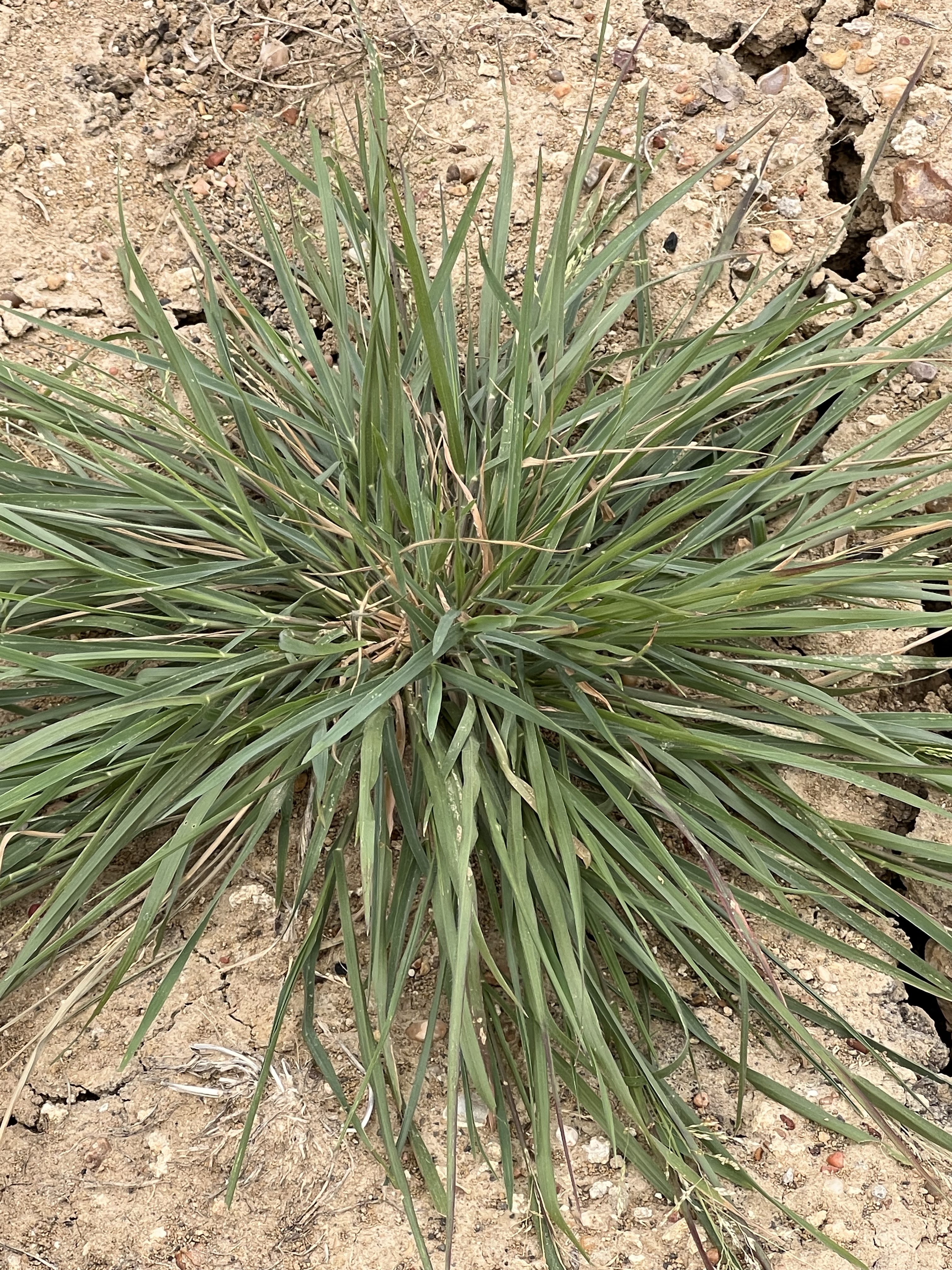
If you’ve slugged through this you’ll finally find out what the horses are eating. I was surprised to see no Bermuda grass, but some bunch grass I can’t ID, a gramma grass, and a brome. Natives!

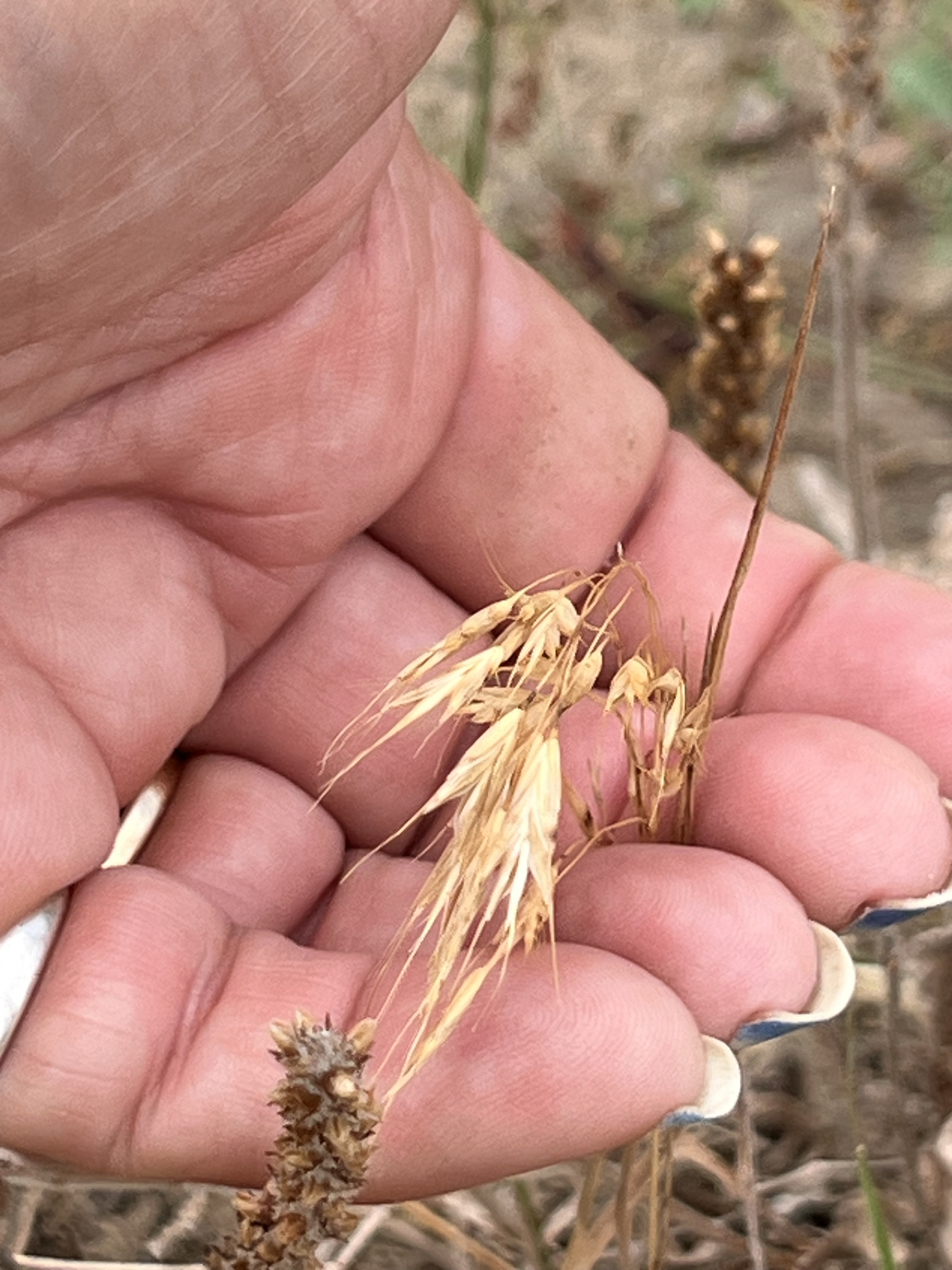
One of these plants, or perhaps the long stuff none of the horses like in their pasture (not sure what it is), is making Apache have allergic reactions all over his face. He’s on Zyrtec now. 21 per day for the first week. Hope it helps. I’m grateful Tarrin knew what was going on!

And that’s enough about the hill.
 The Hermits' Rest