Book Report: In the Shadow of Liberty

Rating: 4 out of 5.

My friend Phyllis loaned me this book after a conversation we had about how history’s narrative differs depending on who’s version is being told. In the Shadow of Liberty, by Kenneth C. Davis (2016), is one of many books that have come out in the past few years that provide perspectives on events in North America from people who aren’t white, male, Christian, or wealthy. As one of those non-priviledged people, I appreciate these insights! (Of course I have plenty of priviledge, just not as much as I would have were I male or a declared Christian).

The book is not about me, though, it’s about people who were witnesses to a lot of the early history of the USA, though they were only 3/4 of a person legally and also enslaved to a wealthy landowner who happened to also be a President of the USA. Because of their proximity to people who wrote a lot and got written about a lot, they managed to get at least glimpses into their lives recorded for people in the future to learn from. As Davis points out there were thousands of people who toiled in the fields anonymously who never got to share their side of life in the 1700s-1800s.

Davis makes it clear that the history of slavery and slave-ownership isn’t as black and white as we make it out to be. Slave owners were known to change their minds over time or treated some enslaved people way differently than others. Some were cruel and some were more humane (a relative term, of course. I found it interesting to see how each group viewed the other and how differently their lives played out.

I’m not going to detail each chapter of the book, which has lots of interesting photographs, timelines, and illustrations to help us understand the times when the protagonists lived. What I do want to point out is how well Davis conveys the whole context of the Presidents and their families, as well as the families of enslaved people around them. It becomes very clear, for example, that George Washington both admired and trusted Bille Lee, who accompanied him on most of his battles and campaigns, yet he always referred to him as “his mulatto man, Billy.” I guess that’s just how people talked back then, but it made me sad.

You’ll find lots of information you may not have heard about before when you read this book, which isn’t very long and is more of a popular book than a scholarly investigation. Some of the people focused on are now pretty famous, but some have faded into the shadows (of liberty).

Reading this book now in 2024 will remind you of how important it is to not backslide on the freedoms we have fought long and hard for in the US. There are still people who would be happy to go back to a time where people could own each other (and it still occurs in the shadows, just a little differently). We all deserve to live our lives safely, with our families, and with meaningful paid work. No “but not these people…” should be allowed.
Book Report: La Florida

Rating: 4.5 out of 5.

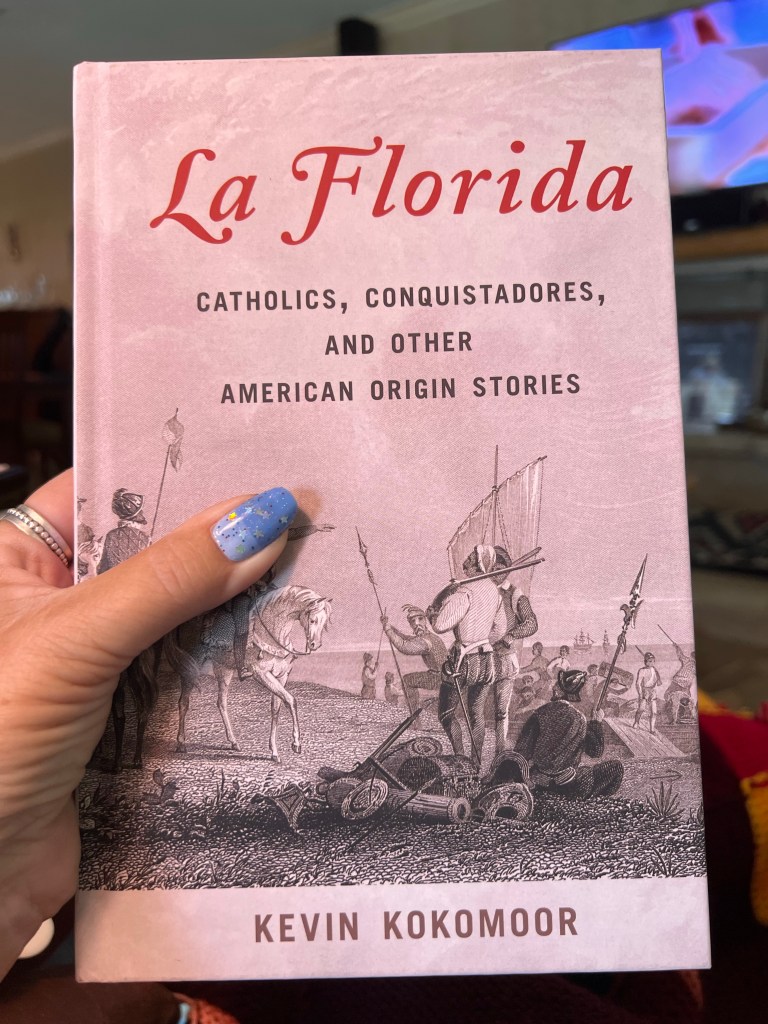
I actually read a book over my time in Myrtle Beach. Impressive! I have been so overwhelmed with magazines (which I read, not just look at pictures) that I haven’t been finishing books lately. The book I read was La Florida: Catholics, Conquistadores, and Other American Origin Stories, by Kevin Kokomoo (2023). It’s not actually published yet, so I was happy to get a copy from Kevin.

I blocked Hernando de Soto’s head. I’m not a fan.

Kevin teaches at Coastal Carolina University, where he focuses on the history of Florida and the rest of the southeast. We bonded last year when I found out he knew the story of when my mother’s family showed up in Florida and that we had lots of fun Florida stories from our youth. That Ocean Enclave place hires the most intelligent and interesting bartenders!

Since I had a lot of alone time while I was in Myrtle Beach, it was easy to get through La Florida, especially since I enjoyed its mix of academic rigor with humor and a bit of conjecture thrown in to bring the history of Spanish Florida (which was much bigger than the state) to life.

You must have a pretty strong stomach to get through the uncensored accounts of what the Spanish explorers did on behalf of their King and church. It’s incredibly violent, though it’s sorta fun to see how those “valiant” conquistadors ended up dying pretty miserably as they wandered cluelessly through the South. Florida was a lot harder to conquer than some other parts of the “New World” were.

Being mean to a French guy. Don’t worry, French guys were also religious fanatics.

It’s easy to reach the obvious conclusion that the more things change the more they stay the same after reading La Florida. Kevin’s chapter on the influence of the Catholic Church on the actions of the Spanish in Florida both horrified me and didn’t surprise me. In a nutshell, the violence against the early residents of Florida was justified because they didn’t accept the Church the moment they were presented with the opportunity to do so. How did they get this opportunity? Well, priests read them an announcement of the requirements for peace, which might have had a better chance of coming across if they hadn’t read the announcement in Latin. Once they determined native folks weren’t Catholic, then they were no longer people, and slaughter was just fine.

I pity the poor Mississippian culture. If all the slaughter wasn’t bad enough, of course the Spanish left lots of diseases to which they lacked immunity. Good times? Nope. (They disappeared, leaving holes for many other tribes to fill—the parts of the book on these groups, especially the Seminoles, filled in a lot of gaps in my knowledge.)

And it wasn’t just various native groups that were slaughtered because they weren’t Catholic, there were fellow Europeans who had the nerve to be Huguenots, who also were deemed to be not human, thus killable if they dared show up and try to bother poor old St. Augustine (what a non-success story that was, but at least it lasted). There were so many wars and invasions and burnings to the ground!

Slavery was another huge part of early Florida history, and I enjoyed learning about enterprising slaves who made big contributions to Florida history. I think slaves fared better because they figured out that getting married and doing other Catholic things got them slightly better treatment. Of course, it wasn’t all that great. No one seemed to have a lot of fun in La Florida. I guess maybe things got better after England took over and the rest of Mom’s family showed up.

In among the descriptions of plunderings, diseases, starvation, and slavery, there are interesting tidbits about how Florida got to be the way it is, such as how citrus fruits showed up, and the history of barbecue (spoiler alert: fish were the first meats to be cooked this way).

So, what are my opinions? I really enjoyed the book, other than coming to the depressing realization that the way people in the US are treating each other today by dehumanizing them isn’t much different from people’s beliefs 600 years ago. If you are from Florida or are a fan of American history, I’d highly recommend it, because it’s a point of view you don’t get in traditional Anglo-focused US history books.

Those Spanish dudes searching for gold and other riches (sigh, they “only” found tons of pearls) were the first people starting European settlements and their efforts deserve more focus. Thanks to Kevin Kokomoor for bringing this history to light!

Skeletons in the Closet?

When I started looking into my family history, I figured I would mostly find a lot of regular folks, farmers, etc. And that’s mostly what I found. I mean, aren’t most of us descended from regular folks?

Regular folks (farmers): Wilburn Larkin Kendall & Minty Viola Tilley Kendall, 1900. He as 20, she 23. My dad’s paternal grandparents.

But I also found some things that made me sad. The biggest one was finding people who had slaves, on both sides of the family. You can easily spot them if you look at census data, since it conveniently lists slaves as household members. Of course, now that I mention it, I can’t FIND any of them again. 

Because this is the way my mind goes, I began processing my white guilt a bit more. Now that I know there are a lot of indentured servants, plus genuine white slaves brought to America for nefarious purposes, and I also know that some of my ancestors in the southern US had slaves in their households, I began to wonder if it’s why I had such a strong reaction to the civil rights movement of the sixties.

I can remember being really angry at kids who weren’t nice to the black students in elementary school (we integrated in fourth grade). I’ve always had some sort of visceral reaction to people who are treated badly just because of how they look, where they come from, what spiritual path they are on, or who they love. Hmm, maybe it comes through the genes after all.

Back to ancestors

I digress. What I did find on my dad’s side of the family were more soldiers than I’d anticipated, but really, they were during times when most everyone was participating in military action. 

War Hero with very long name.

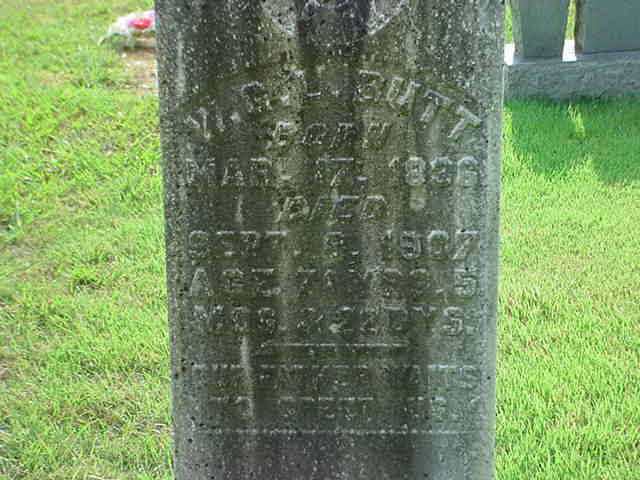
Speaking of skeletons in the closet, of course I found a couple of Civil War heroes lurking on Dad’s side, where there was a lot of action in north Georgia. There was my second great grandfather, Captain William Greenbury Lafayette Butt, of Union Georgia (where a LOT of ancestors settled in the early 1700s). He was on the losing side of that war. In fascinating additional news, his father was a postmaster, and also rather decorated: Judge Major John Butt III. Whew.

I also found soldiers who fought in the Revolutionary War where the US broke from England. One example is Henry Tilley, Sr., in my grandmother’s line, who had five sons who fought in the Revolutionary War. On the Kendall side, my fifth great grandfather, William Kendall, appears to have died from war injuries in 1777. I think they were on the winning side.

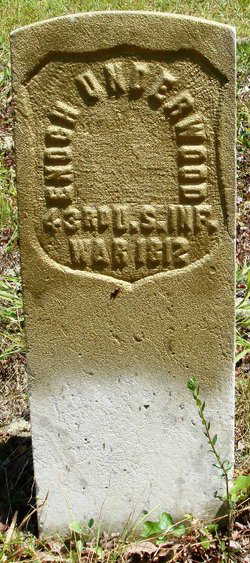
Enoch de Melvin Underwood

On the Kendall side, there was 
Enoch De Melvin Underwood, who fought in the war of 1812. He was a warrior! He is buried in the Tilley cemetary in Union County, Georgia, where a butt-load of family members are (ha ha, many of them are Butts).

I guess that makes me a daughter of all those wars, but I’m not planning to join any clubs. I’m not really big on wars in general. But I do understand that, when everyone is participating, it’s a good idea to participate.

Anyway, the Kendalls appear to have arrived in the Virginia Colonies in the mid 1600s, so the family’s been here a while. Those Kendalls kept good records, because they  keep going and going until Richard Kendall, who was born in 1355! They also confused me, because in the 1700s a Kendall married a Kendall…possibly another skeleton in the closet? Why YES! John Kendall of the Revolutionary War, above, shows up in both lines!

Since this took me three days to write, I am going to stop. I hope you are able to find out where your ancestors came from and what they did. It can be interesting! Even if some of them were on the “wrong” side of history, it’s part of the story of who we are.