You can tell I live in a semi-arid environment by how often I mention that I’m grateful for rain. Our land is so prone to drought that we always fear it will never rain again. Of course, that’s not true. Usually, we have a very dry period followed by a flood. We’re used to it.
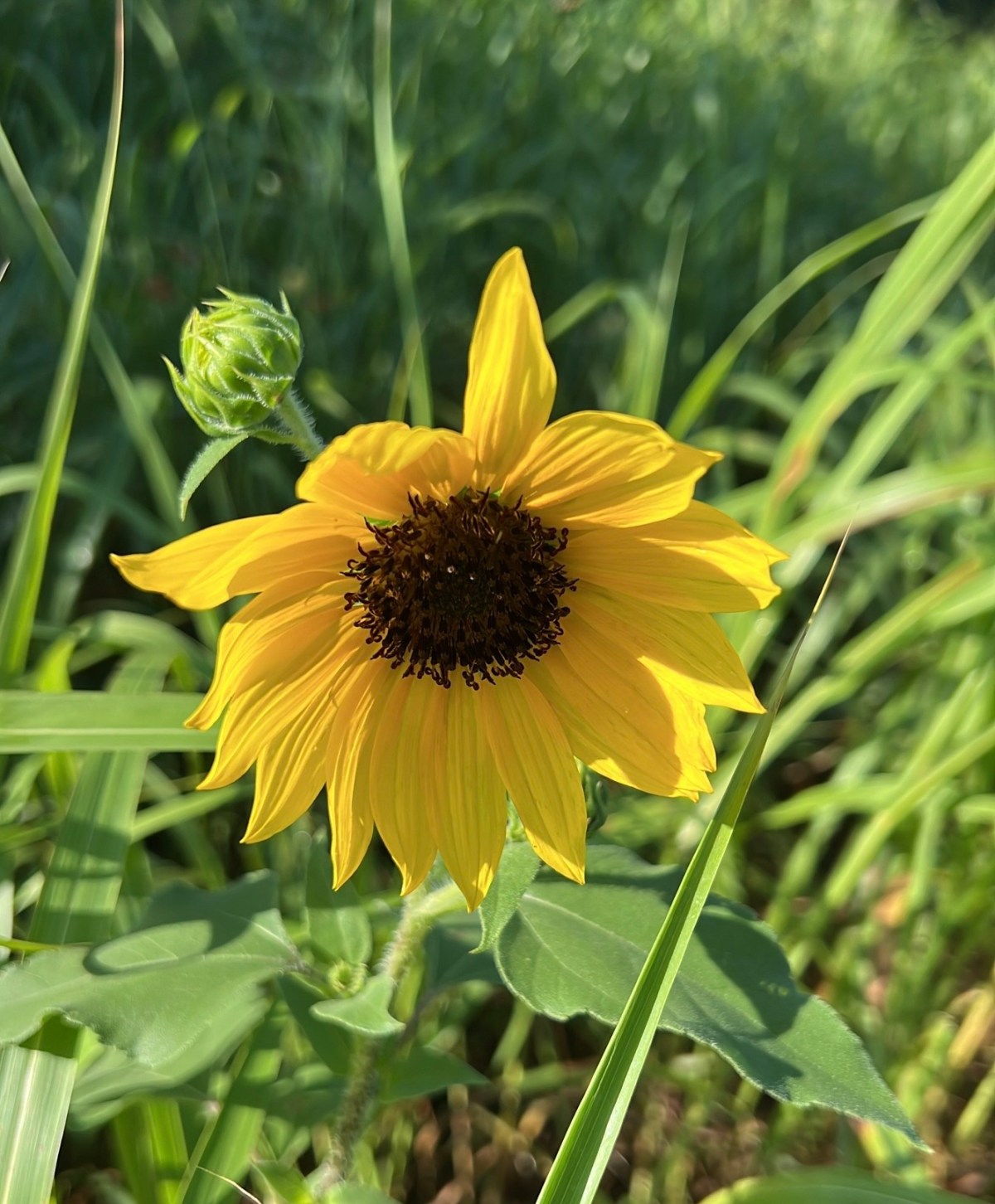
Rain brings sunflowers!
This year we have had some dry spells, but also some nicely spaced rain episodes, just nothing huge, until last night. We had over 2.5″ of rain here yesterday, and since 2″ is usually enough to get runoff happening, that means our ponds/tanks all filled.
Nice to see the front pond full of
It also means that the creek is overflowing, which is always fun, as long as it doesn’t cover the road, which it did not. It only got to the top of the fence that keeps the cattle in. No giant logs banged into the fence, either, which means the new owners won’t have to fix it.
You can see the fence posts almost underwater.
The rain was scary, and there were tornadoes in the area. Some folks got damage, but nothing like what we see in the news in other places, so we’re lucky. One of my friends even got up to 6″ of rain over the past few days! We’ve had at least 3 in total. Now all the animals will be happy.
Walker’s Creek is muddy and wide.
Something did die, though. The vultures right next to my birding chair told me, along with the large number of flies. Ick. I may have to move my chair!
My friends and I smell something good. Please leave so I can eat. It’s right next to my chair!
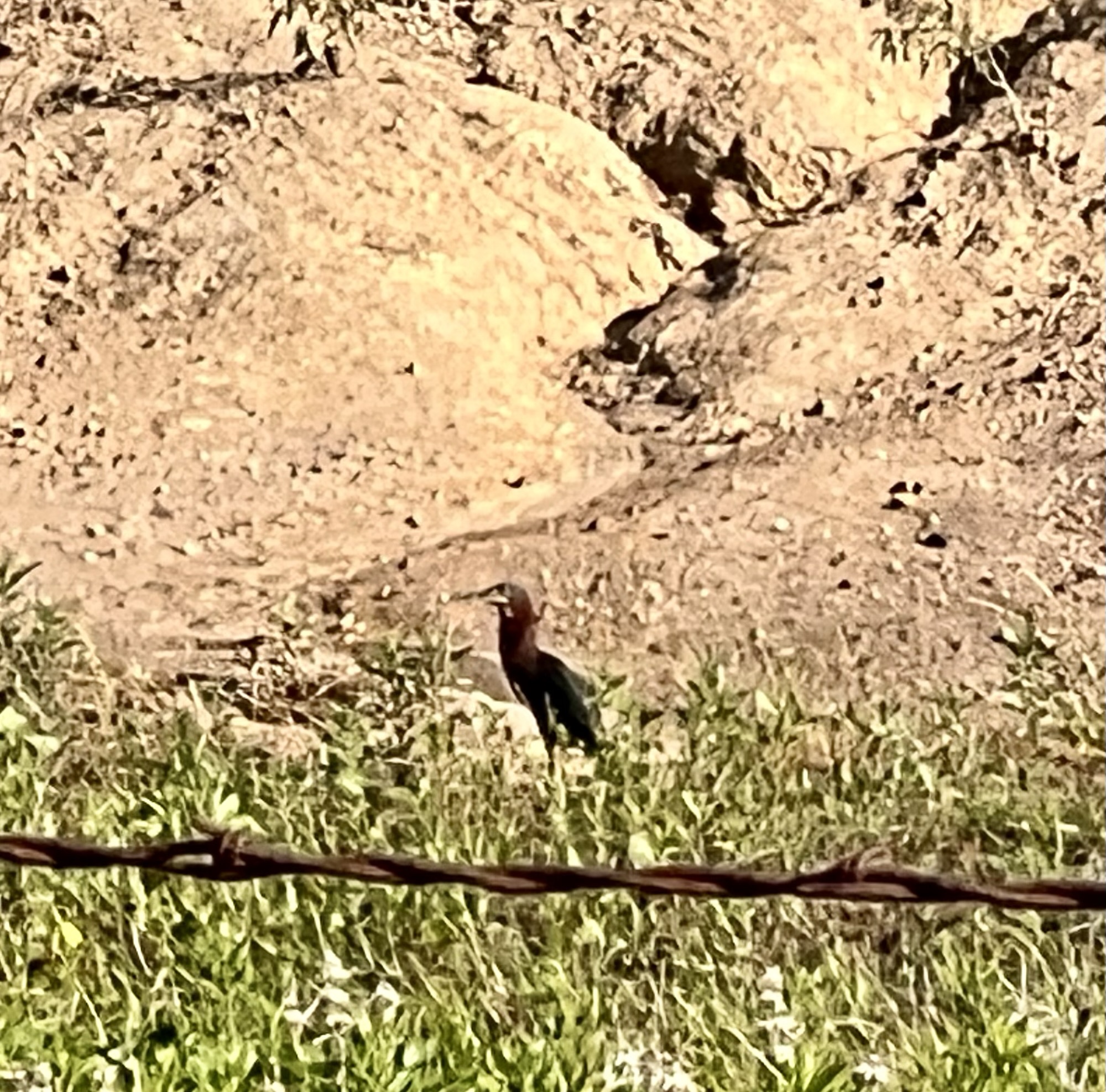
I enjoyed many clean and shiny birds on my morning walk, though, which is the best bonus. I’m still seeing a Tricolored Heron here, so who needs to travel to see interesting birds?
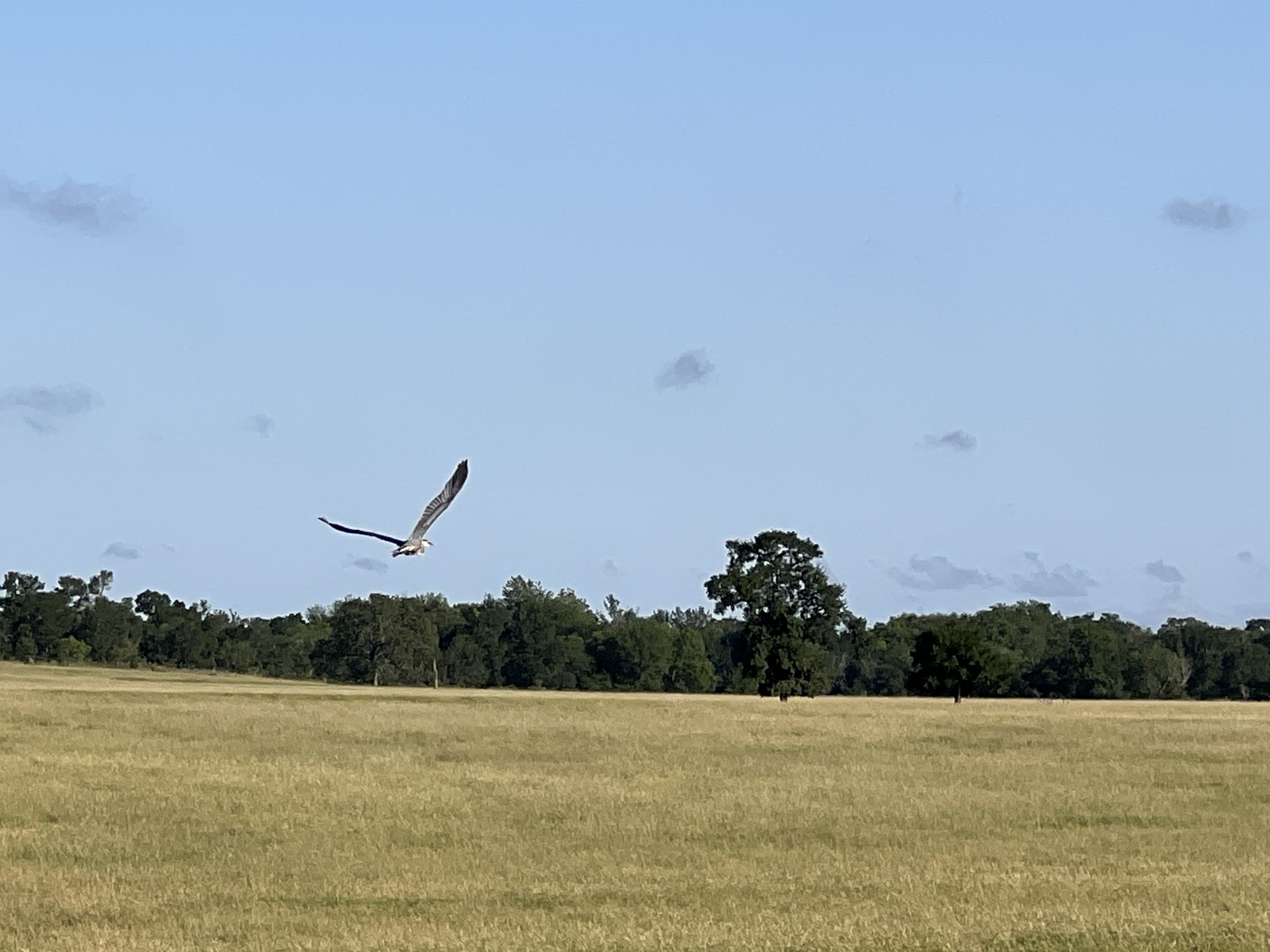
The heron still doesn’t come close This Lark Sparrow was singing away. Lovely song. Here’s a Phoebe, saying Phoebe. Great Blue Heron flying around again. The Crimson King going through his repertoire of songs
I went into town to have lunch with a new Master Naturalist and help her get her Merlin and iNaturalist set up for ease of use. Driving around I saw lots of hail damage and trees with lost limbs. The storm was a lot worse southeast of the ranch!
Our Merlin lesson was a bust, because the birds decided to stop making noise at our Cameron renovation project, where we tried to practice. But I did give my student some hints, and we had more success with iNaturalist. A lesson that I learned (relearned) is that everyone’s cell phone and service are set up differently, which always adds to the challenge of assisting people. We had fun anyway, and found some plants we want to transplant before the old landscaping gets obliterated.
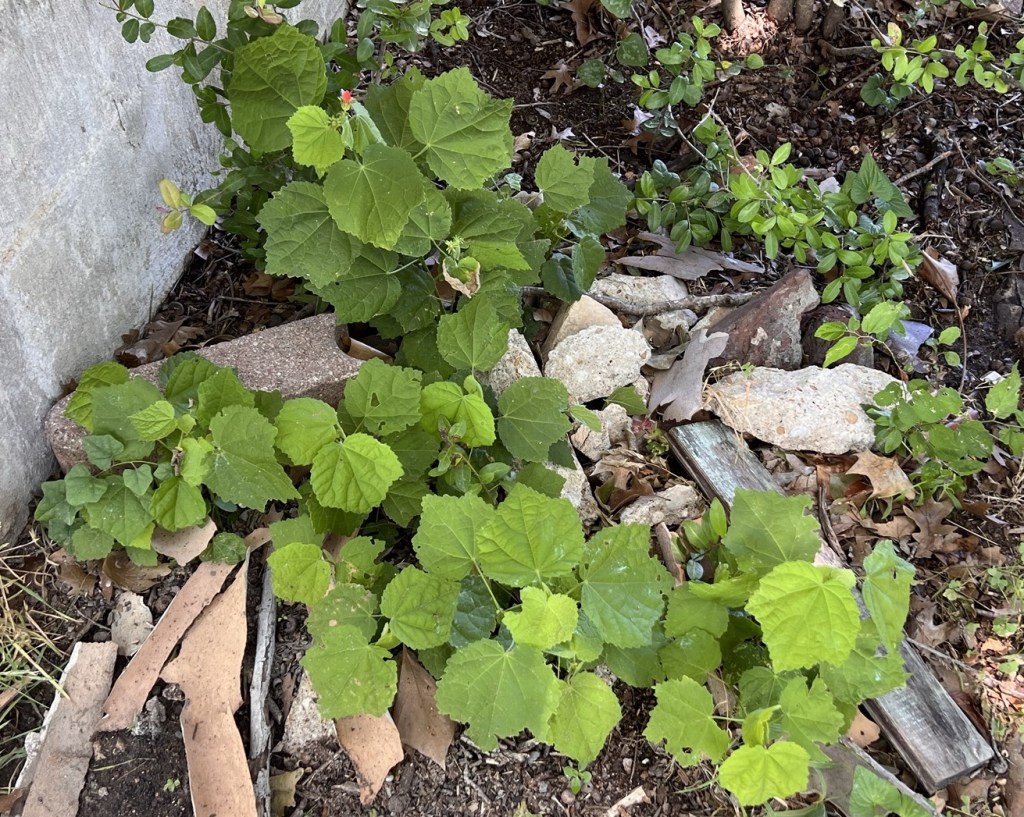
I want some of this Turk’s Cap to plant next to our woods.
Today remains sunny, though more rain is in the forecast. Other than how muddy the horse pens get, I’ll welcome all we get!
It’s a good thing I find cat herding to be entertaining (if tiring). I remembered this today when I did my best to teach a group of adults how to use Merlin Bird ID. I’m happy to report that each attendee learned something on the actual topic! Huzzah!
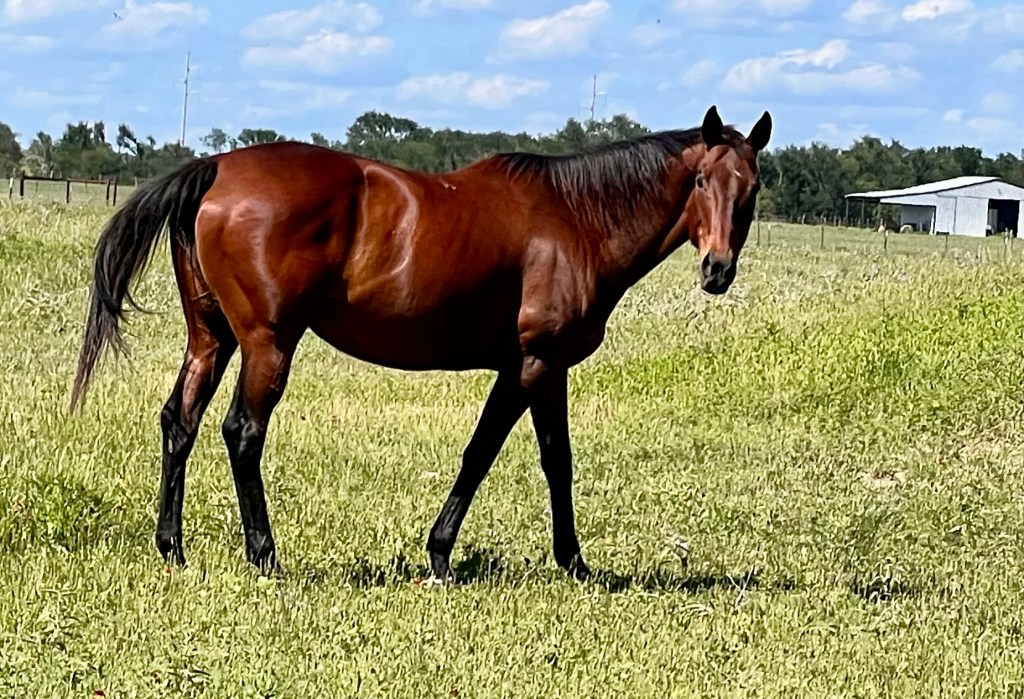
I’d like to have joined this horse in a nice cool pond when I was done.
And I had fun, even while being frustrated by my inability to answer three questions at once. There was one attendee who couldn’t get to the App Store to download Merlin, a couple who couldn’t log in because they didn’t have their password, some who were eager to learn, and one who figured everything out faster than I could tell the rest. In other words, a typical in-person training experience. We were, however, missing the person who falls asleep. No one did that!
They were busy learning.
Luckily there were few enough people there that after showing everyone the UI basics, I could help people wherever they were. Whew. That’s my favorite way to teach adults. Seeing the smiles in people’s faces when they figured out how something worked was very satisfying!
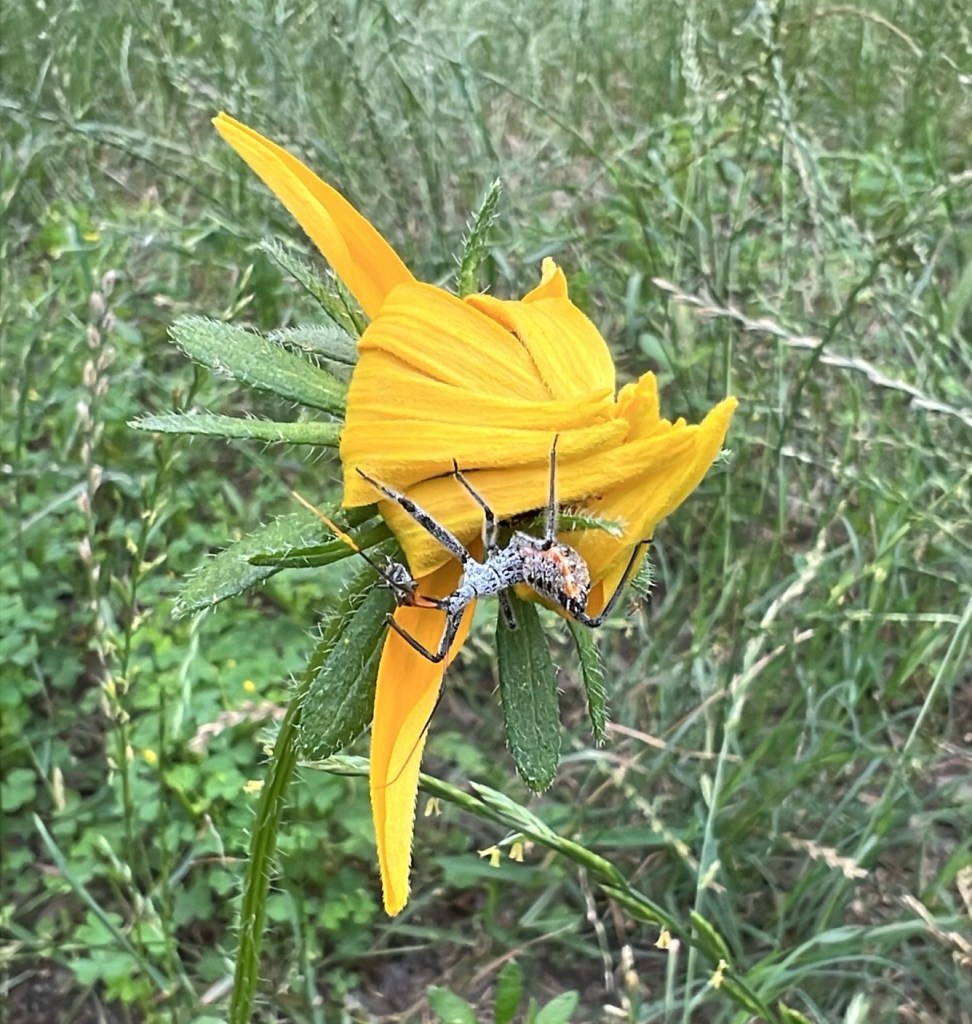
Also satisfying: Linda Jo found this wheel bug.
We ended up finding birds, recording them and creating some life lists. Everyone made progress! And then they learned a bit about the new iNaturalist, even the ones who didn’t have iPhones (there’s no Android version).
One more fun insect. A ponderous spur-throat grasshopper.
I felt good doing what I like to do, and on a topic I’m actually interested in. It also felt great to get more of my fellow Master Naturalists interested in what makes my life so full of education and entertainment these days.
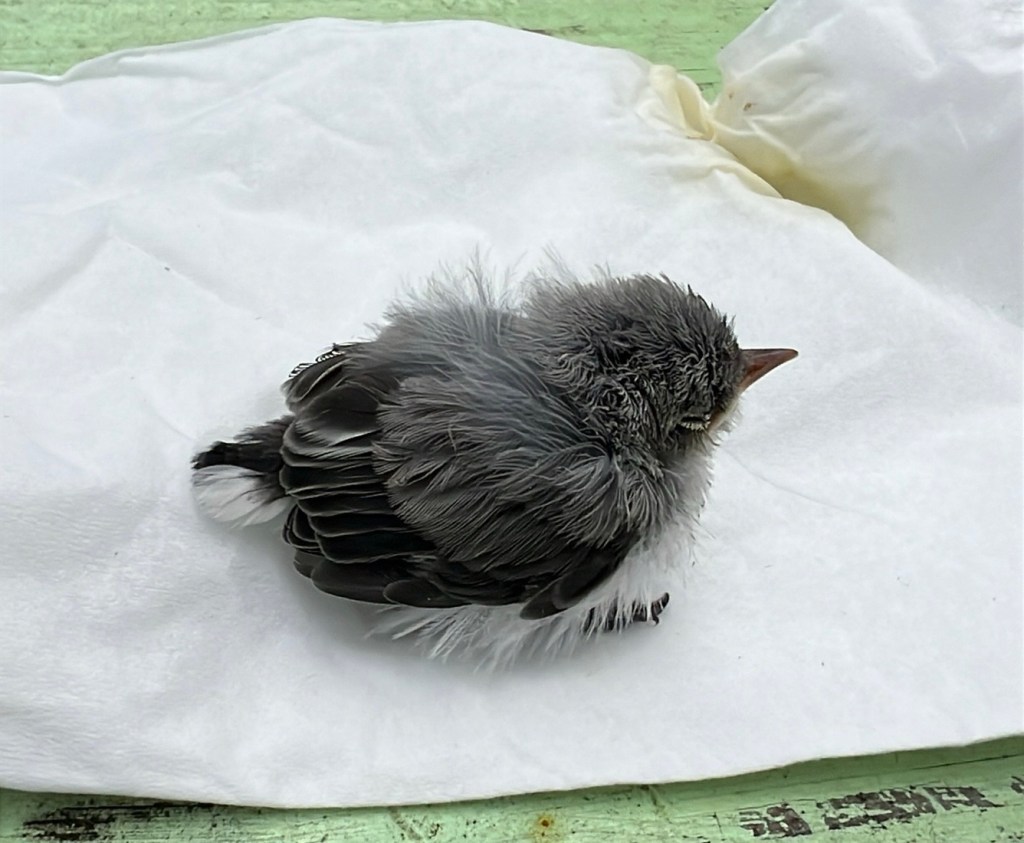
I was educated by identifying this baby bird as a Blue-gray Gnatcatcher (it’s being well cared for and heading to rehabbers soon).
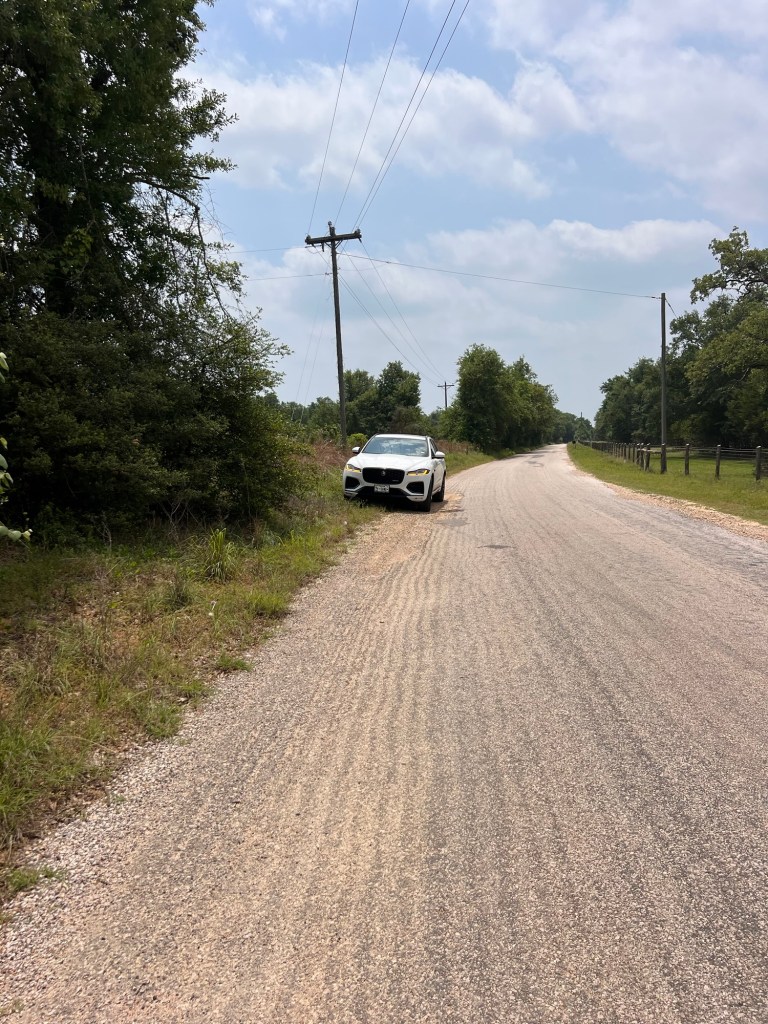
Nonetheless, I took a little jaunt over to Tarrin’s neighborhood to take some medication to a horse friend. I had some time, so I did something I’d wanted to do for a long time. I pulled my car over on Tarrin’s road and entered the interesting plants I keep seeing into iNaturalist.
Lots of hidden gems here.
Woo hoo! I can’t really pull over and take pictures towing a horse trailer!
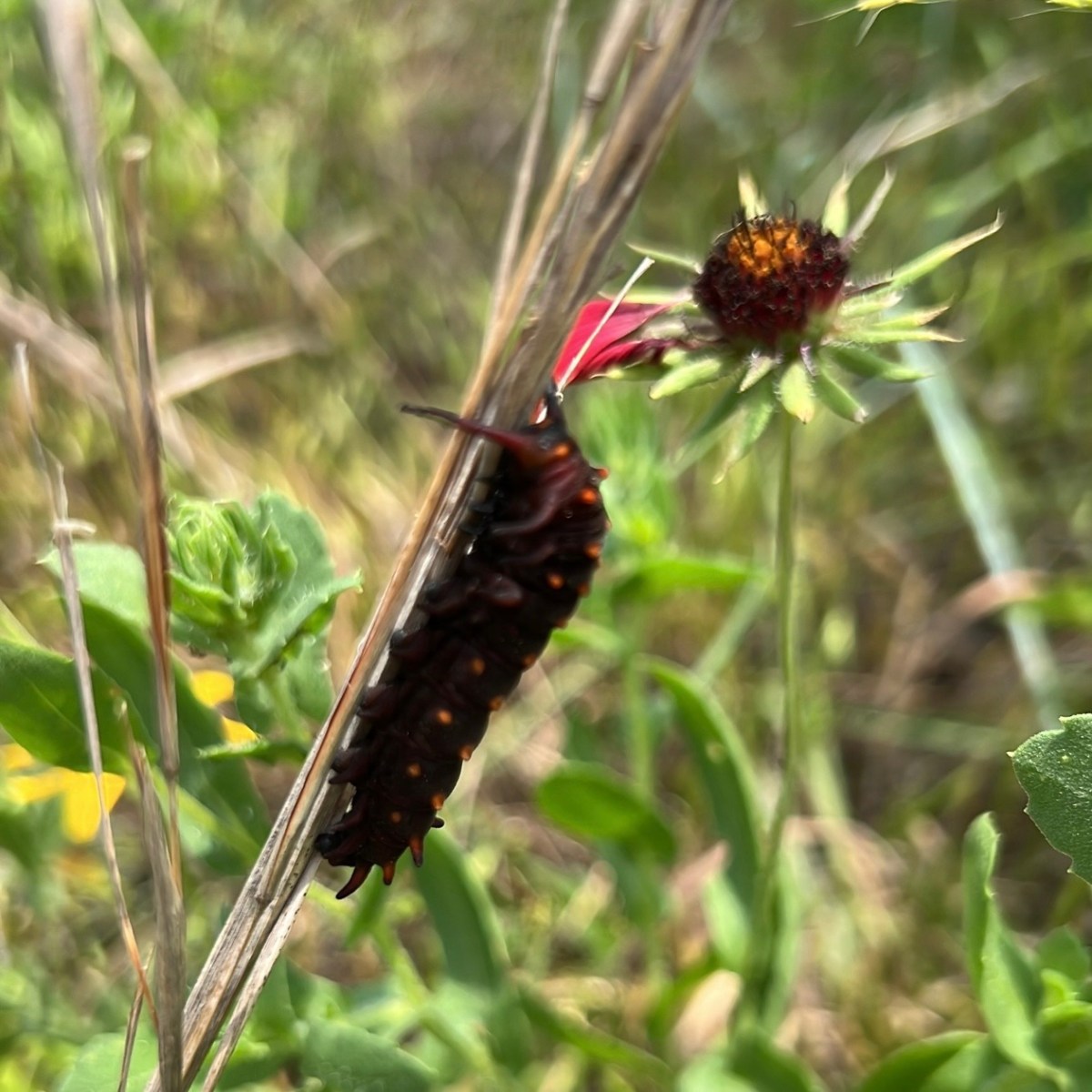
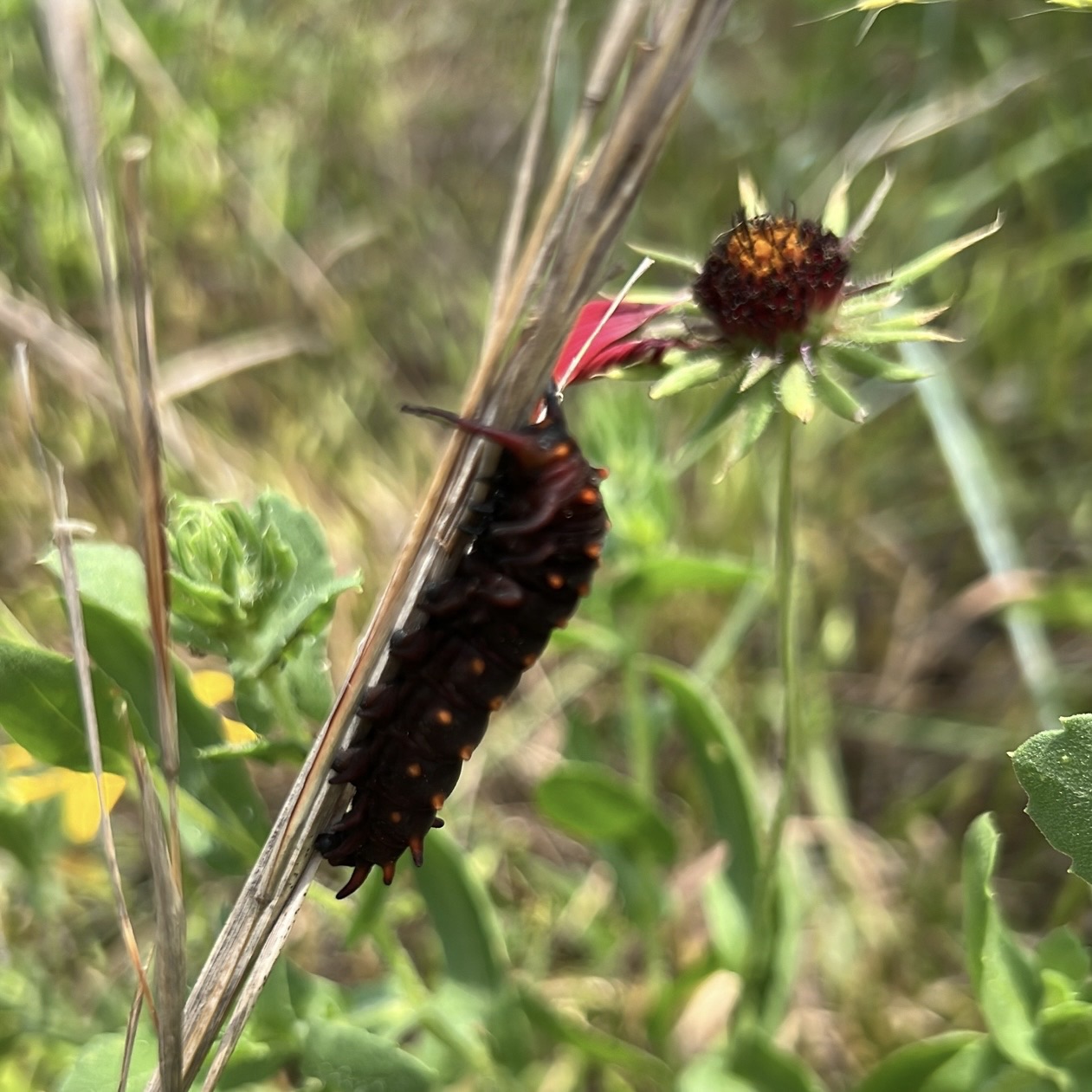
Pipeline swallowtail caterpillar!Texas Bull Nettle Cnidoscolus texanus (called mala mujer in Spanish)Wild blue larkspur Delphinium carolinianumMaroon blanketflower Gaillardia amblyodonStanding cypress Ipomopsis rubra (will soon have beautiful red flowers)Old Plainsman Hymenopappus artemisiifolius
Other than that, it’s very hot and humid. I’ve been thinking about recent tornado victims. It encourages me to enjoy all life’s joys and challenges while I can. The weather can strike anywhere.
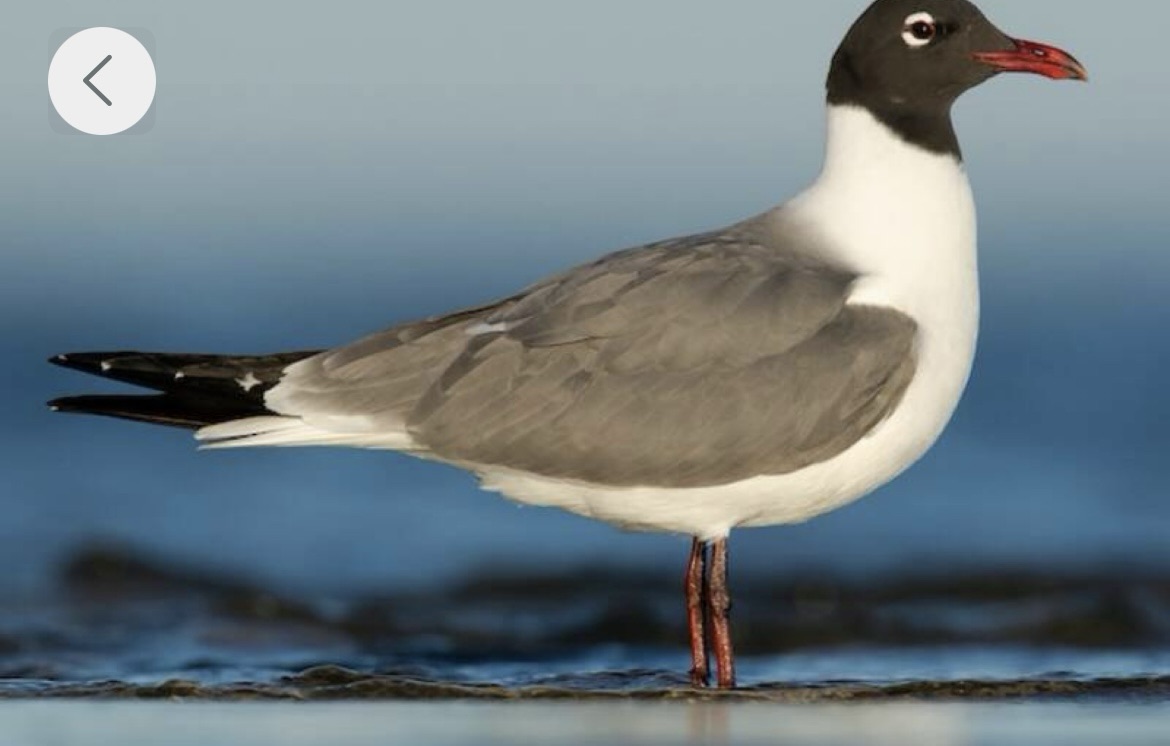
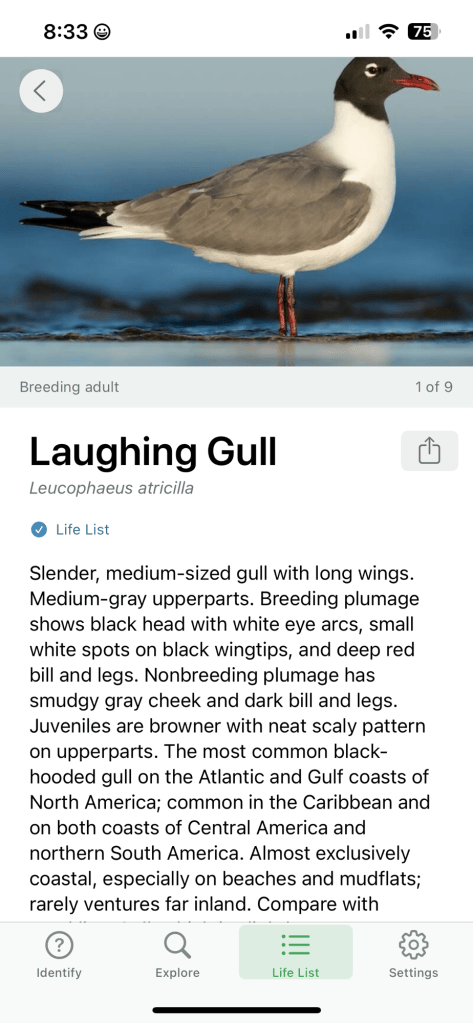
Well, I saw some. It taught me to believe Merlin Bird ID more than I did before. On Saturday, Merlin identified a Laughing Gull. I was dubious. I saw many in South Carolina on the coast, but I didn’t expect to hear any here. Of course, sea birds do pass over here, but never these.
Notice it says they rarely venture inland. No wonder I doubted the observation.
I shouldn’t have doubted the sighting. This afternoon when I was feeding the horses, I saw birds overhead. Yep, Laughing Gulls. A whole flock of them!
Best photo I got.
I guess they’re going somewhere.
Can I go, too? (Someone needs to eat less delicious food.)
Blog readers will know that I’ve been using Merlin Bird ID since last summer to identify birds I hear. I’d used it before to identify birds I saw, but once I started the listening exercise, I was hooked. It’s such fun knowing what I hear around me, and it’s great training for birding without the app. My ability to identify birds by song is hugely improved. Plus, knowing what’s out there helps you know what to look for if you want to see birds.
Merlin interface.
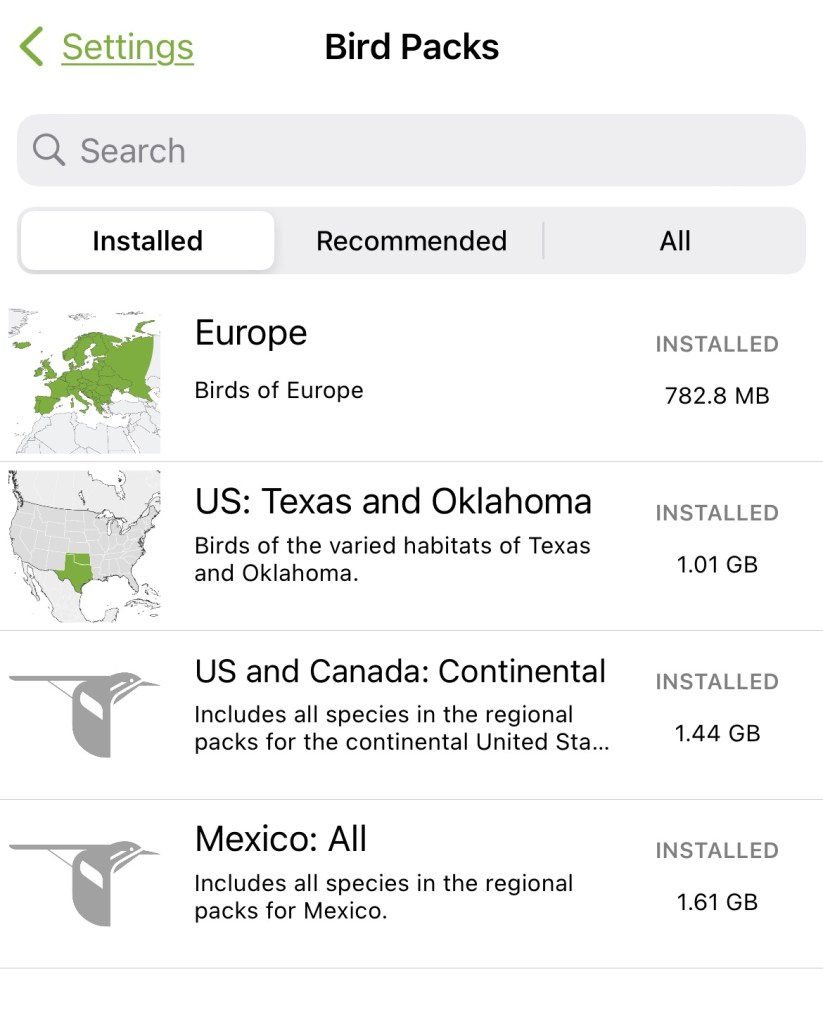
Cornell Labs has done an amazing job developing this app, which you can download from the App Store in whatever kind of phone you have. I can’t imagine how much work it has taken to train the listening app on the sounds of all the birds around the world (you can get Bird Packs for wherever you happen to be).
I got Europe because I keep getting those weird IDs and wanted to read about those birds. Mexico is because I go to South Texas sometimes.
I’ve learned a few interesting things about Merlin that those of you who use it or are interested in giving it a try may benefit from.
One of the most common birds I hear.
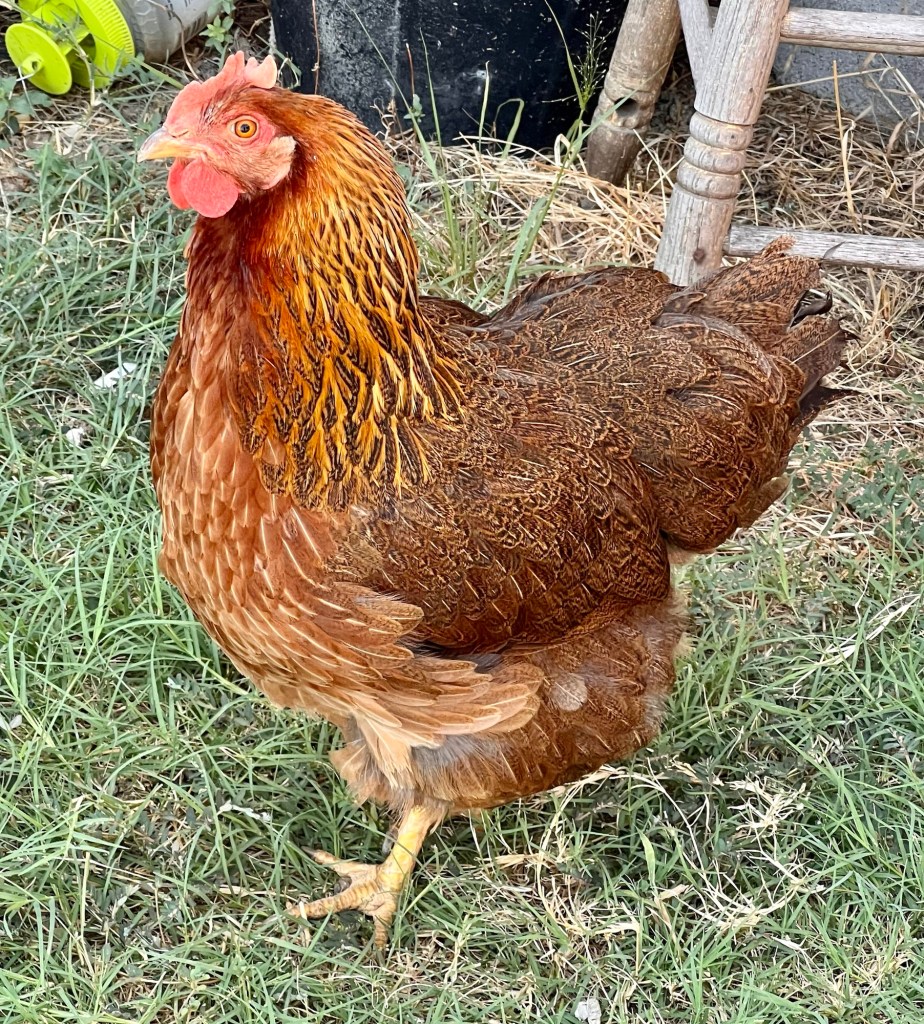
1. Merlin will not identify domestic birds. My chickens can walk right in front of the phone and nothing registers. It also completely ignores Tarrin’s guinea fowl, and didn’t pick up the turkeys at Bird and Bee Farm. However, it has identified wild turkeys, so I think the turkey thing was a fluke.
I’m a bird!
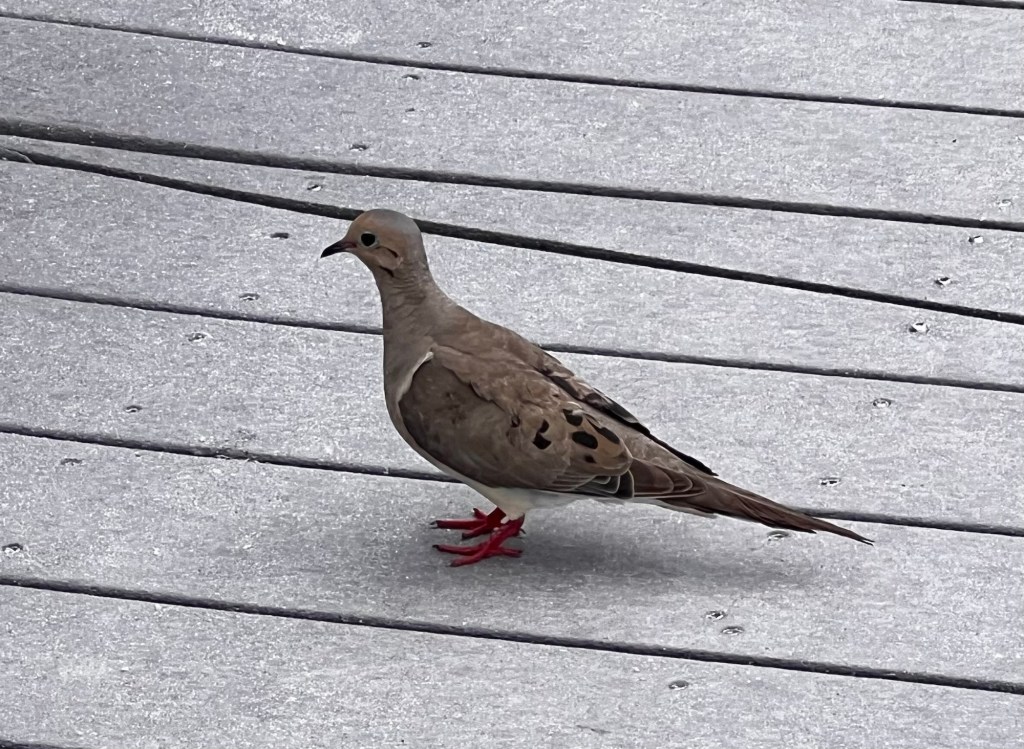
2. The app has trouble with birds who make sounds that are low in pitch. For example, it needs most doves to be really close in order for it to register them. Collared doves make a higher sound that it identifies more easily. And you have to be on top of an owl for it to be picked up. In the past week, I’ve heard entire owl conversations that didn’t get “heard,” both of barred owls and great horned owls. That’s why it pays to also be able to identify birds with your own ears!
I’m so subtle.
3. Crazy things can happen after a recording is interrupted. Two things that happen to me often will interrupt a recording: the phone ringing or me accidentally starting a video rather than taking a photo while the app is running. You can usually save the recordings, though I have lost a couple.
However, I’ve found that if I start the listening function again after an interruption occurs, Merlin’s decides I am not only in North America, but I’m also in Eurasia. I will be informed that I hear a great tit or a European robin, which is highly unlikely!
So, if you suddenly get an identification of a bird you’ve never heard of, be sure to click on the map for that bird, to be sure it has actually been seen in your area. Sure, occasionally birds are blown off course when migrating or after a storm, but most European birds stay in Europe (other than our biddies the house sparrows and starlings, of course!).
Lee’s haiku: Porch sparrow drama – fussing, fighting – very loud What are they saying?
4. Moving around is hard on Merlin. The app works best if you are standing still (or the phone is sitting on something) and the environment is not noisy. It’s amazing how loud you are walking on a trail or around your property. I live in the country, yet I realize now that it’s loud here. Loud farm vehicles and trucks, single-engine planes practicing their takeoffs and landings at the nearby tiny airport, our six dogs, the pool pump and waterfall, and air conditioning units all contribute. When camping, screeching children on trails and boats are hazards. So are waves, believe it or not. But if you stay still, Merlin’s does a pretty good on anyway.
Savannah sparrows looking for bugs
When I’m out walking, I usually pause if I hear an interesting bird, so the app can pinpoint what it is. My exercise app on my watch hates that.
Merlin Hints
Save fairly often. I try to go no more than 20 minutes or so before saving a recording unless there’s some great bird action going on. That minimizes your losses if the app crashes, which does happen occasionally.
Remember to report interesting birds you hear or see to Cornell Labs. It goes to e-Bird and provides useful research data. I don’t report every sighting. I doubt they are interested in the fact that I see vultures and house sparrows every single day. You can also upload photos. Occasionally I get one good enough to share.
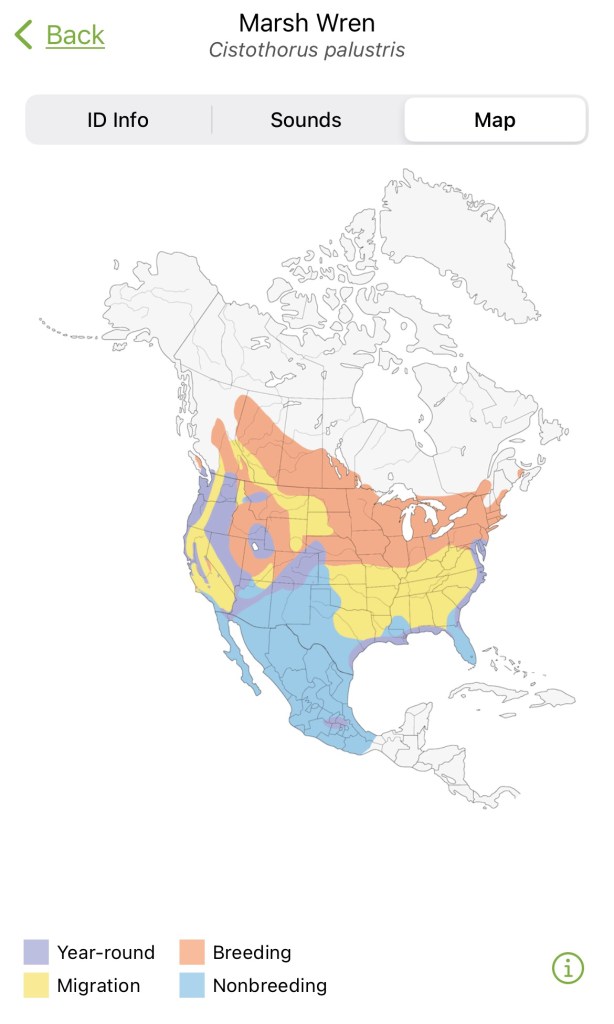
Have some fun with the app and do your own research. I’m tracking what birds I hear at my house each month. It’s letting me know which birds are winter birds, which migrate, which show up in summer, and of course, what’s here all the time (vultures, house sparrows, cardinals, chickadees). Be sure to report each new bird you hear, so your life list on Merlin can grow. I have 192 birds since last September. Majestic that 193. A marsh wren showed up today. That includes birds I’ve seen while traveling, too.
Yep, we are in their range.
Conserve your phone battery. To make my battery last longer when on long hikes, I don’t keep my camera open at the tame time Merlin is running unless I’m actively taking pictures (remember, I also obsessively record plants and other life for iNaturalist). If I were planning to go out for a long time, I’d take a spare battery. I tend to run out of juice after around three hours.
Don’t become annoying. I have developed the habit of shushing people who talk when I’m “listening” through Merlin. I’m sure it irritates my spouse. People are important! I also don’t even TRY to use the app when on a group hike unless I hear something really cool and go hide to try to capture it. I was hilarious at the National Butterfly Center last October, as I lagged behind the Master Naturalists trying to hear exotic Mexican birds. I also find myself trying to be extra quiet any time I’m outdoors,because it’s become a habit. I whisper answers to questions and such. I am working on fixing that before my family stope talking to me.
I hope you get something helpful out of these hints. If I’m wrong about anything, let me know. Also, if you have additional insights or hints, tell me and I can add them to this blog post. I’m still learning!
Flowers attract insects that attract birds.
By the way, I’m not claiming Master Naturalist VT hours for any of this, since it’s on my own property most of the time, and that doesn’t count. I did count my time during the Great Backyard Bird Count, since that’s approved. I don’t claim hours when I’m camping or traveling, since I’m also usually making iNaturalist observations at the same time and don’t want to “double dip.”
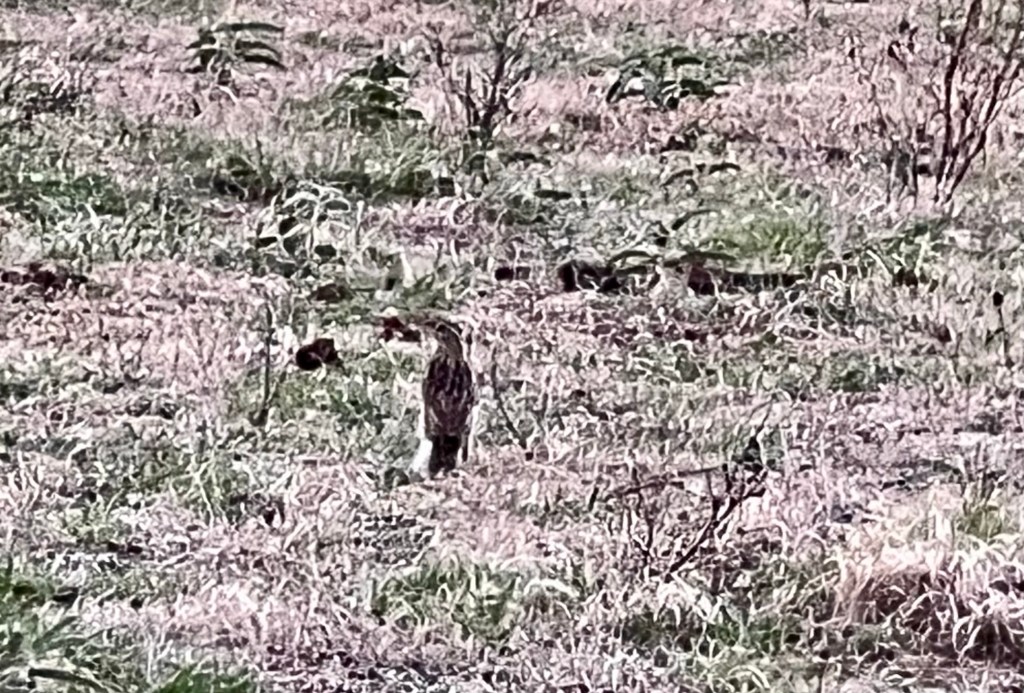
I’ve been trying to ID a brown bird I see every autumn for years now. It’s got white on the sides of its tail and is found in our pastures. Why has it been so hard?
Can YOU tell what this is?
There are LOTS of those tricky little brown birds here in the middle of Texas in the post oak savanna. In addition to the easily spotted house sparrows, there are savannah sparrows, vesper sparrows, lark sparrows, swamp sparrows, white-crowned sparrows, Harris’s sparrows, and maybe more. Some are easy, some are hard to ID visually.
This is the bird. A bit lanky for a sparrow.
That’s why I must once again praise Merlin Bird ID. It’s helped me figure out what I’m seeing SO much. And yesterday and today I was able to figure out what that mysterious brown bird of autumn is, and it’s not a sparrow.
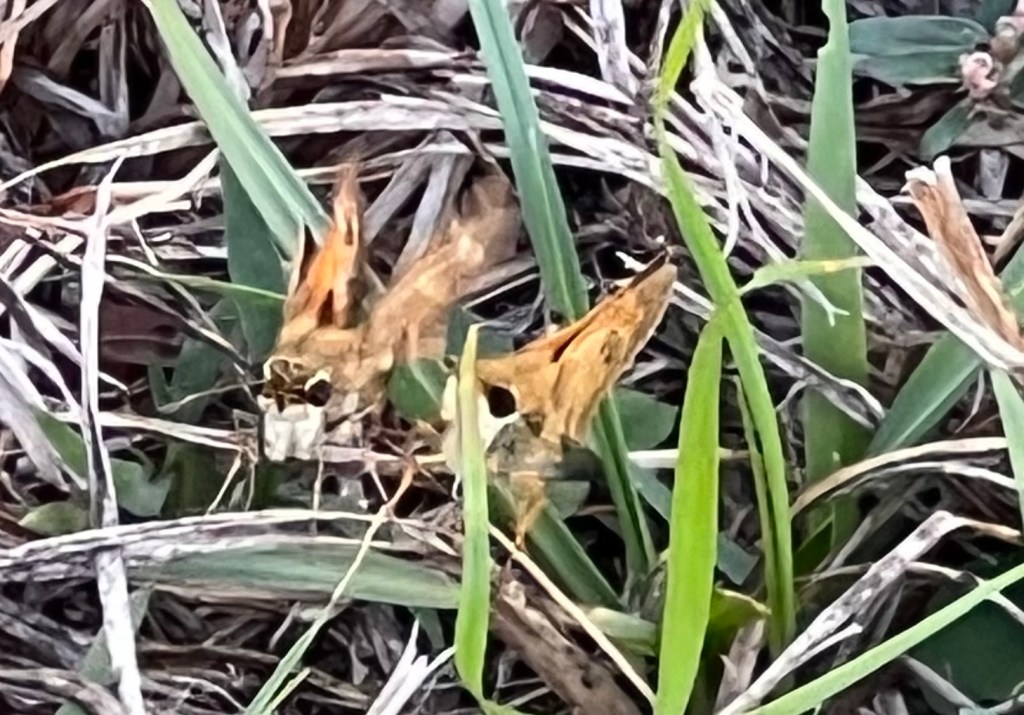
It’s certainly not a fiery skipper.
It’s also not a meadowlark, which also has white along it’s tail feathers and a brown back. It does have a beautiful song, like the meadowlark, though.
Meadowlarks are this color in the front, though.
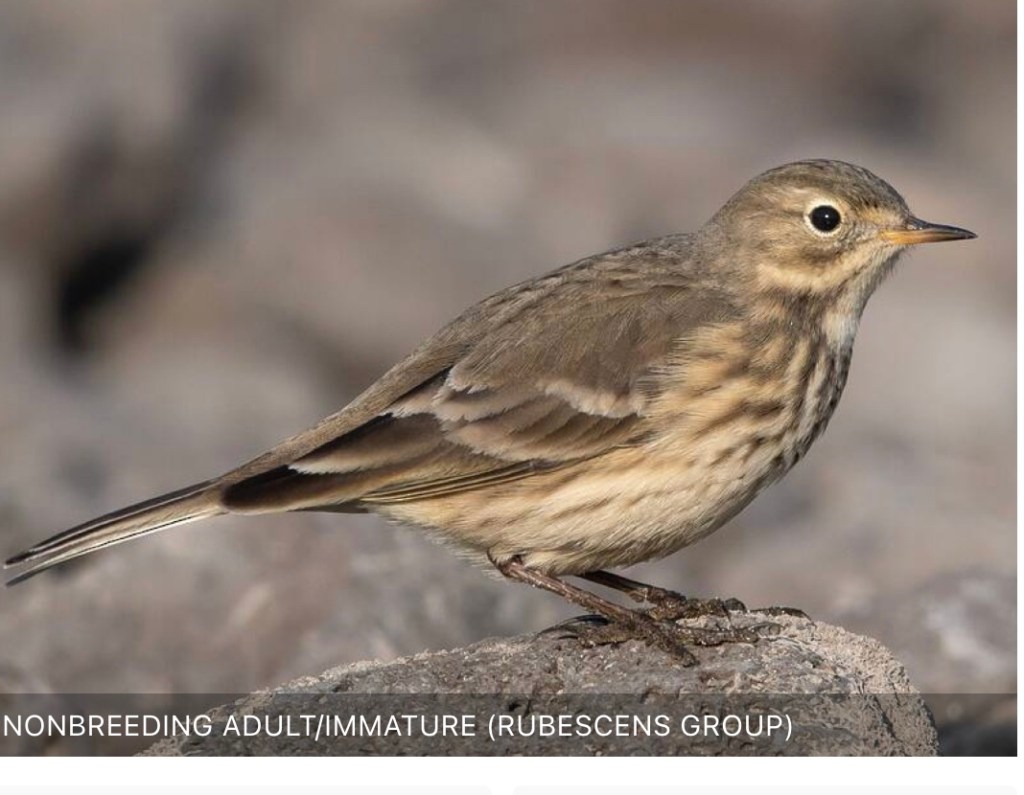
It’s an American pipit. Or it’s a Sprague’s pipit. They aren’t even related to sparrows, which is obvious if you look at their bills. They have the sharp bill of an insectivore. I know that because Merlin heard them calling.
Check out my bill.
I then read the description and had a “doh” moment. That’s exactly what I’ve been looking at in the fields.
The other pipit doesn’t bob its tail.
With my love of identification and categorization of what’s around me, I’m quite satisfied right now. Pipit. Yeah. Turns out they’re not even uncommon. Huh.
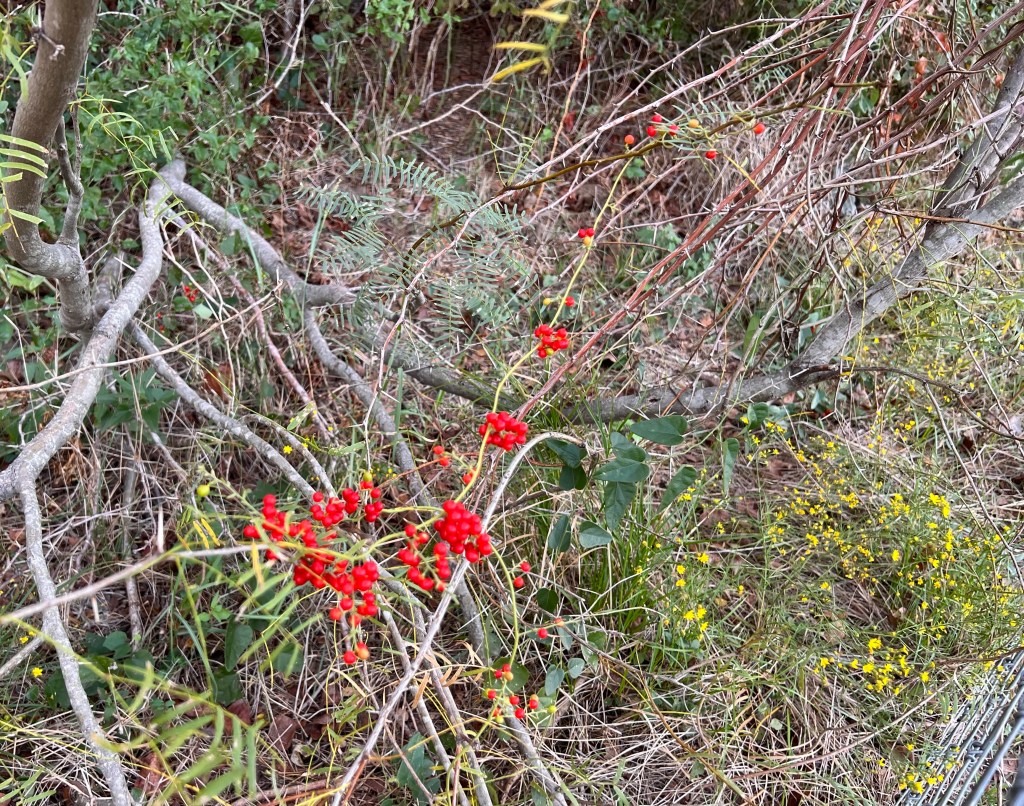
This snail seed vine isn’t uncommon either, but it’s pretty.
It’s a good bird time right now and will only get better. I’m sad to see summer birds go, but meadowlarks and all those sparrows fill the air with song. Plus the phoebes are screeching and the shrikes are shrieking. The kingfisher is back, too!
It’s a great time of year. Flowers glow in late afternoon light.
And hey, only one bur today on Apache’s man bun and zero on Drew. I want to credit my braiding, but I think the new hay has kept them out of bur world.
I’d been bemoaning the lack of bird species I’d seen around the ranch, but the last couple of days make me think the birds may believe the cooler weather of autumn is coming. I’m glad for their beliefs, which encourage me to hope that the prospect of a cool front in a few days may come to pass.
Bees hope it cools off, too.
Yesterday, My glimmer was that a female painted bunting flew right up to where I was standing and listening for birds. She proceeded to tweet a few times, which confirmed what she was, since the female buntings all look pretty similar. She came back today and I got to watch her hopping around for a good while, but she never said anything. Brown of course, I knew who she was!
Today’s glimmer was very large and graceful in the air. I’d reviewed my past photos for a blog earlier this week and realized that a year ago we had storks and a roseate spoonbill in our pond, I was sad to have seen no storks this year. But, lo and behold, I looked up and got to enjoy watching three storks fly by. I guess our pond doesn’t look good enough for a visit this year, but maybe they will come back. No photos. I was using my eyes to enjoy them.
Last year’s storks.
I was also really pleased by the number of birds that were around this morning between 8 and 8:30 am, when I went out to listen with Merlin Bird ID. Here’s what was hanging round the ranch:
Crow
Cardinal
European Starling
Dickcissel (surprised it’s still here)
House Sparrow
Downy Woodpecker
Upland Sandpiper
Blue-gray gnatcatcher
Loggerhead Shrike (my fave)
Killdeer
Baltimore Oriole
Carolina wren
House finch
Yellow warbler (migrating)
Great egret
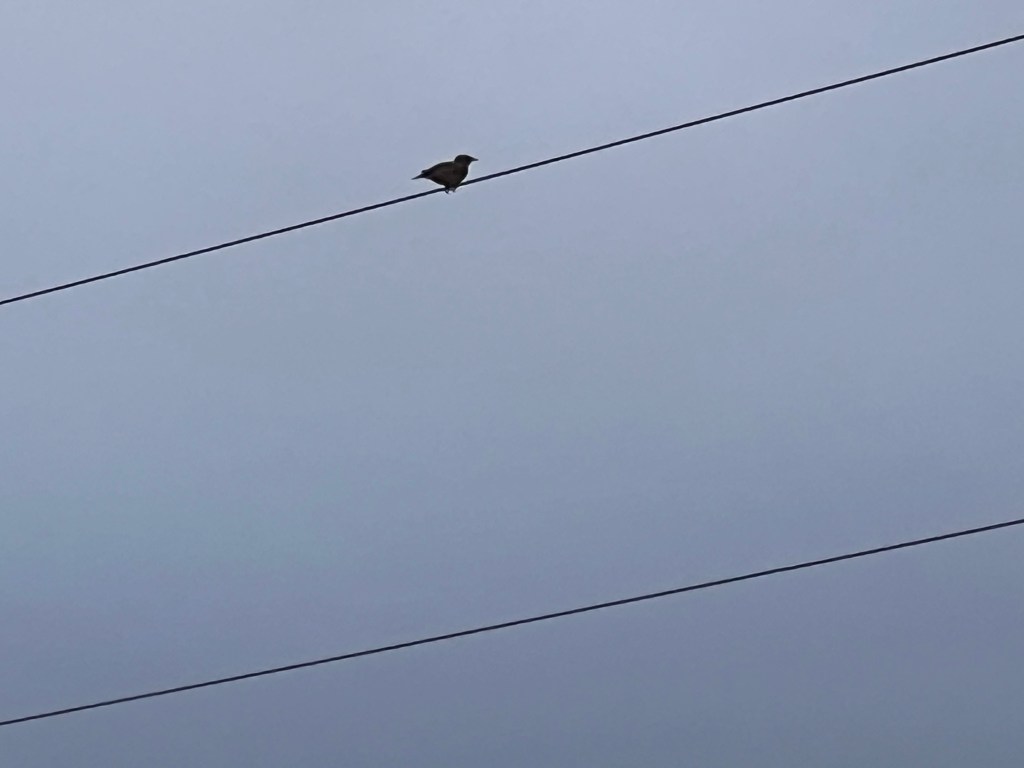
I had visual confirmation of the yellow warblers – they sure are yellow. And I also saw a female hummingbird going after our red salvia, a turkey vulture or two, and the Baltimore Oriole, though you’d never know what it was from my photo.





















 The Hermits' Rest