
I’ve let this book marinate in my mind for a few days before writing about it. That’s because Mother Tongue: The Surprising History of Women’s Words, by Jenni Nuttall (2023), left me conflicted.
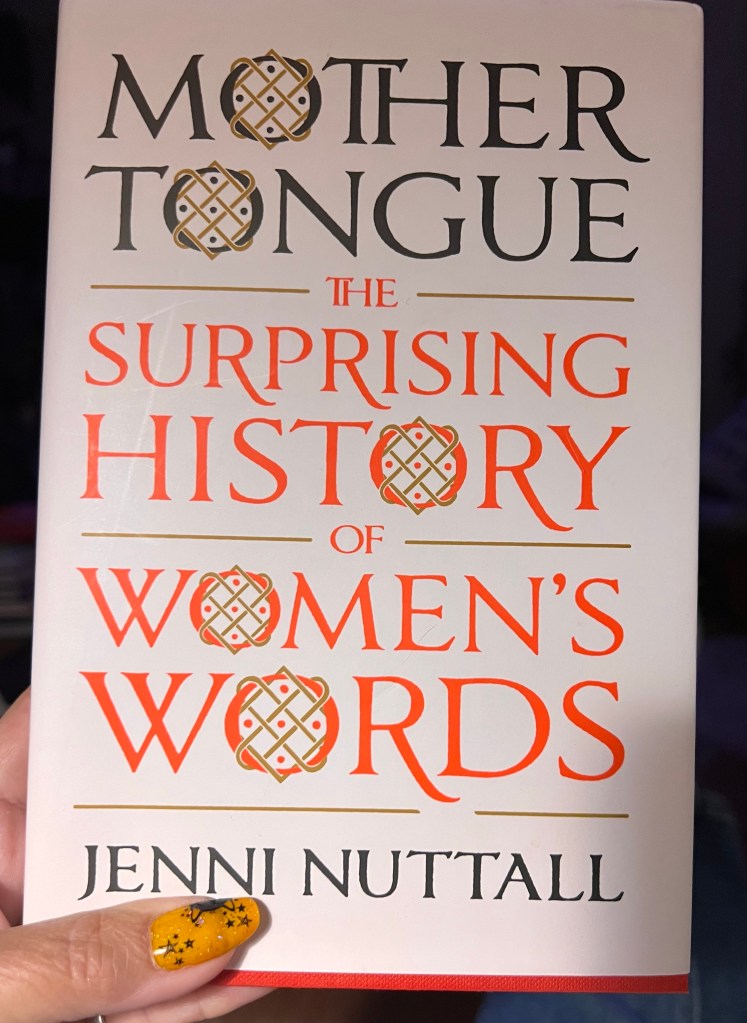
It’s a good book to review on Samhain/Halloween, since it has an entire chapter on witches, and there’s a good deal of discussion of how all kinds of words became derogatory terms for old women, the kind you see depicted in Halloween decorations. And who can complain about a book about etymology? Not me, that’s for sure.
Nuttall is an expert on Old and Middle English, so it’s fun to read her easy translations of old phrases (and to try to figure them out before she translates). I’m inclined to be sympathetic to fellow linguists, of course, and to fellow feminists as well, but dang, this woman comes across as grumpy. She also comes across as defensive about her life choices. I don’t think parenting is her favorite stage of life and she certainly doesn’t have much good to say about breastfeeding and hanging out with your baby. I think she’d have liked one of those wet nurses she talks about in the mothering chapter.
The other small complaint I have is probably just me. Since I spent a lot of my early adulthood reading (and writing) about how women use language in more recent times, I was hoping for a lot more detail, more examples, and more juicy stories about the language of and about women in early English. She doesn’t seem to have many other choices than Chaucer. It does occur to me that there may not be many written sources for her to draw from, so I’ll grant that.
One of the fun things about Women’s Words is that it’s written in British English, so I got to learn some new modern slang. That was a real bonus. But since she’s English, I wish she could have added some words about women from former British colonies like India and the Caribbean.
Honestly, though, I wouldn’t discourage anyone who has an interest in the English language through history and cares about all English speakers, not just the ones who fancy themselves to be in charge. You’ll find out some interesting derivations, like the fact that the history of “girl” is shrouded in mystery. You’ll learn about words for childbirth, marital states, and the work women do. Go ahead and check it out. Don’t listen to grumpy Suna.
PS: if you write a book about women and language, don’t name it Mother Tongue. There are lots of books called that, so you’ll need a good subtitle.

 The Hermits' Rest