
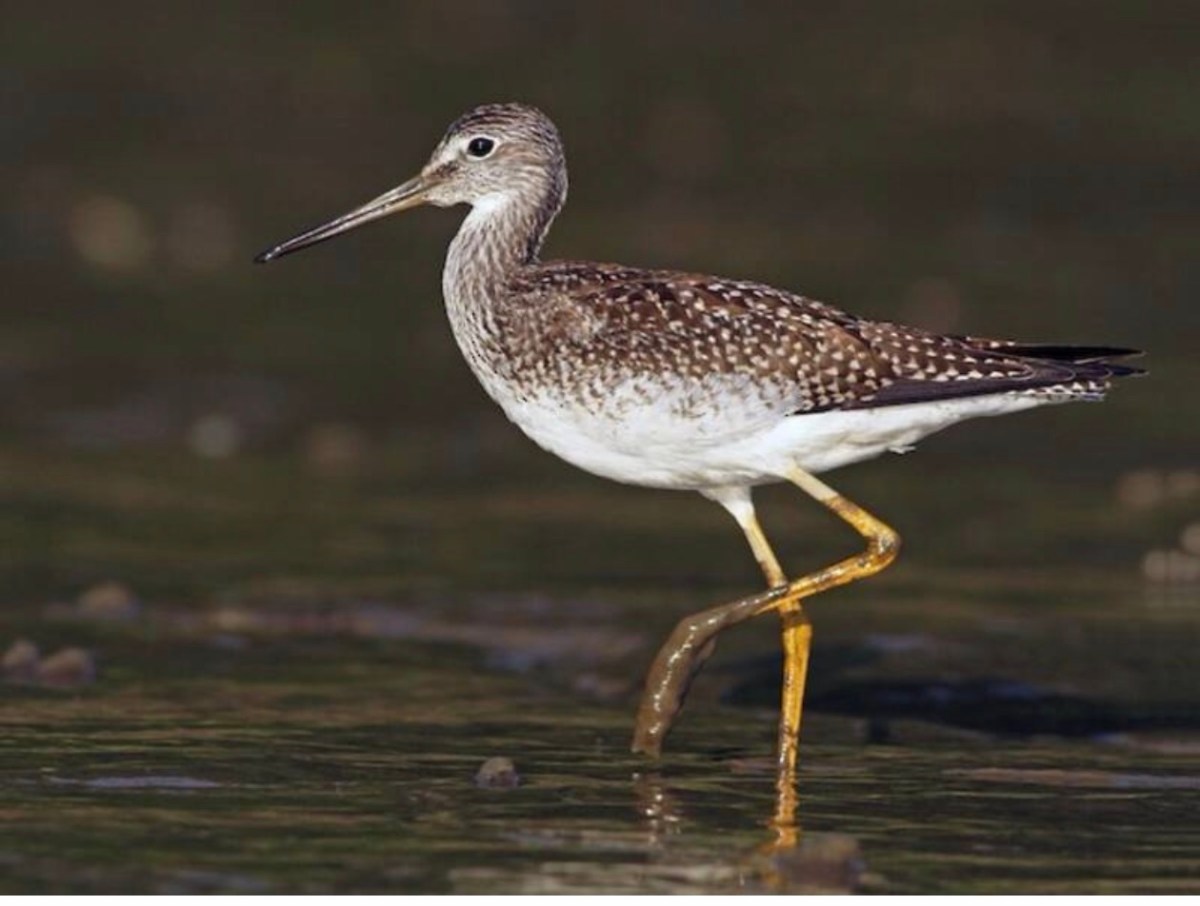
The natural world greeted me as soon as I woke up on New Year’s morning. I looked out the side window and saw a large bird walking along the pond shore, of which there is a lot, thanks to inadequate rain. What was it?
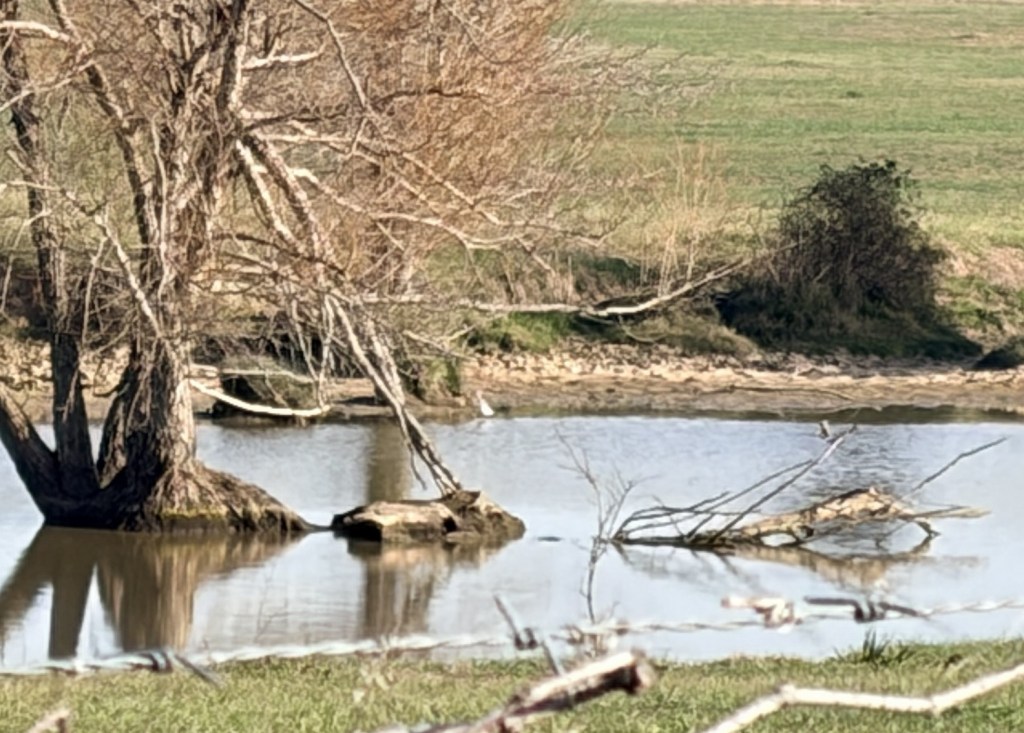
Luckily one of my many pairs of binoculars is stored on the windowsill for just this kind of occasion (along with the tools Lee used on his most recent home improvement attempt). Now I could see it, and I was happy.
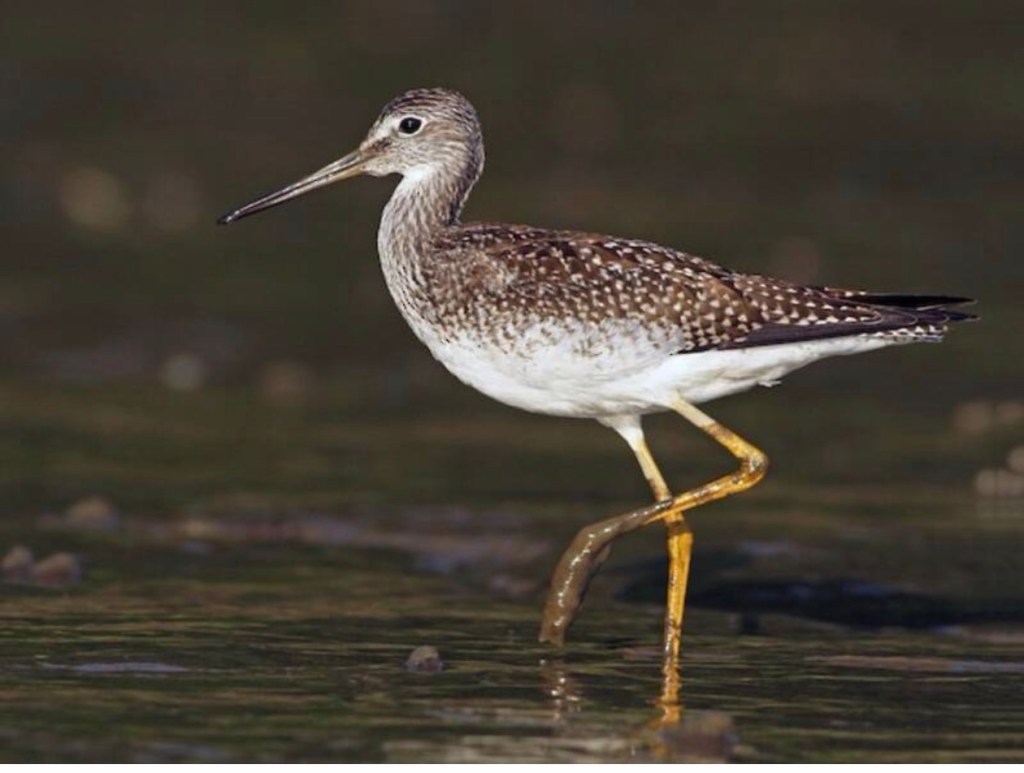
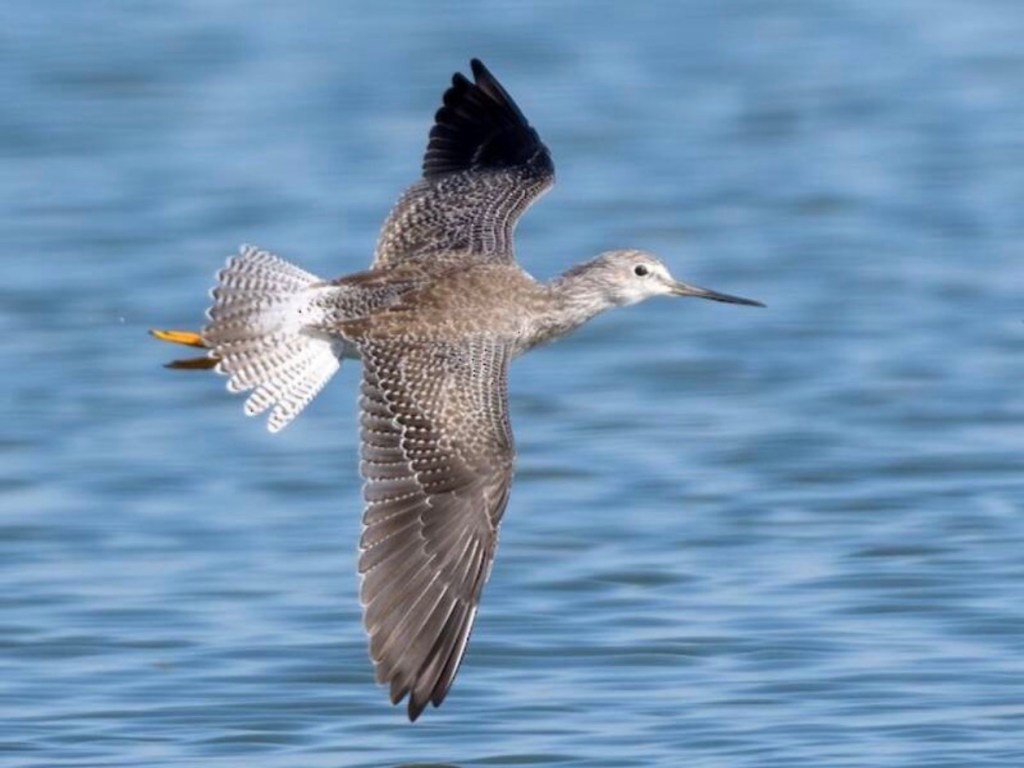
Why was I so happy to see a bird that’s around here all the time? Because I so rarely see them on the ground, doing their shorebird thing. Usually I hear their very distinctive call, and occasionally see them flying with their legs tucked under like landing gear.
I like these birds lots, mainly because they were the first bird to visit our front pond after it filled with water. I had to ID it, gasp, from a book! They were also one of the first shorebirds whose call I learned. Here’s more from Merlin on Greater Yellowlegs:
Fairly large shorebird with bright yellow legs. Plumage is essentially identical to Lesser Yellowlegs: gray upperparts with white speckling, streaky neck, and white belly. Proportions are most important for identification. Greater is larger overall with longer, thicker, more upturned bill, longer neck, blockier head, and bigger chest. Forages actively on mudflats and in shallow pools and marshes, often in loose mixed flocks with Lesser Yellowlegs. Somewhat more likely to be found in larger, more open habitats than Lesser, but much overlap. Listen for strong, ringing “tew tew tew!” calls, louder than Lesser, and usually three or four notes instead of one or two (though Greater can also give single notes). (from Merlin Bird ID)
The highlight of yesterday’s sighting was that it stayed, along with some Killdeer, long enough for me to watch it with the good binoculars as it ran through shallow water sticking its slightly curved bill just under the surface, sorta like how a skimmer does when flying. I now know they don’t poke into the dirt, but rather skim the water. Yay for citizen science!
Once I settled into the birding station, I also got to watch a cute Eastern Phoebe get all plumped up for an extended grooming session. I like how the ones here are more yellow than others I’ve seen.
This morning I had a Loggerhead Shrike land on the birding station roof. I know that because it then sat on the fence right in front of me. Such striking birds. Wish I’d had the good camera.
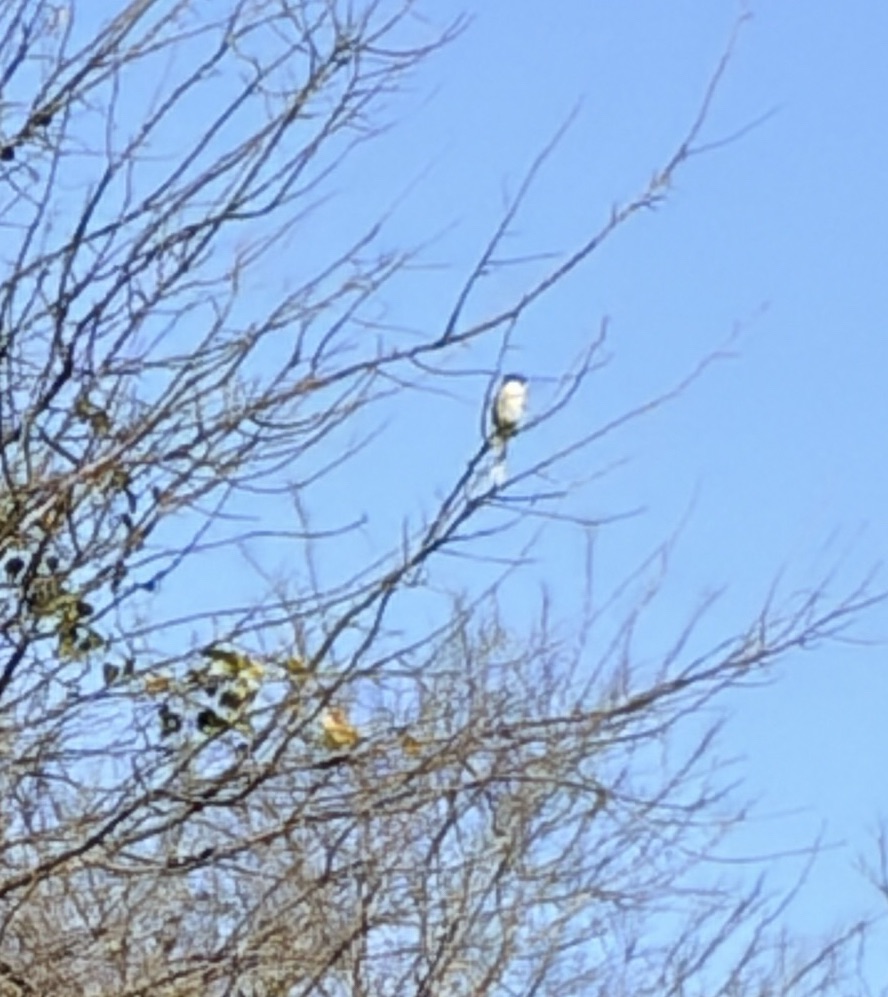
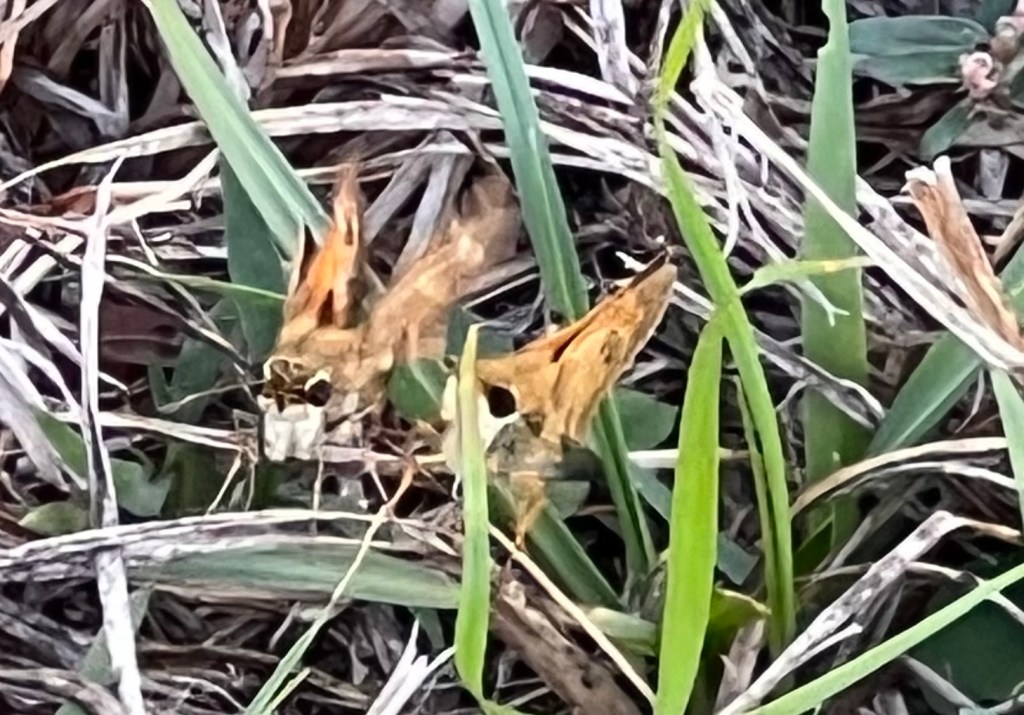
I’m off to an adventure this afternoon, so maybe I’ll get more blurry photos (too much walking to carry the big lens camera).




 The Hermits' Rest