
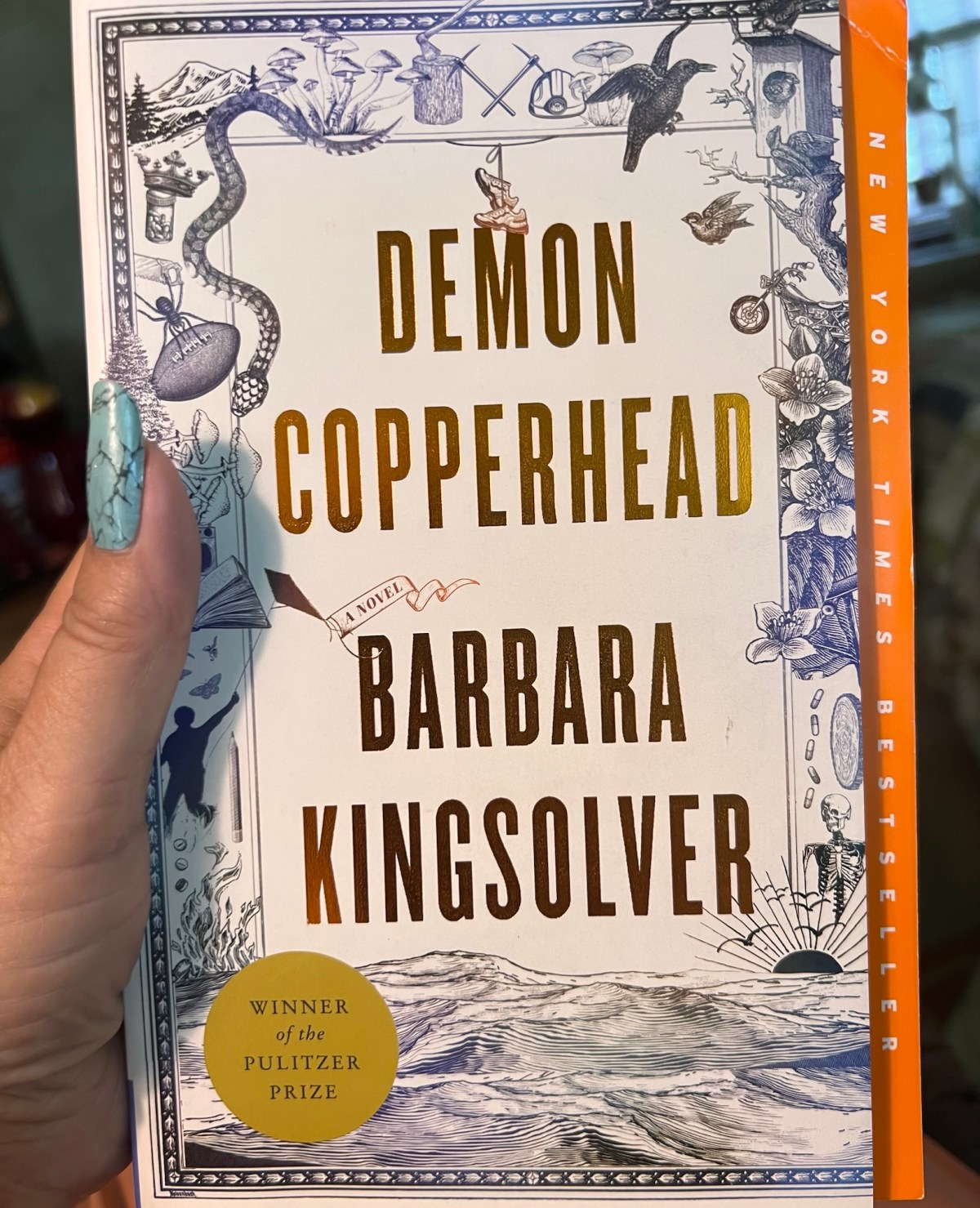
I’ve been trying to escape by reading novels. The joke’s on me, because Demon Copperhead, by Barbara Kingsolver (2022) is not an escape. It’s more of a descent into hell with a really nice guy. Many of you have already read this book, but I’d been holding onto it for a while, thinking it would be a hard one to get through. I was correct about that, but it doesn’t mean the book wasn’t worth reading. Not when one of our greatest living novelists wrote it and it’s about a topic that has touched so many families, even those of us on the outside of the opioid epidemic.
I loved realizing that the book was based on the story of David Copperfield (get it, Demon Copperhead…), which was another book that was so depressing I had a hard time dragging my hyper-sensitive empath eyes over its words. Dickens really knew is sad-but-true sh**. Knowing that ahead of time, I knew where the arc of the story of the main character, who goes by Demon Copperhead, was heading. I just didn’t want to go there with him for a while, so I had to set the book aside as soon as the Big Bad Drugs came out.
A lot of the book was like visiting a new world (at least a respite from White Evangelical Christian World), because for better or worse, I have very limited exposure to addictive substances or illegal drugs, other than alcohol. Thanks to growing up with my mom (who was addicted to legal substances of tobacco, alcohol, and prescription drugs), I didn’t want to have anything to do with anything that might possibly mess with my brain. So, I partook of no weed, no shrooms, no LSD, and none of the other stuff.
It’s not that I didn’t know any people who enjoyed their substances of choice. I mean, I was a teen in the 70s, for goodness sake. I just wasn’t immersed in the culture that went with it. Yes, I managed to have fun anyway.
The world of foster care is another one I don’t have direct experience with, but I gained a lot of sympathy for friends and family who lived through some of the unpleasant aspects of the system. And I’m so grateful for the good foster parents and successful people who made it through.
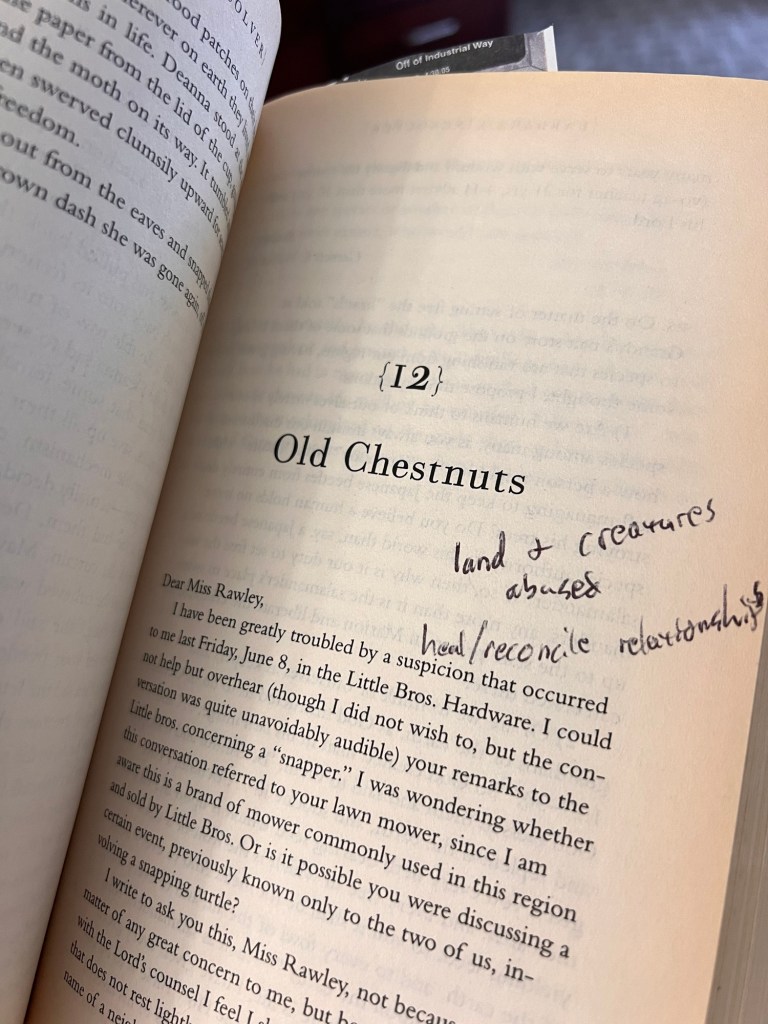
Thankfully, Kingsolver has a knack for describing how things feel from the point of view of the person experiencing them, which means I learned about drugs from the user’s point of view, where things that might have scared me were just part of Demon’s daily life. Kingsolver also makes most characters in the book sympathetic – you can see how they got to be in the mess they were in. I liked her description of having sex from the man’s point of view, too, since it’s obviously not something I’m familiar with.
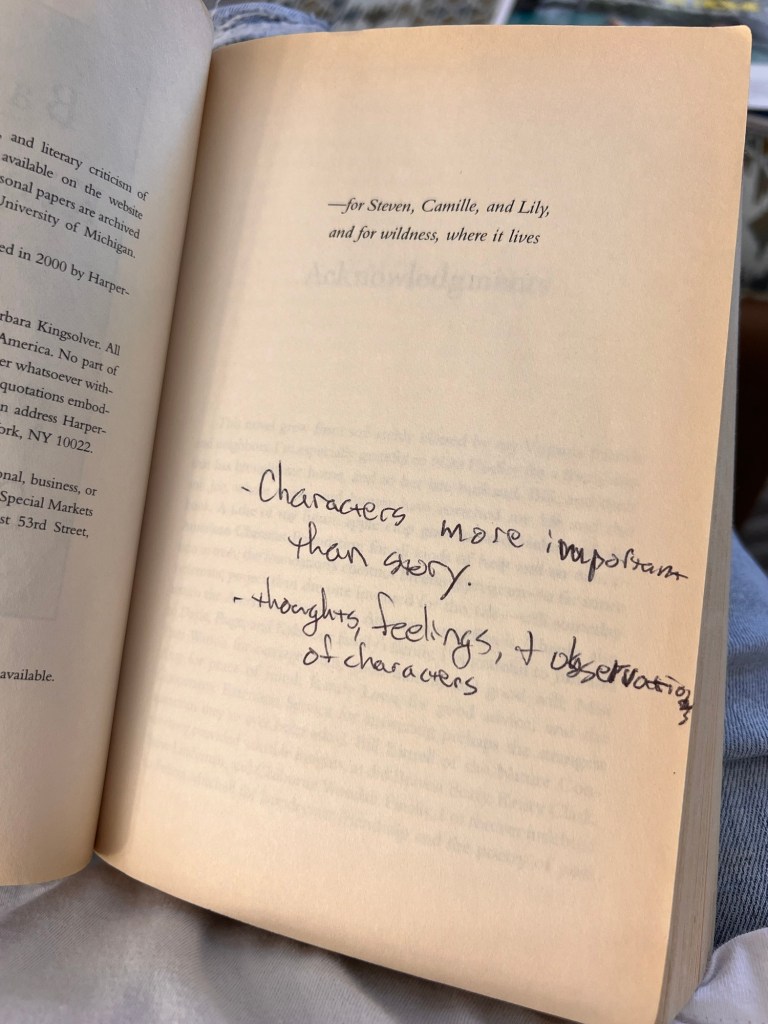
One thing that got me through the hard parts of Demon Copperhead was that sometimes I could just read the words and enjoy how well crafted they were, especially when Demon is observing the world around him. That boy had the artist’s eye, thanks to Kingsolver!
In summary, you probably should read this book. It will be eye-opening to those of you who’ve never lived in rural America or spent time in the poor parts of Appalachia. For me, the overwhelming feeling I got was how grateful I am so have only lived on the edges of the world in this book, and how much more empathy I have for those thrown into it by no fault of their own.



 The Hermits' Rest