
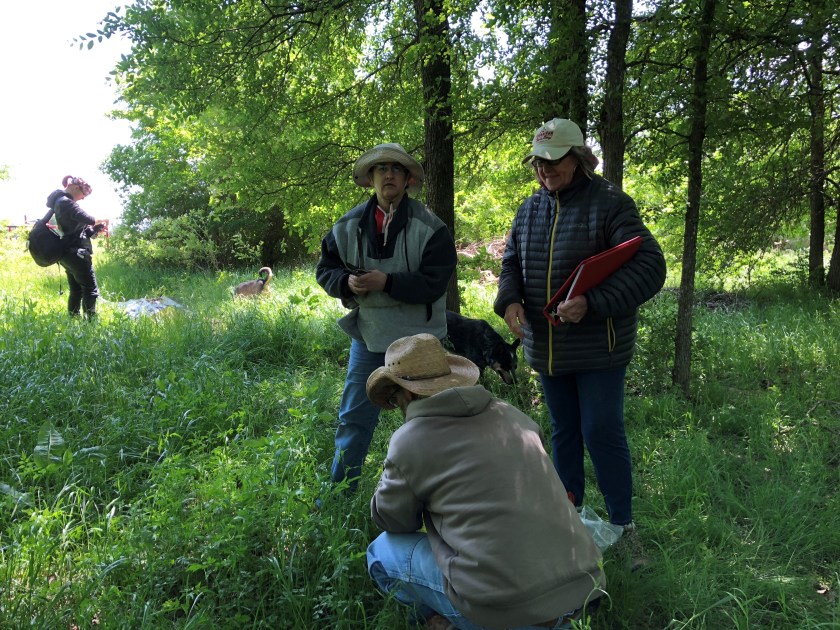
April 14 2018 was an exciting day at the Hermits’ Rest. It was chilly most of the day and incredibly windy ALL day, but that didn’t stop an intrepid band of El Camino Real Chapter Master Naturalists, along with genuine botanist Monique Reed from Texas A&M, to scour the ranch for plants.
Why did we do that?
It turns out that not all that many plants of Milam County have been documented in the SM Tracy Herbarium, and as citizen scientists, we want to help. Our band was led by Nancy Webber, who has done an amazing job documenting what plants are documented, as well as what is still needed. She and another couple of the Master Naturalists who came along have a great working knowledge of the local flora.
However, Monique Reed has an entire Latin dictionary’s worth of plant names in her head. It was amazing to watch her work. There was only one plant that she didn’t at least get a clue about (the “mysterious carrot-like plant”). She looked high and low, from the largest osage orange tree (Maclura pomifera) to the teeniest, and I mean teeniest, little flowers imaginable. She spent quite some time kneeling in the dirt seeing “what’s down there.”
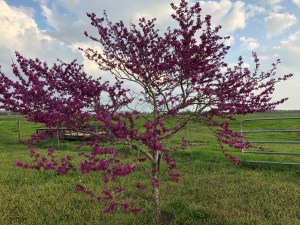
 The Hermits' Rest