Grass Is a Pain in the Rear

rescue
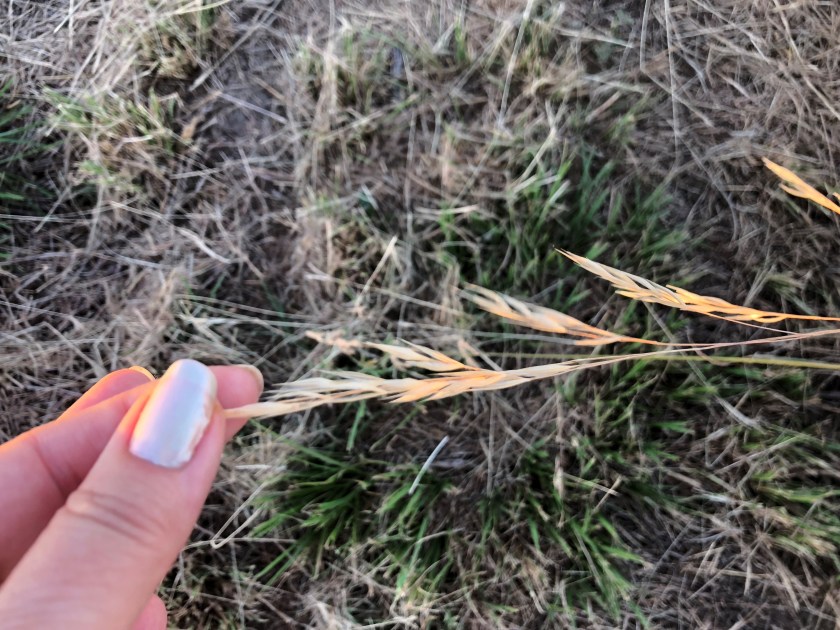
Rescue brome! Cool name, Never would ahve guessed this.

In my zeal to record all the things blooming around the Hermits’ Rest, I’ve been wanting to record all the lovely grasses that are producing their seed heads this time of year. They’re actually just glorious to look at right at sunset, when the silver bluestem practically glows as it waves in the wind. Heck, even Johnson grass (the bane of Texans’ existence) looks pretty that time of day.

I enjoy the grasses, especially since one of our field trips was to the herbarium, where we learned to use the keys to identify grasses by their seeds. Unfortunately, that is not a skill I have. Nor do I have a microscope, or even a really good camera. This means, sadly, that I sort of stink at grass identification.

Still, I throw my photos up on iNaturalist in hopes that someone will know what I am looking at. Sometimes it works, as in that rescue brome up there, but often it doesn’t.

Thank goodness for the helpful naturalists on the site, though. One of the Texas Parks and Wildlife urban wildlife biologists, Sam Kieschnick, has often consirmed my observations. His profile on iNaturalist proclaims his love of the project. The number of contributions he makes confirms his passion. I admire how he helps educate so many peopleand helps them contribute to scientific research along the way.

Continue reading “Grass Is a Pain in the Rear”

Katydid Awareness

katydid
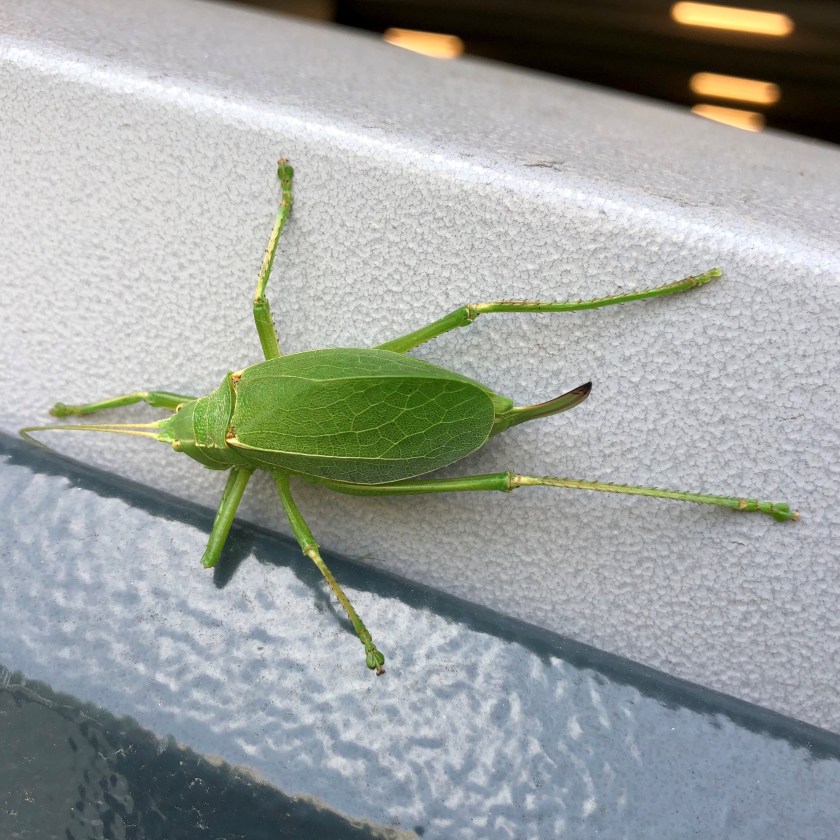
Katydid on the garage entry thing in Austin.

My whole life I’ve heard about katydids but, I guess I’d never seen one in person until yesterday. I was driving into the parking lot at work, when I saw a bright green leaf, but the leaf turned out to be an insect.

I quickly parked my car and went over to see what it was. Of course I took a picture so I could upload it to iNaturalist. What a cool bug it was, too!

When I uploaded the photo, I saw lots of potential katydids, but I figured it was probably the most common one. That turned out to be wrong, as the person who reviewed it for iNaturalist said it was actually a Central Texas Leaf-Katydid, which is more rare and more local. That’s cool!

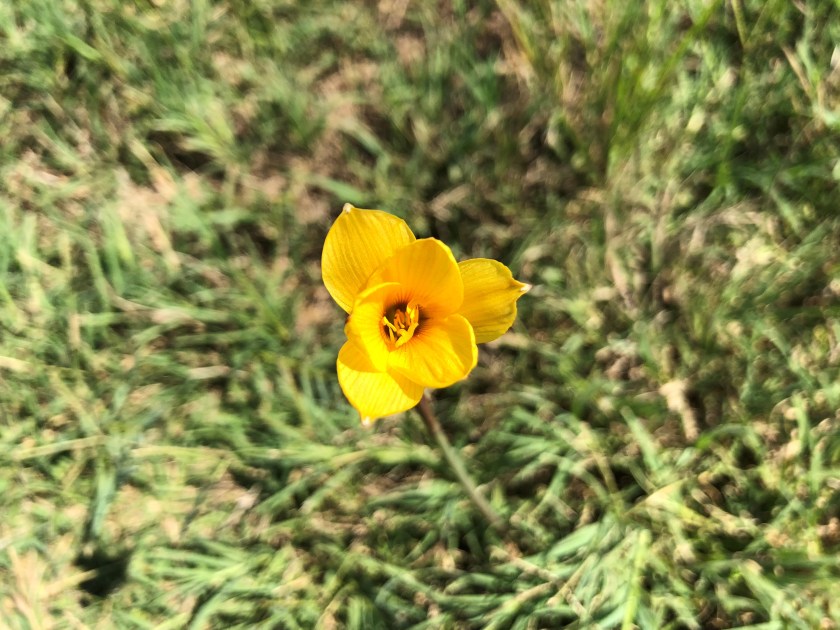
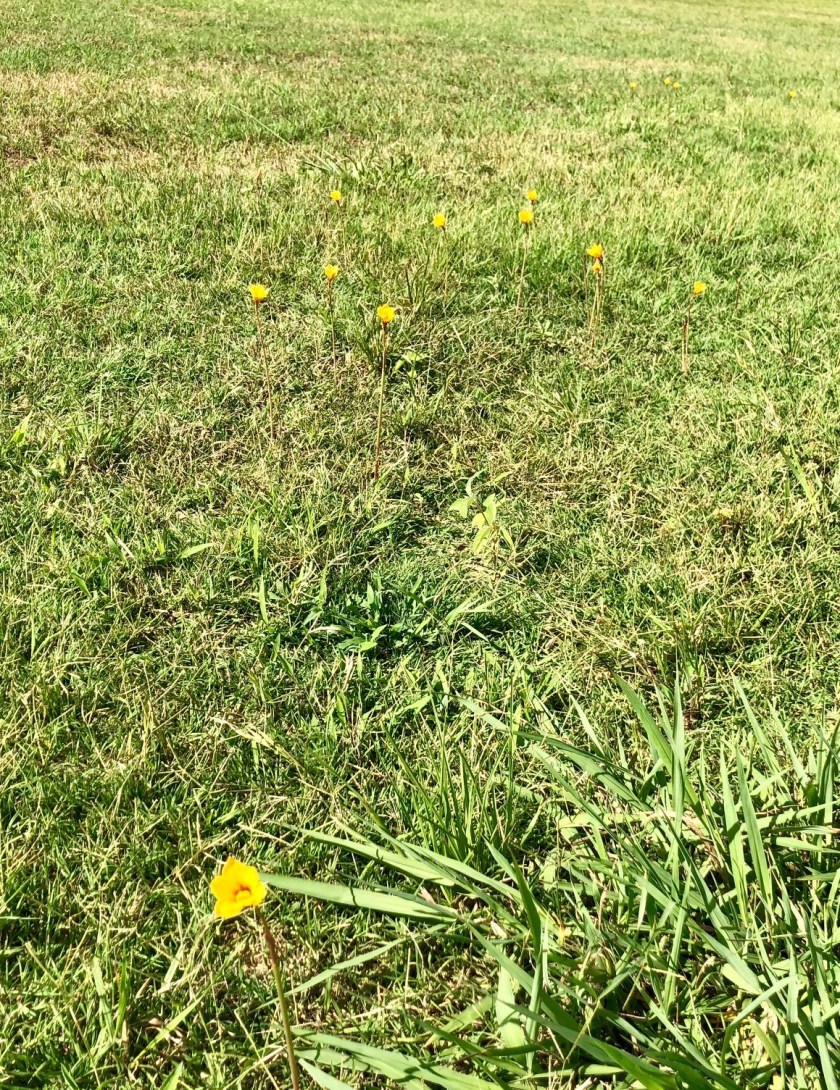
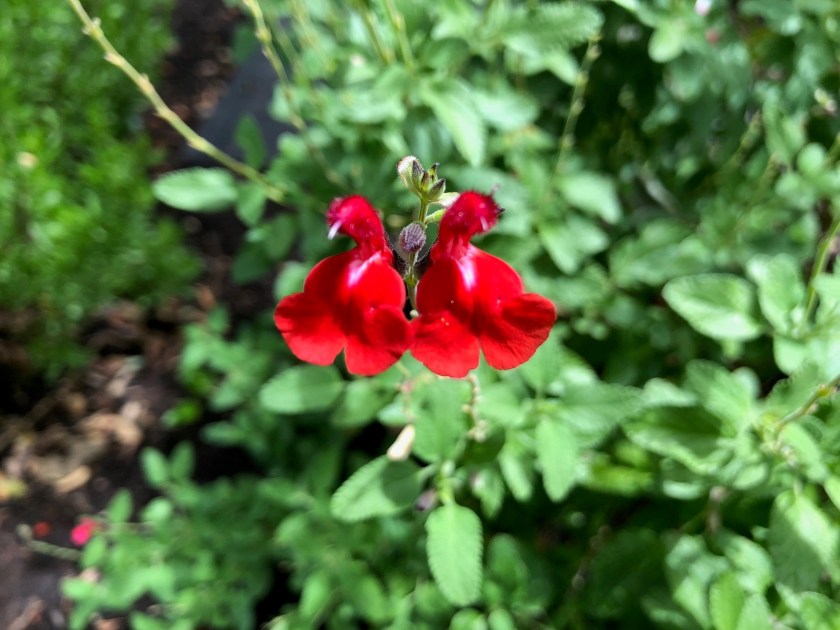
I also sent up two flowers to be identified after I got to the Hermits’ Rest yesterday. They are two of the more late-blooming wildflowers. I am pretty sure I got the ram’s horn right. That’s one I look forward to every year. We only have a few:

ramshorn
I guess I like these because although the flowers are delicate in appearance, they are really big.

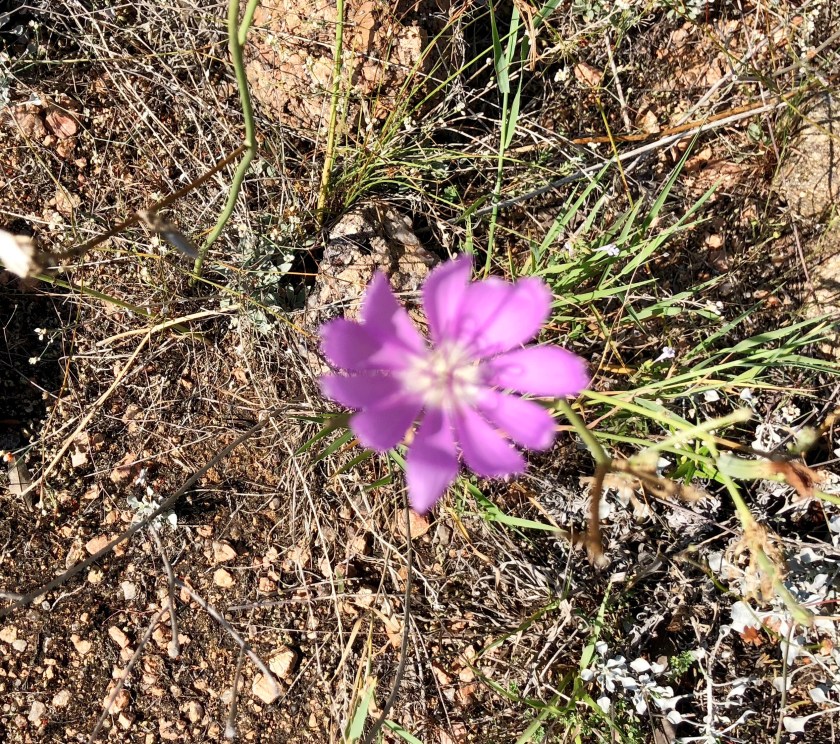
The next plant I am not so sure of. We have quite a bit of it, but when I uploaded it to iNaturalist, there wasn’t much about this one, if, in fact, I identified it correctly. It appeared to be Lady Bird’s Centaury, which must be named after Lady Bird Johnson, right? It said it had not been reported yet. That sounds fishy to me, so I am awaiting a correction from one of the botany experts by morning. It’s great to have the opportunity to learn this way.

centaury
It was really windy when I took this, so I had to hold the plant.

In the News!

A quick share, because I am proud that the article I submitted last week to the Cameron Herald got published just as I wrote it, even with the informal parts intact. I was testing to see if light-heartedness would go over all right, and it did.

By the way, this is a fun paper to read, and subscriptions to the online version are very reasonable. What the heck, read about all the police activity and financial intrigue in a small town! Click the link above to subscribe.

I was a little disappointed to see that they used the photo of me grinning my head off rather than the one of Dr. Thoms, but I can see why they would want to feature local residents. The Thorndale paper also published the article, but with no pictures. I guess I am a byline collector, now.

Cameron_Herald_May_31_2018

My sister texted me to say I was in the newspaper. I said, yes, I know. Check the byline! It’s great to use my skills to volunteer for a good cause and help educate folks about the history of our area. We have it worked out where I and another volunteer alternate articles, so it’s not too much work, either.

Also…

Who can spot the typo?

A Field Day for Field Mice

mouse
It’s dead, Jim.

I am pretty familiar with what lives around the Hermits’ Rest, probably because looking for moving objects is one of my best skills; I seem to have been blessed with better-than-average peripheral vision. That helps with birds, snakes, and stuff. It also helps with rodents, so I’m pretty darned sure we have some big old tree rats (Rattus rattus, my favorite Latin name), along with a heck of a lot of mice and voles. We always see them when Lee shreds the pastures (along with a whole lot of happy hawks, caracaras, and falcons).

The past few weeks, though, I’ve gotten a LOT of practice in mouse identification and spotting. It started when I saw mouse poop in one of the bathrooms. I was just glad it wasn’t rat poop. Lee saw that one and said the dogs “played with it.” Then, I saw some in the other bedroom. Uh oh. Worse, Lee found a mouse in his car. I figure they came in looking for the food that is always in there.

However, when my sister and I got in my (totally food-free) car and were greeted by a friendly mouse face, I knew something was up. She fled, and I escorted that one out of the car. I was concerned. Why are we suddenly seeing so many mice in the house and garage, I wondered?

Continue reading “A Field Day for Field Mice”

Proud of Me

happy_cert
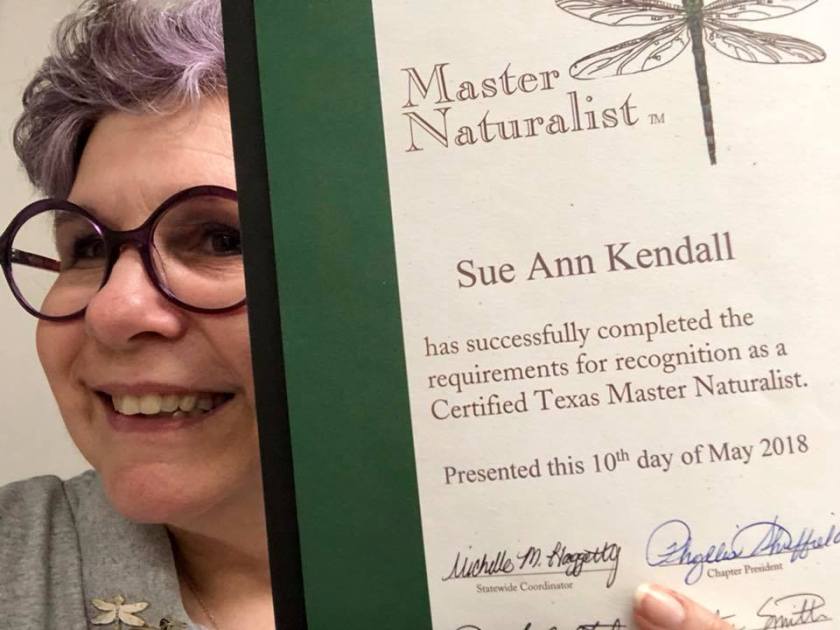
Pin and paper acquired. My first educational certification in many years.

I am proud to say that last Thursday I got my dragonfly pin and my certificate to show I am a Certified Texas Master Naturalist. I can’t say it was hard work, because it was too much fun, but it did require an investment of time and effort! In addition to the weekly classes for three months, I also did 20+ additional hours of advanced training, and over 40 hours of volunteering.

We also got sweet hummingbird pins to thank us for participating in the Earth Day work. They do love their pins here. (They also love cooking; the potluck featured perhaps the most delicious cabbage dish EVER cooked; this bunch needs a cookbook.)

pin
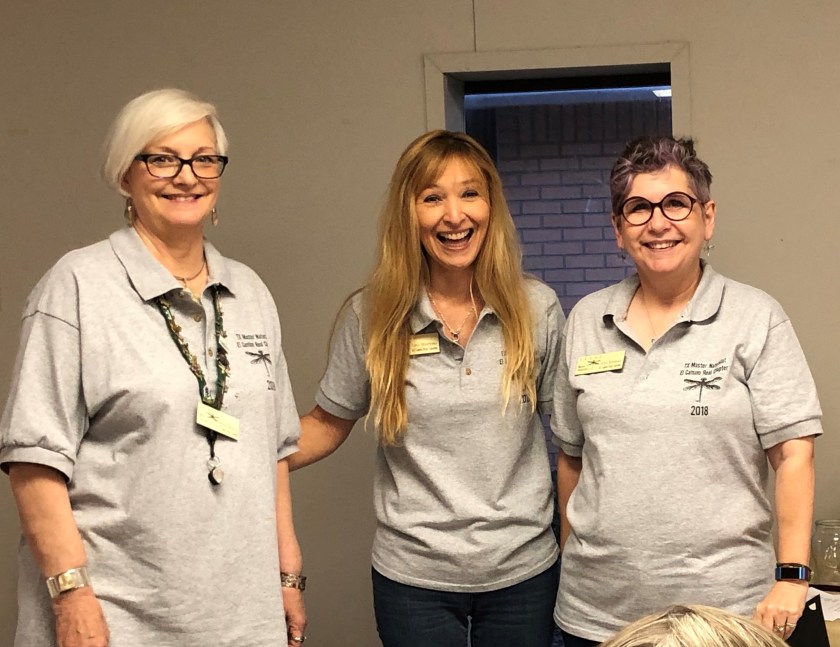
Here I am all happy as heck, with our chapter President and our membership chair.

I’m really glad I ran into Dorothy Meyer at an essential oil class and got to talking to her about the group! They sure are an interesting bunch, with so much to teach me. I just want to soak up all the local lore!

What Did the Native Americans Here Eat?

We also had a very interesting speaker, Prof. Alston Thoms, an anthropologist from Texas A&M. He is an expert on Native American history, and focused the talk for us on what people ate in past centuries in this area. It was lots of roots and berries, cooked in earth ovens (which he does yearly for his grad students). The most “duh” moment came when he asked what the most common food source would have been. It took a while to realize that of course, it was the white-tailed deer. It’s been in the area as long as humans have, and always on the list for what’s for dinner!

I could listen to this guy all day long. I wish he could come back and talk more about the Native Americans currently in Texas. I met some who live near Aquarena Springs a few years ago, and they were really knowledgeable about herbs and healing.

thoms
Alston Thoms, getting the heck out of Milano.

Plant ID with a Pro!

woods
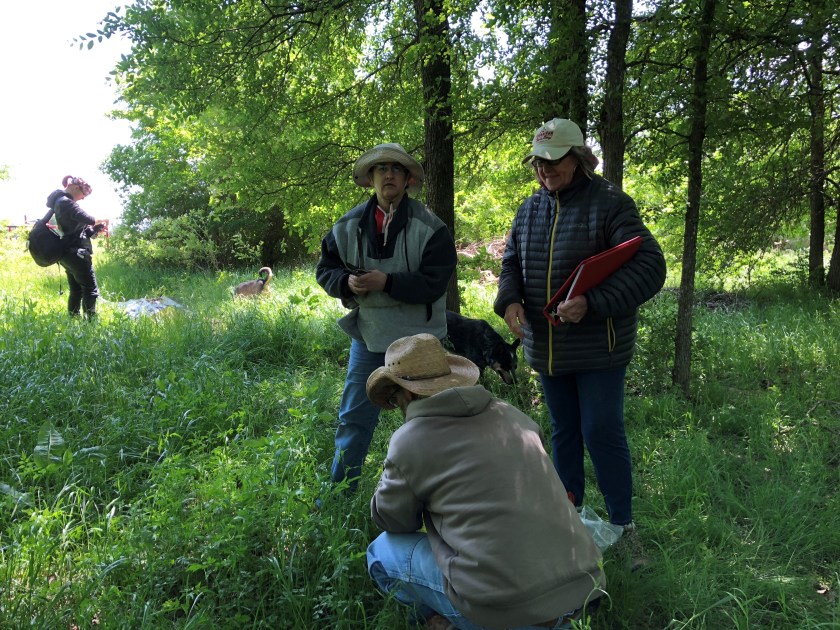
Monique Reed (center) along with El Camino Real Chapter Master Naturalists at the Hermits’ Rest ranch woodland area.

April 14 2018 was an exciting day at the Hermits’ Rest. It was chilly most of the day and incredibly windy ALL day, but that didn’t stop an intrepid band of El Camino Real Chapter Master Naturalists, along with genuine botanist Monique Reed from Texas A&M, to scour the ranch for plants.

Why did we do that?

It turns out that not all that many plants of Milam County have been documented in the SM Tracy Herbarium, and as citizen scientists, we want to help. Our band was led by Nancy Webber, who has done an amazing job documenting what plants are documented, as well as what is still needed. She and another couple of the Master Naturalists who came along have a great working knowledge of the local flora.

However, Monique Reed has an entire Latin dictionary’s worth of plant names in her head. It was amazing to watch her work. There was only one plant that she didn’t at least get a clue about (the “mysterious carrot-like plant”). She looked high and low, from the largest osage orange tree (Maclura pomifera) to the teeniest, and I mean teeniest, little flowers imaginable. She spent quite some time kneeling in the dirt seeing “what’s down there.”

Continue reading “Plant ID with a Pro!”